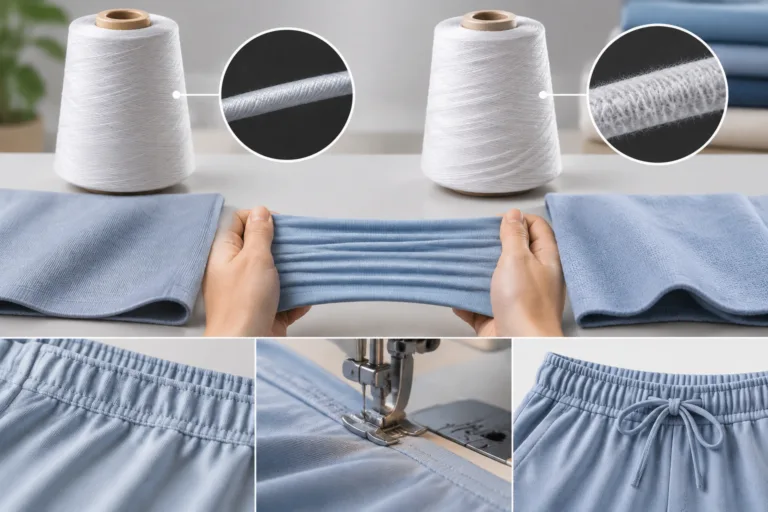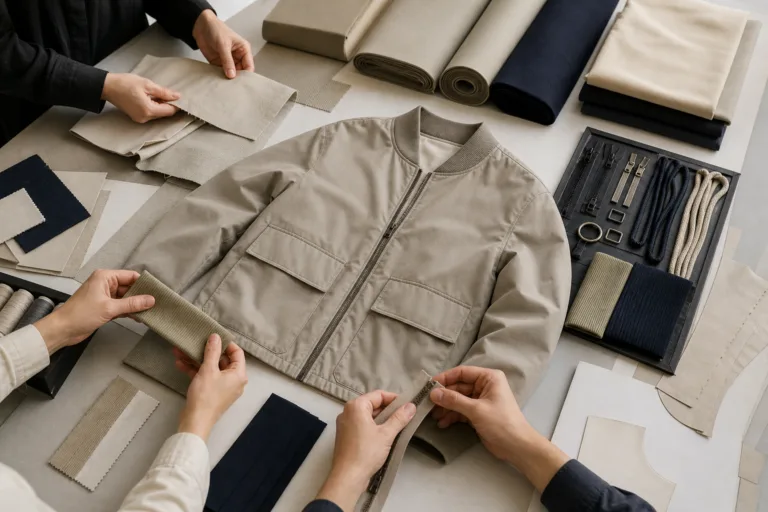
Moving from wardrobe gap analysis to clear product requirements starts with a real clothing-use problem, not a garment idea. A wardrobe gap analysis design brief connects an unmet task or wearer need to a defined user, context, intended outcome, design direction, and review method. This process helps a team decide what the product must achieve before choosing features, fabrics, or construction details. Apparel Wiki is an independent educational publication; its editorial guidance is separate from sponsored content, as described on the Sponsor page.
In practical terms, identify the gap, investigate what is happening, state the desired improvement, translate it into requirements, and compare possible solutions. The brief is a working decision document, not proof that the eventual garment will perform as intended.
What Is a Wardrobe Gap Analysis Design Brief?
A wardrobe gap is a specific unmet clothing task, use situation, or wearer problem. It is more useful than a general wish for something “new,” “better,” or “more attractive.” For example, a hypothetical wearer may find a particular garment difficult to use while carrying equipment during a recurring activity. The gap is not automatically “design a jacket with a new pocket.” The initial gap is the difficulty completing the task while wearing the current clothing.
A wardrobe gap analysis examines who encounters the problem, what they are trying to do, when and where it occurs, what they currently wear, and what outcome they want improved. An apparel design brief then records the working interpretation of that information and gives the development team a shared basis for decisions.
A useful brief may distinguish the following areas:
- Problem and context: the clothing-use situation being investigated.
- Intended wearer and outcome: who the product is for and what should become easier, clearer, safer to assess, or more comfortable.
- Design direction: the relevant aesthetic or product character, kept separate from functional needs.
- Constraints: project-specific limits involving materials, construction, care, timing, cost, or commercial positioning.
- Validation questions: what remains uncertain and how the team may investigate it.
Keep observations and interpretations separate. “The wearer repeatedly pulls the sleeve upward” is an observation. “The sleeve is too long” is an interpretation that may require checking. Activity, layering, fabric friction, styling, or another fit issue could also contribute. Keeping these distinctions visible prevents a preferred solution from being mistaken for an established requirement.
Start With the Wardrobe Problem, Not the Garment Idea
Begin by describing the situation before selecting a product form, feature, fabric, or construction method. Record who is involved, the task they are attempting, the location and conditions, the garments or products currently used, and the outcome they want to improve. This creates a clothing problem definition that designers and developers can discuss without relying on vague language such as “more versatile” or “easier to wear.”
Discovery inputs can include interviews, wardrobe reviews, wear observations, competitor reviews, and existing product feedback. Treat these as ways to identify patterns, questions, and competing explanations rather than as automatic proof of a broad market need. A small set of conversations may reveal an important issue for further investigation, but it should not be used to claim a market percentage or universal wearer behavior without direct evidence.
For example, imagine a hypothetical wearer who repeatedly adjusts a sleeve while reaching forward. The observation should capture the action, the wearer’s own words, the activity, the layers underneath, and the garment condition. The interpretation might involve sleeve length, arm mobility, fabric friction, cuff construction, or styling. Before choosing a design response, compare these explanations and decide what evidence could distinguish them.
This approach also protects the brief from personal taste. A founder’s preference for a cropped silhouette or a particular fabric may be a valid design direction, but it is not automatically evidence that the target wearer has the same preference. Mark aesthetic preferences, user statements, observed actions, assumptions, and unresolved questions as different types of information.
Translate the Gap Into Clear Product Requirements
Write the intended user outcome before listing features. A feature is only useful in relation to the task it is meant to support. After stating the outcome, organize the early product requirements into categories that fit the project. These may include use and function, fit and movement, appearance, materials, construction, comfort, care, labeling, packaging, and commercial constraints.
Each requirement should be specific enough for someone to review, while project-dependent choices remain clearly marked. A target fabric, finish, measurement method, tolerance, or acceptable compromise should not be presented as a universal apparel rule. It is a decision to be confirmed for the product, market, and development stage.
Consider the difference between these statements:
- Unclear: “Make it easier to wear.”
- More useful: “Support the defined reaching task without requiring repeated sleeve adjustment during the agreed wear review; record the wearer’s feedback and any visible restriction for the sample version under review.”
The second statement still needs a project-specific review method, but it links the requirement to a task and evidence. It does not invent a measurement value or claim that one sample proves performance for every wearer.
Also distinguish a requirement from a preference, hypothesis, constraint, and unresolved question. “The garment should retain a clean visual line” may be an aesthetic intention. “A particular panel will improve movement” is a hypothesis until reviewed. “The approved material must come from an available source” may be a project constraint. Separating these categories makes later changes easier to explain.
When the project requires formal handoff, a technical pack, measurement specification, materials list, and revision record can connect the brief to development work. The exact fields vary by product; no fixed page count or universal template applies to every garment. Drawings, written notes, measurements, materials information, and sample comments should agree rather than leaving conflicting instructions for the next team.
Prioritize Requirements and Make Trade-Offs Visible
Not every statement in a brief deserves equal priority. Separate must-have requirements from preferred features, open questions, and items that can be deferred. Then review each proposed solution against the intended user benefit, technical feasibility, maintenance implications, visual intent, cost implications, and ability to validate it. The weighting belongs to the project; a comparison matrix is a discussion aid, not an objective industry formula.
For a hypothetical wardrobe gap involving repeated sleeve adjustment, two possible directions might be compared like this:
| Review area | Solution A: pattern adjustment | Solution B: adjustable feature |
|---|---|---|
| User benefit | May address movement through the base shape | May give the wearer more control during the task |
| Feasibility | Requires pattern and sample review | Requires feature, placement, and construction review |
| Maintenance | May preserve a simpler care approach | May add a component that needs care and durability review |
| Appearance | May keep the visual treatment quieter | May make the adjustment visible or alter styling |
| Validation needs | Movement, fit, and wearer feedback | Movement, operation, comfort, and wearer feedback |
The matrix does not select a universal winner. It makes the reasoning visible so the team can record why a requirement was accepted, changed, deferred, or rejected. Trade-offs should remain explicit: added structure may affect comfort, a special material may affect care, and a feature that helps one use case may complicate production or styling in another.
Build Requirements That Can Be Tested During Development
A requirement becomes more useful when the team can describe how it will be reviewed. For each important outcome, state what needs to be checked, in what use context, who will review it, and what evidence should be recorded. The method should fit the question: a material sample may help assess appearance or handling, while a prototype may be needed to review movement, fit, or construction.
For example, if the brief calls for easier arm movement during a defined task, the team could review a sample while a wearer performs that task and record where movement feels restricted. That finding does not, by itself, establish the cause. Fit, layering, fabric behavior, and the activity may all warrant investigation before the team chooses a revision.
A practical development loop is:
- Link a requirement to the original wearer problem and identify what evidence would address it.
- Choose a suitable review, such as a sketch discussion, pattern iteration, material review, fit review, construction check, or wear trial.
- Record the sample version, review context, feedback, observations, and unresolved questions.
- Decide whether to keep, revise, or investigate the requirement, then recheck the relevant change.
Keep design-review findings distinct from formal laboratory or regulatory results. A prototype or wear review can help identify design issues, but it does not automatically establish compliance, safety, durability, or broad market demand. The purpose of this kind of apparel product validation is to make the next decision better informed, not to claim more than the evidence shows.
Connect the Brief to Materials, BOM, and Production Handoffs
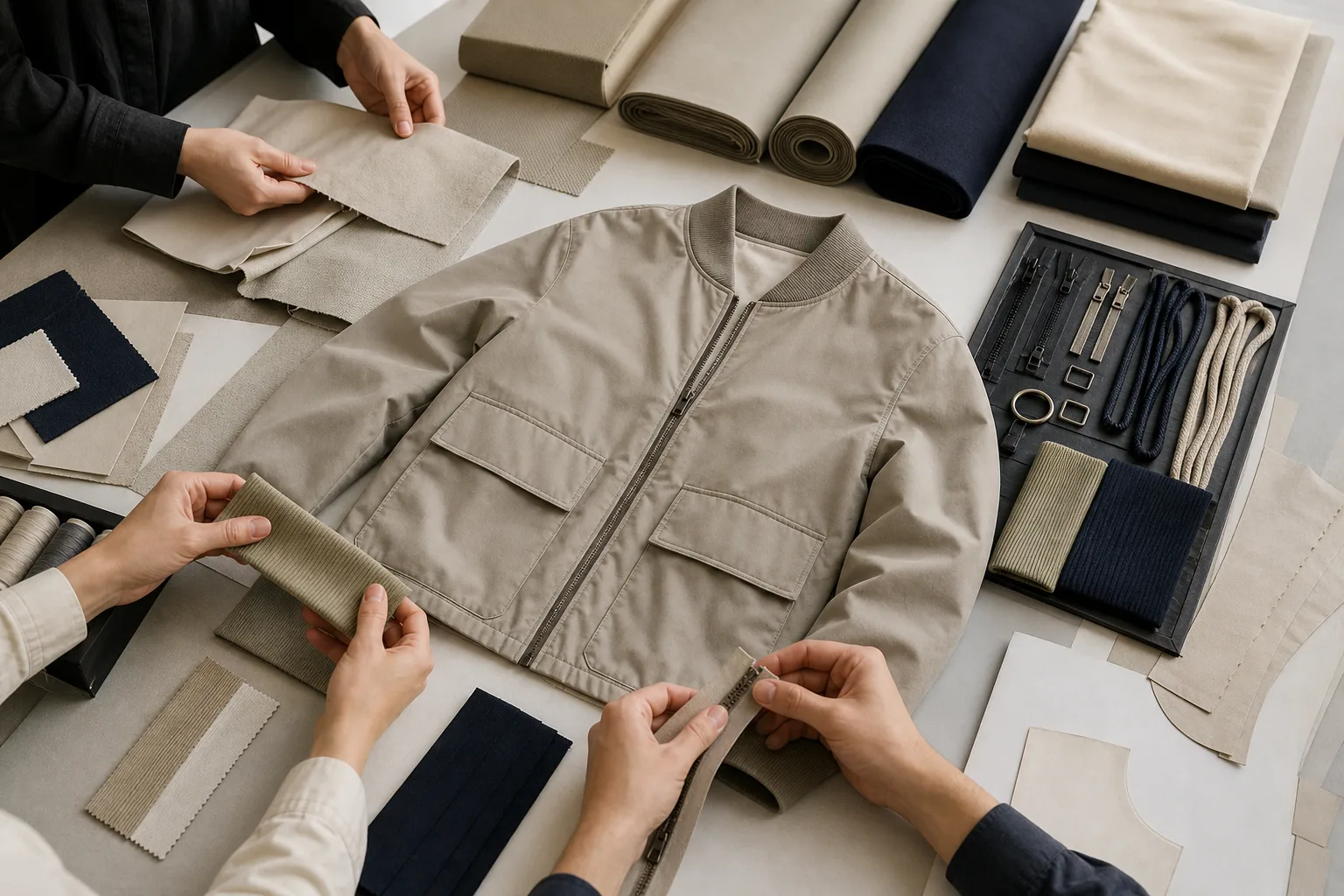
Once a direction is approved for development, connect its intended function and appearance to the relevant materials, components, and construction notes. A bill of materials (BOM) identifies product inputs and their quantities; a cost sheet assigns values to those inputs. They are related documents, but they answer different questions. The project should make specifications, units, assumptions, supplier details, substitutions, and approval status clear where those details matter.
A technical pack or similar handoff can bring together drawings, measurement information, materials, construction notes, and other product-specific instructions. Its contents depend on the garment and the project; there is no single fixed format that applies to every product. Check that images and written instructions agree, and that the brief, BOM, measurement information, sample comments, and relevant care or labeling inputs do not contradict one another.
Before sharing a handoff, review:
- Document names, revision numbers, and approval status.
- Material and component descriptions, units, and any project-defined allowances or assumptions.
- Measurements, construction notes, and related visual references for consistency.
- Care, labeling, and packaging inputs that the project has identified for review.
- Open questions, substitution permissions, and decisions that still need approval.
Do not treat a proposed substitution as automatically equivalent. Review it against the intended use, appearance, care expectations, construction, and any other relevant requirements before approval. Apparel Wiki is an independent educational publication, not a manufacturer or supplier; a clear brief supports communication but cannot guarantee a particular production capability or outcome. Teams organizing their development information may also find the Apparel Manufacturing Tools guide useful.
Review the Brief for Gaps Before Moving Forward
Before the next project stage, check whether someone who was not part of the original discussion could understand the wearer, use situation, intended outcome, and important constraints. Each major requirement should have an owner and a proposed way to review it—or be clearly marked as unresolved with a reason it remains open.
- Is the clothing-use problem specific enough to guide decisions?
- Are observations separated from interpretations and assumptions?
- Are requirements, preferences, hypotheses, and project constraints identified distinctly?
- Is there a review method or next action for each important requirement?
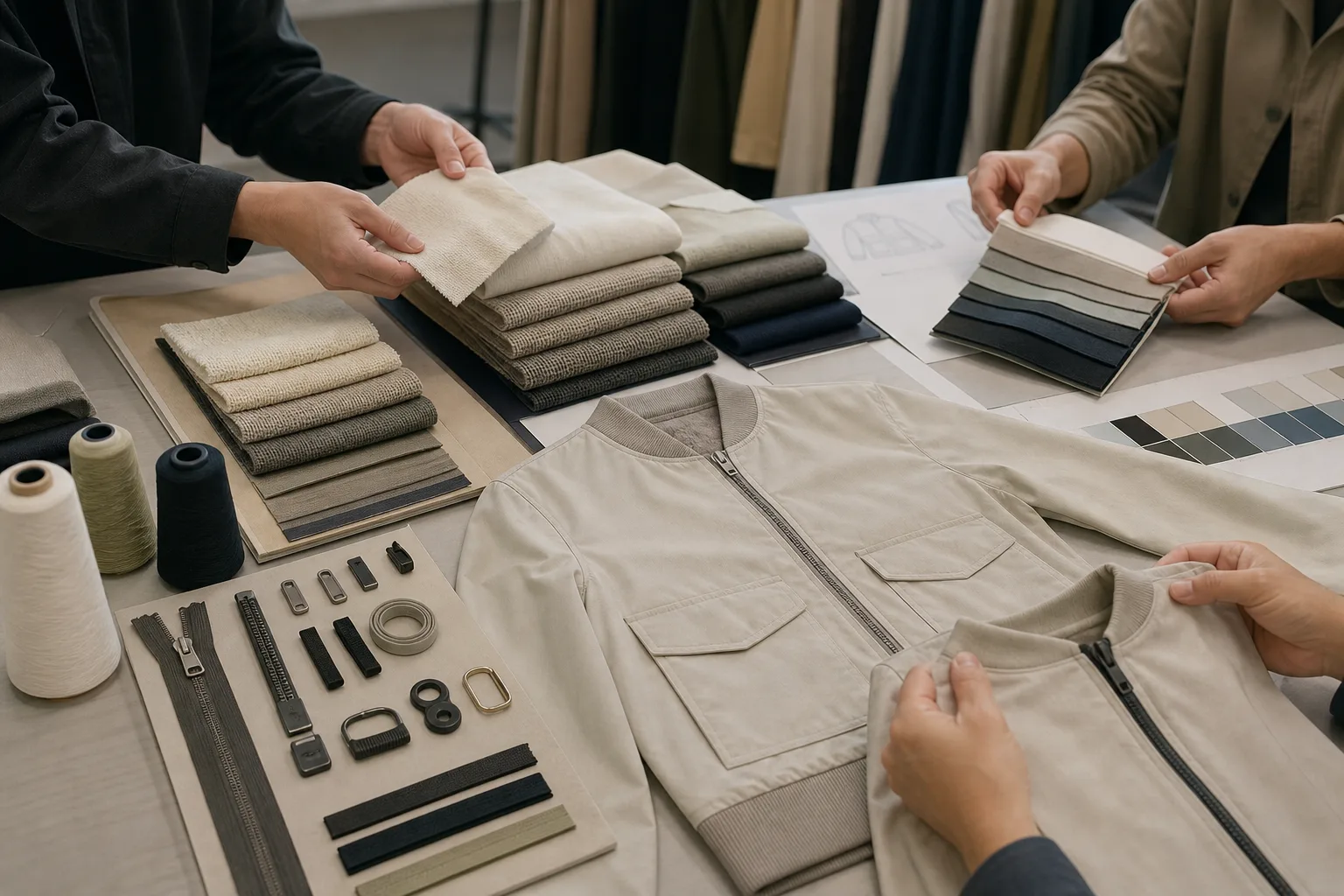
- Are reference images documented with their source, date, intended lesson, and rights or licensing status?
- Do the brief and supporting development documents agree on their current revisions?
Choose a next action based on the biggest remaining uncertainty: gather more observations, investigate a material, explore a pattern change, build a prototype, or seek a targeted compliance review. A completed brief is a stronger basis for discussion and development, not a promise that the final garment will succeed.
Frequently Asked Questions
What is the difference between a wardrobe gap analysis and an apparel design brief?
A wardrobe gap analysis identifies an unmet clothing task or use situation. The design brief records that problem, the intended wearer and outcome, and the requirements and questions that will guide development.
How do you turn a clothing problem into a product requirement?
Describe the wearer, task, context, and desired outcome first. Then state what the product should enable and how the team could review whether it does so, leaving unconfirmed causes marked as questions.
What information should an apparel design brief include?
Depending on the project, it may include the problem, target wearer, use context, intended outcome, design direction, constraints, requirements, assumptions, and validation questions. The useful level of detail varies by product.
How can a team test whether a garment addresses the identified wardrobe gap?
Connect a requirement to a suitable review, such as a prototype, fit review, material check, or wear trial. Record the sample version, context, findings, and decisions, and avoid treating a limited review as proof of broad demand or formal compliance.
Should every product requirement appear in the technical pack?
Not necessarily. Use the technical pack for product information needed in the relevant handoff, and keep broader rationale or unresolved research questions in the project brief or another suitable record. Ensure related documents remain consistent.
How should observations, assumptions, and design preferences be separated in a clothing project?
Record what was seen or said as an observation, label possible explanations as hypotheses, and identify aesthetic choices as preferences. Keep project constraints and externally sourced facts distinct so they are not mistaken for wearer evidence.