A useful digital illustration design evaluation begins with three questions: What is the design meant to communicate? Who is the garment for, and where will it be used? Which visible decisions most affect the intended apparel outcome? This approach keeps a critique focused on design reasoning rather than drawing polish or software effects. It also supports an independent review process; where sponsorship or editorial independence is relevant, see the Apparel Wiki Sponsor page for the site’s stated distinction.
Review the illustration in sequence. First clarify the visual message and focal point. Then examine how silhouette, proportion, line, color, and detail work together. Next ask what those choices may require from the garment’s movement, materials, and construction. Finally, record which assumptions need a pattern review, fitting, toile, material sample, or other direct check. An illustration can communicate an intended silhouette and detail arrangement, but it cannot by itself prove dynamic fit, fabric behavior, construction feasibility, or finished-garment performance.
How to Begin a Digital Illustration Design Evaluation
Start by asking, “What is the design intent?” The answer might concern a recognizable silhouette, a particular balance of volume and restraint, a functional opening, a surface treatment, or a visual relationship between separate garment parts. State the intended message in plain language before judging whether the image looks attractive.
Then ask, “What should the viewer notice first?” Identify the feature carrying that message. It may be the outline of the garment, a contrast between panels, a neckline, a closure, a sleeve shape, or a concentrated surface detail. Follow with, “Which garment features support that first impression, and which compete with it?” This separates a clear concept from polished rendering.
The intended wearer and use context also matter. A proportion that supports an editorial image may not serve the same purpose in a work garment, occasion garment, layered outfit, or movement-dependent design. Treat silhouette, proportion, line, color, and focal detail as review prompts, not universal aesthetic rules. Ask whether they remain legible at the viewing distance and in the context where the garment is expected to be understood.
Keep two kinds of evidence separate. The illustration shows an intended visual result. It does not establish how the garment will move, whether a fabric will hold the shape, whether a closure is practical, or whether the proposed construction can be assembled as drawn. That boundary prevents a confident image from being mistaken for a finished-garment assessment.
A practical priority order is:
- Clarify the visual message and intended wearer.
- Identify functional consequences of the visible choices.
- Test material and construction assumptions.
- Record unresolved points that require a sample or direct check.
Which Visual Decisions Should the Critique Question First?
Begin with visual hierarchy. Ask, “What is the intended focal point?” Then examine whether the hierarchy of silhouette, seam lines, color blocking, surface details, and accessories supports that point. A strong focal detail can lose its purpose when several equally strong details compete for attention. The critique should identify what obscures the main idea and explain why that conflict matters to the stated design objective.
Review the illustration’s balance across every available view. Compare front, back, side, or alternate views when they exist. Look for changes in apparent proportion, panel alignment, hem position, or visual weight. When only one pose or angle is available, record the limitation instead of treating that view as proof of the entire garment. Missing information is a reason to request another view or annotation, not a reason to fill the gap with certainty.
Ask which choices appear deliberate and which may result from rendering, pose, lighting, or perspective. A shaded area may suggest a fold, a seam, a color change, or simply depth. A narrow-looking sleeve may reflect the arm position rather than the actual sleeve volume. When a critique depends on one interpretation, ask for a clearer drawing, labeled detail, flat view, or construction note.
Separate audience or brand appropriateness from personal preference. Instead of saying that a proportion is “wrong,” connect the comment to the stated wearer, occasion, use context, or design objective. For example, ask whether the detail helps the garment communicate its intended level of formality or whether it distracts from the feature meant to define the look. This makes a fashion illustration critique explainable without turning one reviewer’s taste into a mandatory rule.
Finally, distinguish what the image makes visible from what it leaves unresolved. Digital polish can clarify color and surface intention, but it is not evidence of design quality by itself. The most useful apparel design evaluation questions expose assumptions that the next development stage must answer.
How Do the Illustration’s Shape and Details Affect the Garment?
Translate each major visual feature into one design purpose and one garment question. For a silhouette, ask whether its volume is intended to create movement, layering space, or a particular outline. For a panel or seam, ask whether it organizes the visual composition, supports shaping, divides materials, or affects assembly. For a collar, sleeve, hem, pocket, closure, or opening, ask what it contributes visually and what it must allow the wearer to do.
Do not infer fit from one apparent difference between the body and garment. Separate design ease, movement needs, layering space, and fabric stretch. The same visible proportion can behave differently when pattern shape, material behavior, or intended movement changes. A posed illustration may show the desired relationship between body and garment while leaving dynamic fit unresolved. That uncertainty should lead to a fitting, toile, or sample check.
| Observable illustration input | Possible garment implication | Initial critique question | Variable that may change the judgment |
|---|---|---|---|
| Silhouette or overall volume | Movement space, layering, or shaping intent | What must the wearer be able to do, and where does that space come from? | Pattern shape, material stretch, body position, and use context |
| Major seam or panel | Visual division, shaping, stress, or assembly sequence | Is the line decorative, structural, or serving both purposes? | Panel geometry, seam placement, support, and material combination |
| Opening or closure | Access, body coverage, adjustability, or visual emphasis | How does the wearer enter, secure, and use the garment? | Opening size, placement, hardware, movement, and intended use |
| Sleeve or leg volume | Movement, balance, clearance, and proportion | Does the illustrated volume remain compatible with the intended action? | Pose, joint movement, pattern shape, and fabric behavior |
Review whether seam lines, closures, and openings appear compatible with the illustrated movement and body coverage. A flat or posed image cannot resolve every interaction between the wearer and garment. Mark areas where the drawing does not show enough information, then specify what would resolve them: another view, a pattern review, a movement check, or a representative sample.
This turns a fashion design silhouette critique into a development conversation. Every detail becomes a prompt about function and manufacturability, while the illustration remains evidence of intention rather than proof of a pattern, production result, or dynamic fit.
What Should You Ask About Material and Construction Feasibility?
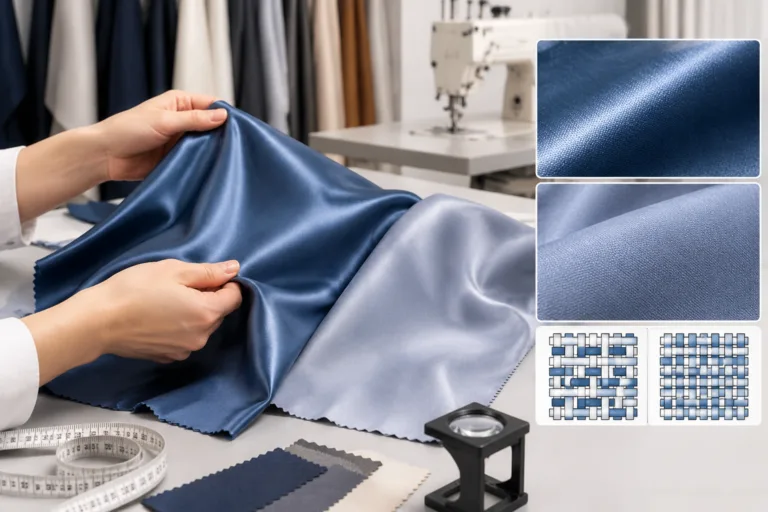
Begin by asking, “What material behavior is this illustration assuming?” Weight, bending, thickness, stretch, and recovery can all affect pleats, drape, volume, edge shape, and the appearance of seams. These variables are more useful review prompts than a fiber name or fabric weight considered alone. Similar-looking materials may produce different results in the finished garment.
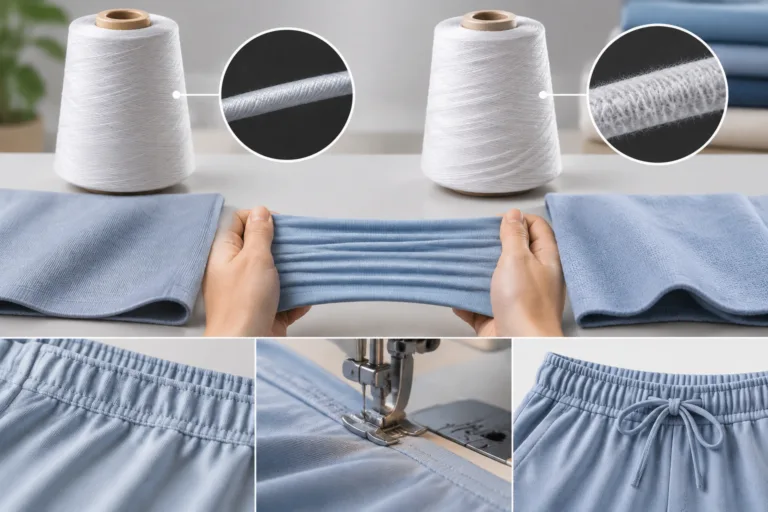
For a lightweight knit shown in close shaping, ask whether the intended appearance depends on stretch, recovery, support, or a combination of them. Then identify the observation that would test that assumption. A material review might compare the garment area during movement, after shaping, or after a representative construction step. The illustration communicates the desired effect, but it does not establish how the material will respond.
For a structured or layered design, question the combined effect of stiffness, thickness, lining, and interlining. Ask whether these layers could change the illustrated silhouette, create buildup at a seam, or alter the way a fold opens. The purpose is not to reject a visual idea because it is complex. It is to identify which material and construction choices carry the idea and need attention first.
Care is another combination question. Review the main fabric, lining, support materials, closures, and decoration together against the intended care route. One component that appears durable does not establish whole-garment care performance. Record any care assumption that could change the choice of decoration, support, finish, or material combination.
Small samples are useful when the illustration depends on a specific effect. Consider a pleat, drape, seam junction, closure, edge finish, or embellished area. For each sample, record three things:
- Illustration assumption: what the visual appears to require.
- Observation needed: what the material or construction sample should reveal.
- Decision affected: which silhouette, panel, support, finish, or care choice would change if the assumption fails.
This keeps a material-aware fashion illustration review practical. It also prevents a visual impression from becoming an unsupported claim about compatibility, durability, or finished performance.

How Should a Critique Turn Observations into Development Decisions?
Once the material and construction questions are visible, sort the comments by consequence. Useful groups include concept, visual communication, function, material, construction, and evidence gaps. Give earlier attention to issues that could change the silhouette, movement, wearer use, material choice, or assembly sequence. Minor color or rendering refinements can wait when a larger assumption remains unresolved.
For each significant comment, record the observation, concern, resolving question, next check, and qualitative decision threshold. For example, “the volume may not hold as drawn” is an observation or concern, not a production specification. The follow-up might ask which material behavior supports the volume and what sample would show whether the intended shape remains convincing.
A lightweight knit in a close-fitting illustrated design provides one useful conditional review. Ask whether the appearance depends on stretch and recovery, then compare that assumption with an appropriate material and movement check. If the material behaves differently from the illustration’s implied result, the next decision could involve a changed silhouette, another support approach, or a closer fit review. The review should document the changed assumption rather than label the original illustration simply right or wrong.
A layered design with prominent pleats or structured volume creates a different question. Ask whether thickness, bending, lining, and seam buildup support the illustrated shape. A representative material or construction sample may suggest a different pleat depth, panel arrangement, or support choice. That outcome is a development decision based on observed conditions, not proof that the original drawing was impossible.
A concise decision record can use this sequence:
| Record | Question to ask | Possible next action |
|---|---|---|
| Observation | What is actually visible in the illustration? | Describe the line, volume, opening, surface, or material effect without adding an assumption. |
| Concern | What garment consequence might follow? | Identify a possible effect on movement, support, care, material choice, or assembly. |
| Evidence gap | What does the image leave unresolved? | Request another view, pattern review, movement check, material observation, or construction sample. |
| Decision | What would change if the check does not support the assumption? | Record whether to revise the silhouette, detail, material combination, or development sequence. |
Keep preferences separate from development problems. “I would choose another color” may be a preference unless it conflicts with a stated design objective or use context. “The focal detail is hidden by the main volume” is a review concern because it can conflict with the intended visual message. Both comments can be recorded, but they should not carry the same priority.
End the review by separating confirmed observations, assumptions, unresolved questions, and responsibilities for the next check. Apparel Wiki provides educational guidance; it has not performed the sample, fitting, movement review, or material evaluation. The record should make that boundary clear.

Turn Critique Questions into a Clear Next Step
A useful critique moves in sequence: clarify intent, inspect visual hierarchy, ask what the garment must do, question material behavior, review construction implications, and identify the evidence still missing. For each major feature, write one question about design intent, one about garment consequence, and one about the evidence needed to support the decision.
As the next educational step, compare the illustration with available specifications, candidate-material observations, pattern or sample information, and the applicable evaluation method. Document the assumptions beside those references. Treat the image as a clear statement of intended design, not as final proof of fit, material behavior, construction feasibility, or finished performance.
Frequently Asked Questions
Can a digital fashion illustration prove that a garment will fit?
No. It can communicate intended proportions, silhouette, and detail placement, but it cannot by itself prove dynamic fit. Pattern review, fitting, movement checks, or a representative sample may be needed to examine the unresolved interactions.
Which questions should I ask about fabric when reviewing a digital apparel illustration?
Ask what weight, bending, thickness, stretch, and recovery the design appears to assume. Then ask whether lining, support, decoration, and the intended care route change that assumption. Use a suitable material observation or sample where the visual effect depends on those variables.
How can I critique an illustration without focusing only on drawing quality?
Start with the design objective and intended wearer. Ask what the viewer should notice, which garment features carry that message, and whether the visible choices support the use context. Rendering polish matters less when the underlying design intent or garment consequence remains unclear.
When should an illustration review lead to a material or construction sample?
Use a sample when a decision depends on pleat behavior, drape, volume, seam buildup, closure operation, edge finish, lining, support, or decoration. The sample should answer a defined question and identify which design decision would change if the result differs from the illustration’s assumption.
How do I separate a design preference from a development problem?
Connect the comment to the stated objective, wearer, occasion, or use context. A personal color preference may not affect development. A detail that obscures the focal point, limits intended movement, or depends on unresolved material behavior deserves a documented development question.