

Effective cutting room layout implementation is a managed transition from an existing arrangement to a working layout. It is not simply a floor plan or a decision to move tables and machines. Begin by documenting the current state, then identify material and information-flow constraints, compare alternatives against the actual product mix, test one controlled change, and revise the method before wider use. Apparel Wiki’s Sponsor page explains the site’s editorial independence; this guide likewise presents decision criteria rather than a factory blueprint.
A workable plan considers the connected route through cutting, spreading, marker handling, piece identification, bundling, inspection, storage, and downstream handoffs where those activities exist. The objective might be less unnecessary movement, stronger fabric identification, clearer status control, or support for a changed product mix. Those objectives can conflict, so the rollout should make trade-offs visible and use site evidence to decide what to retain.
Plan the cutting room layout implementation
Set the implementation objective in operational terms before drawing an alternative. “Improve efficiency” is too broad to guide a pilot. A more useful objective identifies the problem to observe, such as repeated backtracking, mixed-status materials, unclear handoffs, or difficulty supporting frequent style changes. One change may improve visibility while adding handling elsewhere, so avoid promising that every objective will improve at the same time.
Establish the baseline before proposing changes. Record the present sequence, the people and equipment involved, temporary storage locations, information points, recurring interruptions, and known quality or working-condition concerns. Include upstream preparation and downstream activities that affect the cutting area. Bundling, inspection, sewing, or packing may create requirements for staging and handoff clarity even when those operations sit outside the room.
Separate fixed constraints from changeable choices. Building access, utilities, equipment dimensions, available staging space, staffing, product mix, order variability, and site requirements may limit the alternatives. Safety, access, and ergonomic requirements need confirmation against the facility and applicable local authority or occupational-safety source. Do not insert assumed dimensions or universal rules into a plan without site-specific confirmation.
A cutting room layout plan should therefore identify the current state, objective, constraints, proposed alternatives, pilot boundaries, responsible owners, status controls, feedback route, and review method. The rollout logic is straightforward: observe and map, compare options, pilot, gather feedback, revise the standard, and expand only when the arrangement is understood and controlled. Treat standard work as a revisable method that absorbs operator feedback, tool issues, and ergonomic observations.
Map the current cutting-room flow and constraints
Map what actually happens before moving equipment. Start with material arrival or storage and follow the route through inspection, relaxation or preparation where applicable, spreading, marker or bundle control, cutting, piece identification, temporary staging, and handoff. Mark optional steps as optional. Product category, material, equipment, and facility practice can change the route, so a sample process should not become a universal sequence.
Make a second map for information. Record where work orders, marker versions, size or color identification, bundle tickets, defect decisions, and change instructions enter and leave the process. A short physical route can still perform poorly if workers cannot tell which material is approved, which marker version applies, or who owns an exception. Mark every handoff where unclear ownership could create waiting, rework, or an identification error.
Inspect the variables that shape the layout decision. Fabric width, shade or color-lot separation, shrinkage information, surface defects, roll handling, order size, style-change frequency, cutting technology, and work-in-process staging can all affect the preferred arrangement. Pre-cut checks should be confirmed against the applicable internal quality procedure or authoritative textile and apparel process source. A sample check does not automatically represent every later batch.
Use a compact diagnostic sequence:
- Walk the route with the people who perform the work and mark material movement separately from information movement.
- Record congestion, repeated backtracking, blocked access, mixed-status materials, unclear queues, interruptions, and quality risks.
- Classify each finding as a confirmed observation, a working assumption, or an issue requiring measurement.
- Trace each finding to the affected handoff, control point, product condition, or staging area.
- Compare alternatives qualitatively before claiming any time, distance, space, or productivity change.
A simple movement record or before-and-after sketch can expose unnecessary travel and hidden queues, but it does not prove savings by itself. Any quantified comparison requires a documented baseline, a repeatable observation method, and comparable work conditions. The purpose of this stage is to reveal what the layout must control, not to make an attractive diagram appear conclusive.
Compare layout options before choosing a pilot
Compare options by the route they create, the clarity and number of handoffs, temporary staging, status visibility, handling demands, and disruption required for a test. An implementation-ready option is more than a drawing. It names owners, material status points, access requirements, temporary controls, training topics, and the evidence that will determine whether the arrangement is retained or revised.
Use the following table as a decision aid. It does not prescribe one arrangement; the initial response may change when building constraints, staffing, equipment, or product mix changes.
| Observable input | Likely implication | Initial layout response | Variables that could change the choice |
|---|---|---|---|
| Long or repeated material travel | More handling and greater exposure to waiting or status confusion | Test a shorter, clearly marked route between adjacent process points | Roll weight, equipment access, room shape, and downstream demand |
| Mixed order sizes | Large orders may dominate staging while smaller orders become difficult to track | Separate status or staging areas by identifiable work condition | Available space, queue rules, order priority, and bundle method |
| Frequent style or color changes | Higher risk of instruction, marker, or material mix-ups | Test visible version and status controls at the relevant handoffs | Change frequency, labeling practice, lot separation, and staffing |
| Limited staging | Temporary materials may block routes or conceal work-in-process | Define a bounded staging method and remove obsolete material promptly | Order variability, collection frequency, access, and storage capacity |
| Shared equipment | Queues may form around one resource even when other movement is short | Map the queue and test clearer scheduling or positioning controls | Equipment capability, maintenance, product mix, and shift pattern |
| Downstream handoff delays | Cut pieces may accumulate or lose clear ownership | Make the handoff point, status, and receiving responsibility explicit | Receiving-team capacity, bundle size, inspection timing, and transport route |
Rank options across four questions: does the route support material flow, does the arrangement protect information and identification, can the facility implement it, and can the change be tested without disproportionate disruption? Keep safety, access, and reasonable working conditions as evaluation boundaries rather than trading them for apparent speed or density.
Choose a pilot that is limited enough to contain disruption but representative enough to expose the conditions driving the layout problem. Selecting only the easiest order can hide issues caused by frequent changes, difficult materials, shared equipment, or downstream congestion. Efficiency percentages from different labor or loss definitions should not be ranked directly; define the input and output before using such measures.
Pilot the change and roll it out with standard work
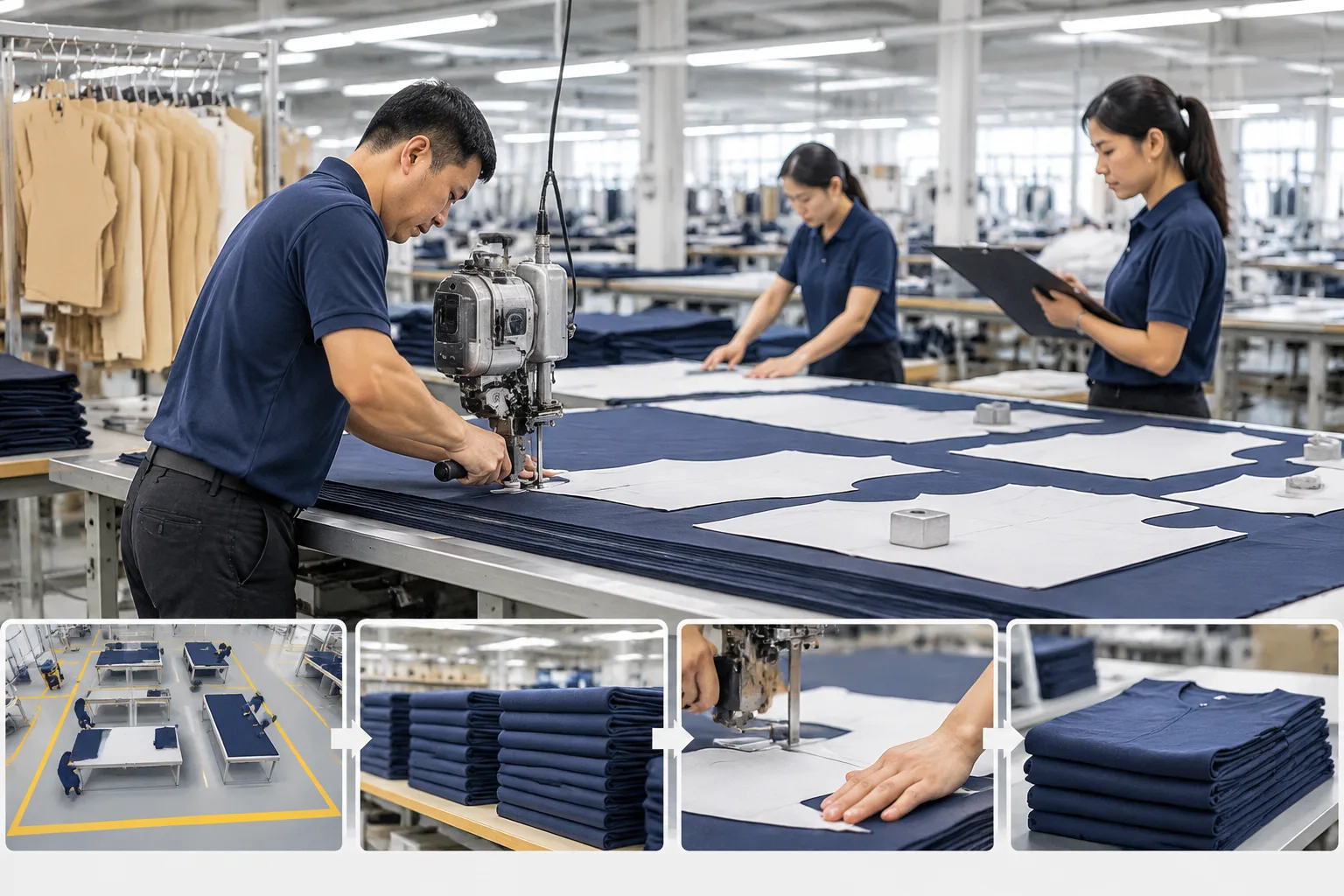
A selected layout becomes an implementation plan only when the proposed arrangement can be tested under controlled conditions. Before moving equipment or materials, document the temporary positions, access routes, status labels, responsible owners, and training topics. Confirm how the pilot will pause or revert if identification errors, blocked access, quality risks, or other serious problems appear.
Brief operators and adjacent teams before the change begins. Explain what is being tested, why the change matters, which controls must remain unchanged, and where people should report problems. Include preparation, spreading, cutting, bundling, inspection, and receiving teams where their work or handoffs may be affected. A cutting room layout rollout can appear successful locally while creating waiting or confusion in another operation.
Write the pilot standard around observable work rather than a floor plan alone. It should identify where material enters, how fabric or bundle status is shown, what information travels with each handoff, and who can authorize an exception. It should also describe what happens when a marker version changes, material is disputed, a queue is full, or equipment is unavailable. The exact controls depend on the product, tools, workforce, and facility.
During the pilot, log deviations and workarounds as they occur. Record congestion, repeated backtracking, unclear ownership, identification mistakes, tool problems, and operator-reported access or ergonomic concerns. Feedback is an implementation control, not proof of a guaranteed productivity or ergonomic improvement. It shows where the proposed method does not match actual work.
Review the observations with affected operators and revise the standard before wider adoption. Stable work methods make changes easier to compare, but stability does not mean preserving an impractical instruction. The revised method should reflect real tool differences, product variation, and the information required at each handoff. Expand in stages only when material identification, flow, quality controls, and downstream receiving remain workable under relevant product conditions. Keep unresolved risks visible instead of treating the rollout as complete.
Measure whether the new layout is working
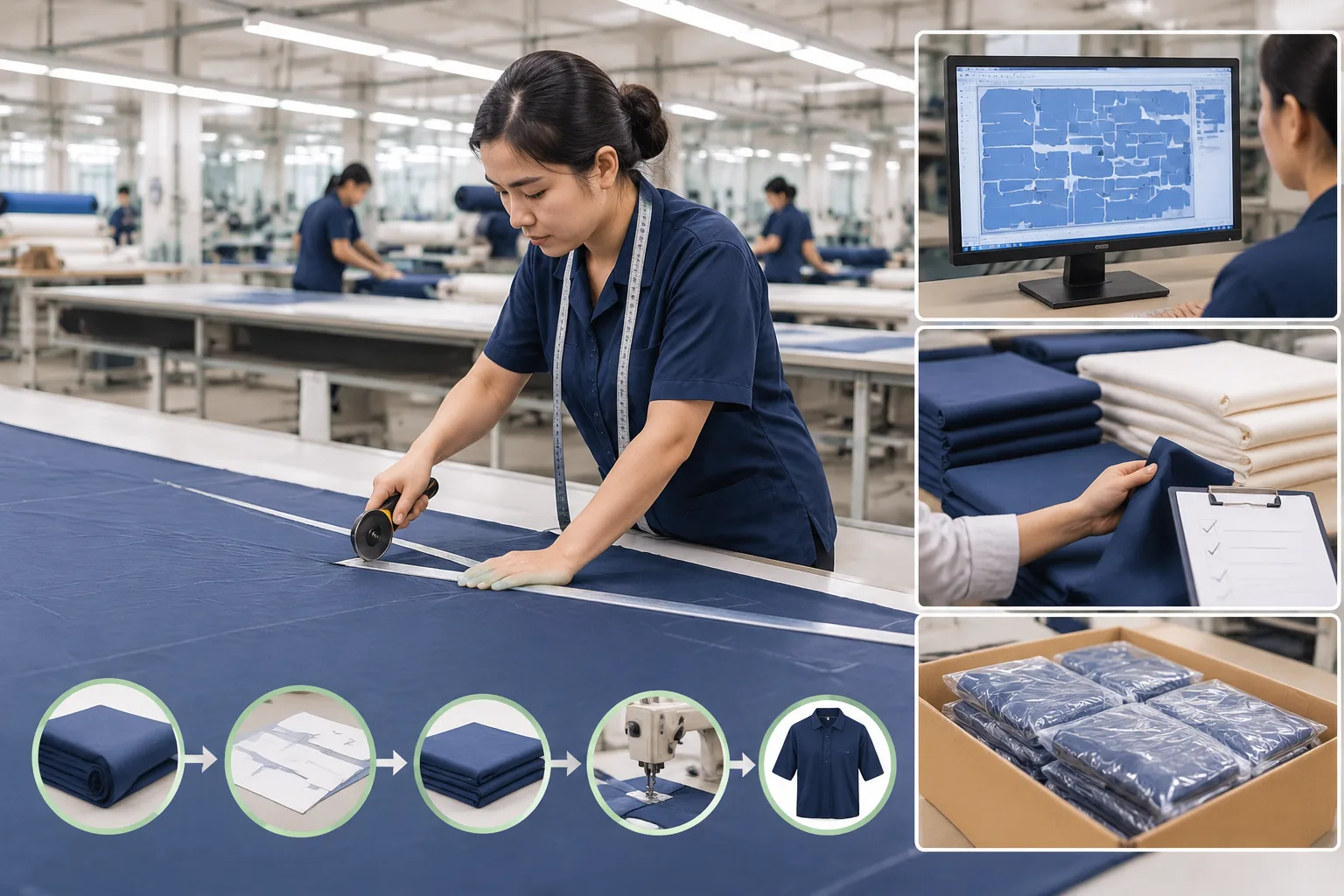
Post-pilot review should answer a practical question: should the layout be retained, revised, or stopped? Choose a small set of measures before comparing results. Useful observations may include material travel or waiting, queue and handoff problems, identification errors, cutting rework, first-pass inspection results, damaged or disputed pieces, and operator-reported obstacles. These indicators describe different aspects of performance and should not be collapsed into one unsupported score.
Define the counting rule and denominator for every measure. For example, an identification-error count needs a stated unit: an order, bundle, piece, or recorded event. A waiting observation also needs a defined start and end point. Efficiency comparisons require clear definitions of standard time and actual input time. Percentages based on different treatment of training, downtime, indirect labor, overtime, or rework cannot be ranked directly.
Keep first-pass results separate from final results after rework. First-pass yield describes the portion accepted at the first inspection, while a final pass rate can include pieces corrected after an earlier failure. Review first-pass results with rework quantity and defect type where available. Otherwise, a satisfactory final result may conceal additional handling, delay, or process loss.
Record the conditions surrounding each observation. Style, fabric, order complexity, staffing, interruptions, training status, equipment condition, and product mix can all affect the result. A layout should not be blamed for variation caused by a different material or an unavailable tool. Comparable work and repeatable observation matter more than a single favorable shift.
Review trade-offs as well as apparent gains. A change may shorten one route while moving congestion to storage, bundling, sewing, inspection, or packing. It may also create extra handling, hidden work-in-process, access concerns, fatigue, or new identification risks. Simple output counts will not reveal every one of these effects.
Set a review cadence appropriate to the pilot and its operating conditions. At each review, compare the defined measures with the recorded causes and operator feedback. Then retain, revise, or stop the change, update the standard, and communicate the decision. Measurement should support learning and reasonable working conditions, not justify excessive pace or conceal unresolved risks.
Keep the layout under review
Prepare a one-page cutting room implementation checklist with the current-state map, selected option, fixed constraints, pilot conditions, owners, status controls, measures, open risks, and revision date. Compare the proposed layout with the mapped material and information flow, then confirm the relevant fabric, identification, quality, facility, and safety requirements for the operation and jurisdiction. A workable layout is an iterative method that remains open to evidence and operator feedback, not a one-time floor-plan exercise.
Frequently Asked Questions
What should be documented before changing a cutting room layout?
Document the current material and information flow, people and equipment involved, temporary storage, handoffs, interruptions, known quality concerns, fixed constraints, and the objective of the change. Also record assumptions that still require measurement or site-specific confirmation.
How can a cutting room layout be tested without disrupting the whole operation?
Use a bounded pilot with temporary positions, defined status controls, named owners, briefed teams, and clear pause or reversion conditions. Choose work representative enough to expose the layout problem, while limiting the number of products or areas affected.
Which fabric and material-control issues can affect a cutting room layout?
Fabric width, shade or color lot, shrinkage information, surface defects, roll handling, order size, and material status can affect the route and controls. Confirm which checks apply to the material and process; a sample check does not automatically represent every later batch.
How do you compare two cutting room layout options?
Compare their material routes, handoff clarity, staging needs, status visibility, handling demands, access, feasibility, and disruption. Treat safety and reasonable working conditions as boundaries. The better option depends on the actual product mix, equipment, staffing, and facility.
Which measures show whether a new cutting room layout is working?
Use defined observations such as waiting, queues, handoff issues, identification errors, cutting rework, first-pass inspection results, damaged pieces, and operator-reported obstacles. Record the denominator, counting rule, work conditions, and defect types before comparing results.
Why should operator feedback be included in cutting room layout implementation?
Operators encounter workarounds, tool limitations, access problems, and status ambiguities that a drawing may miss. Their feedback helps revise standard work so it reflects actual process variation. It is evidence for improvement, not a guarantee of a particular performance result.