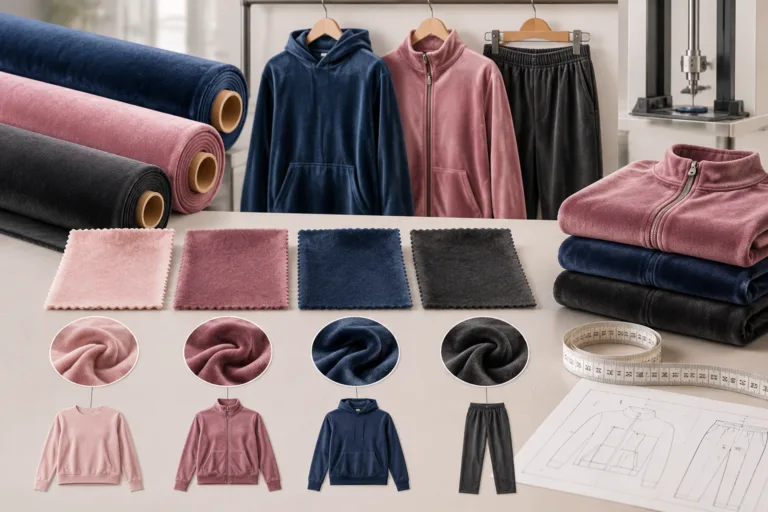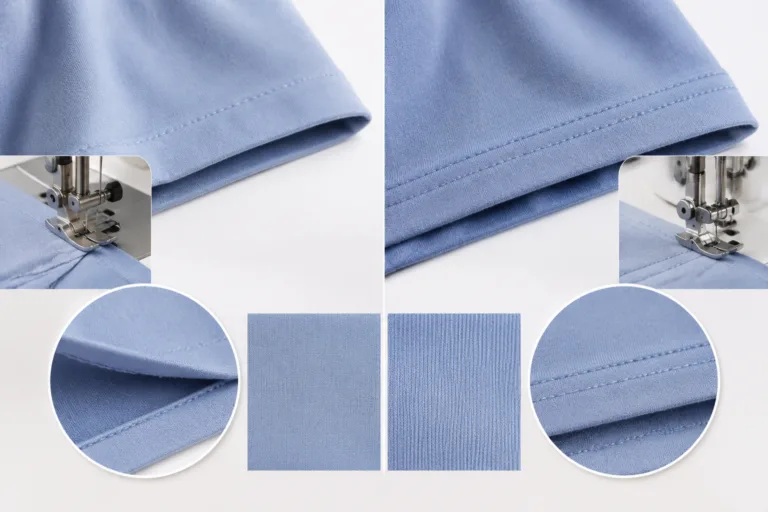
Sponsor relationships do not determine Apparel Wiki’s editorial guidance. For an AI fiber-identification pilot, the required data are more than a folder of fabric photographs: each record should connect an identifiable apparel material or sample with a defined fiber label, source and handling context, image or measurement inputs, and enough documentation to evaluate the result.
These AI fiber identification data requirements are a preparation framework, not a universal dataset specification. The right fields depend on the intended use, sample format, capture method, and consequence of an incorrect or uncertain decision. This article treats preparation advice separately from validated test evidence, laboratory findings, and model performance claims.
What AI Fiber Identification Data Requirements Actually Include
A pilot-ready record begins with a material whose identity and boundaries are clear enough to describe. It may represent a fabric swatch, yarn, garment panel, or another defined apparel material. The record then needs a prediction target, such as a single fiber category, a blend, an unknown or insufficient-evidence class, or an out-of-scope material.
That distinction matters. If uncertain samples are forced into a confident fiber label, the dataset can make unresolved descriptions appear reliable. An unknown or review-needed class preserves uncertainty and lets the pilot measure how often the available input is insufficient for the stated task.
Record the original source, handling context, and the image or measurement input that the pilot will use. A garment-level photograph, an exposed-fabric image, and a yarn-level measurement are different input types. A textile characterization dataset such as NIST’s textile spectroscopy reference also illustrates why measured inputs, reference labels, and validation metadata need to remain connected when a pilot uses spectroscopic data.
Fiber identity should remain separate from adjacent attributes. Yarn linear density, fabric structure, color, finish, surface texture, and garment style may help describe the sample or create visual cues, but none should automatically be treated as proof of fiber composition. A pilot scope should state which target is included: fiber content, blend classification, appearance-based grouping, or another task. It should also state what is excluded.
Build a Label and Metadata Schema Before Collecting Samples
Define the record structure before collecting a large set of samples. A stable sample ID should remain separate from the target label, source description, garment or textile context, and reviewer notes. That separation allows a label to be corrected without overwriting the original description or losing the history of the decision.
| Record area | What to preserve |
|---|---|
| Sample identity | Stable sample ID, material or garment reference, and relationship to any related cut, panel, lot, or repeated capture |
| Prediction target | Intended fiber category, blend, unknown, review-needed state, or out-of-scope classification |
| Label provenance | Whether the description comes from a supplier declaration, technical record, analytical result, or unresolved source statement |
| Material context | Construction, color, finish, lining, trim, coating, contamination status, and other descriptors relevant to the pilot |
| Capture record | Device or method, date or session, lighting or environmental notes, background, orientation, handling state, and operator notes |
| Exclusions and review | Missing information, contradictory records, visible mixed materials, and the reason a sample requires review or exclusion |
Label provenance should communicate evidence quality without pretending that every source is equivalent. A supplier declaration, an existing technical record, an analytical result, and an unresolved description may all be useful, but they support different levels of confidence. Keep the source type and reviewer disposition visible rather than reducing them to one polished label.
Include blend, mixed-material, coating, finish, lining, trim, and contamination fields when they can affect the pilot question. Preserve original terminology and units for supporting yarn or textile details. Direct linear-density systems such as tex, denier, and dtex should not be compared with indirect count systems as though their values were interchangeable. Preserve the original system instead of silently converting or discarding it.
Before collection expands, check for duplicate IDs, missing targets, contradictory records, inconsistent spelling, and answer-bearing information in filenames or notes. Keeping the target out of incidental file names and uncontrolled notes is a practical way to reduce the risk that the model receives the answer through a shortcut rather than through the intended material input.
Capture Samples Consistently and Document Their Provenance
Capture conditions can become an unintended part of the prediction problem. Plan a capture record beside every image or measurement, including the sample ID, date or session, device or method, lighting or environmental notes, background, orientation, handling state, and operator observations when those details could affect interpretation.
Choose samples that represent the conditions the pilot is meant to face. Relevant variation may include color, texture, construction, supplier or source, wear, finishing, and presentation. The collection should not quietly associate one fiber label with one background, image session, supplier, or garment style. Those features can become convenient shortcuts even when they are not the intended evidence of fiber identity.
Retain original files and record any cropping, resizing, enhancement, or augmentation. This makes preprocessing visible and allows different preparation choices to be compared. It also helps distinguish a limitation in the original input from an effect introduced during cleanup. No particular camera, resolution, lighting arrangement, or augmentation method should be treated as universally suitable without method-specific evidence.
Separate garment-level images from exposed-fabric or yarn-level inputs in the schema. Record whether trims, linings, coatings, mixed panels, or other visible materials are present. If the visible surface does not match the target label, mark the record for review or define it as excluded. A photograph of a complete garment may describe appearance and construction while providing an ambiguous view of the material the pilot is meant to identify.
Provenance also includes the right to use the input. Document where images and samples came from, whether use is permitted, and whether they contain personal information, unpublished design details, or confidential product information. Apparel Wiki’s Privacy Policy is a site reference, not a substitute for reviewing the policies and permissions that govern a particular pilot. Minimize sensitive material that is not needed for the stated identification task.
Design a Bounded Pilot Split and Evaluation Plan
Start by writing the pilot question before collecting results. State the material categories the system should classify, the input it will receive, the materials outside scope, and the decision a result would support. A garment image, an exposed fabric view, and a measurement record do not represent the same identification task.
Define the target labels and uncertainty behavior in advance. A result may correspond to a target class, a confused class, a blend or mixed-material condition, an unknown or abstention state, or unusable input. This evaluation matrix gives uncertainty a visible place instead of forcing every record into a confident fiber label.
Keep records used for adjustment or model development separate from records reserved for evaluation. Group related cuts, repeated captures, garments, lots, supplier records, or source files when appropriate. Otherwise, near-duplicate records may appear on both sides of the split and make the pilot look more representative than the real use case.
Document class coverage, missing fields, capture conditions, and source diversity. Then inspect whether errors cluster around color, construction, finish, supplier, image session, or label quality. An error associated with a particular background or source record does not establish that the fiber itself caused the result.
A simple human-recording procedure or non-AI baseline can be useful when it matches the pilot question and is documented consistently. The comparison should clarify the tested workflow, not create an unsupported performance claim. A pilot result is evidence about the selected dataset and method. It is not proof of universal fiber-identification performance, certification, or production suitability.

Review Errors, Rights, and Readiness Before Expanding the Pilot
After the first pass, create an error-review log for uncertain and misclassified records. Link each result to the original sample, target-label source, image or measurement record, preprocessing history, and reviewer disposition. This preserves the difference between correcting a record and changing the underlying evidence.
Classify failures before collecting more data. Useful review categories include label ambiguity, a blend or hidden construction, insufficient or inconsistent input, a capture artifact, an out-of-scope material, and model confusion. The category points toward a different response: revise the label, improve the capture record, narrow the task, or investigate a technical method.
When adding records, ask whether they broaden the intended apparel conditions or merely duplicate an existing source, session, color, or construction. Record why the addition changes coverage or answers a defined question. More records do not automatically provide more useful evidence when they repeat the same incidental cues.
Reassess rights, confidentiality, access controls, retention, and vendor-processing terms whenever data move beyond the original workflow. Inputs may contain unpublished design details, personal information, or material subject to permission limits. Treat these as review questions for the responsible organization and jurisdiction. Do not assume that AI processing removes ownership or permission concerns.
Set a written stop or review point based on evidence quality and intended use rather than an arbitrary performance target. If a fiber-identification result could affect a consequential material decision, compare the pilot specification with an appropriate validated technical or laboratory method. The pilot can identify gaps for investigation, but it should not be presented as final proof.
Apparel Wiki provides independent educational guidance. It has not conducted this pilot, measured a result, approved a method, or provided laboratory or manufacturing services. Preserve unknowns, connect important claims to accessible evidence, and keep generated summaries from inventing standards, results, or expert review.
Use the Pilot Record as the Next Educational Checkpoint
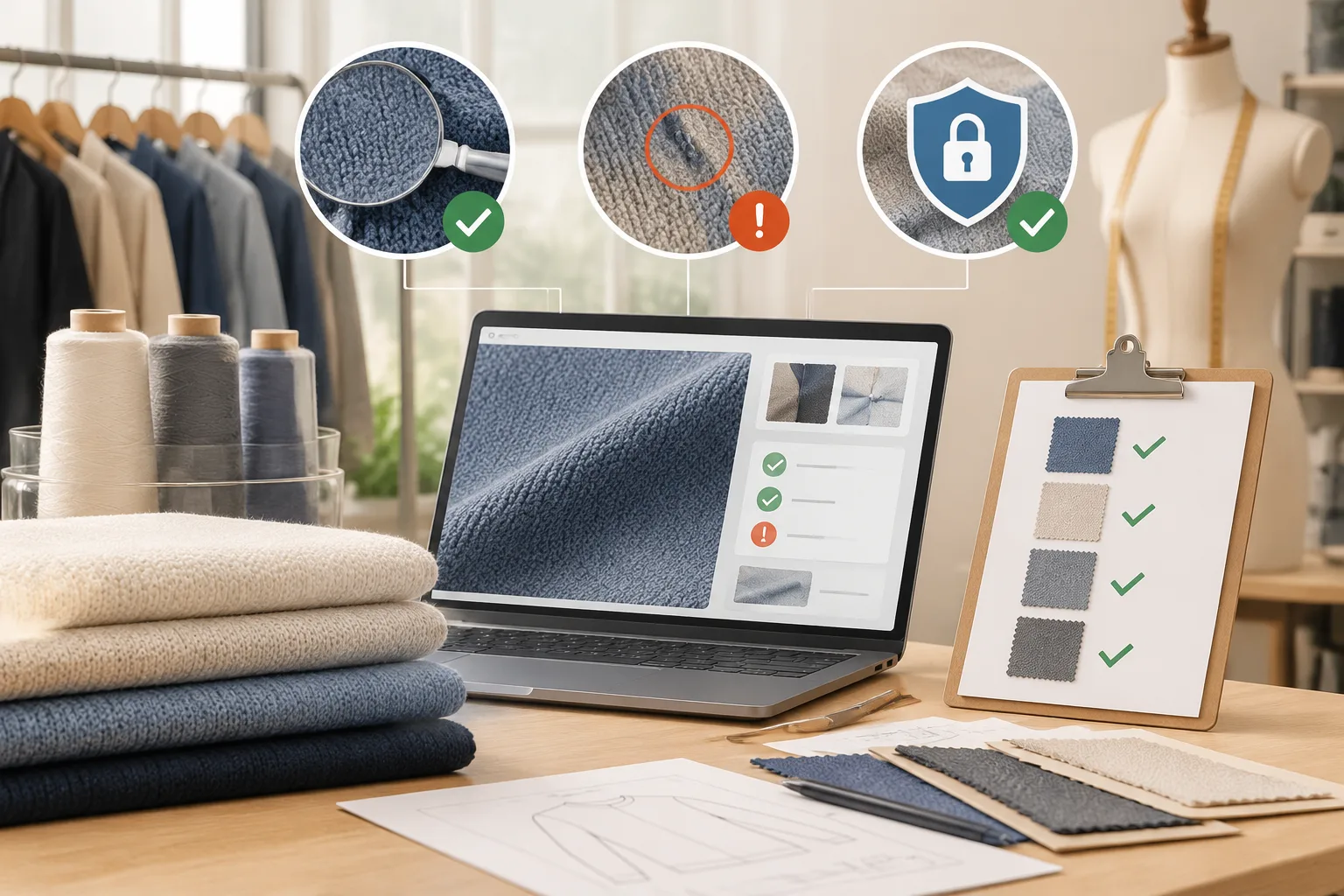
Before expanding collection, complete one sample-record template and one pilot-scope statement. Keep the target, evidence source, unknown state, out-of-scope condition, capture record, and evaluation grouping visible. Then compare the documented specification with the applicable technical method, rights policy, and evaluation design for your context. The useful outcome is a reviewable plan, not a promise that the pilot can identify every fiber.
Frequently Asked Questions
What is the minimum record to create for an apparel sample in an AI fiber-identification pilot?
Record a stable sample ID, intended target label, label provenance, material and garment context, capture or measurement details, exclusions, and review status. Retain the original input and note uncertainty rather than replacing an unresolved description with a confident label.
Should blended and unknown materials receive their own labels?
They should have distinct states when the pilot may encounter them or when they cannot be reliably assigned to a single-fiber class. Separating blend, unknown, review-needed, and out-of-scope records prevents the dataset from hiding uncertainty inside an incorrect class.
How can a pilot avoid mistaking color, background, or supplier identity for fiber composition?
Document and vary relevant capture conditions, separate related source records during evaluation, and inspect errors by color, background, supplier, session, and construction. Keep these descriptors as metadata rather than treating them as evidence of fiber identity.
Should repeated images of the same garment be placed in both development and evaluation data?
Generally, related images should be grouped so they do not cross the development and evaluation boundary without a clear reason. Repeated views can otherwise make the evaluation easier than the intended real-world task by exposing near-duplicate information.
When should an AI fiber-identification result be checked with a validated technical or laboratory method?
Use additional technical confirmation when the result supports a consequential material decision or when the pilot cannot resolve an important uncertainty. The appropriate method depends on the material, input, decision, and governing context, so the pilot should document the question before selecting a method.
What should be recorded when a pilot image or material sample has licensing, privacy, or confidentiality restrictions?
Record the source, permitted use, access limits, sensitive content, retention expectations, and any vendor-processing review required by the responsible organization. Minimize unnecessary personal or confidential information, and do not treat a general AI workflow as permission to reuse restricted material.