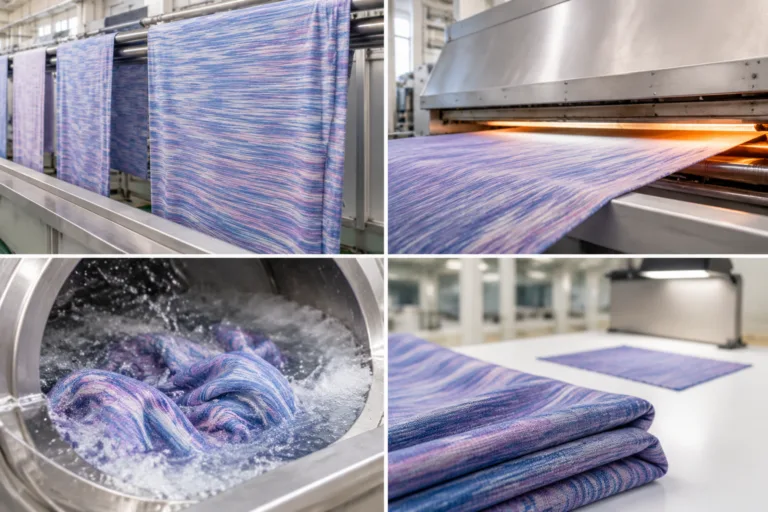
The critical space dyeing process parameters are the controllable material, color-application, handling, treatment, and evaluation conditions that shape pattern consistency, shade appearance, repeatability, and suitability for an intended product. Space dyeing creates deliberately separated or irregular color areas along a textile material. The effect is not determined by color alone: where the color is applied, when it is applied, how the material moves, and how the result is treated afterward all matter. This independent explanation from Apparel Wiki is separate from any commercial role described on its Sponsor page.
For a development or quality team, the useful question is not which setting is universally correct. It is which variables must remain consistent, which may be deliberately changed, and which require verification through a qualified technical method. The starting point is the coloration stage: fiber, yarn, fabric, or garment.
What Are the Critical Process Parameters in Space Dyeing?
Space dyeing is a method of placing color in separated, interrupted, or irregular areas along a textile material rather than producing only a continuous, even shade. The intended variation is part of the design. Uncontrolled variation, such as misplaced color or inconsistent spacing, is a process problem because it can make the approved appearance difficult to recognize or reproduce.
The process can be considered as a chain. Color may be developed at the fiber, yarn, fabric, or garment stage, followed by drying, fixation where applicable, washing, and finishing. Each stage presents a different starting condition. Coloring yarn can establish a pattern before knitting or weaving, while coloring fabric or a garment introduces the construction, panel layout, seams, and handling of that later form. No stage is inherently best; the appropriate choice depends on the intended pattern, construction, development route, and replenishment needs.
Critical parameters in space dyeing are the variables whose change can alter an approved appearance, material compatibility, handle, repeatability, or the reliability of comparison between batches. They include:
- Material and production stage: the substrate, construction, preparation, and point in the process where color is introduced.
- Color placement and repeat: the color identity, location, spacing, interruption, and degree of intended irregularity.
- Application and handling: the formulation or color reference, material path, movement, tension, speed, and equipment condition used to place color.
- Post-application treatment: drying, fixation where relevant, washing, and finishing, each considered as a separate process question.
- Evaluation: the physical reference, viewing conditions, comparison method, pattern assessment, and use-related quality checks.
These groups interact. Substrate structure and preparation can influence how an applied color develops. Material movement and tension can affect how placement is maintained. Drying or fixation can change the developing result, while washing and finishing can alter the final surface or handle. A single parameter should therefore not be treated as sufficient on its own.
Importance is project-dependent rather than a universal ranking. A parameter that is central to a narrow repeat may be less important to a deliberately broad, irregular effect. Likewise, a garment-stage decision may make seam layout important, while a yarn-stage development may require closer attention to how the yarn will later form a fabric. The specification should identify the intended appearance and the conditions needed to compare like samples.
Material Stage, Substrate, and Intended Color Pattern
Material selection begins with identifying what is being colored and at what stage. Fiber, yarn, fabric, and garment-stage coloration offer different observable inputs and create different constraints for pattern placement and handling. The stage should be recorded as a development decision, not inferred later from a finished sample.
| Coloration stage | Starting input | Initial review question | Variable that may change the choice |
|---|---|---|---|
| Fiber | Loose material before yarn formation | Can the planned color distribution support the later yarn and fabric effect? | Fiber preparation, blending, yarn design, and the intended visual repeat |
| Yarn | Continuous material that will later be knitted or woven | Will the color spacing remain suitable after the yarn becomes a construction? | Yarn structure, stitch or weave formation, tension, and repeat scale |
| Fabric | Constructed textile surface | Does the placement read correctly across the fabric width and surface? | Fabric structure, movement, panel layout, and intended garment placement |
| Garment | Assembled product with seams and panels | Is the pattern appropriate across the actual product shape? | Seam layout, handling, garment dimensions, and placement expectations |
Substrate composition, structure, surface, and preparation should be recorded before interpreting a color result. These details establish the basis for comparing samples. A change in material, construction, or preparation can make a visual difference difficult to attribute to the application process alone. When the technical mechanism has not been specifically validated, the practical control is to compare like materials and document any deliberate change.
Pattern intent also needs more than a color name. Record whether the effect should be narrow or broad, regularly repeated or irregular, sharply separated or softly transitioning, and how it should appear on the relevant yarn, panel, or finished garment. A pattern that looks appropriate on a flat fabric sample may require a different review when seams, shaping, or later assembly change the visible context. These are evaluation variables rather than proof that one construction will always produce a particular outcome.
For sampling and replenishment, the development specification should identify the coloration stage, substrate description, construction, preparation conditions, physical color reference, and pattern or spacing intent. Keeping those inputs together makes later shade comparison more meaningful. It also helps a technical team investigate whether a difference began with material selection, pattern design, application, or subsequent handling.
Color Application, Spacing, and Machine Control
Color application controls determine where color reaches the material and how the visual repeat is established. A useful specification describes observable inputs rather than relying on a general instruction such as “match the dyeing.” Record the color identity and physical reference, application position, intended spacing, material path, movement or tension, speed as a controlled variable, and relevant equipment condition.
- Color identity and reference: What shade or combination is being applied, and which physical sample represents approval?
- Application position: Where should color enter or contact the material, and how will that position be recognized during comparison?
- Spacing and repeat: What pattern interval, interruption, or irregularity is intended?
- Material path and handling: How is the material presented, moved, or supported during application?
- Equipment condition: Which setup details must be recorded so a visual difference can be investigated rather than attributed vaguely to dyeing?
The purpose of these records is to distinguish designed variation from uncontrolled drift, streaking, or misplaced color. A screen image can help communicate an idea, but it should not be the only approval reference for a physical textile. Use a physical reference, agree how it will be viewed, and retain the application arrangement and material description with the development sample.
Consider a lightweight knit intended to show a narrow color repeat. An initial arrangement may need reconsideration if the knit stretches during handling, if the construction changes, or if the desired repeat becomes broader for a different end use. The correct response is not to apply an assumed universal speed or tension. It is to compare the changed substrate or pattern intent, document the revised arrangement, and judge whether the result still matches the approved appearance.
Application controls should be reviewed together. Color formulation or concentration, placement, spacing, movement, tension, speed, and equipment setup can each become relevant when they change the visual result or comparison reliability. Exact settings and recipes belong to validated technical instructions for the material, color system, and equipment. For an educational specification, the priority is to identify what was held constant, what changed, and what visible consequence requires investigation.
Before approving a development sample, record the material stage and construction, color reference, intended repeat, application location, material path, handling conditions, equipment arrangement, and agreed viewing approach. This creates a practical record for comparing samples and for discussing a difference with technical teams without treating Apparel Wiki as a manufacturer or promising a production outcome.
Drying, Fixation, Washing, and Finishing Conditions
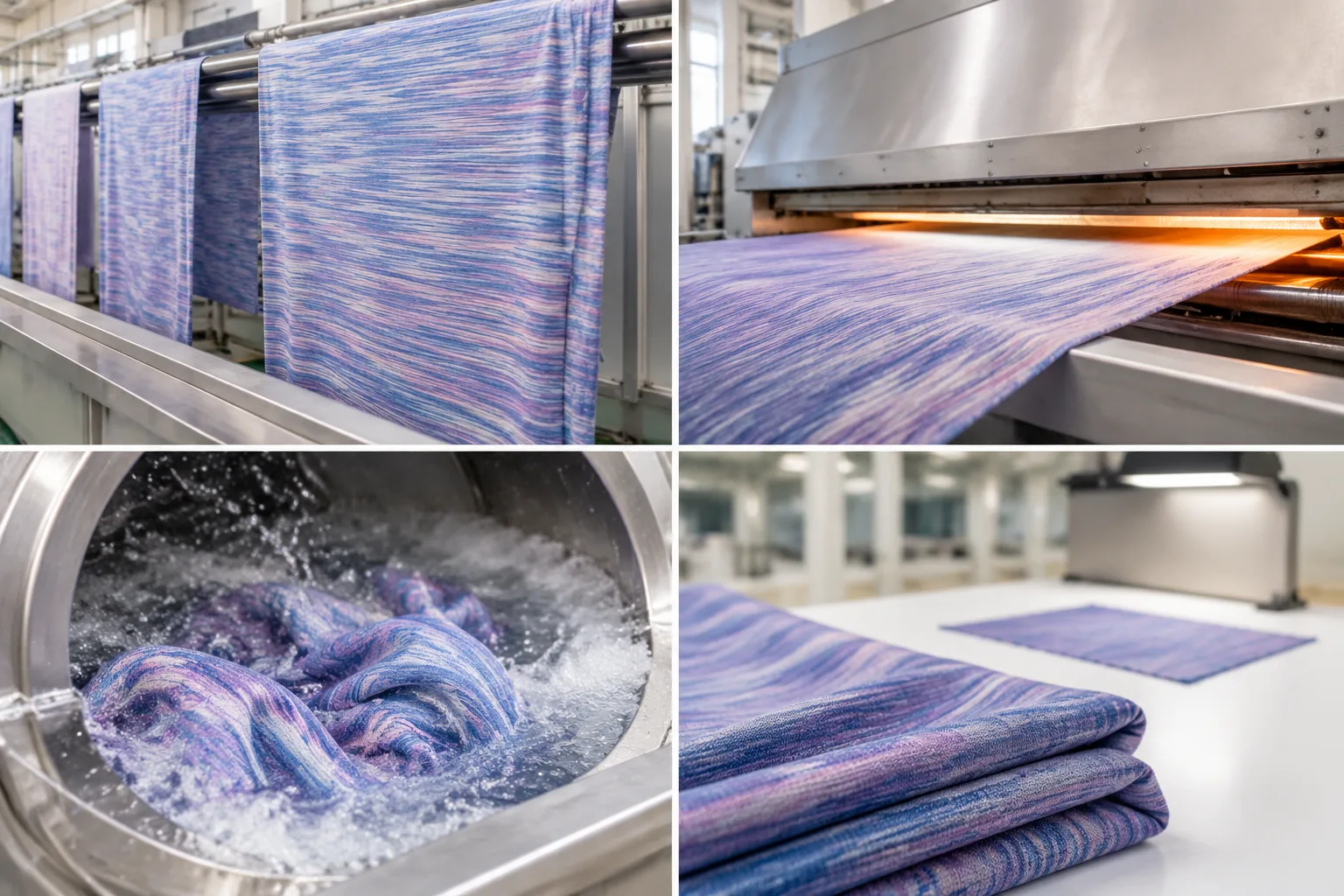
Post-application treatment is part of the space dyeing process, not a separate detail to review after appearance approval. The material can look acceptable immediately after color application and change during drying, fixation, washing, or finishing. The relevant sequence depends on the substrate, color system, equipment, and validated technical instructions.
Drying is the first post-application question. The development team should record the material state and compare the developing pattern with the approved reference after drying. Movement, moisture distribution, and handling during this stage may affect how the color areas are seen, so an intermediate appearance should not automatically become the final approval.
Fixation, where applicable to the color system, is a separate process question. It concerns how the applied color is established in the material under the applicable technical instructions. Exact conditions are not universal. They should come from instructions validated for the substrate, color system, and equipment rather than from a general space dyeing checklist.
Washing may remove residual or unfixed material and can change the visible balance between colored and uncolored areas. Compare the material before and after the relevant wash stage, recording the sequence and material condition. A change found after washing should be investigated at that stage instead of being attributed automatically to the original application.
Finishing changes how the material is presented and handled. Softness, body, surface appearance, water repellency, or wrinkle-related effects may be useful for a product, but they can involve trade-offs and may change with use or care. Compare the finish against the approved appearance and handle expectation before and after agreed care or evaluation conditions.
A useful record identifies the treatment sequence, material stage, substrate and construction, color reference, appearance at each review point, and unresolved variables. This makes it easier to distinguish an application issue from a post-treatment change. It also keeps the review educational: a process explanation does not establish a chemical recipe, production limit, durability result, or performance guarantee.
How to Evaluate Shade, Pattern Consistency, and Fastness
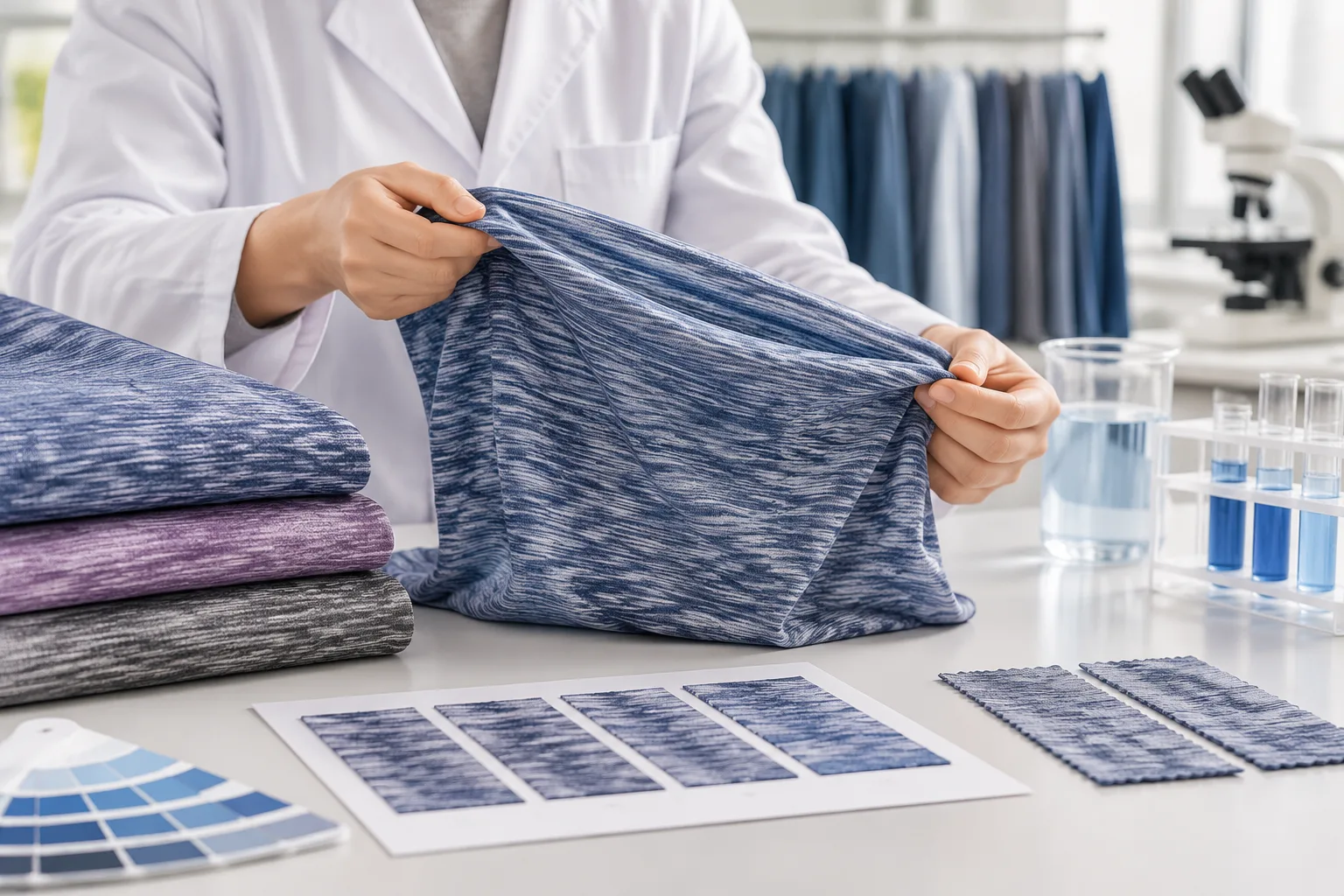
Approval should begin with a physical color reference and an agreed viewing approach. Record the illumination, comparison method, viewing conditions, and approved sample. A screen image can support communication, but it should not replace the physical reference when judging a space-dyed pattern or shade. Materials that appear close under one light may appear different under another.
Review pattern placement and shade appearance separately from fastness. Pattern review asks whether the spacing, irregularity, and location of color match the intended design. Shade review asks how the material compares with the approved reference. Fastness review concerns particular exposures, such as washing, rubbing, perspiration, or light. Color change and transfer to another material are also different observations.
| Observable input | Likely implication | Initial evaluation choice | Variable that may change the choice |
|---|---|---|---|
| Pattern repeat and spacing | The visual rhythm may differ from the approved design. | Compare the physical sample with the agreed repeat and placement reference. | Material stretch, construction, panel layout, or intended end use |
| Shade against the physical reference | The color balance may not be consistent with the approved appearance. | View the sample beside the reference under the agreed conditions. | Substrate preparation, color system, lighting, or finishing sequence |
| Appearance under agreed lighting | A close match in one setting may not remain close in another. | Repeat the documented comparison rather than relying on a display image. | Light source, viewing method, surface presentation, or material construction |
| Transfer or rubbing concern | Color may move to another surface during the relevant exposure. | Select an appropriate evaluation for the intended contact and use. | Color system, substrate, care instructions, and exposure conditions |
| End-use exposure | Visual approval alone may not address the product’s expected use. | Choose checks that reflect the garment’s likely washing, wear, or light exposure. | Care label, product construction, user behavior, and color system |
No single fastness result represents every quality attribute. A material intended for frequent washing may require a different evaluation emphasis from one judged mainly for visual pattern placement. Fiber, color system, construction, care instructions, and end use can change the appropriate review. Record the method, conditions, observations, and result so another sample can be compared on the same basis.
When investigating variation, change one documented factor at a time where practical. Compare the material stage, application arrangement, treatment sequence, and viewing conditions before assigning the difference broadly to “dyeing.” This approach helps identify whether the concern involves repeat placement, shade, post-treatment appearance, transfer, or another fit-for-use question.
A Practical Review Sequence for Space Dyeing Parameters
Build a project-specific parameter sheet before comparing samples. Record the coloration stage, substrate and construction, pattern intent, application controls, post-treatment sequence, physical reference, evaluation method, and unresolved variables. Hold agreed inputs constant when comparison requires it, and identify deliberate changes clearly. For any numerical setting, test claim, or performance requirement, check the applicable technical method or supplier instruction before treating it as a specification.
Frequently Asked Questions
What is the most important parameter in a space dyeing process?
There is no universal single most important parameter. Importance depends on the approved appearance, substrate, construction, application arrangement, post-treatment, and intended use. A parameter is critical when changing it can affect pattern placement, shade, repeatability, compatibility, or the reliability of sample comparison.
How does the stage of coloration affect a space-dyed result?
Coloration at the fiber, yarn, fabric, or garment stage creates different starting conditions for placement, handling, construction, and later comparison. No stage is inherently superior. The appropriate choice depends on the intended pattern, material structure, assembly, and how the final appearance will be evaluated.
How should a space-dyed color pattern be approved?
Use an approved physical reference, an agreed viewing approach, and a documented comparison method. Review repeat, spacing, placement, and shade separately, then compare the material after relevant drying, washing, fixation, or finishing stages. A display screenshot alone is not sufficient for final visual approval.
Why can a space-dyed fabric look different under different lights?
Lighting changes how colors and surface features are perceived. Two materials that appear close under one light may show a visible difference under another. For reproducible decisions, record the physical reference, illumination, viewing method, and approved comparison conditions.
Does one fastness result prove that a space-dyed garment is durable?
No. Washing, rubbing, perspiration, and light represent different exposures. Color change and transfer to another material are also separate observations. Select evaluations that match the garment’s use and record their methods and conditions. One result cannot establish every fastness or durability attribute.
Which space dyeing parameters should be recorded for repeat orders?
Record the coloration stage, substrate, construction, preparation, color reference, pattern and spacing intent, application location, material path, handling conditions, equipment arrangement, post-treatment sequence, and evaluation method. Also record what changed between samples and any unresolved variable that could affect comparison.