Before producing outfit styling content, decide what the content must help a particular reader understand or do. An outfit styling content brief is a concise planning document that aligns the audience, communication goal, featured garment, outfit context, styling direction, deliverables, and evaluation approach. It turns visual appeal into a deliberate communication choice.
A useful brief reduces avoidable rework before styling, photography, writing, design, or publishing begins. It also protects editorial accuracy. Apparel Wiki is an independent apparel knowledge blog, and its Sponsor page does not make sponsored material a substitute for evidence. The same principle applies here: separate confirmed product facts from editorial recommendations and illustrative styling examples.
What an outfit styling content brief should decide first
The brief should answer five questions in a deliberate order: who is the primary reader, what should the content achieve, which garment or outfit context is central, how should the styling communicate that purpose, and what will be produced and reviewed? It should also state how the result will be assessed. Without these decisions, a polished outfit can attract attention while leaving readers unsure what to notice, compare, or do next.
Separate the content objective from the outfit’s visual appeal. The objective might be to explain how a garment can be combined, inspire an outfit direction, compare visible options, introduce a product context, or guide readers toward a relevant resource. The primary reader should then be described through a decision, such as combining a featured garment, understanding proportion, or adapting an outfit to a setting. One styling concept rarely serves every apparel audience equally well.
Define the featured garment, setting, boundaries, and deliverables before selecting references, props, models, copy, or channels. Record which choices are fixed and which remain open to styling judgment. This helps contributors avoid treating a preference as a requirement or an unresolved assumption as a product fact.
- Reader: Who needs this content, and what decision should become easier?
- Objective: Is the content explaining, inspiring, comparing, introducing, or directing?
- Outfit context: What garment, use situation, setting, and boundaries shape the assignment?
- Direction: Which visual relationships, details, and messages must remain clear?
- Handoff: What formats, review responsibilities, evidence checks, and next steps are required?
A mood board is mainly a reference for atmosphere, color, texture, or visual energy. A shot list specifies planned images or views. A finished campaign plan normally covers broader execution and distribution decisions. A styling content brief sits earlier: it establishes the communication logic that those later documents must support.
Choose the audience, objective, and outfit context
Audience selection should begin with a relevant styling problem rather than a demographic label alone. A reader may need to combine a lightweight knit, understand how proportion changes an outfit, or adapt a garment for travel. That problem affects the language, garment views, styling choices, and amount of explanation required.
Next, choose the outfit context only when it changes the work. Workwear, travel, an occasion, layering, and everyday wear can require different garments, visual settings, accessory choices, or explanations. Season and climate may also matter when they change the layering logic or the reader’s intended use. Do not add context as decoration if it does not alter the content decision.
Choose one primary objective and one desired reader action. Brand awareness may aim to introduce a product or establish recognition, while a practical outfit-use objective may help a reader understand how to combine or evaluate a garment. These are different goals, even when they use similar images. Exposure, clicks, consultation, purchase, and repeat purchase are also different stages. A click is not the same as profit, and correlation alone does not establish causation.
Before production, use this short checklist:
- Identify the primary reader by the styling decision the content addresses.
- Record the outfit context, including setting, use occasion, and any relevant season or layering need.
- Name the priority garment or product context and state what is outside the assignment.
- Choose one objective and one reader action, such as understanding a combination or continuing to a relevant guide.
- Separate confirmed product facts, details that need checking, and assumptions that must remain illustrative.
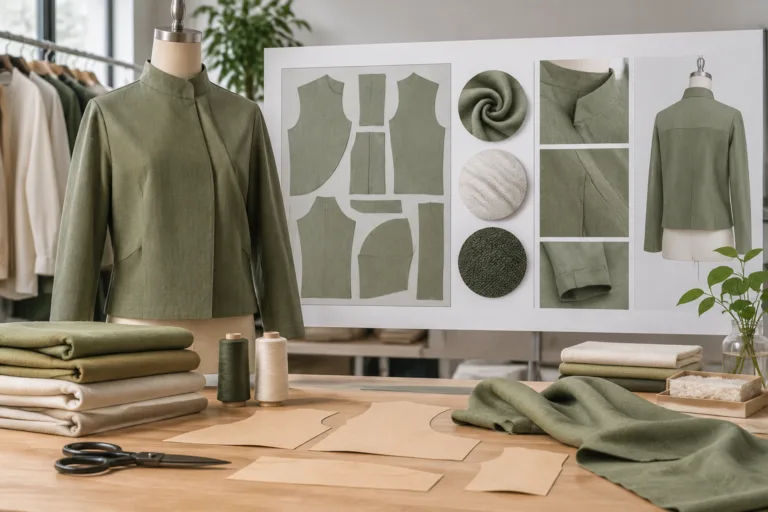
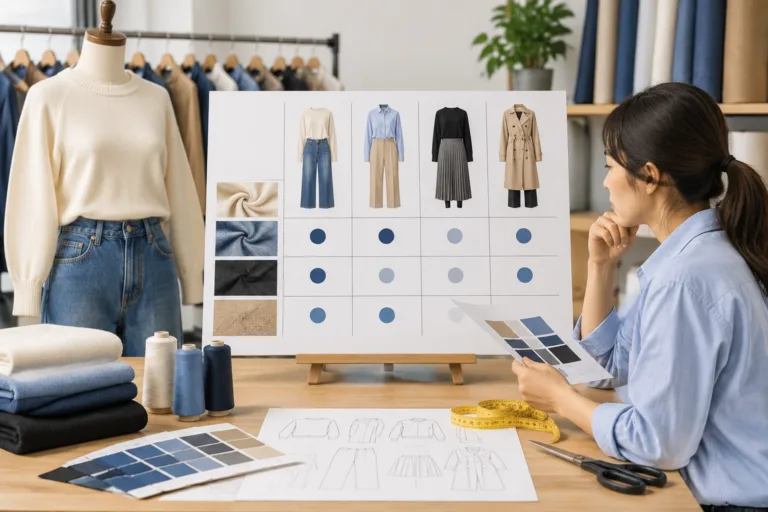
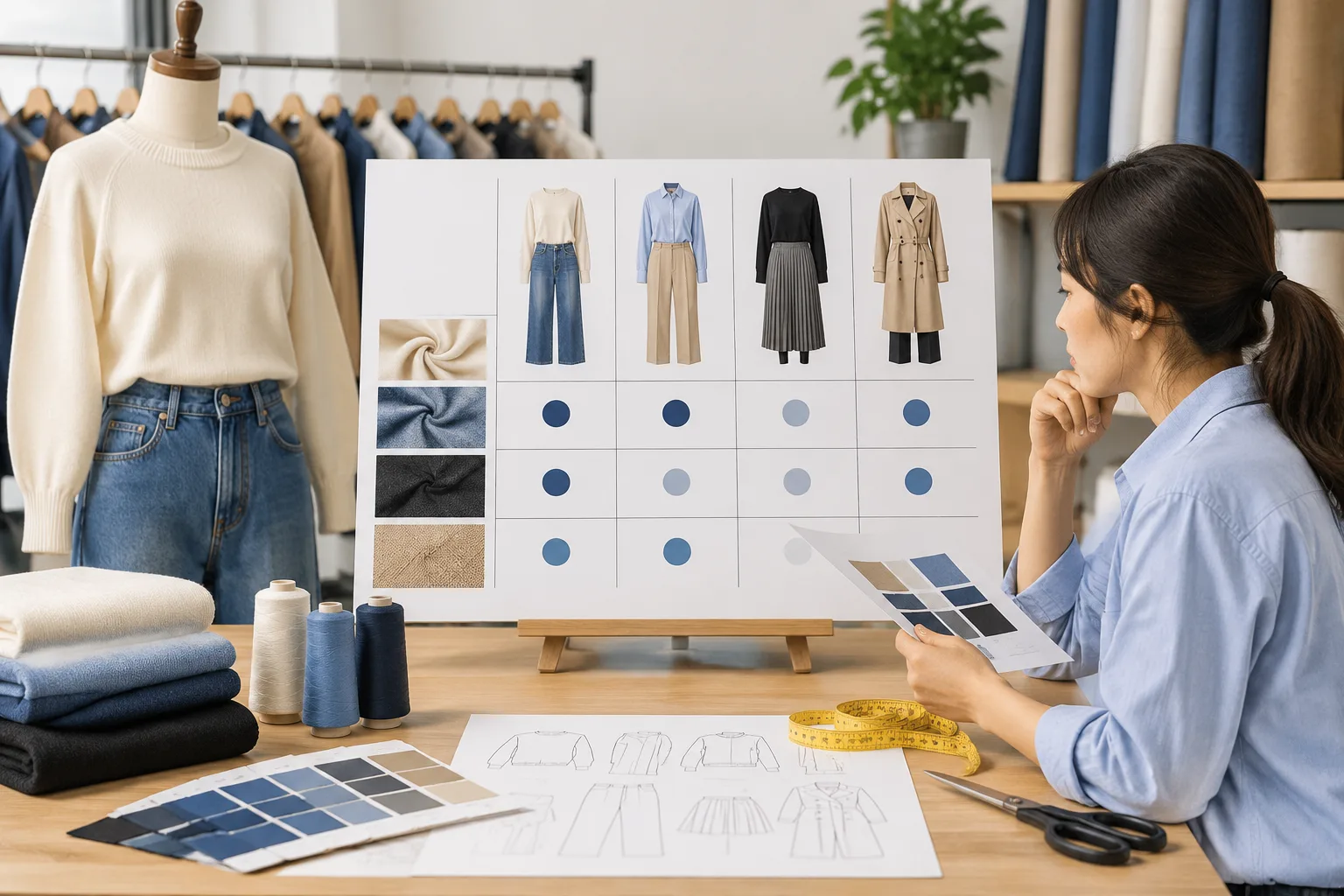
For example, a lightweight knit may be presented for a layered everyday outfit. If the reader needs help seeing texture and layer relationships, the initial direction may favor readable garment views and simple supporting pieces. The direction could change if the intended use shifts to travel, if the knit’s fit or opacity differs, or if climate and color make another styling explanation more useful. This is an editorial scenario, not evidence of a customer result.
Keep the publication’s role clear when choosing the next step. Educational outfit content can direct readers to a relevant explanation, tool, category, or subscription. It should not imply that Apparel Wiki provides manufacturing, styling, or factory services.
Set the styling direction and production requirements
Once the audience and objective are clear, translate them into observable styling instructions. State which garment must remain visually prominent, what relationship between layers should be understandable, and which details need close views or explanatory copy. A direction such as “make the outfit modern” is open to conflicting interpretations; a direction that identifies the focal garment, relevant proportion, and required detail views gives contributors something they can execute consistently.
Separate fixed production requirements from flexible creative references. Fixed requirements might include the featured garment, required views, deliverable formats, review steps, or an exclusion such as unsupported performance language. Preferences might include a color mood, accessory family, setting reference, or pose. A mood board can communicate atmosphere, but it does not replace decisions about outfit structure, framing, copy, or delivery.
Plan representation and usability deliberately. The brief should identify the body and fit context that readers need to understand, show garment details clearly, and specify whether useful styling variations are required. Those choices are communication decisions, not universal rules about how every garment should be worn. If the objective concerns proportion, the framing should allow proportion to be read. If the objective concerns layering, the relevant relationships should remain visible.
Every statement about a product, material, sustainability characteristic, comfort attribute, or performance result should be marked as confirmed, source-required, or excluded. A visual treatment can show color, shape, texture, or construction details that are visible in the content. It cannot by itself prove durability, comfort, health effects, environmental impact, or another physical property. A material feature becomes a meaningful benefit only when it is connected to a specific reader situation and its relevant trade-offs.
Use a production handoff that assigns responsibilities without over-prescribing the aesthetic:
- Styling: define the focal garment, silhouette relationship, layers, accessories, color relationships, and acceptable variations.
- Photography or video: specify crop, setting, required detail views, representation needs, and formats.
- Copy: identify the reader question, tone, visible observations, supported claims, and excluded promises.
- Design: preserve readable garment information and the intended hierarchy across the planned deliverables.
- Review: check product accuracy, styling consistency, audience fit, accessibility or readability, and destination alignment.
Keep the direction flexible where judgment is useful, but make the communication requirement firm. A brief can allow the stylist to choose among compatible accessories while requiring the featured garment to remain legible. It can allow a setting reference to change while requiring the outfit’s proportion or layer relationship to remain understandable. This balance gives production teams room to solve visual problems without changing the assignment’s meaning.
Build a useful outfit decision matrix
An outfit styling matrix turns broad creative preferences into decisions that others can discuss and revise. Start with what can be observed in the garment or assignment, then explain the visual or communication implication. The final column should state an initial direction, not a universal styling rule.
| Observable input | Styling implication | Initial choice | Variables that could change it |
|---|---|---|---|
| Lightweight knit and visible texture | Layering and surface detail may need to remain easy to read. | Use a compatible underlayer and close detail views where texture matters. | Fit, opacity, climate, color, and the reader’s intended use. |
| Long or relaxed silhouette | Adjacent proportions may affect whether the garment remains visually clear. | Test a simpler, balanced lower layer before adding volume elsewhere. | Body and fit context, hem position, movement, and the communication goal. |
| Strong color contrast or pattern scale | Color relationships may compete with garment details or copy. | Begin with quieter adjacent colors and adjust contrast deliberately. | Lighting, background, pattern size, brand direction, and audience preference. |
| Statement outer layer | The focal item can lose emphasis when surrounding pieces are equally complex. | Simplify adjacent garments and accessories so the outer layer remains legible. | The objective, available product range, pattern scale, and desired contrast. |
| Work, travel, occasion, or everyday setting | The setting changes the outfit logic, language, and visual expectations. | Choose garments and framing that make the stated use apparent. | Season, climate, cultural context, reader need, and channel format. |
For a lightweight knit in a layered everyday outfit, the initial direction might keep the layer relationship and texture visible. That choice can change if the garment is more opaque, the fit is closer, the climate is warmer, or the reader needs a more formal outfit. The matrix keeps those variables beside the recommendation.
For a statement outer layer, reducing visual noise around the focal garment may help the content communicate its shape and role. A patterned product range, a comparison objective, or a deliberately high-contrast concept could justify a different direction. The useful question is not whether one combination is correct, but which choice best serves the defined reader and objective.
Use the matrix to support review between styling, photography, copy, and design. It does not establish comfort, durability, fit, colorfastness, or another physical performance outcome. Those claims require evidence suited to their scope.
Define claims, review, calls to action, and measurement
A production brief becomes publishable when it explains not only what the audience should see, but also what the content may responsibly say. Add a claim-and-source block for every material, environmental, comparison, or performance statement that could be read as a product fact.
- Claim: Record the exact wording or intended statement.
- Scope: Identify the product, material, version, use condition, or comparison covered.
- Source responsibility: Name the person or team responsible for checking the evidence.
- Review date: Record when the information should be checked again.
- Status: Mark the statement as confirmed, source-required, illustrative, or excluded.
Keep visible description separate from performance interpretation. A photograph may show a layer, seam, texture, color relationship, or silhouette. It does not by itself prove why a garment performs a certain way. A single test result, when available, also should not be expanded into a broad superiority claim beyond its stated scope.
Set review checkpoints before publication. Product review checks whether the named garment and visible details are accurate. Styling review checks whether the final images still follow the agreed outfit logic. Audience review asks whether the content addresses the intended styling problem. Accessibility and readability review checks whether garment information, copy, and visual hierarchy remain understandable. Destination review checks whether the promised next step matches the page or resource receiving the reader.
Choose one primary call to action that fits the reader’s current question. An educational article may direct readers to compare specifications, read a related explanation, use the Apparel Manufacturing Tools, or subscribe for further knowledge. Do not treat a click as a purchase, profit, or proof that the content caused a commercial result. Exposure, clicks, consultation, purchase, and repeat purchase describe different stages and need separate interpretation.
State one measurement question and its limits. For example, the team might ask whether qualified readers continue to a relevant resource. That question is narrower and more useful than claiming that one engagement metric proves commercial causation. Record what the content can show, what it cannot show, and which later decisions remain outside the brief.
Turn the decisions into a production-ready brief
Before handoff, check the audience, objective, outfit context, styling direction, deliverables, claim status, review owner, primary call to action, and measurement question in that order. Mark each item as fixed, conditional, source-required, or intentionally excluded. Compare the completed brief with the decision matrix, then check any applicable source or test method before approving factual claims. A shorter, resolved brief is more useful than a long list of unranked references or unsupported promises.
Frequently Asked Questions
What is the difference between an outfit styling content brief and a mood board?
A brief records decisions about the reader, objective, outfit context, deliverables, claims, review, and next step. A mood board mainly communicates visual atmosphere or reference. It can support a brief, but it cannot replace production requirements or evidence boundaries.
How many decisions should be fixed before producing outfit styling content?
Fix the decisions that determine meaning: the primary reader, objective, outfit context, priority garment, required deliverables, and claim boundaries. Leave compatible accessory, setting, or styling details conditional when creative judgment can solve them without changing the assignment.
How do I choose the main audience for an outfit styling brief?
Choose the reader with the clearest styling problem or decision, such as combining a featured garment or understanding proportion. Demographic labels alone are not enough. Define what that reader should understand or decide after viewing the content.
Which outfit details need a source before they become marketing claims?
Source statements about material properties, environmental impact, comparisons, comfort, durability, health, or performance when the wording presents them as product facts. Visible details can be described directly, but a visual treatment does not prove a physical property.
Should one styling brief include several audiences or content objectives?
Usually, one primary audience and one primary objective produce clearer decisions. Secondary readers may be noted, but combining unrelated styling problems or objectives can make the outfit, language, and call to action difficult to evaluate.
What should the call to action be in an educational outfit styling article?
Choose one next step that matches the reader’s question, such as reading a related guide, comparing specifications, using an educational tool, or subscribing. The action should extend understanding rather than imply that Apparel Wiki provides manufacturing or styling services.