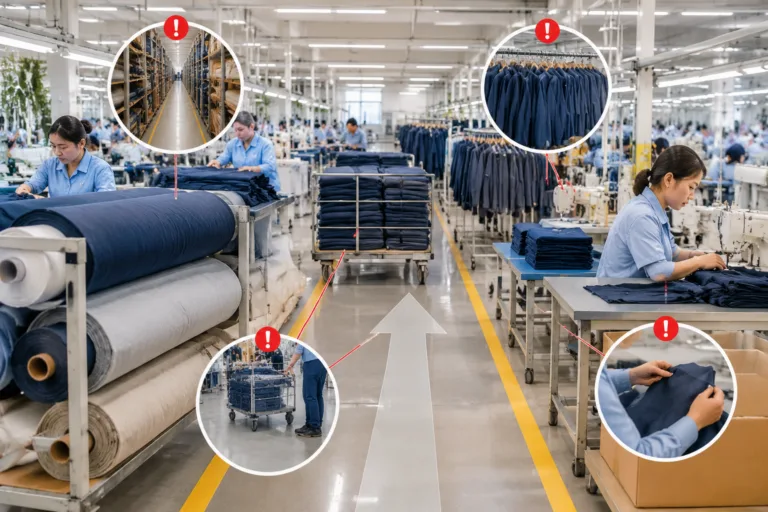
Sponsor support does not change the editorial independence of this educational guide. Triacetate fiber processing is the linked sequence that prepares incoming fiber, controls its movement through spinning equipment, and forms it into a specified yarn. Preparation matters because opening, feeding, drafting, and twisting influence whether the material can move consistently through the process; however, no single route is mandatory for every triacetate yarn.
The useful question is not simply which machine setting to copy. It is which fiber condition, yarn construction, equipment context, and evidence support a particular choice. The process map below separates general spinning stages from triacetate-specific points that require verification for the actual product.
From Fiber Preparation to Yarn Formation
Triacetate fiber to yarn begins with the incoming material record. Confirm the documented generic fiber identity, physical form, lot information, fiber dimensions if supplied, finish information, and the intended yarn construction. A staple-fiber route and any other supplied form may require different preparation decisions. The supplier specification and available equipment therefore define the starting point; the fiber name alone does not establish a complete process.
Preparation commonly aims to make the material clean, sufficiently open, and capable of consistent feeding. Opening separates compressed or entangled fiber without imposing unnecessary handling. Cleaning addresses unwanted matter identified in the incoming material. Blending, when used, is intended to distribute compatible lots or components consistently, but any change in blend composition can also change cohesion, friction, and the way the material drafts. These are process objectives, not guarantees of a particular yarn result.
Fiber control then becomes important. The feed should present a reasonably consistent supply to the drafting stage, where fibers are attenuated and arranged toward the required linear density. Drafting is a general yarn-forming concept, but the suitable arrangement and conditions require review for the specific triacetate product, fiber preparation, and machine. Surface friction, static behavior, cohesion, moisture condition, and finish can interact with feeding and draft control. A symptom such as slippage or irregular delivery does not identify one cause by itself.
Twist gives the emerging strand its selected yarn structure and helps hold fibers together. The suitable twist depends on the yarn design and intended use, so it should not be treated as a universal triacetate specification. Yarn formation may then produce a single yarn or feed a later plying operation. At each stage, preparation can affect continuity, irregularity, surface character, and the usefulness of later testing. The exact route remains a project-dependent choice involving fiber form, yarn construction, equipment, and documented specifications.
This process map helps apparel readers ask precise questions: What was the incoming fiber condition? How was it prepared and fed? Which construction was intended? Which observations or test results support the resulting yarn? It does not approve a route or promise a specific fabric appearance.
What Triacetate Fiber Processing Must Control
The main challenge in triacetate fiber processing is managing several interacting conditions at once. Fiber length distribution, crimp or cohesion, surface friction, static tendency, moisture condition, and finish may influence opening, feeding, drafting, and yarn formation. Their relevance must be checked against the actual fiber specification rather than assumed from the generic name.
Fiber condition affects machine interaction. Material with insufficient cohesion may separate too readily during handling, while excessive cohesion can make opening or drafting less uniform. Friction can influence how fibers move against one another and against machine surfaces. Static may affect fiber control and the handling of loose material. Moisture and conditioning can change the process environment, but the direction and size of any effect require product-specific evidence.
These variables create trade-offs. More opening, speed, draft, or handling may improve one part of the flow while increasing another disturbance. Additional twist may change strand stability and surface behavior, but it also changes the yarn structure being evaluated. A finish change or added component does not automatically improve quality; the outcome depends on fiber characteristics, proportions, yarn construction, equipment, and the intended fabric structure.
Keep an observed symptom separate from a confirmed diagnosis. Irregular feeding, fly, slippage, breaks, or uneven yarn may result from the material, preparation, conditioning, machine alignment, draft arrangement, or measurement conditions. Treating one symptom as proof that the fiber is defective can lead to an unsuitable adjustment.
Evaluate changes under comparable conditions. Record the fiber identity and lot, preparation details, yarn construction, equipment context, environmental or conditioning information, adjustment made, and observed outcome. Change one relevant factor where practical, while recognizing that process variables can interact. This record turns triacetate fiber spinning from a copied recipe into a traceable decision framework.
Common Processing Challenges and How to Investigate Them
Investigation should move from material records to process records, equipment checks, and validated yarn testing. Start with the incoming fiber description and lot consistency. Then review opening, blending, feeding, conditioning, and handling records before changing machine variables. This order helps distinguish a material difference from a preparation or equipment issue.
| Observable input or symptom | Possible implication | Initial check | Variable that may change the decision |
|---|---|---|---|
| Inconsistent feeding | Variation in cohesion, opening, feed presentation, or handling condition | Compare fiber lots, preparation records, and feed consistency | Fiber condition, conditioning, opening, or equipment alignment |
| Drafting instability or slippage | Interaction between friction, cohesion, draft arrangement, and delivery | Record where instability begins and compare the draft path | Fiber preparation, draft control, environmental condition, or machine context |
| Yarn irregularity or breaks | Uneven material flow, structural weakness, equipment disturbance, or sampling issue | Locate when and where the symptom appears; review records | Feed consistency, draft, twist, equipment condition, or test method |
| Excess fly or unwanted surface variation | Loose fiber control, handling disturbance, or a construction-related effect | Compare preparation, visible material behavior, and yarn structure | Opening, cohesion, speed, twist, finish, or intended surface |
The matrix is a starting point, not a diagnosis. A visual or operational symptom cannot replace validated yarn testing. Any result should be read with its test method, sampling conditions, and yarn construction. Compare observations consistently, preserve the original records, and avoid calling an adjustment successful until the relevant attribute has been evaluated under comparable conditions.
How to Evaluate Triacetate Yarn Before Using Its Specifications
A yarn specification should identify the material clearly before it makes a performance claim. Separate the documented generic fiber name from the manufacturing process, raw-material source, and any commercial trademark. These terms describe different aspects of the product and should not be treated as interchangeable.
Next, identify the count system. Tex, denier, and dtex are direct linear-density systems: each relates yarn mass to a stated length, with different reference lengths. Indirect systems express the length associated with a unit of mass. A larger number therefore does not have the same meaning across all systems. Preserve the supplier’s original unit before making a comparison or conversion.
Construction also matters. A single-yarn count is not automatically the same as the notation for a plied or resultant yarn. A format such as a count followed by a ply number may describe component yarns, the number of components, or a commercial reporting convention. Ask the supplier to define the notation and identify whether the stated value applies before or after plying.
| Observable specification | What it may indicate | Initial question | Variable that could change the decision |
|---|---|---|---|
| Fiber identity | The generic material documented for the yarn | Is triacetate identified separately from a trademark or process description? | Fiber blend, source, finish, or product-specific documentation |
| Count system and unit | How linear density or length-to-mass is reported | Is the value direct or indirect, and has the original unit been retained? | Conversion basis, reporting convention, or sampling condition |
| Single versus plied construction | Whether the number describes a component or final yarn | Does the notation identify single yarn, ply count, and resultant construction? | Ply arrangement, twist, and intended fabric structure |
| Twist or structure information | Additional construction details beyond count | Which construction features are documented and by what method? | Yarn purpose, finishing route, or required surface character |
| Intended fabric use | The context in which the yarn will be assessed | Does the documented construction match the fabric role? | Fabric structure, finishing, garment design, and handling requirements |
| Test context | How an observed value was obtained | What method, sample condition, and sampling basis accompany the result? | Test method, conditioning, laboratory practice, or sample selection |
Keep claim types separate. A specification identifies a product attribute. A test result reports an observation under stated conditions. A regulatory label requirement applies only within a relevant jurisdiction. An editorial recommendation explains a review method. None should be silently substituted for another, and yarn count alone does not establish quality, durability, or garment performance.

Choosing a Processing Approach for the Intended Yarn
Begin with the intended yarn construction and its role in the fabric. Then review the fiber form, desired surface, required consistency, available process information, and evidence supporting the proposed route. The fiber name alone cannot determine whether a route is suitable.
For a lightweight yarn where a clean, consistent surface is important, examine preparation, fiber cohesion, drafting control, and final yarn construction together. A change that improves feeding may also alter fiber control or surface character. The initial choice may change when the fabric structure, finishing route, or required visual effect changes.
For a plied yarn, separate the component-yarn specification from the final construction. Confirm the count and unit for each component, the number of plies, and how the supplier reports the resultant yarn. The decision may change with ply arrangement, twist, fabric role, or whether the specification describes the yarn before or after plying.
A concise technical record can prevent later confusion. Include the documented fiber identity, original units, yarn construction, process observations, test method, sample conditions, and unresolved assumptions. Compare options under consistent conditions and record which variable changed between observations.
The practical decision rule is simple: choose the option whose documented construction and evidence fit the intended use, then verify the applicable method or specification. A general process description is a starting point for review, not approval of a particular yarn or production route.
A Practical Next Step for Reviewing Triacetate Yarn
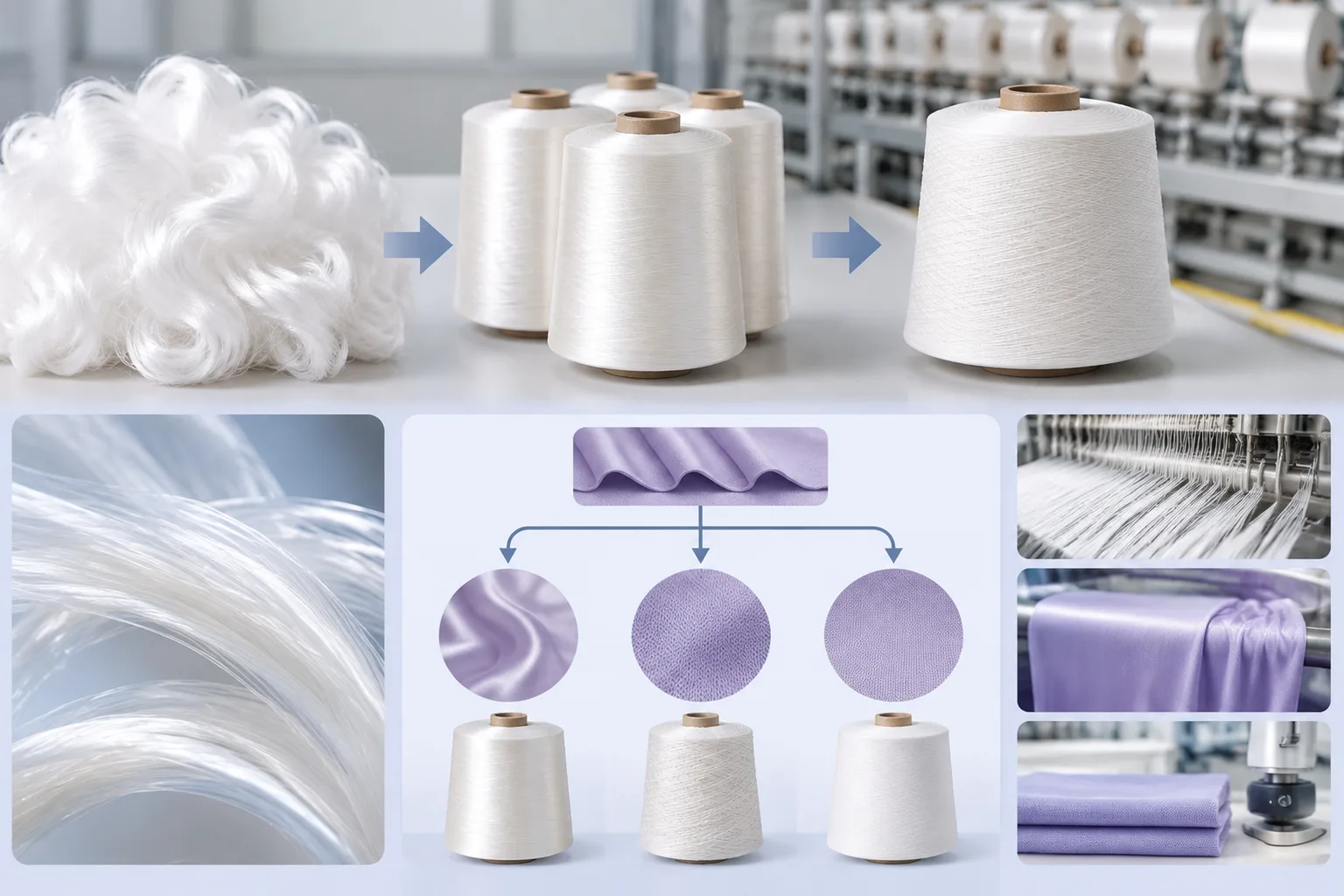
Triacetate fiber processing is a linked sequence of preparation, material control, yarn formation, and evidence review. To continue the evaluation, compare two documented yarn specifications using the same count units and construction definitions. Then check the applicable technical method or source, preserve any unresolved assumptions, and make the project-specific judgment from comparable information.
Frequently Asked Questions
What is the main difference between triacetate fiber preparation and yarn formation?
Preparation conditions and feeds the fiber for controlled handling. Yarn formation uses processes such as drafting and twisting to build the yarn structure. The exact boundary and route depend on the fiber form, equipment, and intended construction.
Which fiber and process variables can make triacetate yarn processing difficult?
Fiber length distribution, cohesion, friction, static tendency, moisture condition, finish, feeding, draft control, speed, and twist can interact. These are variables to investigate, not proof that triacetate itself is the confirmed cause of a problem.
How should I investigate irregularity or breakage during triacetate yarn processing?
Start with the incoming fiber description, lot consistency, preparation records, and conditioning information. Locate when and where the symptom appears, then review feeding, drafting, twist, equipment context, and sampling. Use validated yarn testing to support, rather than replace, the investigation.
How can I compare triacetate yarn counts when suppliers use different units?
First identify whether each value uses a direct or indirect count system. Retain the original unit and confirm the reference basis before converting. Do not compare the raw numbers alone, because different systems express mass and length differently.
Why must single-yarn count and plied-yarn notation be checked separately?
A single-yarn count may describe one component, while a plied notation may describe several components or the resultant construction. Confirm what the number and ply notation refer to before comparing suppliers, samples, or fabric specifications.
What information should be verified before selecting a triacetate yarn for a garment project?
Verify the generic fiber identity, original count unit, single or plied construction, relevant twist or structure information, intended fabric role, test context, sample conditions, and unresolved assumptions. Then check the applicable technical method before drawing a project-specific conclusion.