
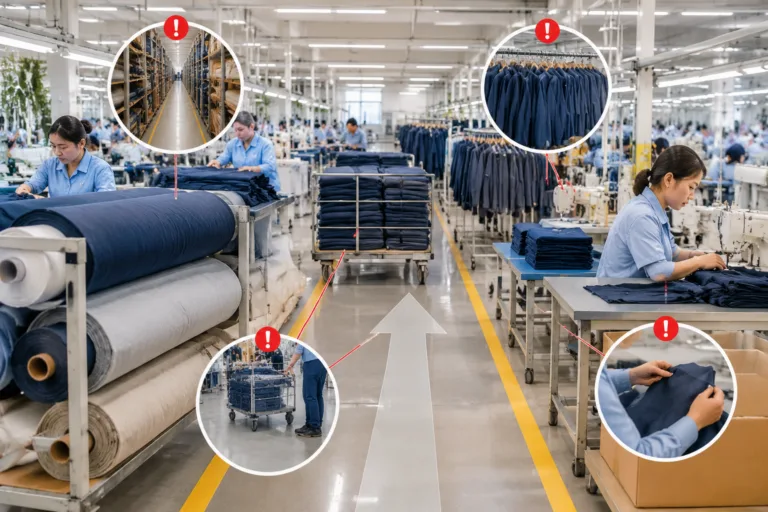
Material handling routes in an apparel factory are the planned or observed paths that fabric, trims, cut parts, work-in-process, finished goods, and related records follow between operational points. Their purpose is to make movement understandable, preserve identification, coordinate handoffs, and support production control. A shorter route is not automatically better: a controlled pause may protect batch identity or inspection status, while a direct path may create confusion when product variation is high. Apparel Wiki is an independent educational publication; its Sponsor information does not change that editorial position.
The useful question is therefore not simply how far material travels. It is whether the route fits the actual process, makes status visible, limits unnecessary backtracking, and supports quality and reasonable working conditions. Route planning can reveal movement problems, but it cannot by itself fix poor scheduling, unclear responsibility, unsuitable equipment, congestion, or unsafe methods.
What Material Handling Routes Mean in an Apparel Factory
A material handling route describes how an item moves between activities and control points. A production process changes the garment or component through operations such as preparation, cutting, sewing, pressing, inspection, or packing. The route describes the movement connecting those activities. It may include physical travel and the records or status information that identify what is moving and where it should go.
The material being mapped can vary by operation. It may begin with incoming fabric and trims, then continue through prepared materials, cut parts, bundles or batches, and work-in-process. Later movements may include inspected work, pieces returned for rework, and completed goods. Not every apparel factory uses the same departments, sequence, containers, or control points, so a route should be described from the actual workflow rather than copied from a generic department list.
Visibility matters because each handoff can affect identity and timing. A clear route helps a team ask where a bundle is, whether it is waiting, whether it has passed inspection, and who is responsible for the next movement. It can also expose unnecessary returns, repeated handling, or places where different styles, sizes, colors, or quality statuses could be mixed.
That makes an apparel factory material handling route a coordination tool, not a guarantee of performance. It cannot correct an unsuitable production plan, a quality problem, inadequate space, unavailable equipment, or unclear ownership. It also cannot justify working methods that disregard safety, operator feedback, or reasonable working conditions. Common route patterns are useful starting points, but local conditions determine whether they are appropriate.
How Route Design Supports Flow and Control
Route design supports control when movement rules make location, status, and responsibility easier to determine. Agreed handoff points, identifiable bundles or containers, and consistent status records can reduce ambiguity. These are management practices, not universal specifications. Their value depends on whether workers can apply them under the actual product mix, process sequence, and space constraints.
Direct movement and controlled staging create different trade-offs. Moving material directly from one nearby operation to the next may reduce waiting or extra travel. A staging point may instead create a deliberate pause for batching, inspection, release timing, or clearer ownership. However, staging can increase queue or mix-up risk when identification is weak. The relevant comparison is the full flow, not one distance measurement.
Route choices also interact with batch size, product variation, rework, inspection timing, line balancing, equipment location, and available space. A route that appears simple for a repetitive workflow may become difficult when styles change frequently or components must be held by status. Likewise, a shared movement path may be practical only when separation and responsibility remain clear.
Stable methods can make changes easier to compare, but stability should not mean ignoring actual work. Operators may identify tool-access problems, process differences, awkward handling, or ergonomic concerns that are absent from a paper route. Observe the work, record relevant feedback, and revise the route description when conditions change.
A route observation should also remain separate from a broad efficiency judgment. Travel distance or handling frequency alone does not establish productivity, throughput, or overall factory performance. A meaningful comparison would need aligned definitions for time, labor, stoppage, rework, and other included work. Without that scope, route design is best treated as a factor to evaluate, not a guaranteed improvement.
Choosing Among Material Handling Routes for Different Workflows
Route selection is a context-dependent review decision. Start by observing the process sequence, product variation, bundle identity, queue visibility, available space, and handoff frequency. Then compare the actual movement with possible direct, staged, and shared arrangements. The table gives an initial choice for investigation, not a universal layout prescription.
| Observable inputs | Route implications | Initial choice | Variable that could change it |
|---|---|---|---|
| Stable sequence, adjacent operations, clear bundle identity, few handoffs | Point-to-point movement may keep the path simple and make the next destination obvious. | Review a direct route first. | Frequent style changes or weak destination control may make staging safer for identification. |
| Inspection holds, batch release, timing differences, or a need to separate statuses | A pause can make release decisions and queue status visible, but it adds a control point. | Review controlled staging between operations. | Limited space or unclear ownership may turn the staging area into a congestion or mix-up point. |
| Mixed products, shared equipment, repeated handoffs, or several destinations | A shared or looped route can serve different flows, but separation and responsibility must remain clear. | Review a shared route only with explicit identity and ownership rules. | Product variation, queue growth, or changing priorities may require dedicated movement paths. |
Consider a lightweight knit workflow with frequent style changes. Even if two operations are close together, different colors or sizes may require stronger identification and a controlled pause. A more repetitive workflow with stable bundles may support a direct handoff more readily. This is a qualitative starting point, not a reported factory result; fabric behavior, construction, batch policy, staffing, and inspection practice can change the decision.
Shared routes need particular attention when styles, sizes, colors, or quality statuses travel together. Define who releases the material, who receives it, and how its identity remains visible. Before changing anything, map the actual path and mark every handoff, waiting point, return, and status change. Compare that observed movement with the proposed route, then check whether the change solves the demonstrated problem or only moves congestion elsewhere.
Where Material Handling Routes Reach Their Practical Limits
A well-drawn route can still fail when the controls around it are weak. If bundle labels fade, statuses mix, records lag behind the work, or handoff ownership is unclear, materials can travel a perfect path and still arrive wrong. The corrective action in that case is stronger control at the handoff, not a shorter path.
Planned routes also diverge from observed routes. Queues, bottlenecks, batch release timing, rework loops, and inspection holds change where material actually waits and travels. A route map that ignores these holds describes an intention, not the flow on the floor.
Keep quality measurement separate from movement. First-pass results and final acceptance answer different questions: a strong final pass rate can hide rework volume and the extra handling it creates. A route review should show both the accepted result and the repeated movement behind it, without double-counting units that were inspected more than once.
Congestion on a route is a signal, not a diagnosis. A route observation can expose unnecessary movement or crowding, but it cannot prove the cause. Product mix, staffing, equipment availability, method changes, and working conditions all deserve investigation before anyone assigns blame or credits.
Performance claims carry the same discipline. Efficiency percentages depend on how standard hours and actual hours are defined, including decisions about training, downtime, rework, indirect work, and overtime. Figures built on different definitions cannot be ranked against each other. Route observations alone cannot support an efficiency ranking, and route optimization must never be framed as permission to shorten breaks, overlook safety needs, or ignore working conditions.
A Practical Review Method for an Apparel Factory Material Route
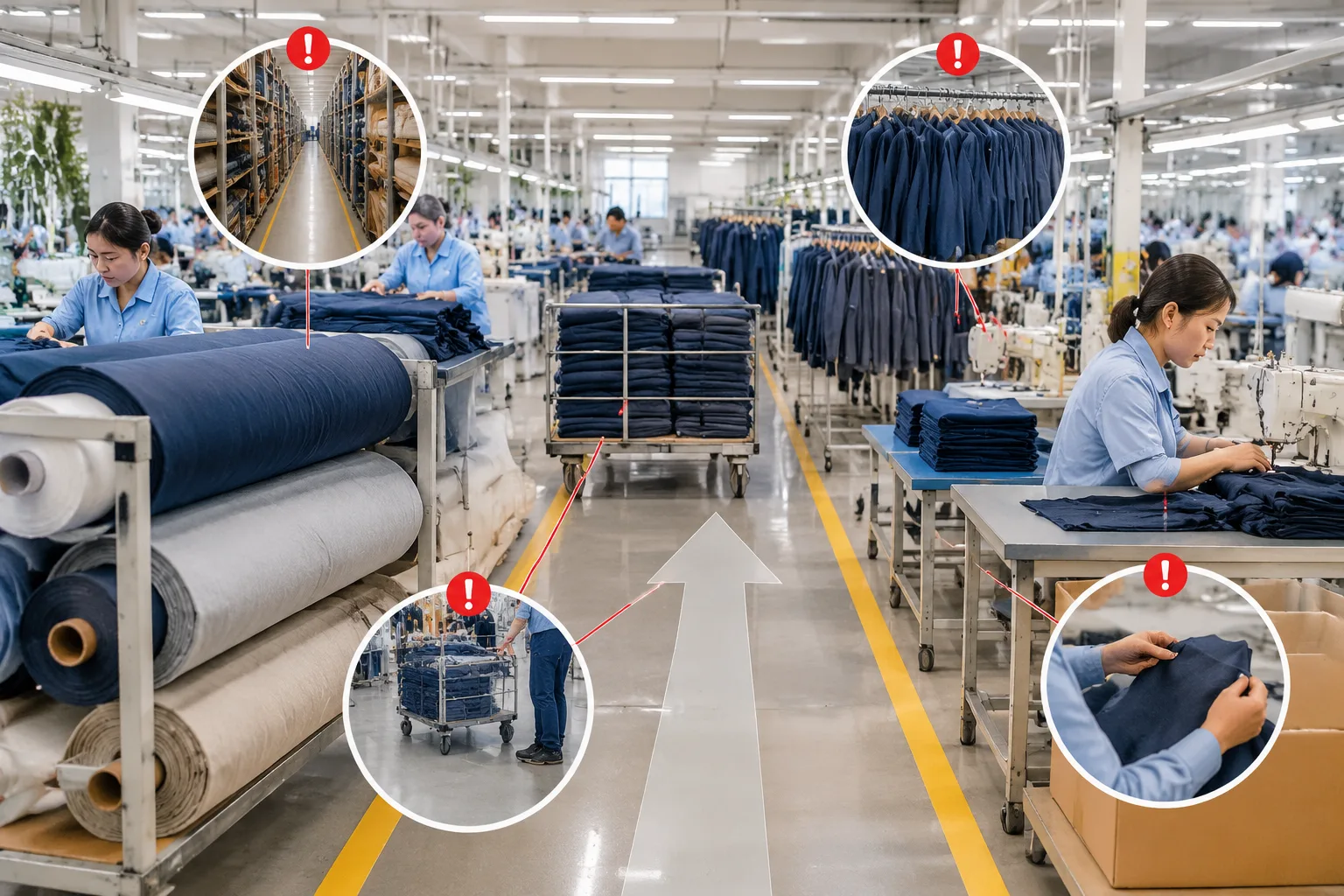
Start with one defined material or work-in-process family, such as cut panels for a single style group. Record its actual sequence, handoffs, waits, returns, rework movements, status changes, and identification points. Avoid combining unlike flows into one average route, because mixed averages conceal the differences that drive decisions.
Compare the current and proposed routes using the same scope and the same observation conditions. Look at the physical path, number of handoffs, queue points, mix-up exposure, information availability, operator access, and effects on inspection or rework. This editorial review approach, described in general terms on the About page, is educational and is not an audit or consulting service.
Ask whether the change solves a demonstrated problem or merely moves congestion elsewhere. Note the variables that could reverse the conclusion: style mix, batch size, staffing, equipment location, and release timing. A route that works for one product family may fail for another.
- Record separately: what you observed, what you measured, what you interpret, and what you recommend.
- Define before comparing: if you use efficiency or quality figures, state the denominator and the inspection point first.
- Check side effects: quality, identification, ergonomics, and working conditions can all shift when a route changes.
Close with a simple decision rule: retain the route when evidence supports it, revise it when the workflow shows a specific mismatch, or test it for a defined period when the effect is uncertain. Preserve operator feedback throughout, and revisit the route after real conditions, not just on paper.
Key Takeaways for Reviewing a Material Handling Route
A useful material handling route balances movement, identification, timing, quality control, space, operator realities, and working conditions. The best choice fits the actual workflow and its control needs, not automatically the route with the fewest meters or handoffs. As an educational next step, map a single material flow in your operation and compare its observed handoffs, waits, returns, and control points against the intended route, then check the applicable measurement or inspection method before drawing conclusions.
Frequently Asked Questions
What is the purpose of a material handling route in an apparel factory?
A route coordinates how fabric, trims, cut parts, work-in-process, and records move between operations and control points. It supports identification, clear handoffs, queue awareness, and production control. It describes movement between activities, not the activities themselves, and it is not simply the shortest distance.
How is a material handling route different from the garment production process?
The production process changes the garment or component through operations such as cutting, sewing, and finishing. The route describes how materials travel between those activities and their control points. One operation may appear once in the process but involve several movements, waits, or returns along the route.
Should the shortest material route always be considered the best route?
No. Direct movement can reduce travel but may increase mix-up or queue risk when identification and responsibility are weak. Controlled staging, looped routes, or deliberate pauses may serve inspection, batching, or release timing better. Fit to the workflow matters more than distance alone.
What information should be recorded when reviewing a garment factory material flow?
Record the actual sequence, each handoff, waiting points, returns, rework movements, status changes, and identification points for one defined material family. Keep observations, measurements, interpretations, and recommendations separate, and define any efficiency or quality denominator before comparing results across routes.
How can rework and inspection holds affect an apparel factory handling route?
Rework adds return movements and repeat handling, while inspection holds insert deliberate pauses that the planned route may not show. Together they make the observed route differ from the intended one. A final acceptance rate alone can hide this repeated movement, so record rework volume separately.