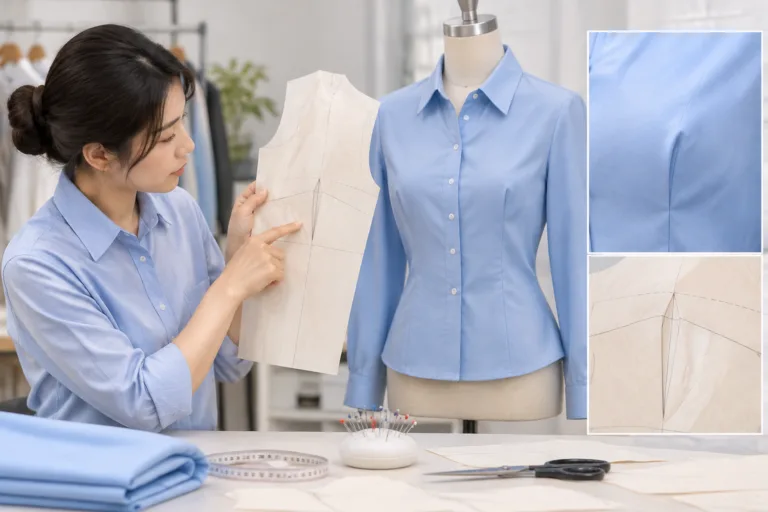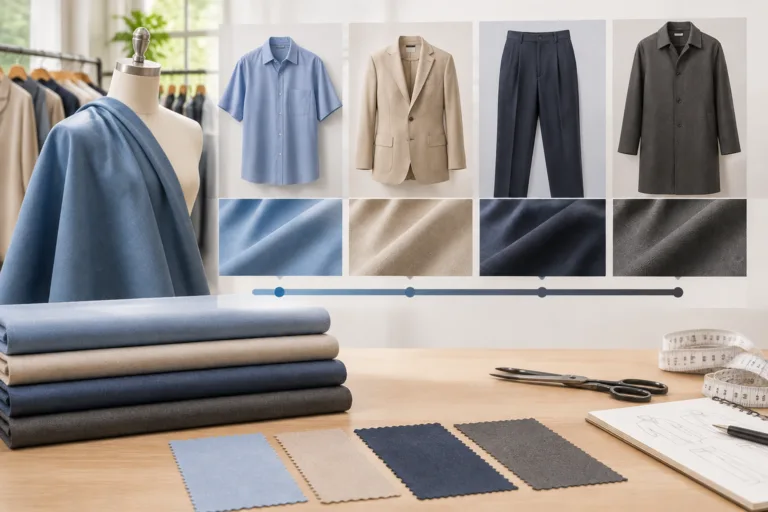
The right tropical wool weight is not a universal number. It is a starting point selected against the garment’s silhouette, structure, wearing conditions, layering plan, and desired hand. For independent apparel-development guidance, see the Sponsor page for the site’s editorial-support information.
Fabric weight usually means mass per unit area, commonly recorded as grams per square meter, or GSM. GSM helps compare materials, but it does not directly state thickness, quality, warmth, opacity, drape, or finished-garment comfort. A useful development decision therefore combines the weight with fiber composition, yarn, construction, finishing, width, and the intended pattern.
What Tropical Wool Weight Means in Garment Development
In garment development, “tropical wool” is best treated as a fabric description used for a particular design and wearing context, not as a complete specification. The name may suggest a wool fabric intended for a less substantial garment, but the commercial term alone cannot predict how a finished jacket, trouser, skirt, or dress will behave.
Describe the material in separate layers. Fiber composition identifies what the material contains. Yarn affects how the fibers are arranged and supported. Weave or knit construction describes how the fabric is built. Finishing can change its surface, hand, and response. Weight is another layer: it records how much the fabric mass occupies a defined area. These details should not be collapsed into one trade name.
GSM is therefore different from thickness. Two fabrics with similar mass per area can have different thicknesses, surfaces, stiffness, opacity, or drape. A higher GSM is not automatically a higher-quality fabric or a warmer one. Conversely, a lighter fabric is not automatically more suitable for warm-weather wear. Yarn construction, weave density, fiber blend, finishing, and width can all change the comparison.
Start with the garment category and silhouette. A fluid style may need movement and a softer fall, while a tailored style may need more body or support. Climate, activity, layering, seasonality, lining, and care expectations also matter. The same nominal tropical wool weight can produce different development results when those inputs change, so weight should remain a starting variable rather than an approval rule.
How Weight Changes Fabric and Garment Behavior
As a development consideration, a lighter fabric may support a less substantial garment with easier movement. A more substantial fabric may give a design greater visual presence or body. Neither outcome follows from GSM alone. Weave, yarn, finishing, color, pattern geometry, and support materials can strengthen, soften, or reverse the expected result.
Weight interacts closely with silhouette. A fluid trouser or skirt may need a balance between movement and enough body to avoid an unintended collapse. A tailored jacket may need enough substance for pressing, seam control, and support materials, yet excessive bulk can work against a clean shoulder, lapel, or closure. A lightweight tropical wool fabric can be useful for a less structured design, but the pattern and finishing still determine the final effect.
Comfort also depends on more than fabric mass. Wearing conditions, garment ease, layering, lining, activity, and construction that affects air movement may change the decision. A fabric that feels appropriate as a swatch may feel different after lining or interlining is added. These are development variables, not universal performance outcomes.
Review likely risks at the construction level. A lighter candidate may need closer inspection for show-through, seam behavior, pocket interaction, or unwanted distortion during pressing. A heavier candidate may create bulk at hems, facings, waistbands, pleats, and closures. The pattern’s seam allowances and geometry can amplify or reduce these effects.
Keep fabric observations separate from finished-garment conclusions. Hand and drape can be assessed on cloth, but the completed garment also reflects lining, interfacing, seam allowances, pressing, and finishing. Weave or knit structure can provide useful clues, but it does not independently establish stretch, breathability, durability, or comfort. Sample evaluation is needed when those properties affect approval.
The Variables That Matter Alongside GSM
A useful tropical wool fabric specification records more than a weight value. At minimum, compare fiber composition, stated GSM, construction, finish, color, and any relevant stretch or recovery information. Record whether the stated value describes greige material, finished material, conditioned material, or another defined measurement state.
Width belongs in the same comparison, but it must not be confused with GSM. Record total width and usable cutting width separately when the supplier distinguishes them. Total width may include selvedges, while usable width describes the area available for layout. This distinction supports development planning without turning width into a substitute for fabric weight.
Also record physical observations rather than treating them as implied by the specification. Thickness, hand, surface character, drape, and opacity are separate observations. A fabric specification sheet should preserve both the stated data and the review notes, because a commercial name cannot establish that two nominally similar fabrics are interchangeable.
| Field | What to record | Why it matters |
|---|---|---|
| Fiber and yarn | Composition and relevant yarn information | Separates material identity from the fabric’s commercial name |
| Weight | GSM, units, and measurement state | Creates a defined basis for comparison |
| Construction and finish | Weave or knit, surface finish, and treatments | Provides context for hand and behavior |
| Width | Total width and usable cutting width | Prevents width information from being confused with area mass |
| Physical review | Thickness, hand, drape, opacity, and surface response | Captures observations not supplied by GSM alone |
Finishing, pressing, washing, coating, or blending may change the hand and behavior associated with a nominal weight. Do not assume that any process changes GSM in a predictable direction without a defined measurement. If units or measurement states conflict, resolve the convention before comparing candidates and document the interpretation in the development specification.
Choosing a Starting Weight for Different Garment Uses
There is no universal best tropical wool weight for every garment. Use the intended silhouette and construction to choose a starting direction, then test whether the fabric creates the required balance of movement, body, opacity, and support. The direction below is a development hypothesis, not a final specification or approval rule.
| Garment situation | Observable inputs | Likely implications | Initial weight direction | Variables that could change the choice |
|---|---|---|---|---|
| Fluid trouser or skirt for warm-weather wear | Loose silhouette, movement, color, opacity, lining, and expected activity | A softer cloth may support fluid movement, but insufficient body or opacity could create unwanted show-through or collapse. | Lighter or moderate | Lining, garment ease, color, weave, surface finish, pleats, and care expectations |
| Lightly structured blazer | Shoulder shape, lapel design, lining, sleeve support, and desired drape | The fabric needs enough body for the design without creating unnecessary bulk or restricting layering. | Moderate | Interlining, canvas or other support materials, pattern geometry, pressing response, and climate |
| More tailored suit garment | Sharp silhouette, seam stability, pressing requirements, pockets, and closure construction | A more substantial starting direction may provide useful body, but the final result also depends on support materials and tailoring methods. | Moderate or more substantial | Pattern balance, interlining, lining, seam allowances, pressing, and desired movement |
| Layered garment | Existing layers, ease, movement, insulation needs, and bulk at closures or hems | Excess mass can make the complete outfit feel bulky, while too little body may reduce the intended structure. | Lighter or moderate | Base layers, lining, silhouette, closure design, climate, and care requirements |
For a lightweight knit or woven garment intended for warm-weather wear, a lighter starting direction may appear appropriate when the silhouette is loose and the design prioritizes movement. However, a pale color, open construction, or unlined treatment may require closer opacity review. Adding a lining can change the garment’s weight, hand, and comfort, so the fabric should be assessed with the proposed support materials rather than alone.
For a tailored jacket or trouser, a more substantial starting direction may help the pattern hold its intended shape and may provide a more stable base for seams, pockets, and pressing. That does not make the heavier candidate automatically preferable. A close-fitting pattern, substantial interlining, or frequent layering can reverse the decision because body may become bulk or restrict movement.
When considering tropical wool for trousers or jackets, compare the garment’s actual construction with the material specification. The same nominal weight can produce different results when yarn, weave, finish, width, or fiber blend changes. Record why the starting direction was selected and identify the observation that would cause you to revise it.
Evaluate the Fabric Before Approving the Development Direction
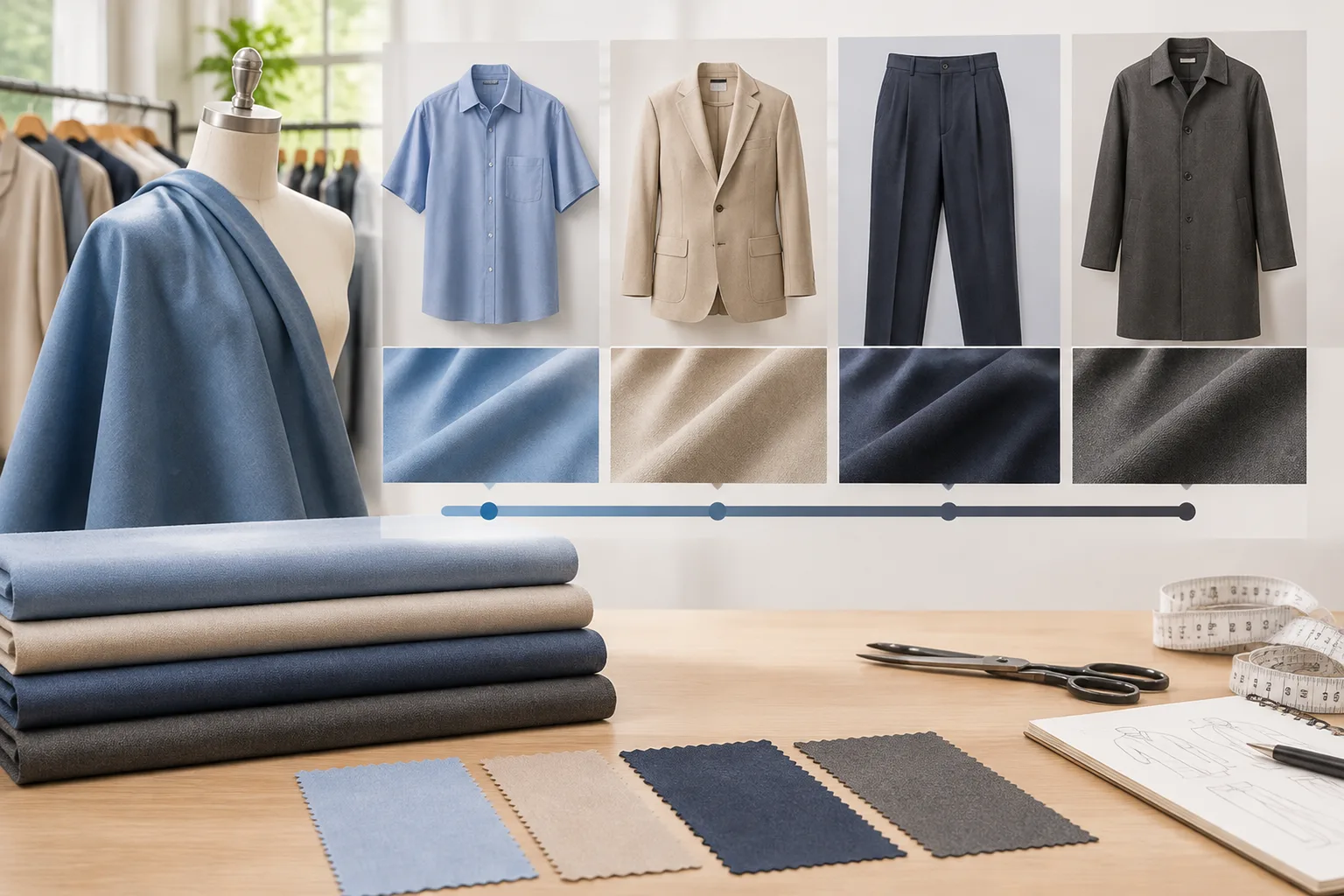
Treat the stated weight as a starting hypothesis until the fabric has been reviewed in the intended design. Begin by confirming the reported GSM, units, and measurement state. Then check the total width and usable cutting width, construction, surface finish, color, and any stated stretch or recovery information. Unclear fields should remain open questions rather than being silently interpreted.
- Review the cloth by hand. Observe thickness, hand, surface response, flexibility, and drape. These are separate observations and should not be used as substitutes for the stated weight.
- Check visual coverage. Review opacity, surface regularity, and the effect of color or light. A small swatch may not reveal how the fabric behaves when placed over the body or across a larger pattern area.
- Place it in the construction. Where possible, use a larger piece, mock-up, or development sample with the intended lining, interlining, seam allowances, pockets, closures, and hems. This helps expose unwanted bulk, collapse, show-through, or difficult seam behavior.
- Review movement and pressing. Consider the garment’s ease, silhouette, and activity. Observe whether pressing supports the design and whether the fabric responds acceptably around seams, facings, waistbands, and other concentrated areas.
- Document the decision. Record the fabric description, units, measurement state, observations, unresolved questions, sample conditions, and revision decision in the technical pack.
A swatch or development sample is a decision tool, not proof that every future production lot will behave identically. If the project depends on a quantified claim about mass, dimensional change, color behavior, or strength, check the applicable textile test method and define the measurement conditions. Visual inspection can support development judgment, but it does not replace a required test.
Keep the technical pack consistent across drawings, material descriptions, measurements, units, and revision numbers. This reduces ambiguity between the selected cloth, the pattern, and the construction reviewed during development.
Record the Choice and Identify What Still Needs Verification
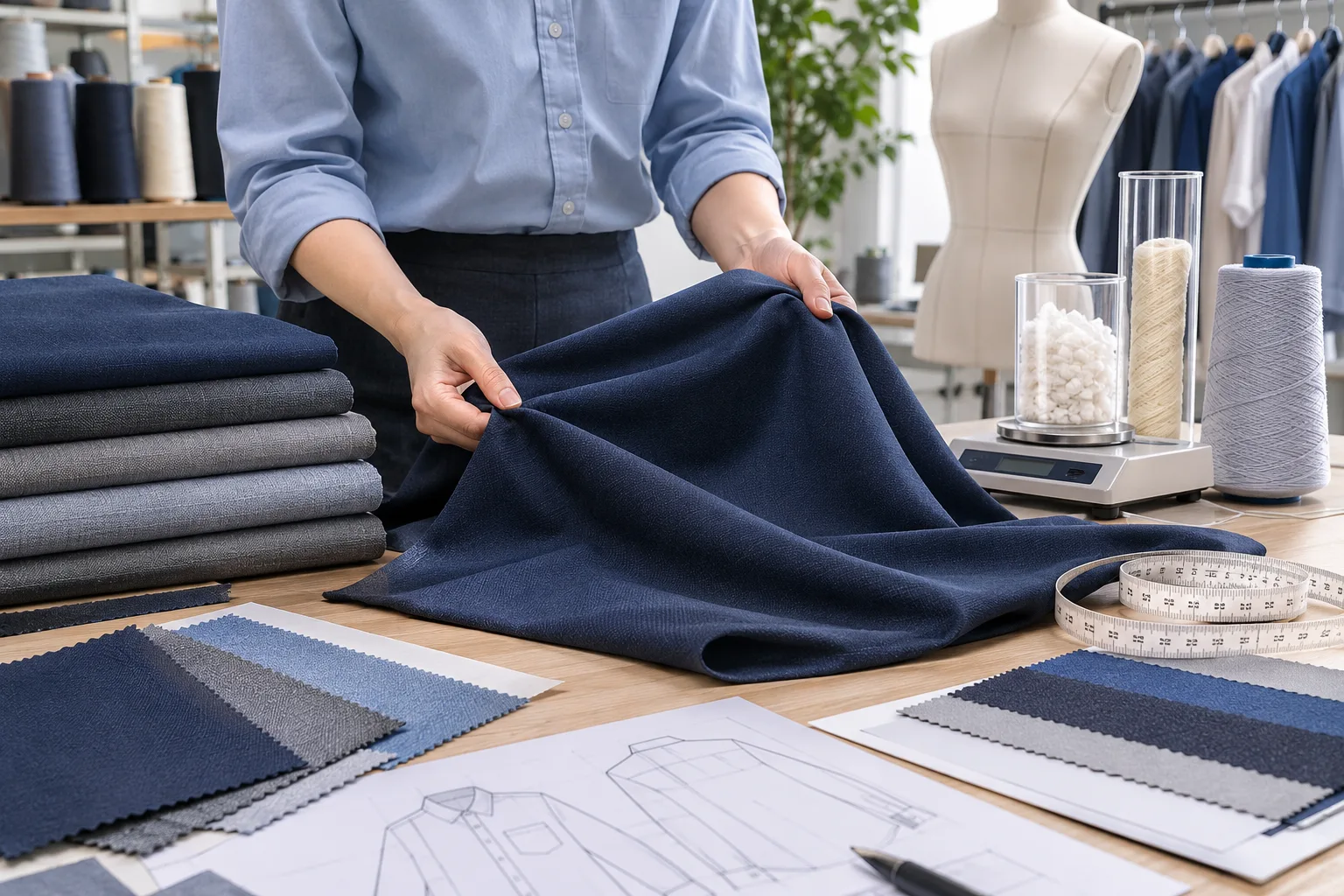
Choose a starting tropical wool weight from the use case and desired garment behavior. Compare the complete specification, review the fabric in its intended construction, and document what changed. As an educational next step, compare at least two candidates using the same fields, then check the applicable measurement or test method before treating their weight values as directly comparable.
Frequently Asked Questions
Is tropical wool weight the same as fabric thickness?
No. Weight normally describes mass per unit area, while thickness is a separate physical characteristic. Hand, drape, opacity, and surface finish are also separate observations, so GSM alone cannot establish how thick or substantial a fabric will feel.
What does GSM tell me when comparing tropical wool fabrics?
GSM provides an area-based weight value for comparison when the units and measurement state are defined. It does not by itself describe construction, finish, width, thickness, quality, warmth, or finished-garment behavior.
Should a tropical wool suit fabric be lighter or heavier for warm-weather wear?
Choose according to the suit’s silhouette, lining, support materials, opacity needs, layering, movement, and care expectations. A lighter fabric may not suit a design needing body or coverage, while a heavier fabric may create unwanted bulk.
Why can two tropical wool fabrics with the same weight behave differently?
Fiber composition, yarn construction, weave or knit structure, finishing, width, and measurement state can differ. Pattern geometry, lining, interlining, seam allowances, and pressing also influence the finished garment.
What should be included in a tropical wool fabric specification?
Record fiber composition, relevant yarn information, GSM and units, measurement state, construction, finish, color, total width, usable width, and relevant stretch information. Add physical observations such as hand, drape, thickness, opacity, and surface response.
How can I evaluate tropical wool weight before approving a garment sample?
Confirm the stated measurement, inspect the cloth, compare a larger piece where possible, and review it with the intended pattern and support materials. Record movement, drape, opacity, seam, pressing, pocket, closure, and bulk observations before revising the specification.