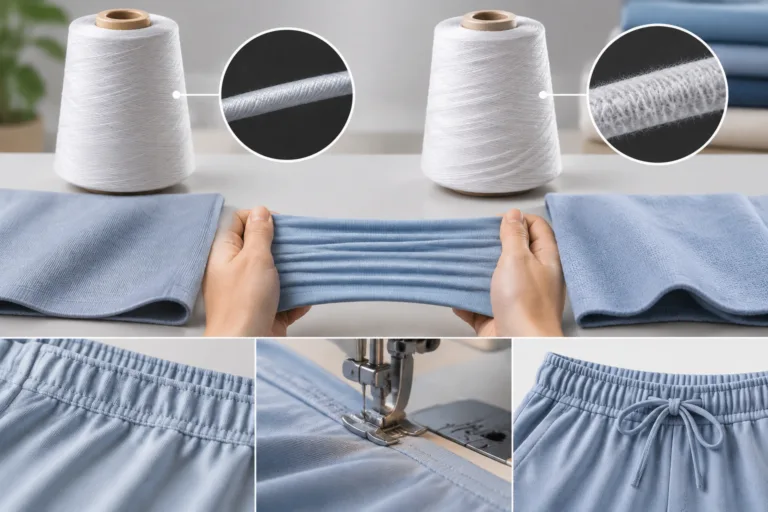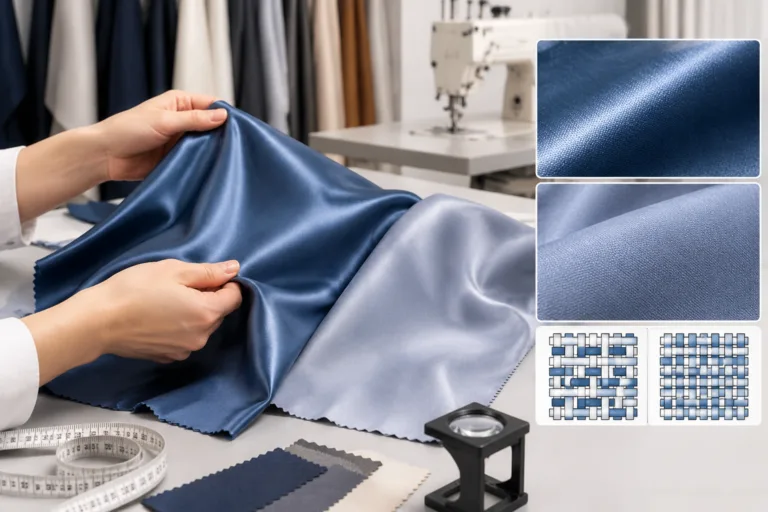
Slow fashion economics mechanisms, as framed here, are the relationships between deliberate apparel decisions and their economic consequences. Smaller batches, longer development, repairability, and extended wear can change costs, inventory exposure, cash timing, and value. Apparel Wiki presents this as independent education; its Sponsor page explains that sponsorship does not confer editorial control.
Slower operations do not automatically produce lower prices, higher profits, or better economic outcomes. The practical question is which choice changes which cost, payment, or use assumption—and for whom. A brand, supplier, retailer, worker, and wearer can experience different effects from the same garment decision.
What Slow Fashion Economics Mechanisms Actually Explain
A mechanism connects an observable choice to an economic effect through an identifiable process. Producing fewer garments, for example, commits money to fewer finished units. Whether that improves the overall result depends on production cost, sales, replenishment, and the consequences of unavailable stock.
This article uses slow fashion economics as an analytical framing, rather than a standardized industry definition. Four distinctions keep that framing useful:
- Business model: how an enterprise organizes its offering, earns revenue, and carries costs, such as selling garments alongside paid repairs.
- Operating choice: a production or purchasing decision, such as limiting an initial order or extending development.
- Consumer-use pattern: how someone wears, maintains, repairs, replaces, or resells a garment over time.
- Evaluation lens: the economic question being examined, such as inventory exposure or expenditure over a period of use.
Cost is the expenditure associated with a defined activity or product; price is the amount charged. Sales revenue does not establish profit without accounting for relevant costs. A higher retail price therefore cannot establish better margins by itself. Longer product life also does not guarantee financial return or resale value.
Consider a brand introducing a jacket with uncertain demand. A small initial batch limits the quantity exposed to being unsold. However, development and setup effort may be spread across fewer garments, raising cost per unit. If demand arrives quickly, replenishment delays could constrain sales.
The time horizon matters. A supplier must fund work before payment under the agreed terms; a retailer carries stock until sale. Workers experience the labor requirements and scheduling involved. Wearers and repair or resale businesses evaluate value across use and subsequent transactions.
Product category, materials, construction, productivity, order volume, channel, returns, and demand certainty can change these relationships. Low wages alone cannot identify the least expensive qualified delivered garment: materials, energy, losses, delivery timing, and taxes also belong in the comparison.
How Product and Production Choices Change Unit Economics
For slow fashion unit economics, begin with a qualified delivered unit: a garment meeting the agreed product requirements and reaching the defined delivery point. Specify that point. Factory dispatch and delivery to a retailer involve different cost boundaries, so factory prices alone may not support the intended comparison.
Include materials, labor time and productivity, energy, loss, rework, packaging, delivery-related costs, and applicable taxes within that boundary. Allocate development and setup effort consistently. Examine delayed or unsold inventory separately where necessary, making clear how its costs enter the comparison.
Smaller batches can limit the number of garments awaiting buyers. Yet when the same development or setup work supports fewer units, its allocation per garment increases. Smaller purchases may also offer less purchasing leverage. Lower stock exposure can therefore coexist with higher unit costs and slower availability.
Different approaches change different parts of this picture:
- Made-to-order: production follows an order, reducing reliance on a finished-stock forecast. Cash timing depends on deposits, payment terms, and when materials must be purchased.
- Limited-batch: a capped quantity restricts initial stock exposure but still requires decisions about sizes, colors, and expected demand.
- Replenishment: later orders respond to sales information, subject to material availability, production capacity, and turnaround time.
- Repair: service work requires labor, parts, handling, and payment arrangements; economic results depend on uptake and service costs.
- Longer wear: construction and material choices support intended continued use, while any consumer benefit depends on actual wear and maintenance.
Compare a forecast-led large run with a demand-tested limited run of the same shirt. Relevant inputs include material commitments, setup effort, expected sales, and replenishment time. With uncertain demand and feasible repeat production, the limited run offers an initial way to constrain excess-stock exposure.
That choice could reverse if repeat materials become unavailable, buyers require immediate delivery, or reliable demand supports a larger commitment. Evaluate cash timing alongside total cost: an option can require earlier payment even when its projected cost per delivered unit is lower.

How to Measure Slow Fashion Economics Without Mixing Data
Before collecting apparel industry economic data, define the boundary: garment, company, or industry; production, export, retail, or value-added measure; geography; currency; period; and nominal or inflation-adjusted basis. Choose figures that answer the same question.
Production value, exports, retail sales, and value added describe different economic stages or measurement concepts. Adding them can count overlapping activity as one market size. The table recommends analytical uses; apply each source’s definitions before comparing figures.
| Observable input | Economic implication | Initial analytical choice | Variables that could change it |
|---|---|---|---|
| Production value | Describes production activity, not final consumer spending. | Use for production-side comparisons. | Coverage, valuation basis, outsourced work. |
| Export value | Describes cross-border trade, not domestic retail demand. | Isolate export activity. | Exchange rates, valuation, re-exports. |
| Retail sales | Describes selling activity, not profit. | Compare equivalent retail channels. | Returns, discounts, channel coverage. |
| Value added | Addresses economic contribution rather than gross sales. | Keep separate from turnover measures. | Industry boundary, treatment of purchased inputs. |
| Inventory | Shows stock exposure, not eventual loss. | Separate quantities from monetary values. | Stock age, condition, valuation date. |
| Sell-through | Relates sales to a defined stock base. | State denominator and observation period. | Receipts, returns, markdowns, stockouts. |
Nominal revenue growth can reflect price changes as well as quantity changes. It alone cannot establish increased physical demand or output. State the denominator and product condition: per garment, per qualified delivered unit, per customer-use period, or per channel.
Give every chart its source, metric, scope, currency, year, and interpretation boundary. Two measures moving together do not prove causation; demand, supply, exchange rates, inventory, and channel structure can contribute. These are editorial comparison recommendations, not a universal accounting standard or a substitute for professional financial reporting.
Why Demand, Prices, and Inventory Do Not Move in One Simple Direction
A higher selling price alongside lower inventory does not identify a single economic cause. Customers might accept a different price, supply might be constrained, or a channel change might alter the sales mix. Exchange rates, forecasting errors, and delivery timing offer other possible explanations.
Separate the seller’s pricing calculation from the buyer’s willingness to pay. A cost-plus explanation starts with costs and an intended markup. A willingness-to-pay proposition asks whether customers value the offer at that price. Higher material or labor costs do not establish customer acceptance; limited availability does not establish it either.
Longer development can change when a garment reaches the market. If customer preferences shift during development, the original demand assumption may no longer fit. Compare the offer, channel, and selling window before attributing a price or quantity change to slower production.
Inventory creates two competing concerns: money committed to unsold garments and stock available to fulfill purchases. A smaller run can limit the first exposure while leaving popular sizes unavailable. Slow replenishment can extend that shortage. Selling the available stock therefore does not establish how much demand went unserved.
For an everyday pair of trousers, consider stable styling, frequent expected wear, accessible seams, and replaceable fastenings. These inputs support evaluating longer use and repair as possible sources of consumer value. Start by comparing purchase, maintenance, and repair costs over the same use period. The choice could reverse if fit changes, repairs are inaccessible, or actual wear falls short of expectations.
For a trend-sensitive embellished top, consider a narrow selling window and uncertain interest in its design. An initial commitment limited to that window may be worth comparing with a larger commitment. The deciding variable could be replenishment speed: additional stock arriving after interest fades would not serve the original opportunity.
These scenarios ask different economic questions. The trousers comparison concerns value during use; the top comparison concerns demand timing and stock exposure. Neither establishes a universal advantage for slow fashion. Keep purchase price, actual use, maintenance, replacement behavior, and availability beside any conclusion about value.
A Practical Framework for Comparing Slow Fashion Choices
Begin with one decision question. Are you trying to reduce excess stock, change cash timing, improve garment-use value, support a price proposition, or lower cost per qualified delivered unit? Choose a primary measure before comparing options. A choice that improves one measure can weaken another.
- Make the alternatives comparable. Identify the garment, required quality, delivery point, channel, and decision period. Hold these conditions consistent where possible. Where they differ, explain how the difference affects the comparison rather than treating unlike offers as equivalent.
- Gather the operational inputs. Record expected quantities, material and labor requirements, productivity, development and setup effort, energy, loss or rework, and delivery timing. Include packaging, transport, taxes, channel costs, and unsold-stock exposure within the stated cost boundary. Add maintenance and repair assumptions when evaluating use value.
- Identify what is known. Keep observed records, management assumptions, and illustrative scenarios visibly separate. An order history is evidence about earlier purchases; an expected repeat order remains an assumption. Record the source and date so another reader can assess its relevance.
- Map the timing. Describe when development, materials, production, and delivery require payment, and when sales generate receipts. If an option changes payment terms or fulfillment timing, include those differences. Comparing only total cost can conceal a period when cash is committed before receipts arrive.
- Challenge the initial choice. Ask what happens if demand is weaker, order volume changes, replenishment takes longer, or materials become more expensive. For longer-use options, challenge expected product life and repair uptake. Include exchange-rate exposure where purchasing and selling currencies differ.
Focus on the variables capable of reversing the decision. If a limited commitment looks preferable only with rapid replenishment, the availability assumption needs particular attention. If a longer-use option looks attractive only with frequent wear, document that expectation and examine what supports it.
Choose the option whose economic logic remains credible under its stated assumptions. Record why it was selected, which uncertainty matters most, and what evidence would trigger reconsideration. Revisit the comparison when actual cost, demand, inventory, or use information becomes available.
Use a Bounded Economic Model Before Drawing Conclusions
Slow fashion economics mechanisms connect production choices with demand, inventory, cost, price, cash timing, and garment use. Slower operation alone guarantees no particular financial result. The conclusion rests on whose economics you measure, over what period, and under which assumptions. As an educational next step, compare one garment decision using a clearly stated metric and time horizon. Document the evidence and uncertain inputs, then check the relevant authoritative data source or measurement method before extending the conclusion to other products or businesses.
Frequently Asked Questions
Does slow fashion always cost more to produce?
No. The label alone cannot establish production cost. Compare material requirements, labor time, productivity, setup effort, and loss or rework for equivalent garments. Smaller quantities can spread fixed work across fewer units, but other operating differences can change the comparison.
How can a brand measure the economics of a slower production model?
Start with a specific objective and consistent boundary. Compare costs, inventory exposure, and cash timing for equivalent products over a stated period. Separate observed results from forecasts, and examine which uncertain inputs could change the preferred option.
Why does a lower wage rate not necessarily mean a lower garment cost?
Wage rate describes only one input. Labor time, productivity, materials, energy, rework, delivery, and taxes also affect cost. Compare the resources required per qualified delivered unit; a wage comparison alone does not capture those requirements.
Can smaller production batches reduce inventory risk?
They can limit the quantity committed before demand becomes clearer. That benefit must be considered alongside setup costs, stockouts, and replenishment delays. Repeated small orders can still accumulate unwanted stock if purchasing decisions continue to exceed actual demand.
How should durability or repair be included in an economic comparison?
Use the same comparison period and state expected wear, maintenance, repair access, repair expense, and replacement behavior. Keep expected use separate from observed use. Longer physical life improves economic value only when the garment continues to serve the wearer.