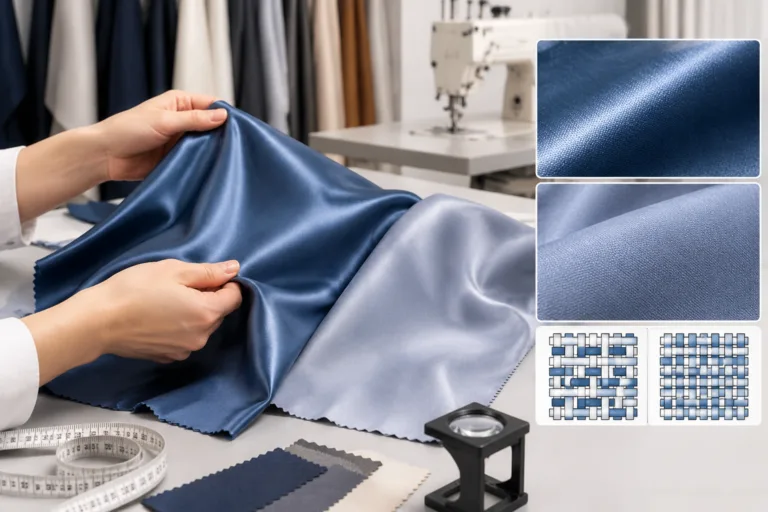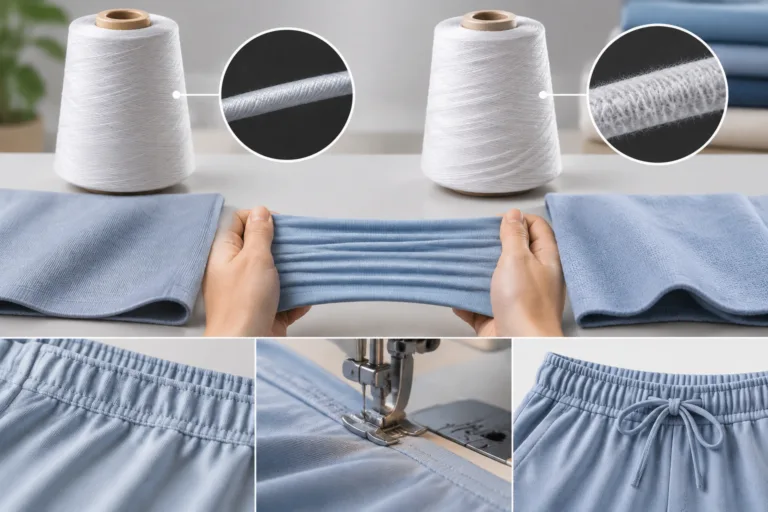
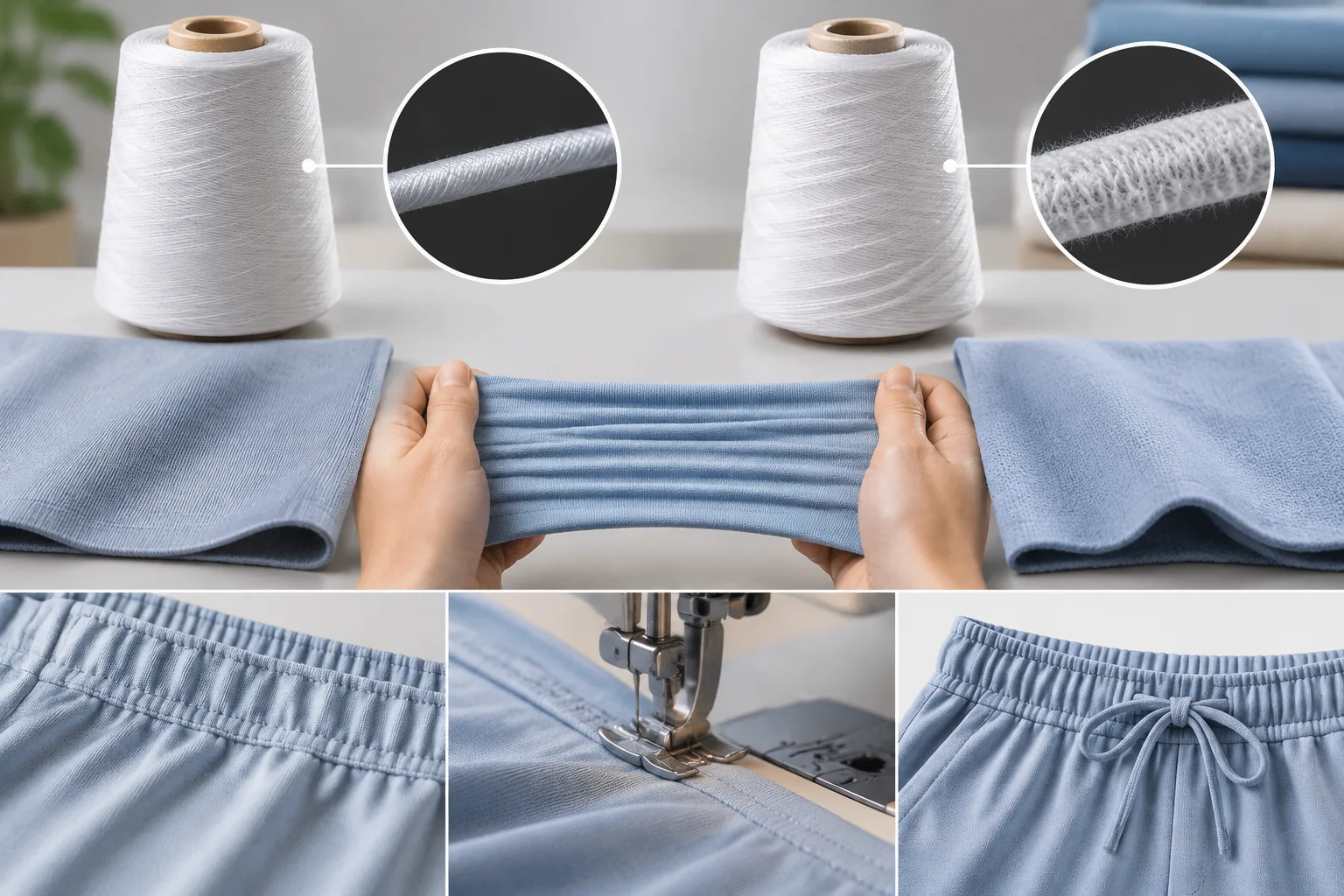
Single covered yarn vs double covered yarn is primarily a comparison of construction, not an automatic quality ranking. A covered elastic yarn has an elastic core with another yarn arranged around it. In a single-covered construction, one covering element or covering operation is used; in a double-covered construction, two covering elements or covering operations are used, often to create a different arrangement around the core. The exact meaning can vary by supplier, so the technical description matters. Apparel Wiki provides independent education; information about its Sponsor support does not replace yarn evidence.
The covering count can influence how the yarn handles during formation and how its structure presents in fabric, but it does not establish stretch, recovery, comfort, durability, or appearance by itself. Core type, covering material, tension, linear density, fabric construction, and finishing also matter. Start with the garment requirement and fabric rather than assuming that more covering is better.
Single covered yarn vs double covered yarn: what changes?
Covering means wrapping or otherwise arranging a yarn around an elastic core. The core supplies the elastic component, while the covering helps enclose and support it within the yarn structure. The covering may also influence how the yarn feeds into knitting or weaving and how the core is presented when the yarn is formed into fabric.
A single-covered elastic yarn generally has one covering strand or one covering operation around the core. A double-covered elastic yarn generally uses two covering elements or passes. Those elements may be arranged together, separately, or in a way defined by the producer’s process. Therefore, “single” and “double” describe the stated construction, but they do not provide a complete specification.
Two yarns with different covering arrangements may respond differently to tension, bending, feeding, and fabric formation. That does not mean the double-covered option will always stretch more, recover better, feel smoother, or last longer. The result depends on the core, covering fibers, yarn linear density, covering tension, equipment, fabric structure, and finishing conditions.
Before comparing samples, ask the supplier to identify the core material, covering material, number and arrangement of covering elements, and the basis of any count or linear-density notation. A trade name alone may not reveal whether the stated count refers to one component, the covered yarn, or an assembled structure. The useful initial question is not “Which construction is superior?” but “Which construction should be investigated for this fabric and end use?”
How covering construction and processing affect the yarn
The elastic yarn covering process links several variables. Core preparation and pre-tension affect how the core is presented before covering. The covering element must be introduced with controlled tension and a suitable path so that it remains arranged around the core. The number of covering elements or passes changes the construction, but the result also depends on how consistently those elements are applied.
Coverage uniformity is important to investigate because differences along the yarn can change its appearance, handling, or behavior during fabric formation. Excessive or uneven tension may alter the relationship between the core and covering. Winding then becomes another consideration: package build, winding tension, and handling can affect how consistently the yarn feeds later. These are process relationships to examine, not universal defect rules or a production recipe.
Downstream settings can change the result even when the nominal yarn description remains the same. Knitting or weaving tension, stitch or fabric structure, machine compatibility, and finishing can all affect how the covered yarn is held, extended, and relaxed. A yarn-construction decision is therefore separate from a machine-setting decision. Selecting a double-covered yarn does not remove the need to evaluate the equipment and fabric process.
For development work, request more than a trade name or one linear-density figure. Ask for a written construction description, material information, relevant processing notes, and technical data that explains the conditions behind any performance statement. If a sample shows inconsistent coverage or feeding behavior, treat that observation as a prompt to review tension control, package handling, fabric settings, and sample comparability rather than assigning one cause immediately.
This processing overview is general educational guidance. It is not a validated covering recipe, a machine-setting specification, or a guarantee of defect-free output.
Compare the options by fabric requirement and risk
A practical single vs double covered yarn comparison begins with the fabric requirement. Record what the fabric must do, what the wearer will notice, and what evidence is available. Then compare constructions under conditions that keep the yarn, fabric structure, and finishing variables visible.
| Observable input | Likely implication to investigate | Initial construction question | Variables that could change the choice |
|---|---|---|---|
| Required stretch and recovery behavior | Compare how each construction behaves in the intended fabric, rather than inferring performance from the label. | Would single or double covering provide the more relevant sample comparison? | Core type, fabric structure, extension level, finishing, and evaluation conditions |
| Surface and comfort priority | Check hand, surface consistency, and contact feel at fabric level. | Does the covering arrangement need closer review for the intended skin contact? | Covering material, yarn tension, fiber blend, fabric density, and finishing |
| Fabric weight and structure | Assess feeding, appearance, and dimensional behavior in the actual construction. | Which option is compatible with the planned knit or woven structure? | Machine settings, stitch or weave design, yarn linear density, and finishing |
| Processing complexity and available data | Identify where unclear construction or limited technical information creates risk. | Can the supplier define the construction and applicable data clearly? | Equipment, lot consistency, documentation quality, and sample availability |
Double covering may be worth investigating when a project needs a different balance of coverage, stability, or surface behavior. Those are evaluation attributes, not guaranteed outcomes. Single covering may also be a reasonable comparison point when the project is considering a simpler stated construction or when available evidence supports that direction. The label alone does not establish lower cost, lighter weight, easier processing, or better quality.
For a lightweight knit intended to sit close to the skin, hand and surface consistency deserve close attention alongside stretch and recovery. A yarn that appears suitable in isolation may present differently after knitting and finishing. Fiber choice, knit structure, finishing, and end use can change the decision, so compare fabric samples rather than judging only a loose yarn strand.
Manufacturing economics, availability, and machine compatibility remain project variables. Ask which information is documented, which observations come from matched samples, and which claims still require an appropriate evaluation method. This approach helps answer which covered yarn to choose without turning a construction name into a universal ranking.
What to include in a yarn specification and sample review
A useful comparison record should describe the yarn before it describes the result. Record the construction in the supplier’s own technical language, including the elastic core, covering material, number or arrangement of covering elements, and any stated processing notes. Also note whether the description refers to one yarn, a covered yarn, or an assembled structure.
Include the linear-density value and its original unit. Tex, denier, and dtex are direct systems: they express mass per length using different length bases. Preserve the stated unit rather than silently replacing it. If a conversion is needed, use it only when the input definition is clear. An indirect count such as Ne should not be compared directly with a tex, denier, or dtex value as though the numbers shared the same basis.
A short specification block can include:
- Construction: written description of single or double covering, including the supplier’s explanation of the arrangement.
- Materials: elastic core and covering material names, with composition details where supplied.
- Linear density: value, notation, unit, and whether it describes the individual or assembled yarn.
- Application: intended knitted or woven fabric use and relevant garment requirement.
- Processing notes: winding, knitting or weaving considerations, and finishing information supplied for the sample.
- Evidence: available test conditions, sample or lot identification, and the source of each observation.
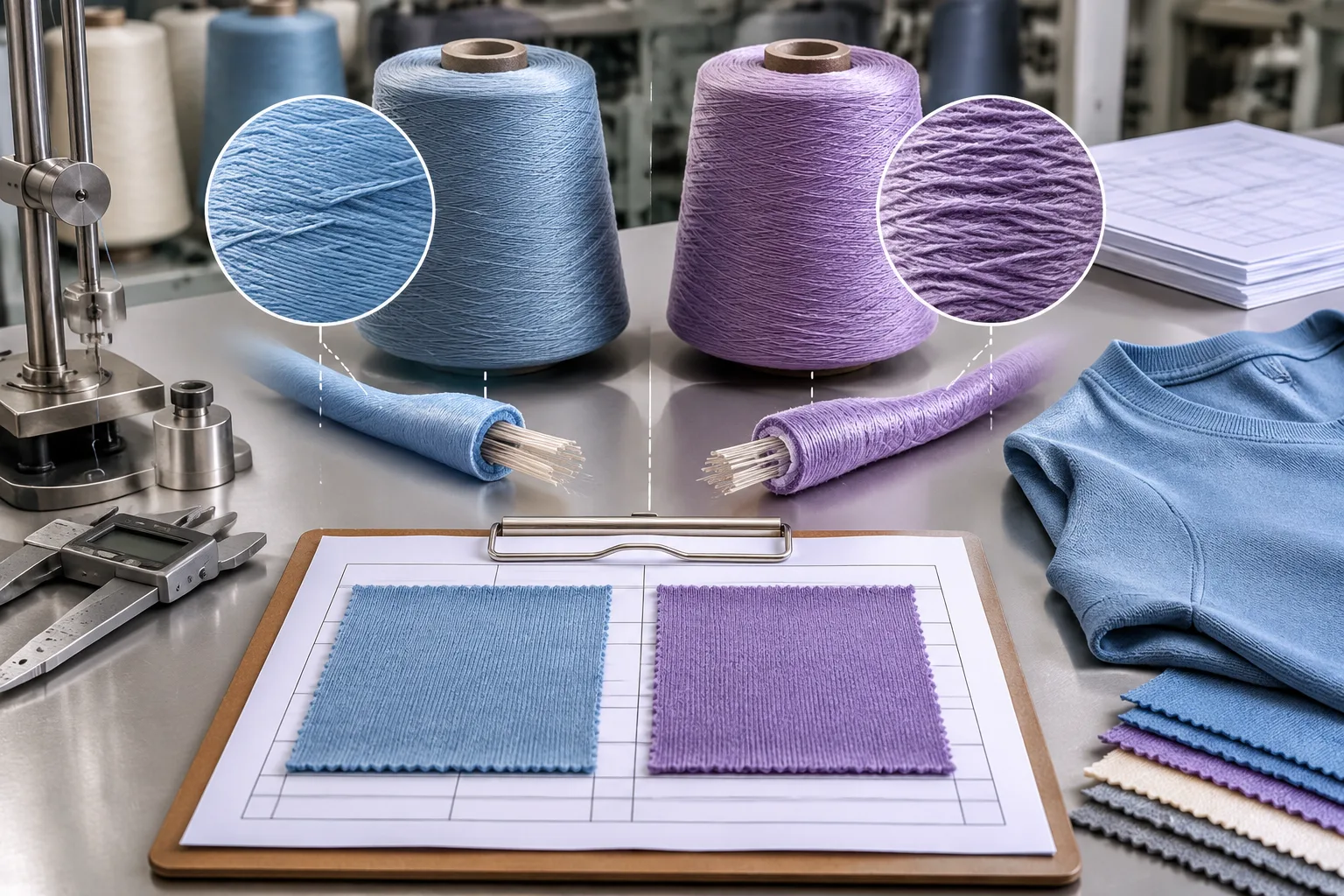
Keep yarn-level observations separate from fabric- and garment-level observations. A loose yarn sample can reveal construction, winding appearance, or visible coverage. It cannot by itself establish how the yarn will feel against skin, recover in a fabric, or look after finishing. For a fair comparison, use matched fabric construction, finishing, conditioning, and evaluation conditions where possible. Record whether each observation concerns the yarn, fabric, garment, or test setup.
When consistency matters, compare more than one sample or record the available lot information. This helps identify an unresolved variation without creating an acceptance limit. A sample review is an editorial and development aid; it does not replace a validated test when a performance claim matters.
Limitations, trade-offs, and common comparison mistakes
Yarn architecture is one input in a chain that also includes fiber materials, yarn linear density, fabric structure, machine conditions, finishing, and end use. The same covered yarn may therefore support different fabric outcomes in different constructions. Appearance, comfort, recovery, dimensional behavior, and durability need context at the fabric or garment level.
Do not treat “double-covered” as a quality ranking. More covering, a higher linear-density value, or a familiar commercial term does not automatically prove better performance, greater comfort, or easier processing. It also does not establish a legal, regulatory, or other formal claim. The construction name is a starting point for investigation, not a substitute for technical information.
Common comparison mistakes include:
- Comparing denier, dtex, tex, or an indirect count without recording the system and basis.
- Assuming a marketing name provides a complete technical definition.
- Judging stretch or recovery from a loose yarn sample and transferring that impression to a finished garment.
- Comparing samples made with different fabric structures, finishing conditions, or evaluation setups.
- Transferring a result from one test approach to another without checking whether the methods and conditions are comparable.
If supplier terminology is incomplete, request a written construction description and clarify what each number represents. Similar shorthand can describe different bases, especially when a notation might refer to a single yarn, a covered yarn, or an assembled structure. Do not fill that gap with an assumption about the covering count or expected result.
An illustrative calculation can help explain a unit relationship, but it does not prove physical performance, production limits, or compliance. Likewise, supplier data is information to assess, not independent proof of every claim. Keep uncertainty beside the recommendation and identify which question requires matched samples or an appropriate evaluation method.
Use the comparison to define the next sample question
Single-covered and double-covered yarns are construction options, not universal performance rankings. Define the fabric requirement, clarify the elastic core and covering arrangement, compare matched evidence, then reassess the result after fabric formation and finishing. Create a side-by-side specification sheet, preserve units and test conditions, document unknowns, and check the applicable evaluation method whenever a performance claim matters.
Frequently Asked Questions
Is double-covered yarn always better than single-covered yarn?
No. Double covering may be worth investigating for a particular balance of coverage, surface behavior, or stability, but the label does not guarantee those outcomes. Fabric structure, finishing, processing, end use, and available evidence determine which construction is suitable.
What information should a supplier provide for a covered elastic yarn?
Request a written construction description, elastic core and covering materials, covering count or arrangement, linear-density value and unit, intended application, processing notes, sample or lot information, and any available data with its test conditions.
Can yarn count or denier alone show how a covered yarn will perform in fabric?
No. A count or denier value describes a measurement basis, not complete fabric performance. It must be interpreted with the yarn construction, core and covering materials, fabric structure, finishing, evaluation conditions, and intended use.
How should single-covered and double-covered yarn samples be compared fairly?
Compare samples in matched fabric constructions with consistent finishing and evaluation conditions where possible. Preserve the original units, identify the sample or lot, and record whether each observation concerns the yarn, fabric, garment, or test setup.
Why can the same covered yarn behave differently in two fabrics?
Knitting or weaving conditions, fabric structure, yarn tension, finishing, fiber materials, and garment use can change the final result. A yarn-level description cannot predict every fabric-level or garment-level response.
When should a covered-yarn comparison use a formal test method?
Use an applicable formal method when a decision depends on a stated performance claim or when results must be compared consistently. Confirm the method, units, conditioning, and reporting basis rather than transferring an unrelated result.