Checking Sponsor information is separate from checking a fabric’s technical performance. To evaluate cationic softening fabric strength, compare the same material before and after the relevant finishing treatment under a documented, method-appropriate procedure. A softer hand feel can guide observation, but it cannot by itself prove strength loss or improvement.
The useful sequence is to identify the material, preserve a comparable baseline, select the strength property that matches the fabric and intended use, and record the conditions behind each result. This approach helps distinguish an observed change from a conclusion about the softener.
Cationic softening fabric strength: what the check is meant to show
Cationic softening is a fabric finishing treatment described here only at a practical level: a cationic softening finish is applied to improve the fabric’s hand or surface feel. Its formulation, concentration, application method, and process conditions are project-specific technical matters. They should not be inferred from the commercial name of a finish.
A strength review asks a narrower question: did a measurable fabric property change after the treatment? That question is different from whether the fabric feels smoother, looks fuller, drapes differently, or changes dimensionally. These observations may all matter to product development, but none substitutes for a relevant strength evaluation.
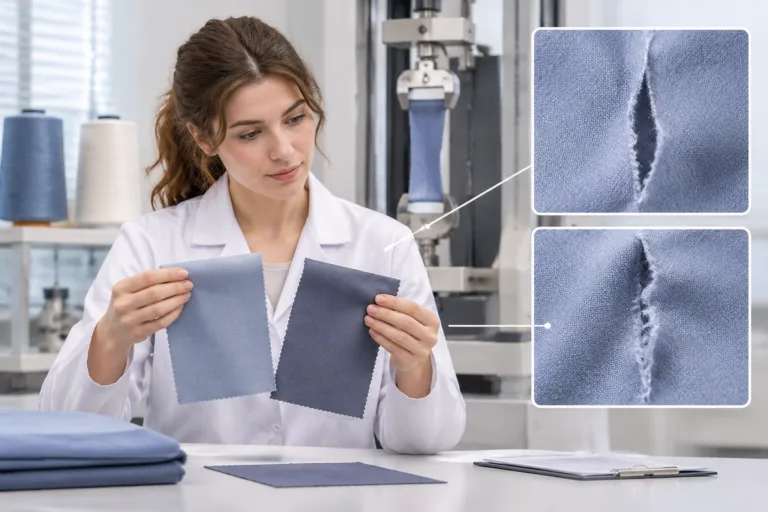
Strength is also not one single result. Tensile evaluation concerns resistance to a specified pulling action. Tear evaluation addresses resistance to a tear once a tear is initiated. Bursting evaluation can address how a fabric responds to multidirectional loading, while seam-related checks concern the fabric and seam construction together. Abrasion may answer a wear question rather than a direct breaking-strength question. One result should not be presented as evidence for all of these properties.
The comparison should use the same material before and after the relevant softening treatment whenever the project can retain a pre-treatment sample. Record fiber content, yarn information, fabric construction, available mass or specification, finishing stage, and intended use. A label such as “satin” or “knit” is not a complete material identity: satin may describe a construction category, and knit describes a structural method, not a fiber.
Finishing stage matters as well. A treatment applied at fiber, yarn, fabric, or garment stage may be associated with different surrounding processes and comparison constraints. Prior dyeing, drying, curing, washing, or other finishing can affect what the finished sample represents. The result is therefore decision support for a defined material and use, not a universal specification for all cationically softened fabrics.
Set up a fair before-and-after fabric comparison
Begin by preserving the fabric’s identity. The comparison record should state the fiber composition, yarn or fabric construction, available fabric mass or other specification, lot or approval reference, finishing stage, treatment status, sample location, and relevant wash or conditioning history. Note where and when the softening was applied if that information is available.
Retain an untreated or pre-treatment sample when possible. A finished sample can then be compared with its own documented baseline instead of with another fabric that shares a style name or broad commercial description. If the review also concerns care durability, a post-care sample may be added. That separates an immediate finishing comparison from a change that appears after an agreed care condition.
| Observable input | Why it matters | Initial comparison choice | Variable that could change the choice |
|---|---|---|---|
| Fiber, yarn, construction, and fabric mass | These identify the material beyond its trade name. | Compare samples with matching recorded specifications. | Different lots, blends, structures, or fabric weights may require a separate baseline. |
| Finishing stage and treatment status | It shows what process the sample represents. | Pair an untreated or pre-treatment sample with the finished sample. | Softening at fiber, yarn, fabric, or garment stage changes the comparison context. |
| Sample location and direction | Fabric position and orientation can affect specimen preparation. | Use comparable locations and directions where the applicable method calls for them. | Method requirements, fabric width, patterning, and known variation may alter sampling. |
| Conditioning or post-care history | It distinguishes an immediate result from a later-use result. | Compare samples with the same documented history. | Care instructions, project decisions, and the selected method may require another condition. |
Keep conditioning, specimen preparation, equipment, operator instructions, and reporting units consistent. The applicable strength method should determine how specimens are taken and prepared; do not substitute generic conditioning times, temperatures, tolerances, or acceptance limits. Direction or orientation should also be recorded when relevant to the method and fabric.
Retain the material identity, treatment record, approval information, and comparison conditions with the result. If an unexpected difference appears, those records can help distinguish a different lot, construction, treatment stage, or later process from the softening treatment itself. A documented fabric finishing comparison is more useful than an isolated number without its sample history.
Choose the strength checks that match the fabric and use
Select strength-property categories from the product question, not from a universal test list. A woven or knitted structure provides a starting clue, but structure alone does not determine performance. Fiber content, yarn arrangement, fabric mass, finishing history, garment construction, and expected use can all change which failure mode matters.
| Observable fabric or use input | Property that may be relevant | Initial check to consider | Variables that could change the choice |
|---|---|---|---|
| Fabric expected to resist a pulling load | Resistance to tensile loading | Consider a tensile-strength evaluation. | Direction, stretch, construction, seam design, and the applicable method affect the question. |
| Fabric likely to encounter a localized cut or tear | Resistance to tear propagation | Consider a tear evaluation. | Fabric structure, edge condition, specimen preparation, and use-related damage may change relevance. |
| Stretchable or multidirectionally loaded fabric | Resistance to bursting or related loading | Consider a bursting evaluation where the product question supports it. | Fiber, construction, elasticity, garment fit, and the selected method can change the interpretation. |
| Fabric joined into a garment | Behavior of the seam and surrounding fabric | Consider a seam-related evaluation. | Seam type, stitch, thread, seam allowance, and garment design may be more important than fabric strength alone. |
| Surface exposed to repeated rubbing | Resistance to abrasion-related damage | Consider an abrasion-related evaluation. | Contact surface, care, coating, construction, and the intended wear pattern can change the product question. |
For each selected check, choose the applicable method before comparing numbers. Record the method name or identifier when validated, fabric direction or orientation where relevant, specimen condition, result units, and any reported variability. A test-method result describes performance under that method. It is not automatically a general durability claim, a regulatory pass, a certification result, or proof of garment-level performance.
Consider a lightweight knit intended for a close-fitting garment. Bursting or seam-related concerns might deserve attention because the garment can impose multidirectional or concentrated loads. That is a decision prompt, not a rule for every lightweight knit. A different fiber, construction, fit, seam, or end use could make tensile, tear, abrasion, or another evaluation more informative.
Keep the strength categories separate when reviewing fabric strength testing after softening. Just as one care or color-fastness result cannot represent every related fastness property, one strength result cannot represent every way a fabric may fail. The most defensible selection connects the material record and intended use to a clearly stated product question.
Interpret a strength difference without blaming the softener too quickly
Begin with the observed comparison, not an explanation. Identify the property reviewed, whether the result increased or decreased, the result reported by the applicable method, and whether comparable specimens show a consistent pattern. A difference in one reported result is evidence for further review. It is not, by itself, proof that the cationic softening finish caused the change.
Next, confirm that the samples represent the same material. Check fiber content, yarn and fabric construction, fabric mass or available specification, finishing history, treatment stage, and sample location. Also review conditioning, specimen preparation, fabric direction, post-treatment handling, and any agreed washing or care step. A difference in one of these records can complicate attribution.
Possible explanations should remain separate from measured findings. The treatment may be one variable, while prior dyeing or finishing, drying or curing conditions, handling, sampling variation, and the selected test method may also matter. Without validated chemistry-specific evidence, avoid assigning a mechanism such as fiber interaction or lubrication. Record those process details as variables to investigate.
Record hand feel separately from strength. A softer hand can coexist with an unchanged, reduced, or improved strength result, depending on the material and process. Appearance, dimensional behavior, and care response should also remain separate observations. Reviewing these attributes together supports a product decision, but one observation should not be used as a substitute for another.
A practical review sequence is:
- Confirm the baseline and finished-sample identities, including lot, construction, treatment stage, and retained approval records.
- Confirm the selected property, applicable method, specimen direction, preparation, units, and reported variation.
- Compare like with like and check whether the difference appears consistently across comparable specimens.
- Review other dyeing, finishing, drying, curing, handling, and care variables before assigning responsibility to the softening finish.
- Compare the finding with the project requirement and record the next action with its responsible decision owner.
For example, if a lightweight fabric shows a lower post-softening result, first check the baseline, method record, specimen location, and other finishing steps. The correct response may be a repeat or independent technical review, but the repeat plan and acceptance decision belong to the responsible technical team and applicable method. The result should not be treated as proof of a universal fabric strength loss after finishing.
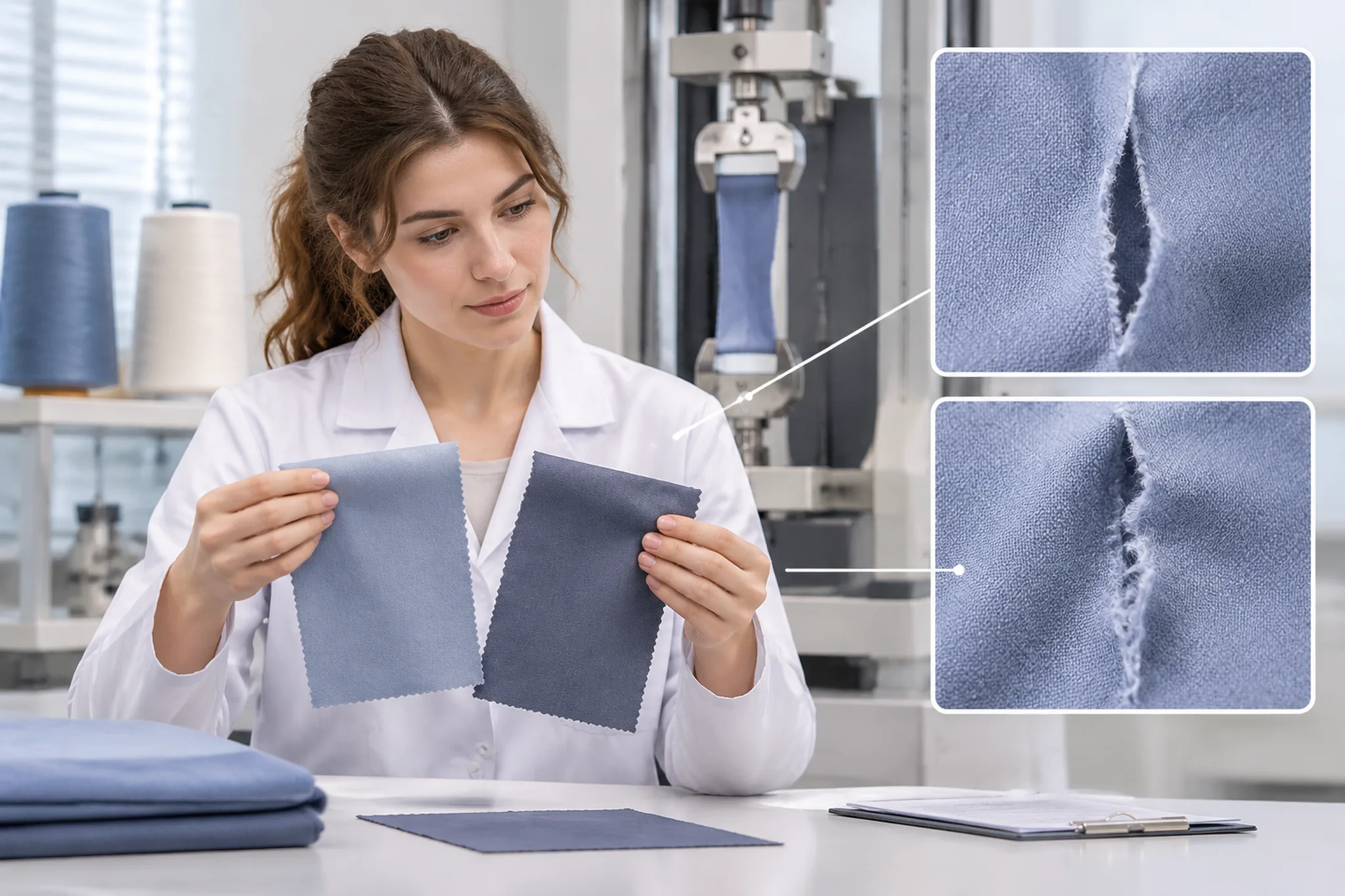
Turn the comparison into a documented fabric decision
A useful fabric finishing quality check ends with a traceable decision record. Start by confirming the sample identity and the strength property that answers the product question. Then confirm the applicable method and compare the finished material with the documented baseline under consistent conditions. The comparison should be judged against the project’s own requirement, not an invented universal limit.
That requirement may come from a product specification, buyer requirement, risk assessment, or responsible technical authority. A general textile fact cannot establish that a particular result is adequate for every garment category. Where the result conflicts with the requirement, seek a qualified technical review and keep the material decision unresolved until the relevant question is addressed.
At minimum, record:
- fiber content, construction, fabric mass or available specification, and sample identity;
- treatment status, finishing stage, baseline source, and relevant care history;
- selected property, method, specimen condition, direction where relevant, units, and result;
- hand, appearance, dimensional, or other observations recorded separately;
- limitations, unresolved variables, next action, and decision owner.
This record helps another reviewer understand what the comparison established and what it did not. If strength meets the project requirement but hand or appearance does not, the decision is not strength-only. Conversely, acceptable hand does not resolve an unexplained strength concern. A fabric may satisfy a requirement in one construction and care condition yet need further review when the intended garment use or post-care condition changes.
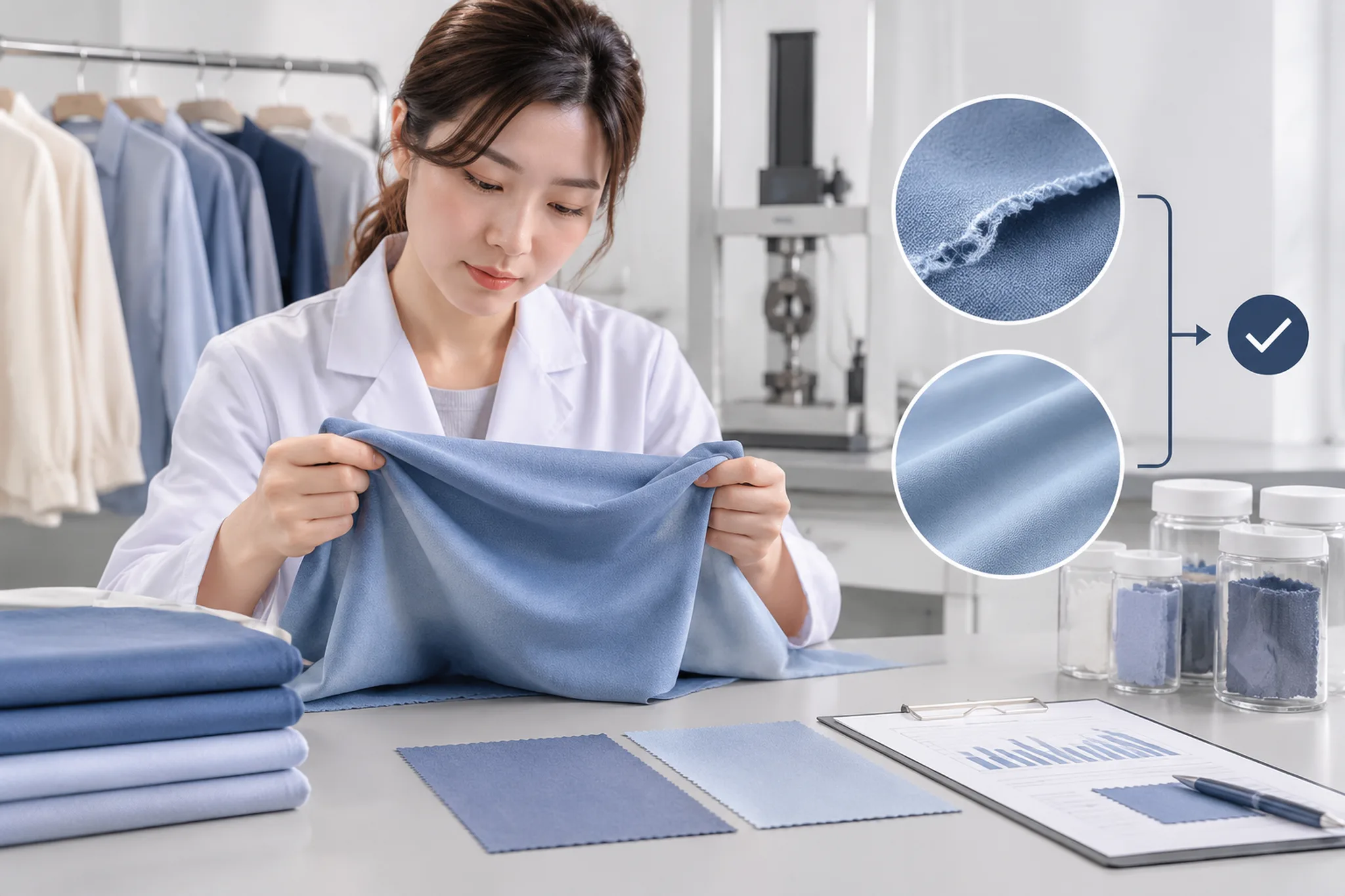
Use the result to plan the next verification step
Checking cationic softening fabric strength requires a documented, method-appropriate comparison rather than a judgment based on softness alone. Compare the material specification and treatment history, identify the strength property relevant to the intended use, and confirm the applicable method and project acceptance criterion with the responsible technical or testing authority. Keep the observed result, possible explanation, and final project decision distinct before changing the treatment or approving the material.
Frequently Asked Questions
Can a softer hand feel prove that cationic softening weakened the fabric?
No. Hand feel is a separate observation from tensile, tear, bursting, seam-related, or abrasion-related strength. A softer feel does not establish the direction or size of a strength change. Compare documented samples using the applicable method.
Should fabric strength be checked before and after cationic softening?
A before-and-after comparison is useful when the project needs to know whether a property changed after treatment. Use the same material and a traceable baseline when available. The selected property, specimen preparation, and comparison conditions should follow the applicable method.
Which fabric strength property should be reviewed after softening?
Choose the property that matches the fabric, likely failure mode, and intended use. Tensile, tear, bursting, seam-related, and abrasion-related evaluations answer different questions. Construction provides a starting clue, but it does not determine one universally sufficient check.
How can I separate the effect of softening from other finishing variables?
Compare like-for-like samples and review fiber content, construction, fabric mass, finishing history, treatment stage, specimen preparation, conditioning, handling, and care history. If the result remains unclear, document the uncertainty and seek a repeat or technical review under the applicable method.
What information should be included in a before-and-after fabric strength report?
Include sample identity, material specification, treatment status, baseline source, selected property, method, specimen condition, direction where relevant, units, results, observations, limitations, and decision owner. Also record the project requirement and any unresolved variable affecting interpretation.