Understanding Hem Meaning in Garment Manufacturing
The term “hem” carries significant weight in the apparel industry and daily garment care. Whether inspecting a premium sports polo or altering a favorite pair of jeans, the hem’s construction and finish communicate essential clues about quality, durability, and style. In this article, we will clarify hem meaning, explore various garment hem types, and provide practical, factory-level guidance on hemming methods for both woven and knit fabrics. This is the definitive guide for brands, buyers, tailors, and anyone aiming for excellence in garment finishing.
What Is a “Hem”?

A hem is the folded and stitched edge at the bottom of a garment panel—most commonly found on sleeves, trouser legs, skirts, and shirt bodies. The fundamental purpose of a garment hem is to finish the raw edge of the fabric, prevent fraying, and enhance the aesthetic appeal and longevity of the piece. Well-constructed hems deliver a professional look, hold their shape after washing, and withstand daily wear.
Core Purpose of a Hem in Apparel
- Secures the fabric edge to avoid unraveling
- Improves the garment’s silhouette and visual finish
- Ensures durability and resistance to wear and tear
- Accommodates ease adjustments, length corrections, and individual fit preferences
Key Hem Parameters
| Parameter | Typical Values | Impact |
|---|---|---|
| Hem depth (width of fold) | 1–5 cm (shirt hem: 2.5–3 cm, jeans: 2–3 cm) | Affects drape and durability |
| Stitch type | Lockstitch, chainstitch, coverstitch | Determines seam appearance and stretch |
| Thread type | Poly/cotton, core-spun, elastic thread | Influences strength and elasticity |
| Finish | Topstitched, blind, rolled, serged | Visual and tactile properties |
Common Hem Mistakes and How to Avoid Them
- Incorrect hem depth: Causes puckering or an unstable edge
- Loose stitch tension: Can lead to seam slippage or popping during wear
- Omitting stabilizers on stretchy knits: Results in wavy or stretched hems
- Failure to press after sewing: Creates an uneven appearance
Practical Tips for Checking Garment Hems
- Confirm hem depth matches spec sheet (±0.5 cm tolerance is standard for woven, ±1 cm for knits)
- Review stitch density (SPI: 8–16 for coarser denim, 12–18 for dress shirts)
- Gently tug at the hem: A high-quality hem should not distort or open at seams
- Inspect for skipped stitches or loose threads before bulk approval
Rain’s tip from the factory floor: Always inspect hems post-wash for puckering or twisting—especially with knits. A quality hem should remain flat and true after laundering.
The Function and Value of Garment Hems
In both industrial sewing lines and bespoke tailoring ateliers, the hem takes center stage during final garment assembly and finishing. Here’s why garment hem quality is critical:
Stabilizing the Fabric Edge
Fabrics—especially those with open weaves or knitted structures—are prone to fraying or curling at the cut edge. Hemming mechanically encloses these edges to reinforce the integrity of the panel, maintaining a crisp silhouette through repeated use.
Controlling Drape and Fit
The hem affects how a garment falls and moves with the body. Deeper, heavier hems can shape the hang of skirts and dresses, while lightweight, narrow hems on t-shirts or activewear keep the finish soft and flexible. Hem placement is routinely adjusted during fit sampling and wearer trials to achieve the desired look and comfort.
Branding and Quality Perception
In export factories, hem finishing is a signature for distinguishing “basic” versus “premium” product tiers. Topstitched hems signal durability on jeans and workwear, while invisible hems are prized for elegance in formalwear. Misaligned, puckered, or uneven hems are strong indicators of rushed or low-grade production.
Types of Hems Used in Garment Construction
The choice of hem type varies widely depending on the garment silhouette, intended use, and the fabric’s physical properties. Here are the main types of garment hems professionals encounter on the production floor:
Single Fold Hem
The simplest method—folding the fabric edge over once and stitching it down. Common on inexpensive or casual garments where durability trumps finesse.
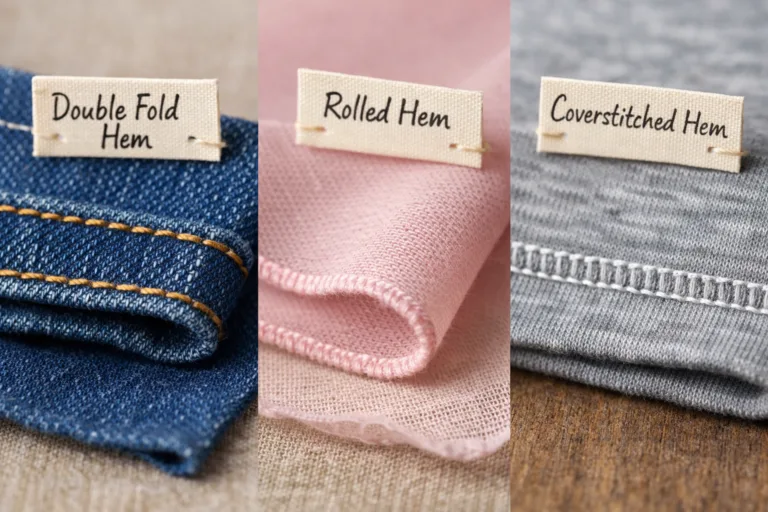
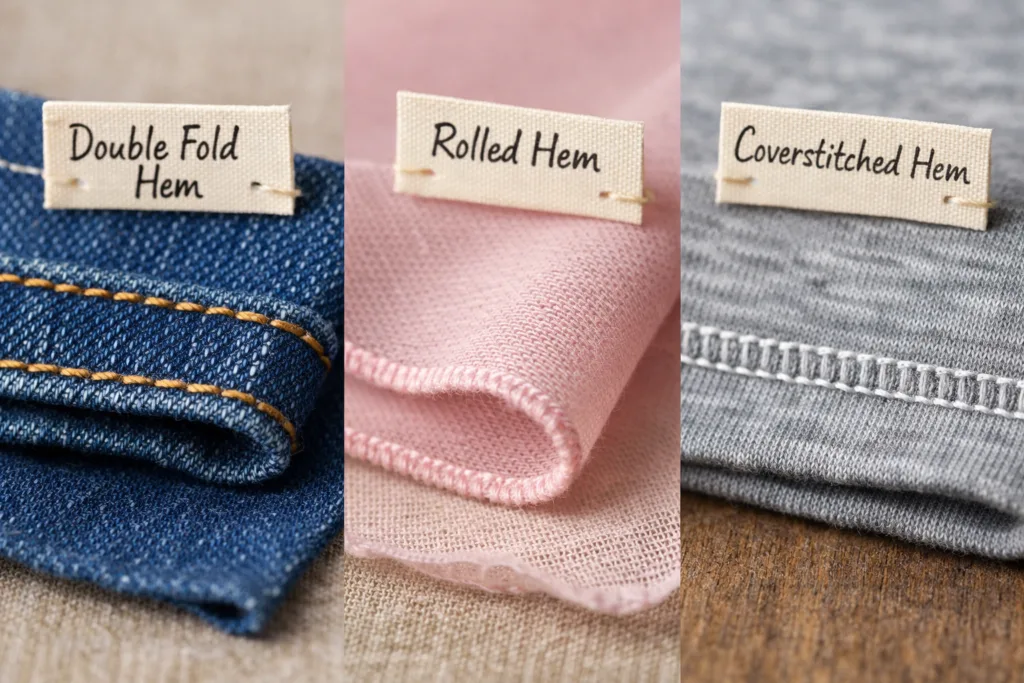
Double Fold Hem (Turned Hem)
The edge is turned under twice (typically 1–3 cm per fold) before sewing, concealing the raw cut entirely. This method offers a neat finish and extra strength. Widely used for shirt tails, trouser legs, skirts, and most woven tops.
Rolled Hem
Achieved by tightly rolling the edge (often only 2–4 mm wide) and sewing, usually with a specialty foot. Suited to lightweight woven fabrics (chiffon, silk) found in scarves, blouses, or lingerie.
Blind Hem
Sewn so that only minimal stitching shows on the garment’s right side. Ideal for formal trousers, skirts, and dresses, especially where a seamless look is needed.
Coverstitched Hem
Delivers parallel rows of stitching on top, with looping on the reverse side. Integral for knitwear—t-shirts, polos, sweatshirts—where the hem must stretch without losing shape. Executed on a coverstitch machine (ISO 602 stitch).
Serged/Overlocked Hem
The fabric edge is enclosed by overlocking (serging) and sometimes folded once before stitching. Used for activewear, technical sports garments, and casual knits where stretch and rapid production are priorities.
Faced Hem
Reinforced with an extra piece of fabric (a facing), used in tailored jackets, coats, and some high-end skirts to add weight, structure, or contrast.
Decorative/Lettuce Hem
Stitching is deliberately stretched and manipulated to create a wavy effect—popular for trendy jersey tops, kidswear, and dance costumes.
Comparing Hem Types: Selection Table
| Hem Type | Best for Fabric | Recommended Stitch | Typical Garment Use |
|---|---|---|---|
| Single Fold | Medium/heavy wovens | Lockstitch | Casual shirts, work shorts |
| Double Fold | Most wovens | Lockstitch | Dress shirts, trousers, jeans |
| Rolled | Lightweight woven (chiffon/silk) | Narrow hem machine/serger | Scarves, blouses, lingerie |
| Blind | Suiting, trousers, skirts | Blind hem machine | Formalwear, uniforms |
| Coverstitched | Knit jersey, fleece | Coverstitch | T-shirts, sports tops |
| Serged/Overlocked | Stretch knits | Overlock + lockstitch | Activewear, leggings |
| Lettuce | Lightweight stretch knits | Serged (stretched) | Dancewear, kidswear |
Hemming Methods for Woven Fabrics
Woven fabrics—ranging from denim to poplin to twill—require specific hemming techniques to ensure the edge is secure, flat, and shows minimal puckering after washing. Here are the main approaches used in large-scale garment manufacturing and tailoring:
Double Turned & Topstitched Hem
Most wovens are finished with a double fold (typically 2–3 cm per fold) pressed with steam for crisp definition, then topstitched with a lockstitch machine. The double fold avoids raw edge exposure and delivers a clean finish both inside and out. This is standard for jeans, trousers, and woven shirts in export factories.
Blind Hemming for Formalwear
In suiting and dress pants, factories use a blind hem machine equipped with a curved needle to deliver near-invisible stitches on the outside. The hem is stabilized with fusing tape or a lightweight interfacing for a perfectly even drape.
Rolled or Pin Hem for Delicate Wovens
For silk, chiffon, and organza, a rolled hem foot (narrow hemmer) or fine overlocker is used. The edge is curled and sewn in a single pass for an unobtrusive, elegant finish. Pressing with low heat secures the shape without flattening the roll.
Using Hem Tape and Fusibles
Fusible hem tape offers quick reinforcement, especially for home alteration or when sewing high-volume basics. Tape is ironed into the hem crease before final stitching. While less common in high-end manufacturing, fusibles are routinely used on uniform pants and skirts for durability.
Puckering and Shrinkage Controls in Wovens
Before final hemming, panels are pre-shrunk (sometimes 2–3% shrinkage allowance) and steam-pressed to relax tension from cutting. This step prevents post-wash distortion and keeps hems flat over the garment’s lifespan.
Hemming Methods for Knit Fabrics
Knit fabrics—such as jersey, rib, interlock, fleece, and French terry—demand hemming techniques that can accommodate stretch and recover without losing shape or causing wavy distortion. In Rain Chen’s experience, these methods are vital for premium sportswear and casual apparel:
Coverstitch Hem for Knits
Most factory-made knit hems use a coverstitch machine (two or three top threads, one or two looper threads underneath) to sew parallel lines visible on the garment’s outside, with looping below. This construction allows the hem to stretch comfortably. Standard on t-shirts, polo shirts, and sweatshirts.
Flatlock Hem for Minimal Bulk
Used on lightweight activewear and yoga garments when a flat, less bulky look is desired. Panels are joined edge-to-edge and stitched using a flatlock machine (ISO 607), reducing chafing and improving comfort against the skin.
Overlocked and Turned Hem
For speed and economy, many mass-market knits are first overlocked to secure the edge, then turned up and stitched down with a straight or zigzag stitch. This reduces bulk but offers less stretch than pure coverstitch.
Lettuce Edge Hem for Fashion and Kidswear
A serger is set to stretch the fabric as it sews, causing a ruffled, “lettuce” effect. Popular for trendy styles and soft jersey garments, especially in young fashion and girls’ tops.
Stabilizing Knits: Fusibles, Tapes, and Elastic Threads
To prevent wavy hems, factories may insert a lightweight fusible tape, elastic thread, or stay tape along the foldline before sewing. This technique ensures the hem snaps back after washing and prevents stretching out over time.
Factory Checks for Knit Hems
- SPI (stitches per inch/cm): 10–16 depending on fabric weight
- Stretch/recovery test: Hem should easily stretch by 15–25% and recover flat
- Wash test: No excessive waviness or curling after one normal wash cycle
- Visual inspection: Even, aligned parallel lines—especially important for coverstitched hems
Garment Categories and Hem Design: Factors to Consider
The choice of hem construction depends not just on fabric and machinery, but on the target garment category, wear conditions, and branding requirements:
T-Shirts and Polo Shirts
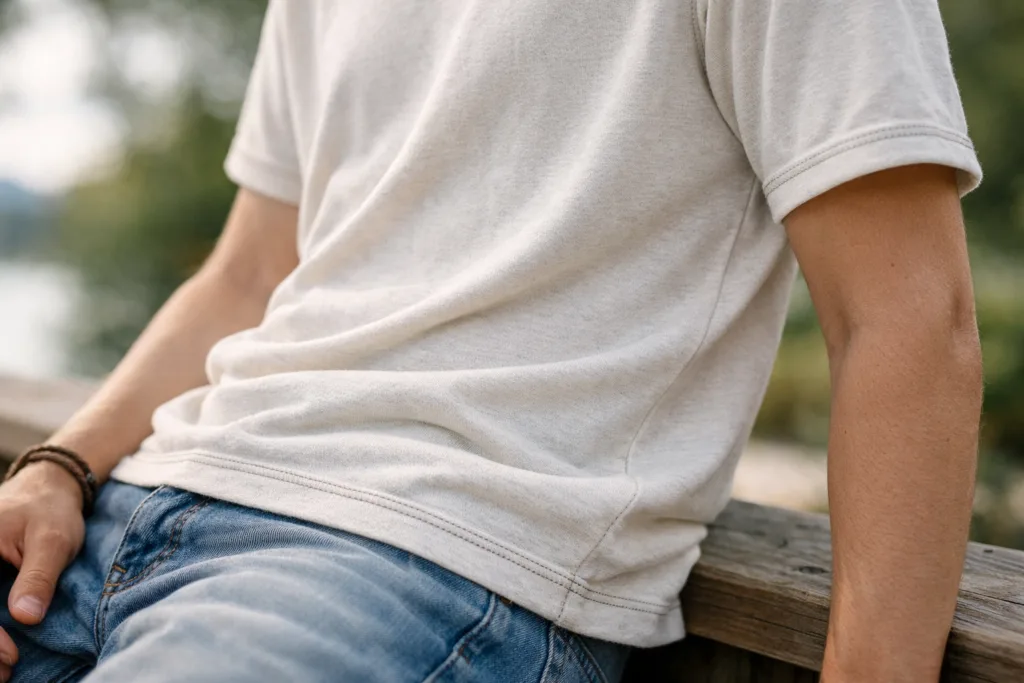
Coverstitched hems with a 2–2.5 cm depth are industry standard. For more upscale polos, custom stretch tapes may be added to prevent rolling and preserve shape after laundering. Always check that the hem aligns smoothly with side seams to avoid torque or twisting—a critical factor in knitwear exports.
Jeans and Trousers
Double folded, topstitched hems (with lockstitch or chainstitch) provide maximum durability. Many brands use heavy-duty bonded threads (e.g., core-spun poly/cotton) for added abrasion resistance. Hem width is typically 2–3 cm, and the depth is strictly controlled for brand consistency.
Activewear and Sportswear
Serged and coverstitched hems dominate for their flexibility, light bulk, and ability to withstand frequent washing. Look for elastane/spandex blends in the fabric combined with soft, resilient thread for no-chafe comfort.
Formalwear and Uniforms
Blind stitched hems—sometimes paired with fusible interfacing—communicate quality and professionalism. Uniforms may require added reinforcement tape or embroidery at the hemline for branding and compliance.
- Garment use (active, formal, casual)
- Fabric weight, stretch, and origin
- Required wash durability and shrinkage tolerance
- Visual branding (contrast stitching, label placement)
- Retail price point and target consumer
Hem Finishing Equipment and Industrial Workflow
Large apparel factories employ a range of machinery and workflow protocols to ensure consistent hemming quality. Here’s an overview of the main tools and finishing steps:
Key Hemming Machines in Factories
- Lockstitch machine: For all-purpose woven hems; ISO 301 stitch
- Blind hemmer: For formalwear trousers/skirts
- Overlock (serger): For edge finishing and some knit hems; ISO 504/514
- Coverstitch: For jersey and rib knits; ISO 602
- Flatlock: For activewear and yoga garments
- Rolled hem machine: For lightweight wovens
Workflow Steps
- Panel relaxation: Resting cut panels (12–24 hours) to prevent shrinkage and torque
- Edge preparation: Overlocking, pressing, taping (as needed)
- Folding: Accurate measuring and pressing to match spec sheet
- Sewing: Using specified machine and stitch density
- Final pressing: Secures hem shape and sets seam after sewing
- Trimming: Removal of loose threads or excess tape
- QC: On-line and end-line inspections, comparing to tolerance chart
Quality Control and Hem Inspection in Apparel Production
Hems require rigorous inspection protocols to catch defects and guarantee buyer satisfaction. Apparel Wiki recommends the following best practices for both home and factory QC:
Standard Inspection Points
- Hem depth is consistent across panels and matches product specifications
- Stitch type and density are uniform, with no skipped stitches
- No visible puckering, twisting, or waviness—especially after wash testing
- Thread ends are trimmed, and there are no loose tails
- Branding elements near the hem (labels, patches) are secured and correctly positioned
Measurement and Tolerance Charts
| Garment Type | Hem Depth Spec | Allowed Tolerance |
|---|---|---|
| T-shirt (knit) | 2.0–2.5 cm | ±1.0 cm |
| Dress shirt (woven) | 2.5–3.0 cm | ±0.5 cm |
| Jeans | 2.5–3.0 cm | ±0.5 cm |
| Skirt/Dress (blind hem) | 3.0–4.0 cm | ±0.5 cm |
| Activewear (knit) | 1.5–2.0 cm | ±1.0 cm |
Simple In-House Tests
- Stretch the hem gently: Does it snap back, or stay wavy?
- Wash a sample garment: Any edge distortion or seam opening?
- Measure hem depth on each panel: Consistent from front to back?
- Compare to size set and PP sample: Differences within tolerance?
- Check for color change on thread after wash (colorfastness)
What Is a “Hem”? – Final Overview & Action Steps
A hem is far more than a minor element—it is a signal of garment quality, craftsmanship, and attention to detail. Mastering hem meaning and choosing the right garment hem construction is critical for brands, designers, and production managers aiming to thrive in a competitive market.
Key Takeaways for Practitioners
- Match hem type and stitch to the fabric structure—coverstitch for knits, double fold for wovens
- Confirm hem depth, thread, and machinery align with style and performance requirements
- Inspect hems rigorously for finish quality, wash durability, and spec sheet conformance
- Discuss hem tension, panel relaxation, and wash tests with your factory before approving bulk production
- Stay current with garment category trends—experiment with decorative hems for fashion-forward lines
When collaborating with your factory, always include hem specs and inspection protocols in your tech pack and QC checklist. A good hem isn’t just about looks—it’s a signature of your brand’s reliability.
Frequently Asked Questions
What does hem mean in garment manufacturing?
In garment manufacturing, a hem refers to the folded and sewn edge that finishes a fabric panel, preventing fraying and imparting structure and style to the garment.
What are the main types of garment hems?
The main types of garment hems include single fold, double fold, rolled, blind, coverstitched, serged/overlocked, faced, and decorative (lettuce edge) hems.
How is hemming different for wovens versus knits?
Wovens generally require double fold or blind hems for stability, while knits are best finished with coverstitch or serged hems to allow for stretch and recover after wear.
What stitch is best for hem durability?
Lockstitch is preferred for woven durability; coverstitch and overlock stitches offer resilience and flexibility on knit hems, preventing seam breakage during daily use.
How can I check hem quality at home?
Check hem quality by ensuring consistent hem depth, smooth stitching, absence of loose threads, and flatness after gentle stretching or washing.
Why do hems sometimes pucker after washing?
Puckering after washing usually results from uneven tension, insufficient panel relaxation, or mismatched thread/fabric elasticity used during sewing.