What Are Non-Woven Fabrics? Definition, Features & Key Parameters
Non-woven fabrics are sheet or web structures bonded together thermally, mechanically, or chemically, rather than being woven or knitted. Unlike traditional textiles, nonwoven fabrics are directly produced from fibers, filaments, or chopped yarns into a flexible, porous structure. This unique construction unlocks characteristics such as high filtration efficiency, excellent absorbency, light weight, and customizable strength.
- Fiber types: Commonly polypropylene (PP), polyester (PET), viscose/rayon, nylon, sometimes blended with cellulose or wood pulp.
- Basis weight (GSM): Ranges from 8–250 gsm depending on application—ultra-light for medical masks, heavier for geotextiles.
- Performance: Varies: water repellency, breathability, fabric strength, softness.
Nonwoven textiles are engineered for performance rather than aesthetics, making precise technical specifications critical for sourcing and production.
Manufacturing Methods for Nonwoven Textiles
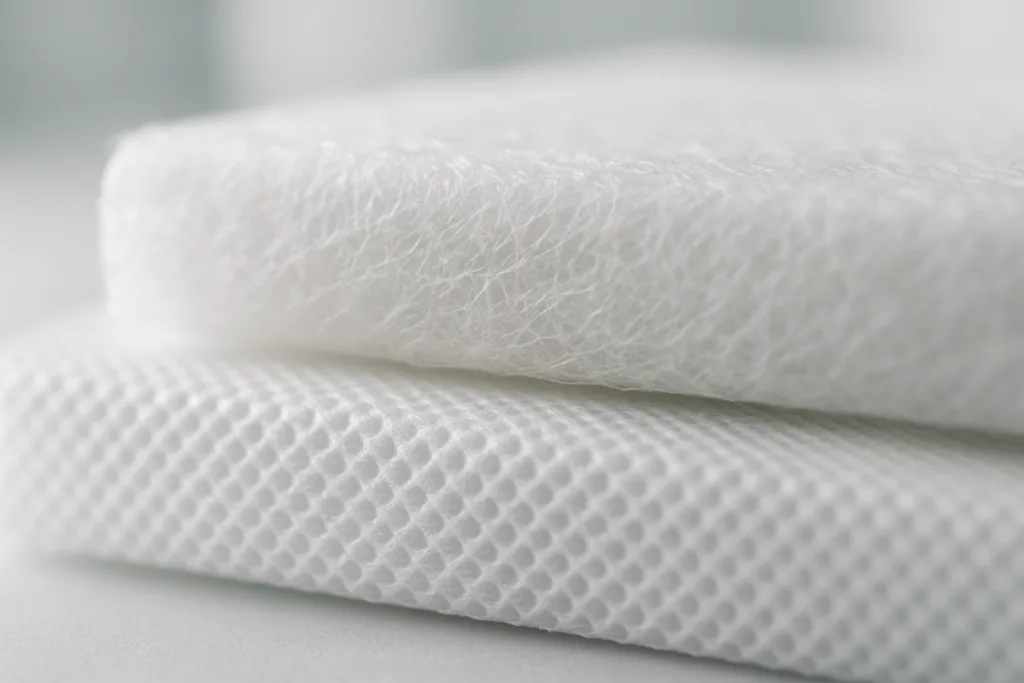
Industrial fabrics in the nonwoven category are formed through different bonding and web creation processes. These influence fabric properties, price, and best-fit usage. The most common industrial production methods include spunbond, meltblown, needle-punched, and chemical bonding.
Spunbond Production
Polymer granules (most often PP or PET) are extruded, spun into continuous filaments, then laid randomly or in parallel to form a web. This web is then thermally bonded—usually via calendaring rollers. The result is a strong yet lightweight fabric, often seen in surgical gowns, agricultural covers, or packaging.
Meltblown Method
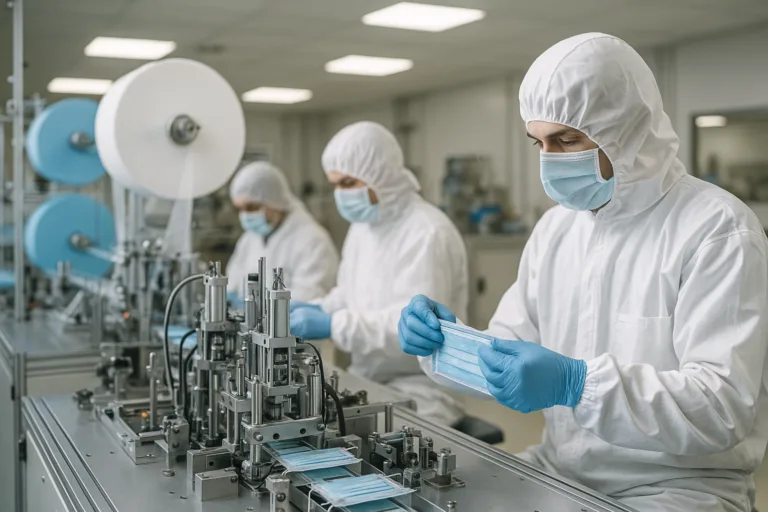
In the meltblown process, melted polymer is extruded through fine nozzles with high-velocity hot air, producing ultra-fine microfibers. These fibers form a web that is directly collected on a conveyor. Meltblown nonwoven textiles boast excellent filtration efficiency and softness, perfect for face masks, filtration media, or oil absorbents. Often, meltblown is laminated with spunbond to combine strength and filtration—this is the classic SMS (spunbond-meltblown-spunbond) for medical use.
Other Methods: Needle Punching & Chemical Bonding
Needle-punched non-woven fabric is made by repeatedly interlocking fibers using barbed needles, creating a highly durable, fabric-like material. It is used in automotive insulation, padding, and carpet underlays. Chemically bonded nonwovens use adhesive resins to fix fibers—commonly applied where elasticity and drape aren’t critical but economy is.
| Method | Fiber/Polymer | Strength | Typical GSM | Main Applications |
|---|---|---|---|---|
| Spunbond | PP, PET | Moderate–High | 10–150 gsm | Medical wrap, packaging, agriculture |
| Meltblown | PP | Low–Moderate | 8–50 gsm | Masks, filtration, absorbents |
| Needle-punched | PES, blends | High | 80–250 gsm | Insulation, padding, automotive |
| Chemically bonded | Viscose, PET, pulp | Low–Moderate | 20–80 gsm | Wipes, low-cost liners |
Key Advantages of Nonwoven Industrial Fabrics
Non woven fabric production methods deliver unique benefits that traditional woven and knitted fabrics can’t match in certain scenarios:
- High productivity: Web formation and bonding are rapid, enabling large-scale output at lower cost.
- Tailorable properties: Density, thickness, and surface treatment can be adjusted for specific strength, filtration, or absorbency requirements.
- No yarn spinning or weaving: Fewer steps; less energy and labor required.
- Excellent for single-use/disposable products: Critical for medical and hygiene industries.
- Customizable function: Additives for flame retardancy, anti-static, antibacterial, or hydrophobic finish can be easily introduced during manufacturing.
However, some nonwoven textiles may lack the durability or aesthetic of woven/knitted fabrics. For industrial use, the focus is on technical performance, not style.
Meltblown and Spunbond: In-Depth Analysis
Meltblown and spunbond are the two heavyweight technologies in the nonwoven textile sector, particularly for filtration and medical applications.
Spunbond Fabric: Properties & Applications
Spunbond nonwoven textiles are valued for their uniform strength, air permeability, and resistance to stretching and tearing. They serve as the backbone for disposable medical wear, wet wipes substrates, crop covers, packaging, and backpacks. Spunbond can be engineered in single (S), double (SS), or composite (SMS) layers depending on required end-use protection.
Meltblown Fabric: Fine Fibers, High Filtration
Meltblown produces extremely fine (1–5 micron) fibers and webs, making it irreplaceable in face mask filtration layers, air/oil filters, absorbent mats, and some insulation. A classic meltblown fabric often weighs 15–35 gsm and delivers high BFE (bacterial filtration efficiency), integral to medical-grade masks and respirators.
SMS & Composite Structures
For many industrial fabrics, combining layers optimizes performance. SMS nonwoven (spunbond–meltblown–spunbond) is a leader in medical isolation gowns, caps, shoe covers, and coveralls—delivering both high filtration (meltblown) and abrasion/tear resistance (spunbond layers).
Rain’s tip from the production line: Always check layer order and bonding in nonwoven composites. For medical export, demand up-to-date test reports for filtration, tensile strength, and basis weight.
Applications of Nonwoven Fabrics in Medical, Filtration, and Padding
Most high-impact advances in apparel and technical textiles in recent decades involve nonwoven industrial fabrics. Application-specific design, cost control, and safety certification all depend on accurate understanding of production methods and fabric specs.

Medical & Hygiene
- Masks (surgical/respirator): meltblown as middle filtration layer, spunbond as inner/outer protection.
- Disposable gowns, drapes, head covers: spunbond or SMS for protective, low-lint performance.
- Shoe covers, caps: spunbond or single-layer for affordable disposables.
- Wound dressings, sanitary napkins: absorbent nonwovens (viscose blends, hydroentangled).
Filtration Media
- Air filters (HVAC, cabin air): fine-fiber meltblown layers; sometimes combined with activated carbon for enhanced capture.
- Oil/water separation mats and oil spill absorbents: hydrophobic meltblown PP web.
- Industrial dust and particle filters: composite nonwovens with electrostatic treatment for particulate capture.
Padding & Insulation
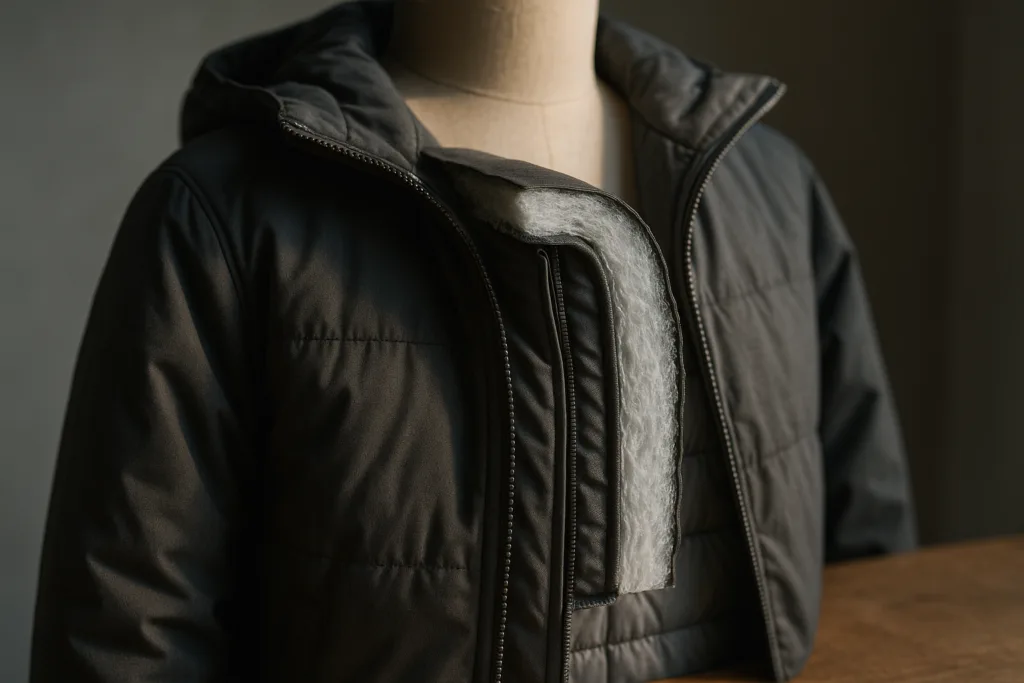
- Garment padding and insulation: needle-punched PET for jackets, workwear, and outerwear linings.
- Mattress and furniture padding: thick, dense, needle-punched or thermally bonded nonwovens.
- Automotive acoustic insulation: layered nonwovens for reduced cabin noise.
Other Key Industrial Segments
- Geotextiles: heavy-duty needle-punched fabrics for soil stabilization and drainage.
- Construction membranes: spunbond/laminated nonwovens for roof underlays, housewrap.
- Packaging & agriculture: crop covers, seedling bags, protective wrap.
Essential Technical Parameters for Buying & Quality Checks
For buyers, QC managers, and production engineers, understanding key performance criteria is crucial when sourcing nonwoven textiles because small variations can create critical failures in industrial or medical use.
- Basis weight (GSM): Confirm the actual weight against spec sheet for each non woven fabric lot.
- Thickness & density: Measured by caliper and weight—impacts filtration, insulation, and durability.
- Tensile/tear strength: Especially important for medical, automotive, and geotextile applications.
- Filtration efficiency: For medical/filtration grades, require % BFE (Bacterial Filtration Efficiency) or PFE (Particle Filtration Efficiency) results.
- Softness, handfeel: Key for garments, face masks, and hygiene; machine settings greatly influence final texture.
- Absorbency/release rate: Essential for wipes, medical pads, and padding insulation.
- Additive finishes: Check for hydrophobicity, flame retardancy, anti-static, or antibacterial treatments as per end-use requirement.
- Compliance & safety: For medical/PPE, request certificates complying with OEKO-TEX®, FDA, ISO 13485 or EN 14683 standards where relevant.
Nonwoven Textiles in Apparel Padding & Lining
In garment manufacturing, nonwoven industrial fabrics play major roles in adding comfort, warmth, and structure. Needle-punched and thermally bonded nonwovens create insulation layers for jackets, coats, and work uniforms. Their consistent thickness, low weight, and minimal water absorption deliver reliable performance for mass production—far superior in cost and repeatability compared to natural batting or loosefill.
Practical Production Notes for Factories
- Nonwoven padding must be pre-inspected for thickness variation (typically ±10%) and dimensional stability—this prevents uneven garment fill or shifting after wash.
- When cutting, use sharp rotary or band knives and avoid crushing the fabric’s loft.
- Assembly lines should store nonwovens in humidity-controlled rooms to avoid static or stickiness during handling.
Lining non wovens are also widely used as bag, cap, or shoe stiffener—inexpensive yet effective for volume production.
Pitfalls & Common Quality Issues in Nonwoven Fabric
Despite high output and flexibility, selecting and using nonwoven textiles demands strict quality vigilance. Key QC points include:
- Bursting or tearing: Under-specified GSM or poor thermal/chemical bonding leads to weakness.
- Fiber shedding/linting: Low-quality webs or incorrect polymer grades may cause lint, a major issue for medical and hygiene applications.
- Inconsistent handfeel or thickness: Machinery tuning and batch consistency checks are vital in industrial fabrics for uniform drape and compression.
- Color instability: PP and PET are generally colorfast, but use ISO-tested pigments for high-standard imports.
Always test non woven fabric before confirming bulk order, especially for medical or filtration applications. Request cuttable size swatches to check color, thickness, drape, and handfeel before approving bulk production.
Non-Woven Fabrics: Construction & Industrial Usage
To summarize the focus of this guide, non-woven fabrics—engineered by methods such as spunbond and meltblown—are at the core of modern industrial and technical textiles. Their unmatched productivity, engineered properties, and low cost per unit make them essential in medical, filtration, and apparel sectors. Success in sourcing and applying non woven materials depends on deep understanding of their construction, performance parameters, and ongoing quality checks throughout production and end-use.
- Define your core performance need—filtration, strength, absorption, or insulation—and work backward to select suitable manufacturing method and GSM.
- Always specify compliance testing for critical applications—crosscheck with up-to-date standards and supplier certification.
- Collaborate with suppliers/factories for sampling, lab dips, and thorough pre-bulk testing, especially for medical or high-value industrial fabrics.
- Establish clear QC protocols for incoming lots: test basis weight, thickness, and bonding before use in final production.
To further enhance your project outcomes, work closely with experienced nonwoven manufacturers and stay updated on global standards for technical textiles. For practical help on evaluating samples or designing spec sheets, consult industry resources like the Nonwovens Institute (NWI) or relevant national textile associations.
Future Trends: Sustainable Nonwovens & Smart Industrial Fabrics
The next frontier for nonwoven industrial fabrics centers on sustainability and advanced materials. There’s a sharp rise in biodegradable PLA, cellulosic fiber nonwovens, and recycled PET solutions for single-use products, especially in Europe and Japan. Meanwhile, smart nonwovens—incorporating nanofibers, sensors, or phase-change materials—are emerging for filtration, protective gear, and automotive interiors. Factories aiming for future-proof supply should track certifications like GRS (Global Recycled Standard) and invest in R&D for bio- and recycled-content nonwoven textiles.
Frequently Asked Questions
What is a non woven fabric and how is it different from woven fabric?
Non woven fabric is created by bonding fibers through heat, chemicals, or mechanical action instead of weaving or knitting, making it more versatile and typically used for functional, not aesthetic, applications.
What are the main uses for nonwoven textiles in industry?
The main uses include medical disposables like masks and gowns, filtration media, padding and insulation in garments, automotive components, and construction geotextiles.
How can you identify spunbond versus meltblown nonwoven fabrics?
Spunbond fabrics are stronger and used for structural layers, while meltblown is much softer, has a finer texture, and is crucial for filtration in masks and filters.
What tests are important for non woven industrial fabrics?
Essential tests include basis weight (GSM), tensile and tear strength, filtration efficiency (for medical/filters), thickness uniformity, and relevant chemical/biological safety certifications.
Why do nonwoven fabrics often shed fibers or lint?
Shedding or linting is typically due to poor-quality fibers, low-grade polymers, or weak bonding during manufacturing—a critical issue for medical and hygiene products.
What sustainable options exist for nonwoven industrial textiles?
Sustainable options include nonwovens made from recycled PET, PLA (corn-based), or cellulosic fibers, as well as production using water-based or biodegradable binders.