
The Garment R&D Workflow: Step-by-Step Breakdown

Design Brief Creation
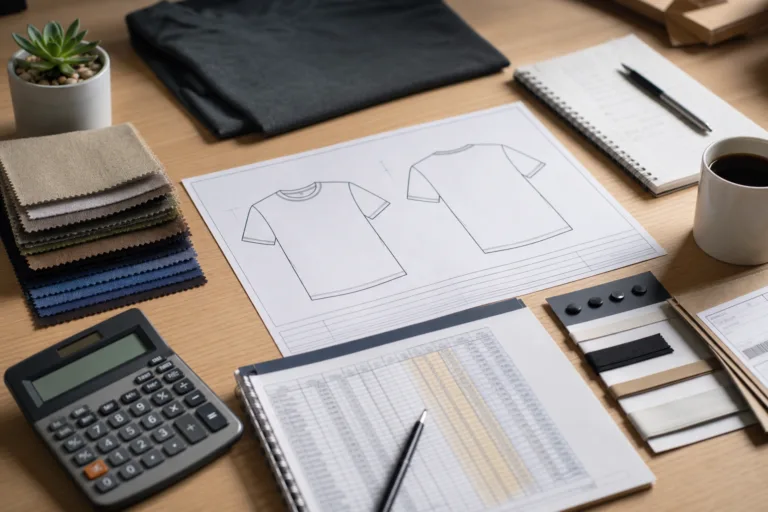
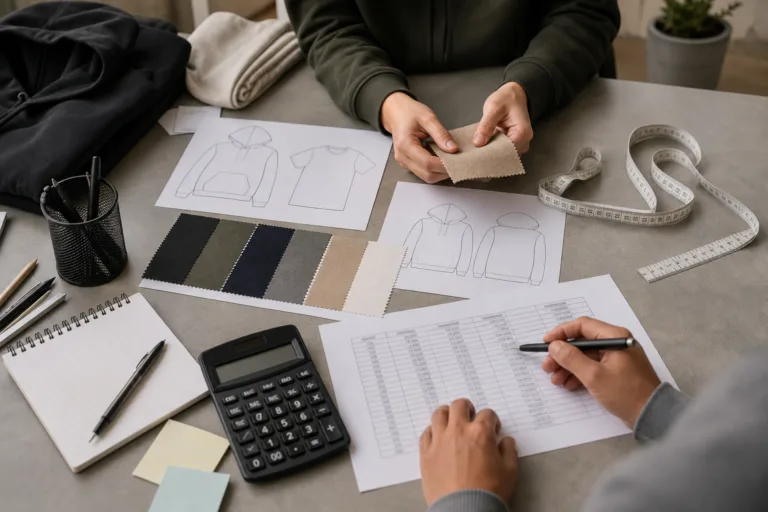
Every successful product development clothing project starts with a detailed design brief. This document lays out intended aesthetics, functionality, target user, required fabrics and trims, technical sketches, and fit specifications. The more precise the brief, the fewer back-and-forth corrections later.
What Should Be in a Design Brief?
- Design inspiration, mood boards, and reference samples
- Target market demographics and brand positioning
- Fabric quality, GSM, colorways, trims, and care requirements
- Technical sketches, fit type, silhouettes, and size specifications
- Production minimum order quantities (MOQ) and timeline expectations
Pattern Making and Technical Packs
Pattern makers turn design briefs into technical paper or digital patterns, considering fabric shrinkage, construction, ease allowance, and grading between sizes. A robust tech pack includes all required garment dimensions, seam details, stitch type codes (like ISO 301 for lockstitch), artwork position, and measurement charts—forming the contract between brand and factory.
Prototype Sample (Proto) Creation
Factories use approved patterns to sew the first prototype sample—often from available but representative fabrics—to check construction, silhouette, and basic fit before moving to final fabrics. This step highlights issues in pattern alignment, sewing quality, and ergonomic function. Proto samples rarely go to market, but their role in debugging is critical for manufacturing efficiency.
Fit Evaluation and Feedback
Fit sessions involve designers and technical teams fitting the prototype on a live model or mannequin, measuring for tolerance, movement comfort, and style. Adjustments are made for sleeve length, chest/waist/hip width, collar drop, and overall balance. Tolerance charts (e.g., ±1 cm for chest width in knits) guide acceptable deviations. Fit comments are recorded for the next round.
SMS (Salesman Sample) Development
The SMS uses approved bulk fabrics, trims, and branding, fully representing the production intent. Brands use SMS for buyer presentation, testing finishing processes like enzyme or silicone wash, and verifying branding/decoration techniques (print, embroidery, patches). SMS feedback solidifies final adjustments before mass production.
Why Garment R&D Matters in Product Development Clothing
Reducing Time to Market
A structured garment R&D workflow cuts costly delays. Each stage, from concept to SMS, is designed to catch problems early—in pattern accuracy, fit tolerance, or material performance—saving weeks in bulk production.
Ensuring Fit and Quality Consistency
Apparel Wiki’s production experience shows inconsistent patterns or loose specs often cause fit complaints, returns, and brand damage. Clear R&D communication and repeatable processes lead to repeatable quality.
Controlling Costs and MOQ
Early sample accuracy reduces bulk wastage and excess correction, controlling unit cost and MOQ. Pattern perfection before bulk cut means less rework and more trust from both sides.
Key Roles: Designer, Pattern Maker, and Factory Communication
Designers: Vision and Brand DNA
Designers define the garment’s look, function, and branding.
Pattern Makers: Technical Translators
Pattern makers convert vision into buildable forms, setting the rules for structure and sizing.
Factory Teams: Execution and Quality Control
Factory production managers and sample tailors implement designs, solve manufacturing challenges, and feedback practical constraints about sewing, fabric, machine setup, and achievable finishes.
Expert Takeaway: “Skilled communication—from designer’s vision board to pattern maker’s lines to factory floor managers—decides whether an idea lives as a best-selling garment or gets lost in revision cycles.”
Fabric Selection, Sourcing, and Bulk Approval
Choosing the Right Fabrics for R&D
Every product development clothing project hinges on the selected fabric’s GSM, fiber type, finish, and cost. Early samples may use similar substitutes for speed, but SMS and bulk must match specifications exactly to ensure performance and branding integrity.
Fabric Testing and Approval
In real factories, fabric rolls undergo 4-point inspection, shrinkage/wash tests, and shade approval before cutting. Brands request lab dips—small dyed swatches—to approve colors, and expect written testing reports on pilling, colorfastness, and stability.
| Fabric Type | Typical GSM | Main Properties | Best Use Scenario |
|---|---|---|---|
| Single Jersey (Cotton/Poly) | 140–180 | Soft, light, good drape | T-shirts, polos |
| Pique | 180–220 | Structured, breathable | Polo shirts, uniforms |
| French Terry | 220–300 | Looped back, warm | Hoodies, sweatshirts |
| Denim | 280–400 | Tough, structured | Jeans, jackets |
| Polyester Mesh | 100–130 | Breathable, stretchy | Sportswear |
Fabric Sourcing Tips
- Request test reports for colorfastness, shrinkage, and pilling in advance
- Insist on roll shade continuity and bulk lab dips
- Check for compliance certifications (OEKO-TEX®, REACH, etc.) if selling internationally
Pattern Making: Foundation for Fit and Efficiency
Block Pattern Development
Base patterns, developed to standard body measurements, are the foundation of product development clothing. Factories reference block patterns before adapting them into styles by adding collars, pockets, trims, and branding.
Grading and Size Range Determination
Patterns are graded into sizes using defined increments (e.g., +2 cm chest per size). Erroneous grading can cause off-sizing and fit complaints. Size set samples validate the grading before approving the pattern for mass production.
Pattern Assessment Checklist
- Verify measurement charts against brand standards
- Double check seam allowance and shrinkage adjustment
- Discuss any twisting/skewness risks with the factory for knits
Sampling Techniques: Proto Sample, PP Sample, Size Set, and SMS
Proto Sample: Debugging Design and Construction
Proto samples use substitute materials to validate technical assembly and basic fit. Issues like poor drape, misaligned seams, or bulkiness are flagged early.
PP Sample: Bulk Specification Approval
Pre-production (PP) samples must use exact bulk fabric, trims, and finishing methods. Approval means all design, fit, and sewing details are locked for factory bulk.

Size Set: Confirming Grading
Size set samples cover the entire size curve (e.g., S/M/L/XL), tested for fit and compliance with tolerance charts. Any major grading issue here sends patterns back for revision.
SMS: Final Market Validation
Salesman samples represent finished product, validating all branding, packaging, and final washing effects before buyer presentation.
Fit Session Protocols and Specification Review
On-Body and Mannequin Fitting
Garments are fitted on models or precise mannequins to check posture, movement, and silhouette. Fit teams record measurement deviations (e.g., body length, shoulder width) and note comfort-related issues.
Measurement Specifications and Tolerances
Brands set tolerance charts (e.g., ±0.5 cm for collars, ±1 cm for body width in knits) to allow for production variation without harming fit consistency.
Wearer Trial Sessions
Some brands run wearer trials—giving samples to real users for performance feedback on comfort, stretch, breathability, and appearance after washing.
Production Communication: Best Practices for Designer, Pattern Maker, and Factory
Clear and Timely Feedback Cycles
Factory teams depend on actionable feedback: annotated photos, fit comments, revised specs. Slow or vague instructions often delay the entire R&D timeline.
Technical Pack Transparency
Well-structured tech packs allow easy reference for all parties. Apparel Wiki recommends using highlighted measurement changes and stitch type codes to reduce confusion.
Sampling Calendar and Proactive Problem Solving
Setting a sample calendar (sample in 5 days, fitting in 24 hours, comments by next day) keeps teams synchronized and accountable. If sample feedback is unclear, a 15-minute video call can resolve days of email uncertainty.
Garment Testing and Quality Control in R&D
Performance Tests for Garment Development
Garment R&D requires functional testing before bulk: shrinkage, colorfastness, pilling, seam strength, wash durability, and stretching. Knits go through skewness and torque tests to avoid twisting post-wash. Woven items get tensile and seam slippage checks.
| Test Type | Method | Key Metric | Pass/Fail Criteria |
|---|---|---|---|
| Shrinkage | Home laundry (30°C/40°C) | % change after wash | <5% |
| Colorfastness | ISO/AATCC wash & rub | Grey scale rating | >4 |
| Pilling | Martindale abrasion | Pill grade | >3-4 |
| Seam Strength | Pull test (kg) | N/A | No seam burst |
| Torque/Skew | Post-wash measure | cm twist | <1.5cm |
Documenting and Communicating Results
Testing data goes in the tech pack. Factories often provide full reports before bulk. Brands should examine real test samples, not just PDFs, to see color shifting, pilling, or stretching firsthand.
Packing, Bulk Sample Approval, and Shipment Preparation
Packaging Specifications
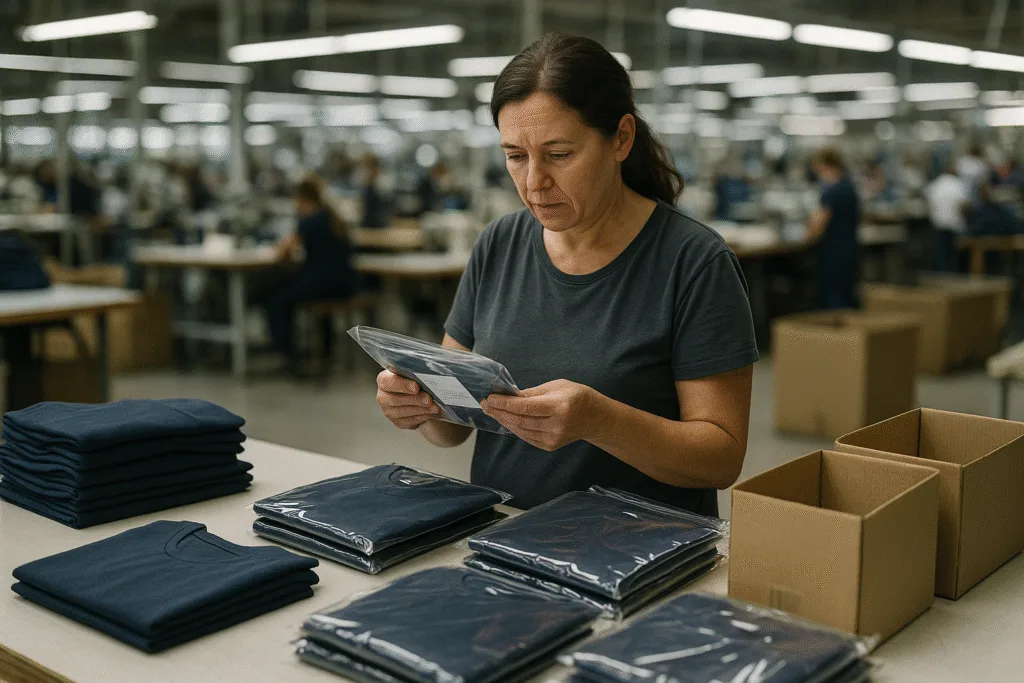
Packing methods affect final presentation and cost. Polybag thickness (35–60 micron), vent holes, carton strength (5-ply for heavy goods), and warning labels (for kidswear) are specified in the tech pack before bulk shipment.
Bulk Sample/TOP Approval
Bulk samples, sometimes called TOP (top-of-production), must match all approved specifications, including branding labels, decorations, and folding method. Only after TOP is signed can the factory ship the order.
Packaging Checklist
- Polybag spec (micron, vent holes, printed warning/size)
- Carton spec (ply, dimension, barcode label, marking)
- Folding method (flat, half fold, hanger, etc.)
Frequently Asked Questions
What is garment R&D and why is it important?
Garment R&D (research and development) is the process of turning a clothing concept into a fit-perfect sample, ensuring quality and production efficiency before bulk manufacturing.
What are the main stages in product development clothing?
The key stages include design brief, pattern making, prototype sampling, fit evaluation, SMS development, and finally bulk approval for production.
How is communication handled between designer, pattern maker, and factory?
Teams work off a shared tech pack, using annotated fit comments and sample feedback cycles to synchronize and resolve issues in design, fit, and build.
What tests are performed during garment R&D?
Tests include shrinkage, colorfastness, pilling resistance, seam strength, torque/skew checks, and actual wearer trials to ensure product stability.
Why are multiple sample types needed in R&D?
Proto, PP, size set, and SMS samples each validate different aspects—construction, fit grading, decoration, and final branding—prior to bulk production.
How do factories handle fit and measurement tolerances?
Factories rely on written tolerance charts, live fitting feedback, and approved measurement specs to ensure every piece fits consistently in bulk output.