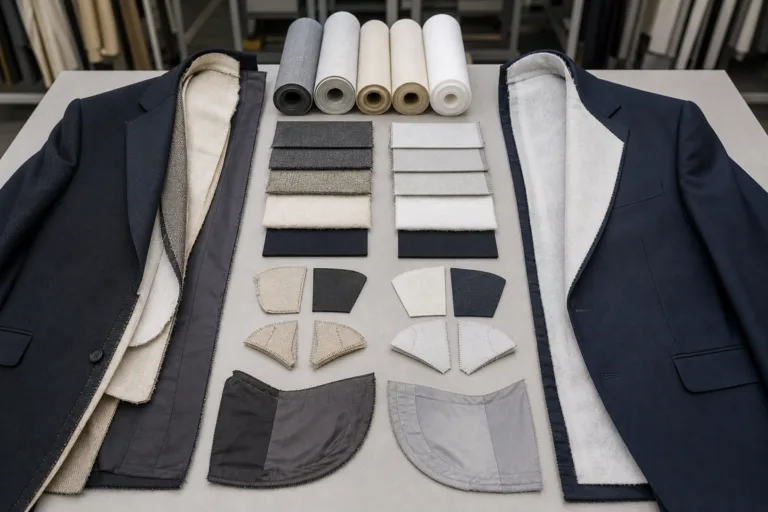
Protective interleaving environmental impact cannot be judged from a material name alone. Apparel teams need to examine the complete construction, the protection it provides, possible contamination, the collection route, and the processing options available where the material will actually be discarded. This guide approaches those questions from an apparel-packaging perspective. Apparel Wiki is an independent educational publication; its editorial content is not a supplier specification or certification. For related industry resources, visit the Sponsor page.
Protective interleaving is a layer placed between garments, textile panels, or product surfaces during handling and storage. It may be intended to limit friction, moisture transfer, pressure marks, color transfer, dust, or other contamination risks. At end of life, the relevant subject is the packaging layer itself, not automatically the garment or textile product it protected.
End of life can include reuse, collection, sorting, recycling, composting where applicable, energy recovery where relevant, and disposal. Those routes are not universally available, and a route described in a supplier document may depend on specific facilities, preparation steps, or geographic conditions. The practical question is therefore not whether one material category sounds preferable, but whether the proposed construction has a credible pathway in the target market and still provides the protection the product needs.
What Does Protective Interleaving Mean at End of Life?
In apparel packaging, interleaving is used to manage a physical or appearance risk between surfaces. A folded garment may need separation from another garment, a decorated panel, or a packaging surface during storage and movement. The intended function could involve reducing abrasion, preventing dye transfer, limiting contact with moisture, or avoiding pressure marks. The correct protection level depends on the garment, textile, packing method, and handling conditions.
This function matters to an environmental assessment because inadequate protection can create product damage, rework, repacking, rejection, or replacement. That does not prove that additional packaging has a net environmental benefit. It means the comparison needs to include the product risk that the interleaving is meant to control. A lighter or simpler option may be preferable if it performs adequately, while removing the layer may be unsuitable if documented damage increases.
End-of-life analysis should keep several questions separate. First, what is the interleaving made from? Second, what other components are attached or applied to it? Third, where will it be discarded? Finally, can the available system accept that exact construction? Labels such as “paper,” “recycled,” “recyclable,” or “biodegradable” are descriptions or claims that require context. None, by itself, establishes a complete environmental assessment or a lower overall impact.
The purpose of this evaluation is to identify evidence and project-specific trade-offs, not to rank one protective packaging material as universally best. A conclusion should match the supplied construction, intended use, destination market, available recovery system, and demonstrated protection need.
Which Material and Component Questions Should You Ask First?
Begin with a material inventory. Ask the supplier to identify the complete composition of the interleaving by component, including proportions or weight information where it can be substantiated. The visible sheet may not represent the whole construction. Coatings, laminates, adhesives, printing, treatments, dyes, tapes, clips, labels, and other attached parts can affect how the item is handled after use.
Useful questions include:
- Is the interleaving a single material, or is it composite, coated, laminated, printed, treated, or bonded?
- Which components are permanent, and which can be detached before disposal or recovery?
- Do labels, tapes, clips, fasteners, or other accessories remain attached after the packaging is removed?
- Does the environmental description apply to the interleaving, its retail or shipping packaging, or the complete apparel shipment?
- What substances may be present after use, including oil, moisture, dye transfer, dust, chemicals, or production residues?
- Does the documented composition match the production version proposed for approval?
Composition is a prerequisite for discussing an end-of-life route. A supplier declaration may identify what a material is intended to contain, while a technical data sheet may describe its construction or handling properties. A test report may address a narrower question under specified conditions. These documents should not be treated as interchangeable, and a certification claim should be checked for its exact scope, version, and limitations.
Ask for evidence at claim level rather than accepting broad sustainability language. If the supplier uses a recyclability, compostability, degradability, renewable-content, or recycled-content claim, request the wording that applies to the exact construction. Check whether the claim concerns an inherent material property, a test result, or access to a collection and processing system. Appearance and material family alone are not enough to infer the relevant route.
What Disposal or Recovery Route Exists in Each Target Market?
The destination of used interleaving may be a factory, warehouse, retail operation, returns center, customer home, or another site. Each location can involve different collection practices and different access to sorting or processing. Ask where the material is most likely to be discarded in the actual packaging workflow, then evaluate the route at that location rather than relying on a general statement about the material category.
Map the relevant local or regional options for collection, sorting, recycling, composting, recovery, and disposal where those options apply. Confirm whether the material is accepted as a standalone item or whether it may be rejected because of its size, coating, contamination, mixed construction, or limited recovery value. Also determine whether it must be separated from garments, hangtags, cartons, bags, or other packaging before it enters the relevant system.
Every end-of-life claim should have a geographic scope. A route available in one city, region, or country should not be presented as a universal condition for global apparel shipments. Record the named system or facility assumptions, preparation requirements, and any limitations stated in the supporting evidence. Keep legal requirements, common industry practice, and a company’s preferred packaging policy distinct; they are not automatically the same.
Finally, ask what happens when the preferred route is unavailable. The fallback may involve general waste, another recovery route, storage until collection, or a different handling process. That fallback should be documented as part of the evaluation, because a theoretical recovery option does not describe the likely outcome for every customer, warehouse, factory, or distribution destination.
How Should You Test Environmental Claims Before Adoption?
Create a claim register before approving the material. For each claim, record the exact wording, the component covered, the geographic scope, the conditions required, and the document supporting it. This prevents a statement about one component, market, or test sample from being generalized to the full packaging configuration.
Next, identify what the evidence actually demonstrates. A test-method result may show behavior under defined laboratory conditions; it does not necessarily demonstrate that collection and processing are available in every destination market. Similarly, evidence of recycled content does not establish that the finished interleaving is recyclable, and a recyclable design does not establish that it will be collected or recovered in practice.
Review the test method or recognized assessment procedure, the laboratory or certification body where relevant, the sample construction, conditioning requirements, and production revision. Confirm that inks, coatings, adhesives, detachable parts, and likely contamination were included or addressed. If a certification is cited, verify the publicly available scope and whether it covers the proposed construction rather than a related material.
Document the limits of the evidence as carefully as the result. A claim register should state what remains unknown, including performance in other markets, acceptance by a named facility, or any conclusion about lower total environmental impact. This is editorial due diligence for a sourcing or packaging decision, not legal advice or a substitute for certification, regulatory review, or project-specific technical validation.
Does the Interleaving Prevent More Product Loss Than It Creates?
The environmental impact of protective interleaving cannot be assessed from packaging quantity alone. First identify the product risk it is intended to control and where that risk occurs. Depending on the garment and operation, the concern may be friction between surfaces, pressure marks from folding, moisture exposure, color transfer, dust, or another form of contamination during handling and storage.
Next compare the proposed interleaving with a credible lower-material, reusable, or no-interleaving option under the same conditions. A lighter configuration is not automatically better if it causes more inspection, repacking, rework, rejected goods, or damaged products. Conversely, the existence of a protection benefit does not by itself prove that the added packaging has a lower total environmental impact.
A small, comparable trial can make the decision more concrete. Record the interleaving used, discarded packaging, observed damage, repacking activity, handling time, and product loss for each configuration. Keep the product type, route, storage conditions, and inspection approach as comparable as practical. The goal is to understand the actual trade-off, not to create a universal result for every apparel operation.
Assess changes to thickness, size, coatings, attachments, or material count carefully. A reduction may affect protection, packing speed, ease of inspection, or the frequency of marks and contamination. Any environmental comparison should state its system boundary, assumptions, and data limitations. Avoid presenting packaging reduction as a success when the result simply transfers environmental or operational costs to the product.
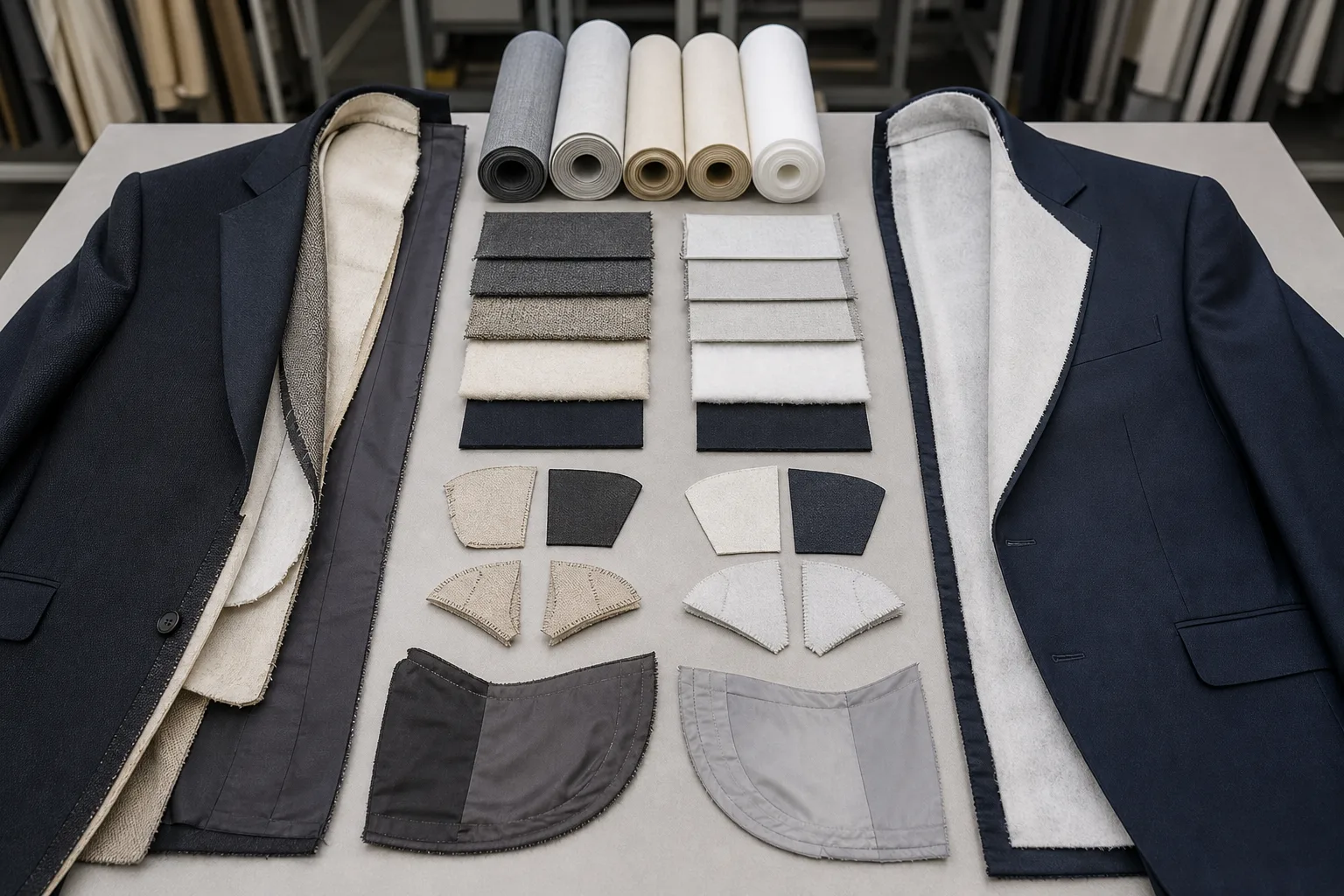
What Should a Supplier and Packaging Team Record Before Approval?
An approval record should connect the packaging decision to a specific product, process, supplier, and destination market. Record the intended use, garment or textile risks, packaging configuration, complete material construction, supplier identity, and the markets served. This prevents a general supplier description from being treated as evidence for every version or use case.
Document the preferred end-of-life route and the conditions it depends on. Include the relevant collection or processing system, separation steps, contamination concerns, and fallback route when the preferred option is unavailable. The record should also state whether the route applies at a factory, warehouse, retail operation, returns center, or customer location.
Attach the exact specification reviewed, along with claim evidence, test methods, certification scope where applicable, revision dates, and any production-version limitations. Recycled content, recyclability, compostability, biodegradability, renewable content, and reduced-impact claims should each be documented separately. Evidence for one claim should not silently be used to support another.
Define project-specific acceptance criteria for protection, handling, appearance, contamination, labeling, and material consistency. These criteria should come from the relevant operation rather than an invented universal threshold. Assign ownership for reviewing supplier changes, market changes, material changes, and updates to environmental claims. Include an unresolved-questions field so missing evidence remains visible instead of being interpreted as approval.
Approval is appropriate only when the evidence matches the proposed production construction, protection need, use conditions, and destination markets. An internal checklist can be maintained alongside the wider Apparel Manufacturing Tools available from Apparel Wiki, but the publication is an independent educational source, not a certifier, laboratory, factory, or packaging service provider.

When Should You Delay or Reconsider Protective Interleaving?
Delay approval when the material composition is undisclosed or when an environmental claim cannot be tied to the exact supplied construction. A description of a material family, sample, or related product is not enough if the proposed version includes different coatings, inks, adhesives, laminates, labels, or attached components.
Reconsider the proposed route when it depends on collection or processing facilities that are unavailable in a destination market. Mixed materials, contamination, small-format pieces, or required separation may also make a stated recovery pathway impractical. This does not prove that the material is harmful; it shows that the intended end-of-life outcome requires further verification.
Question continued use when the interleaving addresses no documented product risk, or when a lower-material configuration performs adequately under the same conditions. Reassess after a supplier, material, production process, product category, handling route, or destination-market change. A conclusion made for one configuration should not automatically carry over to another.
The next step is to define the protection objective, request the complete composition and claim evidence, map the actual local routes, compare alternatives in a consistent evaluation, and record both the decision and its unresolved questions. This sequence gives sourcing, quality, product development, and packaging teams a shared basis for deciding whether the interleaving is justified.
FAQ
What is protective interleaving in apparel packaging?
Protective interleaving is a layer placed between garments, textile panels, or product surfaces to reduce risks such as friction, pressure marks, moisture transfer, color transfer, or contamination during handling and storage.
Why is the material alone not enough to judge protective interleaving environmental impact?
The result depends on the complete construction, attached components, contamination, intended use, collection system, processing facility, and destination market. A material label does not establish the practical end-of-life outcome.
What should I ask a supplier about the end of life of protective interleaving?
Ask for the complete composition, coatings, adhesives, inks, attachments, claim wording, evidence scope, applicable test method, geographic conditions, required separation, accepted collection route, and fallback disposal route.
Does recyclable protective interleaving guarantee a lower environmental impact?
No. Recyclability may describe a material property or a result under defined conditions, but it does not guarantee collection, recovery, or a lower total impact. Product protection and the full packaging system must also be evaluated.
How should apparel teams compare less packaging with the risk of product damage?
Compare configurations under similar handling and storage conditions. Track packaging use, damage, rework, repacking, inspection effort, and product loss rather than judging the decision by packaging weight alone.
Do end-of-life options for protective interleaving vary by country or region?
Yes. Collection, sorting, processing capacity, accepted inputs, contamination rules, and disposal guidance can differ by location. A route available in one market should not be presented as universal.