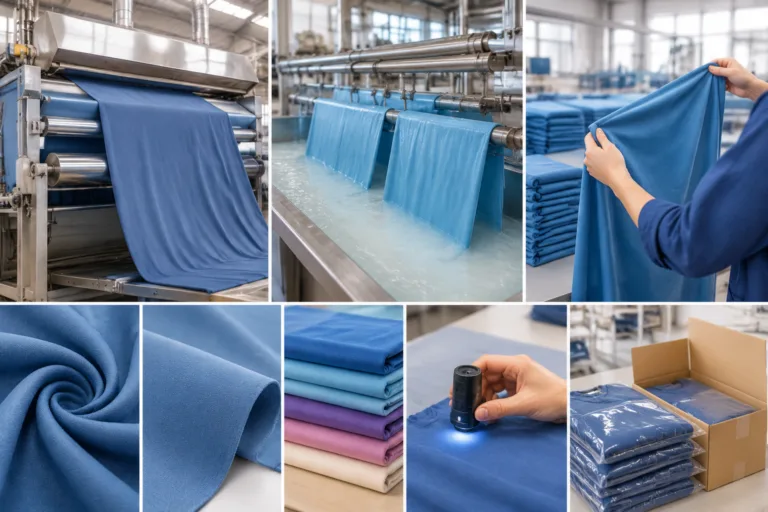
The slasher dyeing process continuously colors warp yarns arranged in sheet form before weaving. Its practical challenge is to develop the intended shade while preserving an orderly yarn sheet for subsequent processing. Apparel Wiki explains these production principles as an independent educational publication; its Sponsor page describes the boundary between sponsorship and editorial control.
Preparation, dye application, and subsequent handling belong to one connected process. Yarn condition and controlled passage influence the conditions for coloration, while later treatment must suit the intended fabric. Understanding that relationship helps teams discuss shade consistency without mistaking a general process map for a production recipe.
What the slasher dyeing process is and where it fits
Slasher dyeing is a form of continuous warp yarn dyeing. The warp comprises the lengthwise yarns in woven fabric; during this dyeing route, many yarns travel alongside one another as a sheet. Color application therefore occurs before those yarns interlace with the weft during weaving.
The coloring stage distinguishes it from other routes. Fiber dyeing colors material before spinning. Package dyeing treats yarn wound into packages. Piece dyeing colors fabric after fabric formation, while garment dyeing treats assembled garments. Each position creates different planning constraints and appearance possibilities; none is universally preferable.
At a reader level, the flow is preparation, controlled passage through the dyeing line, and subsequent drying and warp preparation as applicable. A line may provide repeated exposure through successive processing zones. The equipment arrangement, sequence, and number of passages depend on the material, color system, construction, and mill practice.
The sheet must remain organized throughout this movement. Yarn separation, alignment, and tension are handling concerns because the material must continue through later operations. Color evaluation also needs to distinguish differences across the sheet from changes along its running length. These are separate questions when reviewing consistency.
This description does not specify bath conditions, line speed, passage count, drying settings, or whether sizing occurs within the same line. Those choices require the applicable production documentation. A process name alone cannot establish which operations a particular material received.
Its position before weaving also matters for replenishment. Review the colored warp together with the planned weft, construction, and subsequent treatment. Matching a yarn reference addresses only part of the intended fabric appearance. Preparation and after-treatment therefore need to be considered alongside weaving requirements, rather than approved as isolated stages.
Preparing yarns and the dyeing line
Slasher dyeing preparation starts with identifying what will enter the line. Establish the fiber or blend, yarn construction, material lot, warp arrangement, intended fabric use, and weaving requirements. These details provide the context for selecting a documented process and interpreting differences between an approved sample and production material.
Check the sheet for orderly separation and alignment, visible damage, and contamination. Review how tension will be controlled during passage. The appropriate controls depend on the equipment and material; a general instruction to maintain tension does not define an operating setting or an acceptance limit.
Wetting readiness deserves separate attention. Yarn condition and the way liquid reaches the material are relevant to investigating uneven exposure. If adjacent areas behave differently during preparation, establish whether that difference follows the yarn supply, sheet position, or handling stage before deciding what to adjust.
Keep preparation checks distinct from dyeing chemistry and later sizing. Checking cleanliness does not establish a chemical preparation recipe. Similarly, arranging yarns for controlled passage does not determine whether they need sizing for weaving. Those decisions belong to the applicable material and process specification.
Define the color target before judging a result. Preserve an approved physical reference and its approval record, then agree on lighting, evaluation method, and the material stage being compared. A screen image can communicate design intent, but it should not serve as the sole basis for accepting production color.
A useful preparation checklist can remain brief: identify the material, inspect the sheet, establish handling controls, assess wetting readiness, and define the reference. Record unresolved issues before running. Later treatment should not be assumed capable of correcting damaged yarns, contamination, or an unclear target.
If a visible difference appears, investigate its location and timing. Compare material and handling records with dyeing, drying, and finishing stages rather than automatically blaming the bath. For repeat or replenishment work, preserve material identification, warp arrangement, physical standards, approval history, evaluation conditions, process records, and any documented departures from the agreed preparation.
How dyeing variables shape shade and consistency
Slasher dyeing variables interact. Yarn condition and wetting affect access to the color system; concentration, bath condition, contact, and passage control influence the conditions for shade development. Replenishment and drying also belong in the investigation. Adjusting one factor without tracking the others can make comparisons difficult to interpret.
Use observable differences to choose an investigation path. The table identifies starting points, not confirmed defect causes. Compare samples from equivalent material stages before deciding that a visible difference requires a process change.
| Observable input | Likely implication | Initial focus | Variables that could change the decision |
|---|---|---|---|
| Different yarn condition across the sheet | Material or handling differences warrant investigation | Map differences to yarn lots and sheet positions | Fiber blend, yarn construction, prior handling |
| Uneven wetting before coloration | Comparable liquid exposure is uncertain | Examine cleanliness and wetting preparation | Material condition, preparation route, equipment |
| Changing line or bath records | Process conditions may differ between samples | Align sample timing with recorded changes | Contact, passage control, replenishment, drying |
| Observed shade differs from the target | Process and comparison conditions both need examination | Compare physical samples under agreed lighting | Reference stage, construction, neighboring materials |
A target shade needs more definition than a color name. Tie it to a physical reference, agreed lighting, evaluation method, and material. Two materials that appear close under one light source may differ under another. Screenshots cannot replace this physical comparison.
Warp dyeing shade consistency is also distinct from fabric appearance after weaving. Yarn arrangement, neighboring weft colors, and construction can change the perceived result. A consistent warp sheet therefore does not, by itself, establish that the woven fabric matches its approved appearance.
When troubleshooting, record the material, line conditions, sampling point, and evaluation context. Document what changed and compare equivalent samples rather than relying on memory. Any numerical concentration, temperature, time, passage count, or tolerance must come from applicable process documentation or a validated technical source for that material and system.
Drying, sizing, and handling after dye application
After color application, the warp sheet still needs preparation for its next operation. Drying, sizing, and handling have different purposes. Their order, location, and inclusion depend on the fiber, yarn, dye system, equipment, loom requirements, and intended fabric. A process map should show the actual sequence used for the material.
Drying removes moisture to bring the yarn sheet to a condition suitable for subsequent handling. It does not, by itself, establish that color development or after-treatment is complete. The appropriate drying conditions belong in the applicable process documentation; there is no universal temperature or moisture target for every slasher-dyed yarn.
Assess drying at the handoff to the next stage. Record the material condition, sample location, and any visible variation across or along the sheet. If appearance changes between stages, compare equivalent samples and their handling history before assigning a cause. An observation after drying does not automatically identify drying as the source.
Sizing or related warp preparation addresses requirements for later weaving. Consider yarn protection, abrasion during weaving, cohesion, and the intended fabric feel when reviewing whether sizing is needed. These are project-specific considerations, rather than guaranteed benefits from any particular formulation. Sizing and dye fixation serve distinct purposes; do not treat one as evidence that the other is complete.
Keep yarn separation, alignment, and controlled handling in view during subsequent winding or transfer. Uneven tension, rubbing, or disrupted yarn order are variables to investigate when damage or appearance changes emerge. Record where the change first becomes visible rather than assuming that the dye bath caused it.
Preserve the sequence and condition records for repeat production, including any change in drying, sizing, winding, or storage arrangements. A handling choice suited to weaving may also need assessment against later fabric feel and finishing requirements. Obtain formulations, application amounts, drying settings, and acceptance limits from the relevant specification rather than inferring them from this general process description.
After-treatment, color evaluation, and quality follow-up
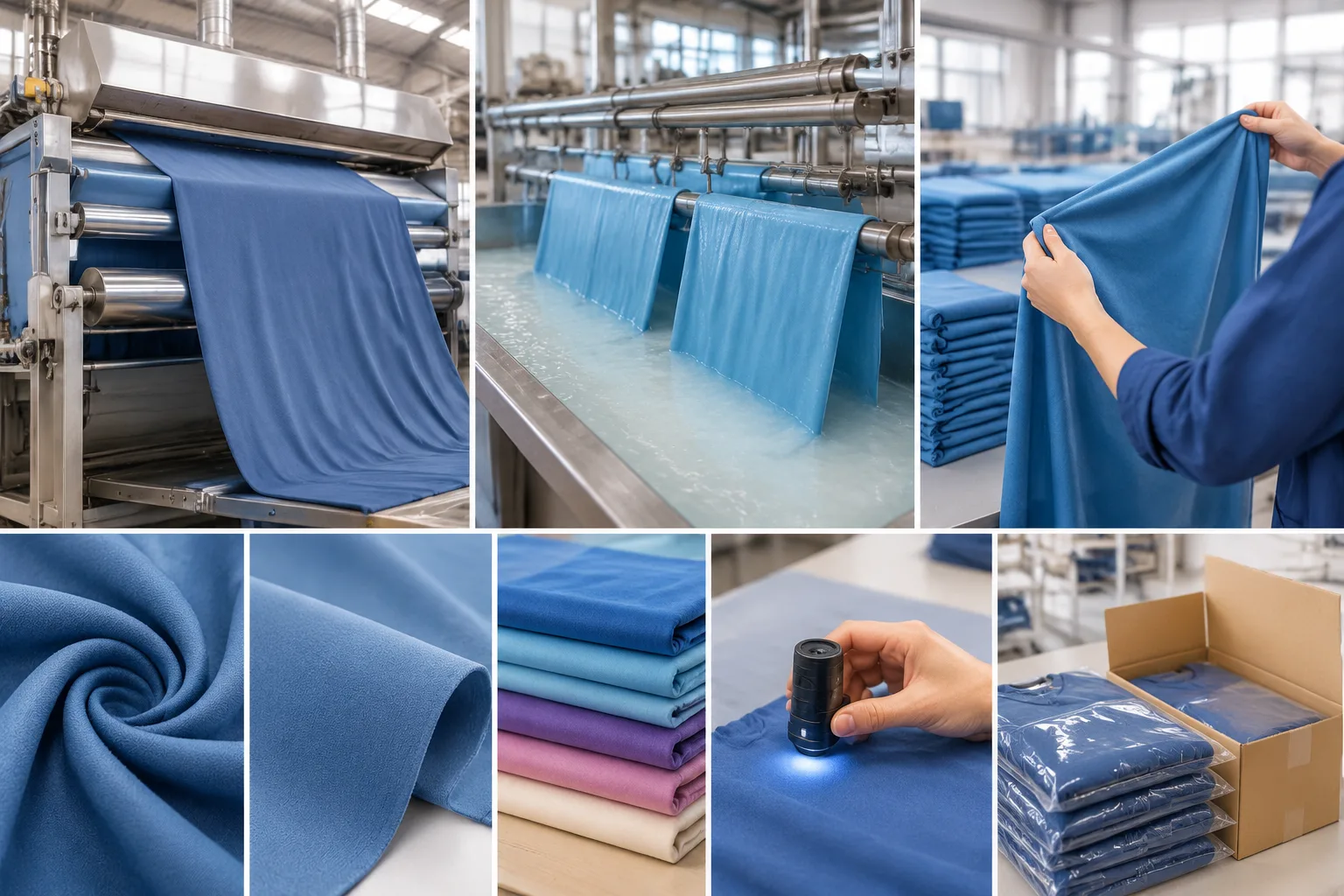
After-treatment covers operations used after coloration to reach the required material condition, appearance, cleanliness, feel, or downstream performance. The appropriate route depends on the dye system and fabric objective. Do not assume that every slasher-dyed material receives the same treatments, or that a treatment appropriate for one material transfers unchanged to another.
Keep color development and fixation requirements separate from cleaning, handle adjustment, or surface finishing when reading process documents. These purposes can involve different operations. Confirm their applicability and sequence in the material-specific documentation before discussing chemistry or making changes. A general process description cannot establish which treatments a particular yarn requires.
For color approval after treatment, identify the physical reference, light source, evaluation method, material pairing, sampling point, and approval status. Compare samples at equivalent stages. A treated yarn, untreated yarn, and finished woven fabric answer different questions; an approval record should make clear which material condition it covers.
Use a short follow-up checklist to connect appearance with readiness for the next operation:
- Shade and uniformity: compare representative locations against the approved reference and note visible streaks or patches.
- Yarn condition: inspect separation, alignment, and visible damage at the recorded handoff.
- Hand and surface: compare feel and appearance at the specified treatment stage.
- Next operation: check the receiving requirements and record unresolved observations before transfer.
Colorfastness asks how color responds to particular exposures. Washing, rubbing, perspiration, and light address different questions. Also distinguish a material’s own color change from staining or transfer onto another material. One satisfactory result cannot establish every fastness property, and an acceptable shade match does not prove colorfastness.
For a dark warp fabric paired with a contrasting weft or light trim, examine the actual combination. Consider both the intended appearance and relevant risks of color transfer during use or care. The pairing and intended use should guide method selection; neither the dark shade nor the contrast supplies an acceptance threshold.
Document each test’s method, conditions, evaluation item, and result. Keep color appearance, fastness, hand, and dimensional or construction outcomes separate in the record. Where finishing effects matter, compare the relevant appearance and performance before and after agreed care. Softness, stiffness, or other effects can change with use and interact with other goals. An unsatisfactory result should prompt review of material, sequence, and treatment compatibility before changing the recipe.
Using the process map to review a slasher-dyed material
Review the slasher dyeing process in five steps: identify the material and coloring stage; inspect preparation records; connect dyeing variables with samples; trace drying and subsequent handling; and evaluate after-treatment against the physical reference and intended use. Keep observations tied to their sampling stage so later changes remain traceable. As an educational next step, compare the actual material specification, process documentation, approved color standard, and applicable evaluation method. Note any missing conditions or unclear acceptance criteria before drawing conclusions. This turns a general process map into a focused review of the material in front of you.
Frequently Asked Questions
What is the slasher dyeing process used for?
It colors warp yarns arranged in sheet form before weaving. Reviewing the process means considering both the required yarn shade and the condition needed for subsequent handling and fabric production. The exact route depends on the material and equipment.
How is slasher dyeing different from piece dyeing?
Slasher dyeing colors the warp yarn sheet before weaving. Piece dyeing colors fabric after it has been formed. This difference changes which material enters the dyeing stage and which construction and handling operations follow; neither route is universally preferable.
Which preparation checks matter before warp yarn enters a slasher dyeing line?
Check material identity, yarn condition, sheet alignment and separation, cleanliness, tension control, and wetting readiness. Establish the physical shade reference and approval conditions. Preserve these records so later observations can be compared with the starting material and preparation route.
Does slasher dyeing include sizing and after-treatment?
A particular production route can include sizing and after-treatment, but their inclusion and sequence require confirmation. Sizing addresses warp preparation for weaving. It should not be treated as proof of dye fixation or completion of every required treatment.
How should color and colorfastness be evaluated after slasher dyeing?
Compare physical samples under agreed lighting and evaluation conditions, identifying the material stage and reference. Select fastness checks for relevant exposures, such as washing or rubbing. Record color change and staining separately, together with the method, conditions, and results.