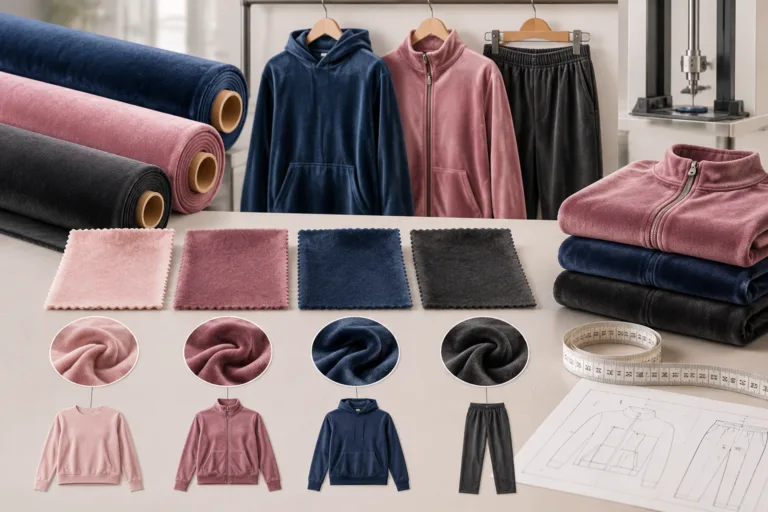
Sri lanka apparel material supply coordination means keeping the garment specification, material sources, approvals, quantities, delivery sequence, and receiving records aligned from development through production. It is a project control process, not proof that manufacturing in Sri Lanka automatically provides a particular quality level, cost, speed, or labor outcome. Apparel Wiki is an independent knowledge publication; its editorial work is separate from any manufacturer, factory, supplier, or Sponsor.
The practical starting point is a material register and route map. For every fabric, trim, packaging item, and approved reference, record who is responsible, what has been approved, where it will come from, whether a substitute is allowed, how much is required, when it should arrive, and what happens at receipt. This exposes missing information before a team compares supply options or commits to a route.
What Sri Lanka Apparel Material Supply Coordination Covers
Apparel material coordination connects product decisions with supply decisions. A garment specification may identify fiber or composition, construction, weight, usable width, color, finish, performance needs, care expectations, and construction compatibility. Those details can affect cutting efficiency, sewing response, appearance, fit, and later care instructions. A trim or packaging component also needs an identified location in the garment or shipment and an approval reference.
Coordination begins when these requirements are translated into actions. A source must be identified, samples or references must be requested, the responsible person must approve them, quantities must be based on the approved product records, and planned arrivals must support the development and production sequence. Incoming checks then compare what arrived with what was approved. A delay, unapproved change, or missing record can affect sampling, cutting, sewing, packing, or release, so the information needs to remain connected.
A useful coordination record includes:
- material name, garment location, construction or composition, and approved reference;
- responsible parties for specification, sourcing, approval, purchase release, and receiving;
- source, route, approval status, substitute status, and quantity basis;
- planned arrival, receiving disposition, and unresolved exceptions.
This record also helps separate country context from facility evidence. Sri Lanka may be the manufacturing location, but that fact alone does not establish a particular factory’s access to a material, management system, quality performance, delivery capability, or backup route. A named mill, trim supplier, logistics route, or factory requires direct, current verification. Without that evidence, the sound conclusion is only that the project route still needs to be checked.
The same distinction applies to claims about local availability, import dependence, cost, speed, or sustainability. These are product-, destination-, and route-specific questions. Coordination should therefore identify the evidence needed for the actual project rather than treating a country label as a supplier qualification.
Build a Material Specification and Responsibility Map
A coordination-ready brief turns a garment concept into comparable sourcing information. For each material, align its construction or composition, usable width, appearance, hand, color reference, finish, care expectations, garment location, and required approval sample. Record units and documented allowance assumptions with the approved marker or bill of materials. Do not introduce a universal consumption, loss, tolerance, or waste figure when the product records do not support one.
Similar composition or appearance does not make materials interchangeable. Construction, finish, weight, color behavior, shrinkage, drape, and sewing response may differ. A change can affect fit, wash care, surface appearance, or how a component performs during assembly. Matching a fiber label is therefore only an initial comparison, not a substitution approval.
| Material or input | Observable input | Production implication | Initial choice and reassessment variable |
|---|---|---|---|
| Shell fabric | Construction, composition, width, hand, color, finish, approval reference | Can affect cutting, sewing, fit, appearance, and care | Source matching the approved reference; reassess if construction or finish changes |
| Lining or interlining | Garment location, compatibility, appearance, hand, approval sample | Can affect comfort, support, bulk, and assembly behavior | Select for the documented garment function; reassess with a sample after a change |
| Thread, elastic, labels, or closures | Construction details, dimensions where documented, color, placement, and reference | Can affect assembly, appearance, adjustment, or identification | Use the approved component; reassess compatibility and appearance if replaced |
| Packaging | Item type, pack method, markings, quantity basis, and destination needs | Can affect packing sequence, identification, and shipment handling | Use the documented packing instruction; reassess when shipment or presentation changes |
Assign ownership as a project control. One person or team may maintain the specification, another may source options, and another may approve samples, authorize purchases, or release received materials. Testing, where applicable, should have a named decision owner and a defined record. This allocation is recommended coordination practice, not a universal legal or industry-mandated process.
Use the same information structure when requesting quotations. Specifications, units, allowances, packaging, delivery terms, and included or excluded items must be comparable before price decisions are meaningful. A material register can show the initial choice, the approval status, and the variable that could reverse it, such as a changed garment location, finish, color reference, or care expectation.
Coordinate the Sri Lanka Supply Chain Around Timing and Constraints
Map the actual route for each material from source to receiving point. Record where ownership changes, where samples or approvals occur, and where a delay would affect sampling, cutting, sewing, packing, or release. Keep this material-route record separate from broad country comparisons. It should describe the product’s chain, not imply that every Sri Lankan project follows the same path.
Geographic distance is only one planning variable. Material availability, technical skills, energy, customs processes, subcontracting, documentation, and logistics connections can also affect whether a route is workable. Proximity does not prove faster delivery, lower cost, lower environmental impact, or easier recovery when a material changes. Each statement needs project-specific evidence.
Compare local, regional, and imported options using the same assumptions:
- match to the approved specification and documented quantity;
- evidence that the source can provide the required material;
- sample and approval timing;
- transport route, trade terms, and responsibility at each handoff;
- fallback feasibility if the first route is delayed or changed.
For example, a lightweight knit for a short development cycle may appear attractive because its source is nearby. That option may still be unsuitable if the construction, color approval, quantity, or backup route is unconfirmed. Another source may become preferable if the approved specification changes, but that decision should follow a new comparison rather than an assumption about location.
Build a dated coordination calendar with checkpoints for the material brief, sample request, approval, purchase release, dispatch, receipt, inspection, and production use. Dates are planning inputs for the specific project, not universal lead times. The calendar should also show which decision owner must act at each checkpoint and which downstream activity is exposed if the checkpoint slips.
Where trade or customs documentation matters, identify the applicable product, destination, and route requirements for verification. Do not infer origin qualification, import treatment, or clearance performance from a shipping location or manufacturing country. The useful question is whether the documented route supports the approved material and the planned production sequence.
Align Quotations, Approvals, and Material Substitutions
A useful apparel sourcing quotation comparison begins with one consistent request format. Send each source the same approved or working specification, unit of measure, required quantity basis, packaging assumptions, delivery terms, alternatives, quotation validity period, and exclusions. Record whether the response covers material only or also includes preparation, packing, transport, documentation, or other operations.
This structure makes differences visible before a price decision. A lower material price may not produce a lower delivered cost or lower project risk if it requires additional approval work, creates transport dependencies, increases delay exposure, or leaves replacement review unresolved. Minimum purchase constraints and packaging units can also change the quantity that must be authorized.
Keep a comparison record for each source option. The record can include the following fields:
| Comparison field | What to record | Decision variable |
|---|---|---|
| Specification match | Construction, appearance, composition information, finish, and intended garment use | Whether the material can proceed to approval |
| Availability evidence | Written confirmation of the relevant material, quantity, and source status | Whether the route is workable for the project |
| Route and timing | Handoffs, transport dependency, approval point, and receiving location | Which production activity is exposed to delay |
| Substitution risk | Differences that could affect care, color, weight, fit, or appearance | Whether sampling or evaluation must be repeated |
| Fallback | Alternative source, approval status, and conditions for use | Whether the backup is genuinely usable |
Use a substitution gate whenever a proposed replacement differs from the approved material. Identify the change, compare construction and appearance, review the garment and care implications, obtain approval from the assigned decision owner, and record whether a new sample or project evaluation is needed. A material should not be described as equivalent until the relevant evaluation supports that conclusion. Matching composition alone is not enough.

Receiving Checks and Risk Controls for Material Supply
Receiving inspection should compare the delivered material with the approved project record. Check the identity, received quantity, visible condition, color reference, available construction or composition information, packaging, and lot or batch traceability when those details matter to the project. Record what was observed, when it was observed, and which material or delivery record it concerns.
These checks have a defined limit. A receiving observation is not the same as a laboratory result, a test-method result, or a regulatory determination. Visual review can identify an apparent mismatch or damage, but it cannot independently establish every physical, performance, or compliance property. The project should identify any applicable requirement or evaluation method separately.
Use an exception process for shortages, damage, shade variation, incorrect trims, undocumented substitutions, or missing records:
- Flag or segregate the affected material so it is not released by assumption.
- Describe the discrepancy against the approved specification or receiving record.
- Assign a decision owner and identify the affected garment use or production activity.
- Document the decision to release, rework, replace, or hold the material.
- Update the route, approval, quantity, and production records when the decision changes the plan.
A fallback plan should name an alternative material or route, but it should also state the conditions for using it. Include its approval status, the sample or evaluation required, and the point at which the production plan must be reassessed. A backup is not automatically interchangeable because it appears similar.
For example, if a woven shell fabric arrives with a shade or finish that differs from the approved reference, pause release for the affected use. Compare the delivered evidence with the approved record and reassess whether appearance, care expectations, construction response, or fit could change. The correct action depends on the documented specification and the responsible approval decision.
Before production use, confirm:
- approved specification and quantity basis;
- source, route, and responsibility record;
- material approval or authorized substitution;
- receiving result and traceability information where relevant;
- resolved discrepancies and documented release decision; and
- unresolved risks with an assigned owner and next review point.
This apparel material quality control approach reduces coordination risk through records and defined decisions. It does not guarantee a quality outcome or replace a project-specific inspection, test, or regulatory review where one applies.

A Practical Decision Path for Sri Lanka Material Coordination
For a practical Sri Lanka apparel material coordination checklist, create a one-page material register and route map. Compare each option against the approved specification, responsibility map, timing dependencies, substitution controls, and receiving evidence. Mark every country-level or supplier-level assumption that lacks direct support. Before treating a material as approved, check the requirements relevant to the product, destination market, and applicable test method for the specific project.
Frequently Asked Questions
How is apparel material supply coordination different from simply buying fabric and trims?
Buying focuses on obtaining materials. Coordination connects specifications, sources, approvals, quantities, route timing, responsibilities, receiving checks, and substitution decisions so material activity supports the garment plan.
What information should be included in a material specification before contacting suppliers?
Include the material’s construction or composition information, usable width, appearance, hand, color reference, finish, care expectations, garment location, approval sample needs, quantity basis, packaging assumptions, and known project responsibilities.
Does manufacturing in Sri Lanka automatically mean materials will be locally available?
No. Manufacturing location does not prove local availability, quantity, specification match, or delivery capability. Each material route should be verified using project-specific evidence, including source, approval status, timing, and fallback feasibility.
How should a garment team compare local, regional, and imported material options?
Use consistent assumptions for specification match, documented availability, quantity, approval timing, transport route, trade terms, handoffs, timing dependencies, and fallback feasibility. Geographic proximity alone does not establish a better option.
When does a material substitution require a new sample or evaluation?
Review the change when construction, finish, color, weight, drape, sewing response, care expectation, fit, or appearance may differ. The assigned approval owner should determine whether sampling or another project evaluation must be repeated.
What should be recorded when received materials do not match the approved specification?
Record the material identity, discrepancy, quantity or affected lot, visible evidence, date, responsible decision owner, disposition, and any effect on production. Hold or flag the material until release, replacement, or reassessment is documented.