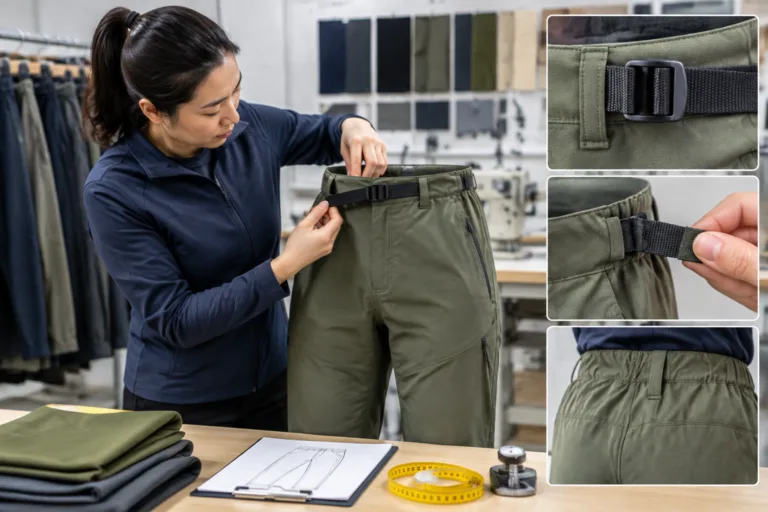
US women’s sizing development is not a direct conversion from a label to a finished garment. It is the process of translating an intended wearer, fit preference, product category, and body-measurement reference into measurable garment specifications that can be drafted, sampled, and reviewed. A size label or generic chart can provide a starting reference, but it cannot replace product-specific decisions about ease, fabric behavior, silhouette, and movement. For related material-development context, see Sponsor.
This distinction matters whether a team is developing a close-fitting knit top, a structured woven jacket, or a relaxed layered garment. The useful question is not simply “What does this US size convert to?” It is “Which wearer and fit intent does this product serve, and how will that intent be measured?”
What US Women’s Sizing Means in Apparel Development
In apparel development, US women’s sizing is a reference system for communicating intended wearer size. It may appear as a numeric label, a letter size, or a brand-specific range. The label helps identify the intended position within a size system, but it does not fully describe the body, the garment, or the fit. A product team must define those details separately.
A size-chart reference describes selected body assumptions or a reference population. A brand’s adopted size range states which labels the product will offer. The finished garment specification states what the sample or production garment should measure. These are different evidence categories. A body measurement describes the wearer; a garment measurement describes the product after a defined measuring method is applied.
For example, a flat half-chest measurement cannot be treated as the wearer’s chest measurement. Doubling the flat width may produce an approximate garment circumference only when the geometry and symmetry are understood. The result still includes design ease, construction features, and possible movement allowance. It is therefore a garment specification, not a direct claim about the body that will wear it.
The same nominal US size can require different development decisions across products. A stretch knit may use fabric extension and recovery as part of its fit strategy. A structured woven garment may need more deliberate ease for construction, layering, and movement. A close silhouette, relaxed silhouette, sleeve shape, neckline, and intended use can all change which measurements matter and how they should be interpreted.
Generic S/M/L charts and regional conversion charts are reference aids, not universal finished-garment rules. Their usefulness depends on the brand, target customer, product category, and fit preference. Before drafting or grading patterns, document the intended wearer, selected label system, fit intent, garment category, and core body-measurement assumptions. That short decision record gives the team a clearer starting point than a conversion chart alone.
Translate the Size Intent into Body and Garment Measurements
Once the size intent is selected, convert it into a measurement architecture that a pattern maker and product team can use. Every record should state whether it describes the body, the pattern, or the finished garment. It should also identify the measurement point, unit, measuring state, and whether stretch, tension, or relaxation is involved.
Points such as bust, waist, hip, and length can support development when their locations and methods remain consistent. They should not be treated as a universal mandatory list for every product. A sleeveless top, trouser, coat, and elasticated knit may need different points of measure. The technical package should define the selected points in words and, where useful, on a drawing.
| Observable input | Development implication | Initial choice | Variables that could change the choice |
|---|---|---|---|
| Body measurement reference | Describes the intended wearer rather than the garment. | Record the source, point, unit, and measurement state. | Target customer, posture, measurement method, and selected fit preference. |
| Finished flat measurement | Describes the garment in a defined laid-flat state. | Record geometry, symmetry, construction, and ease separately. | Seams, gathers, shaping, stretch, relaxation, and measuring tension. |
| Stretch knit | Fabric behavior can affect coverage, movement, and fit response. | Define the relaxed state and any project-specific stretch condition. | Fiber content, fabric recovery, direction, garment tension, and use. |
| Structured woven garment | Shape and construction may limit how the garment accommodates the body. | Set key dimensions with silhouette, balance, and intended layering in mind. | Interfacing, seams, closures, lining, posture, and movement needs. |
A flat width may approximate part of a circumference only after the measurement geometry is clear. Side seams, curved panels, darts, pleats, elastic, and asymmetric construction can make a simple width-times-two interpretation misleading. Keep the garment value identified as such, even when it is compared with a body reference during fit review.
Record units and conventions in the technical package. State whether a measurement is taken relaxed or extended, where the tape or ruler begins and ends, and which sample state is being measured. Matching terminology across drawings, written points of measure, patterns, and revision notes reduces the chance that different teams interpret the same size requirement differently.
Choose the Size Range, Grade Logic, and Fit Intent
Size-range selection and grading are related but distinct decisions. The range determines which intended sizes the product will offer. Grading determines how the pattern and garment specifications change between those sizes. A conversion chart may inform the first decision, but it does not supply a finished grading rule.
Fit intent should be written in product terms such as close, standard, relaxed, or oversized only after the team defines what the term means for that garment and fabric. The definition may refer to selected body areas, garment ease, silhouette, layering, or movement. Without those details, the label describes an aspiration rather than a checkable development requirement.
Grade logic should follow the product’s key dimensions, construction, silhouette, and fabric behavior. Avoid treating one increment or ratio as valid for every women’s garment. Customer data may support one range, while the category, use, or design proportions support another. Document the assumptions so later fit findings can be traced to the decision that produced them.
For instance, a lightweight stretch knit intended for movement may initially prioritize coverage, recovery, and movement at selected body areas. A structured woven version of a similar style may require different ease and balance decisions because its construction and fabric respond differently. The scenario is a development consideration, not a universal rule; the fabric, pattern, and intended use must be reviewed together.
Before approving a range or grading approach, record the target customer information, style category, layering expectation, movement needs, fabric behavior, and fit preference. Treat the first range as a product-specific proposal that can be refined through sample review, rather than as proof of a universal US conversion.
Document US Women’s Sizing in the Technical Package
Turn the chosen size and fit intent into a clear, product-specific specification. A size-and-fit block can identify the intended size labels, the body reference or chart being used, defined points of measure, units, measurement state, and fit intent. Include tolerances only when they have been established for the product and measurement method; do not borrow an unverified value from another style.
Match the names and locations used in the measurement table to the technical drawing and pattern information. Add revision identifiers so a reader can tell which specification applies. If a drawing marks one location while the written point describes another, different teams may measure different things and reach conflicting conclusions.
Keep size data distinct from material records. A bill of materials (BOM) describes the materials and components used in the product; a sizing specification explains how the garment is measured and evaluated. They may sit within the same technical package, but they answer different questions. The right level of detail depends on the product, so a single template or page count will not suit every style.
For each key measurement, make the review process explicit: who measures it, on which sample state, using what defined method, and what happens if the result differs from the approved specification? This makes the package more useful across design, pattern, sampling, and quality review without implying that any one documentation format is universal.

Validate Fit Through Movement, Care, and Review
Begin sample review with a consistent standing assessment of coverage, balance, key garment measurements, and visible strain. Then select movements that reflect the garment’s intended use. Raising the arms, sitting, bending, or wearing a planned layer can reveal pulling, shifting, pressure, or coverage changes that a static view may not show. These are project-defined checks, not a universal test protocol.
Record what was observed before deciding what to change. A practical sequence is:
- Compare the sample with the approved measurements and note the sample state and review conditions.
- Assess relevant movements and record specific changes in fit, coverage, or appearance.
- After agreed care or use conditions, compare selected dimensions and appearance again.
- Link each observation to a possible measurement, construction, fabric, or use variable, then note the proposed revision and follow-up check.
Where stretch materials are involved, recovery may be relevant to the fit review; for other constructions, dimensional change or twisting may matter. Compare before-and-after results under conditions selected for the product, rather than assuming one care review represents every use. A single fitting or wash does not establish performance throughout a garment’s life. Keep measured results, project decisions, and general development advice distinct.

Use the Results to Refine the Size System
Use a concise review record to connect each fit observation to a measurement, construction, fabric, or use variable and the next revision. Before the next sample decision, compare the intended body references with finished-garment specifications using clearly defined points and units. Document changed assumptions, and check the applicable measurement or care method when a numeric or compliance claim matters. This refines a product-specific sizing system; it does not prove a universal US conversion.
Frequently Asked Questions
Can a US women’s size label be converted directly into finished garment measurements?
No. Treat the label as a size-system reference, not a finished-garment specification. The target wearer, garment category, fit intent, fabric, construction, and measurement definitions all affect the measurements developed for a product.
How should body measurements and garment measurements be recorded during US women’s sizing development?
Identify each record as body, pattern, or finished garment data. State the measurement point, unit, and relevant sample or measurement state; define the method consistently. Do not present a garment measurement as a direct claim about the wearer’s body.
What should a technical package include for a women’s size and fit specification?
As appropriate for the product, include intended size labels, the body reference or chart, defined measurement points, units, fit intent, and measurement state. Keep drawings, written points, and revision identifiers consistent, and document any product-specific tolerances that have been established.
How do fabric stretch and garment ease affect the selected US women’s size range?
They are product-development considerations, not universal rules. A stretch knit intended for movement may call for different fit and coverage decisions than a structured woven. Review the fabric, construction, silhouette, and use together when setting and revising the range.
Why should movement and post-care measurements be reviewed during apparel sizing development?
Movement can reveal changes in fit or coverage that standing review misses. Care or use may also affect dimensions and appearance. Project-relevant checks help link observations to revisions, but a single fitting or care review does not establish full-life performance.