When sourcing from vertically integrated garment factories, sample evaluation shows how well a supplier turned a specific brief into a garment. The fabric, fit, construction, and finish can reveal how well material selection, pattern work, sewing, and finishing were coordinated. Apparel Wiki covers sourcing independently and explains its policy on the Sponsor page.
Sample quality here means how closely the garment matches the agreed specification for its stage of development. A close match tells you what the team achieved on that version. Bulk consistency, available capacity, compliance, and which processes the factory controls in-house each require separate evidence.
What sample quality can reveal about an integrated factory
A strong sample gets the details right in combination. The fabric and trims match the brief, the measurements and silhouette reflect the approved pattern, and the construction and finish suit the design. When those results agree, they suggest the team understood the requirements and carried them through the work.
Give more weight to the features that matter most for the style. If a design calls for matching stripes across a seam, check that join directly. The alignment depends on how the pattern pieces were laid out, cut, and brought together in sewing. The finished seam shows whether the requirement was met on that garment. The work history can explain how the team achieved it.
Read each result in light of the sample’s purpose. A fit sample made in an agreed substitute fabric can help resolve shape or proportion. The fit and appearance in the intended production fabric still need checking. Record which requirements the sample was supposed to demonstrate so that an agreed provisional choice stays distinct from a deviation.
Development skill and production repeatability answer different sourcing questions. A sample maker can spend extra time aligning pieces or correcting an operation before presenting the garment. During bulk production, the team has to achieve the required result across units under the intended production conditions. A controlled trial can examine that repeatability within the conditions it covers. Available capacity for the planned order is a separate question.
Sample appearance also leaves the commercial and production relationships open. Establish who issues the quote, who receives payment, who makes the garment, and who may subcontract an operation. That information puts the sample result in context when you assess the supplier.
A practical garment sample inspection framework
Give each factory the same approved specification, pattern version, material list, measurement points, and applicable sample comments. Record the version each factory actually used and any agreed departures. Compare garments at the same development stage so the review measures execution against a common brief.
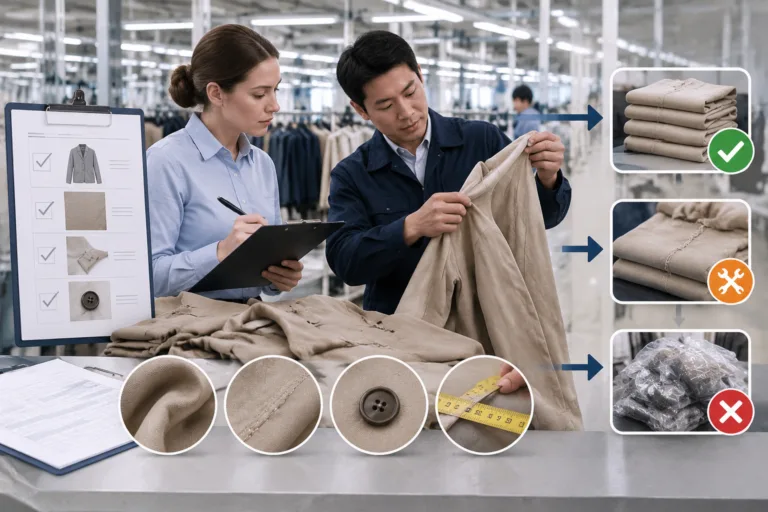
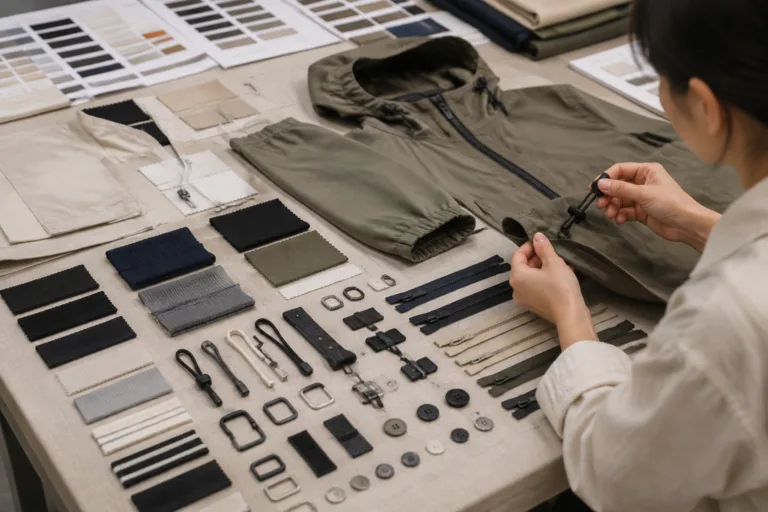
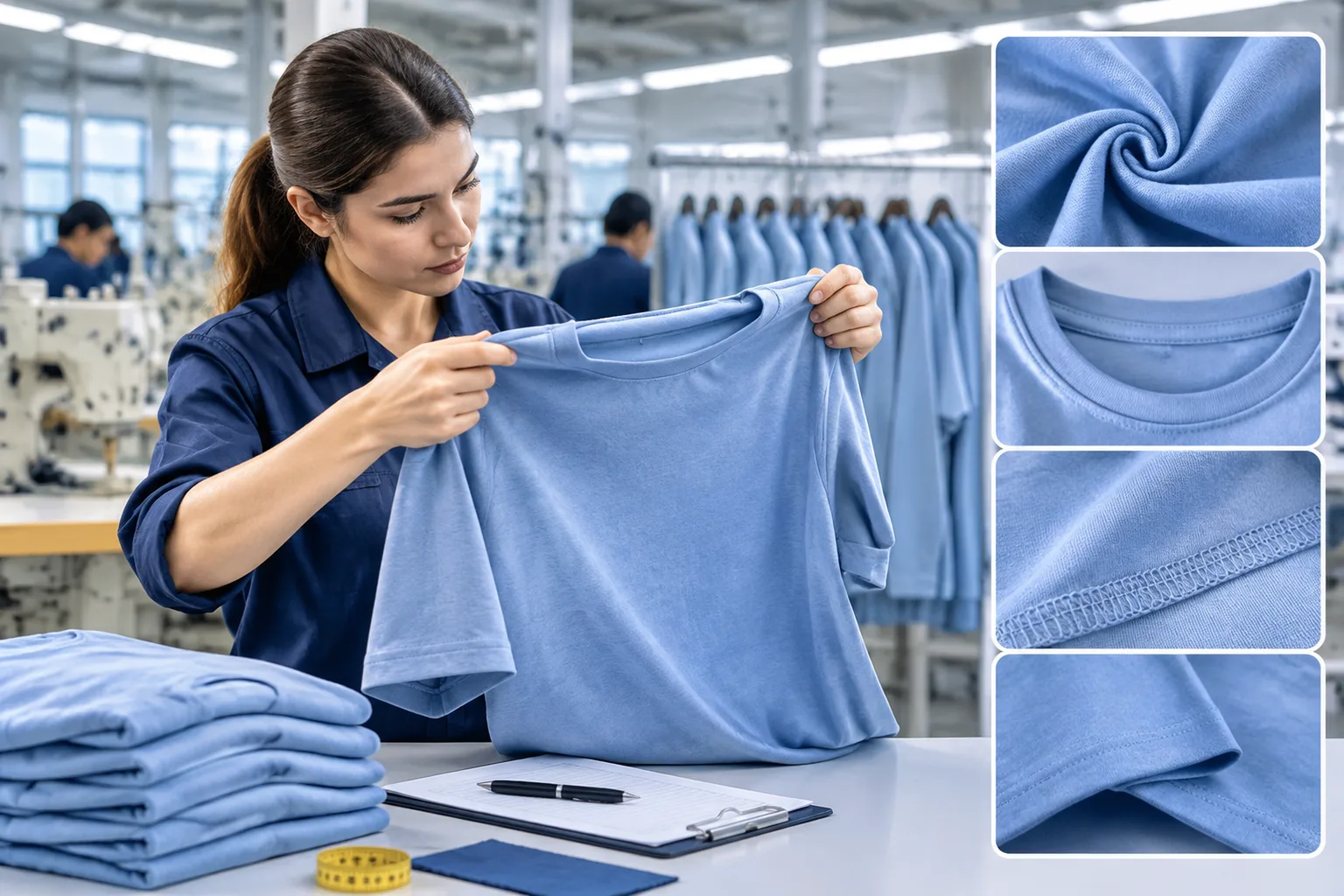
Check fabric and trim identities against the material list. Then measure at the specified points and assess pattern balance by looking at how the garment hangs and how its parts sit in relation to one another. A measurement records size at a particular point. Balance can reveal an issue with the overall shape even when that point matches.
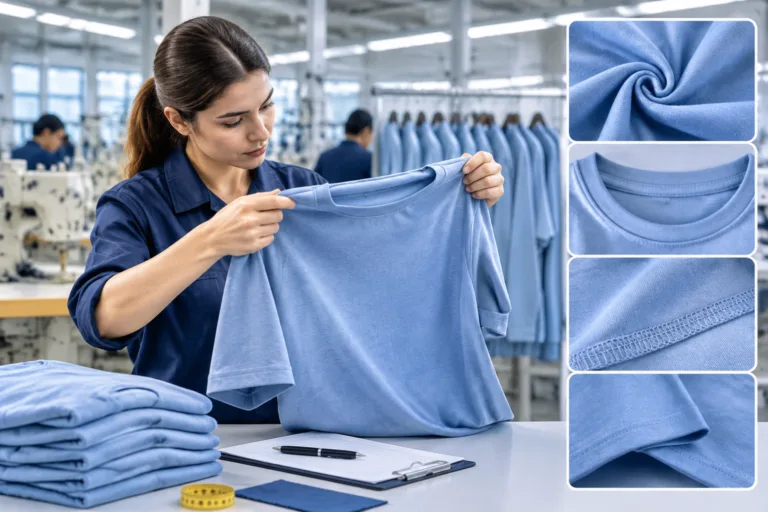
Inspect seam alignment, intended symmetry, stitch consistency, edge control, and how trims are attached. A neat seam still has to match the specified construction. If a seam puckers, record where it occurs. Fabric behavior, thread tension, pattern shape, handling, and pressing are all possible contributors.
| Observable input | Possible implication | Initial follow-up or choice | What could change the decision |
|---|---|---|---|
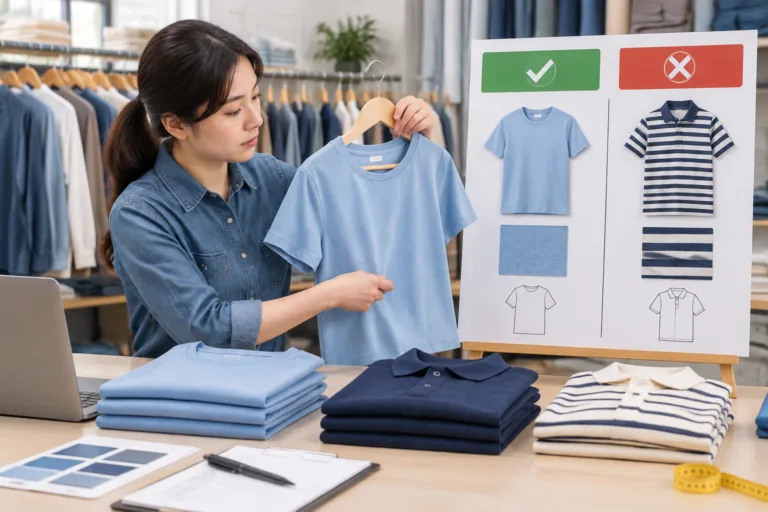
| Substitute fabric or trim | Similar appearance can mask differences in care behavior, color, weight, fit, or hand. | Identify the substitute and check its approval status. | Sample purpose and the material planned for bulk |
| Measurement outside the brief | The measuring setup, pattern, or assembly may differ from the brief. | Repeat the measurement at the specified point and check the pattern version. | Applicable tolerance and effect on fit |
| Uneven seam or attachment | Placement or execution may vary within the sample. | Mark the location and check the corresponding details. | Intended asymmetry and the function of the attachment |
| Press marks or loose threads | A finishing step may need adjustment. | Record the affected area and ask how it was finished. | Fabric sensitivity, visibility, and whether the defect recurs |
Compare label and packing details where the brief covers them. If the review includes an agreed care procedure, record the garment’s appearance and dimensions afterward. Use agreed evaluation methods for claims about colorfastness, shrinkage, strength, or safety. Visual checks, hand feel, and routine measurements answer narrower questions.
Connecting sample evidence to vertical integration
For sourcing, assess vertical integration by asking which relevant processes the supplier controls directly and how it coordinates the rest. Correct material selection, accurate pattern interpretation, and consistent sewing and finishing suggest that instructions reached the people doing the work. The sample gives you a basis for checking that explanation.
Trace an issue through the stages that could affect it. If the position of a pocket changes between sample versions, ask where the approved position was recorded, how cutting and sewing received the update, and where quality review checked it. For a material change, ask who had authority to approve the substitute. For a defect, identify who owns the correction and who checks the revised sample.
Direct control over several stages can make those handoffs clearer when teams share current instructions and know who can authorize changes. The resulting quality still depends on how the teams apply those controls to the garment. A comparable sample could come from internal departments, approved partners, or a mix of both. A trading or contracting company may also be separate from the producer. Knowing who did the work helps you trace decisions and establish responsibility.
Use the revision history to check how the team responds. Match a dated comment to the updated instruction and then to the corresponding detail on the next sample. If the change affects another requirement, such as pocket placement relative to a seam, check that detail too. A traceable revision shows how the team handled a specific correction.
Assess capability against the garment and material combination you plan to order. Country, facility size, equipment count, and a polished sample room offer little detail about how that combination will run. Comparable samples, process explanations, verifiable records, and performance in a relevant trial each give you a more direct basis for judging the proposed setup.
What to request after the sample review
Ask for records tied to the sample you reviewed and the production arrangement the supplier proposes. If development and production will use different materials, sites, or teams, have the supplier identify those differences. That gives you a basis for deciding which findings carry forward and which need fresh evidence.
- Specification and sample history. Request the dated specification, pattern revision, fabric and trim list, and sample comments for the reviewed garment. Ask the supplier to identify which measurement and construction changes the sample incorporates and which are still pending. Flag any temporary materials or details that need confirmation before production.
- Production responsibilities. Ask for a process map or written account that identifies the quoting party, the intended production site, and the teams responsible for the style’s key operations. Confirm which operations may be subcontracted, where that work is planned, and how the supplier will notify you if the arrangement changes.
- Product quality checkpoints. Request relevant quality records for the style, if available, or a proposed inspection plan. Ask what the team will check before an error can carry into the next operation, who records the result, and how a correction is verified. Keep any social responsibility audit in its own scope when evaluating the supplier.
- Material change approval. Ask how a proposed substitute will be identified, who can approve it, and how that decision will reach purchasing and production. Agree which checks to repeat based on the properties that could change. A substitution might call for another sample, a fit review, or an evaluation under the intended care conditions.
- Capacity for the proposed schedule. Ask which operation could limit output for this style and how the supplier plans around it. Discuss material availability, specialized equipment, operators with the required skills, and existing orders. Ask which of those commitments must line up for the proposed production window to hold.
Use these documents and explanations to specify what a revision or trial needs to verify. A checkpoint listed in a plan shows how the supplier intends to control an operation. A record from the relevant run can show whether the check took place and what the team found.
Turning sample findings into a sourcing decision
Start with the requirements for the sample stage. For each deviation, assess its effect on fit, use, or appearance and note how certain you are about its cause. Agree what would close the issue, such as a corrected detail on a comparable sample or an acceptable result in a controlled trial.
If a lightweight knit looks clean but its behavior after washing is uncertain, confirm that the sample uses the intended production fabric. If it uses a different fabric, make the evaluation sample in the intended material. Apply the agreed care evaluation and check the dimensions and appearance that matter for the intended use.
If a structured garment repeatedly misses measurements or alignment requirements, pause before advancing it. Confirm the pattern revision, measurement points, and construction method. Ask who owns the correction and what the next sample will demonstrate. Base the decision on the team’s response and the revised garment, keeping the judgment specific to that style.
| Observable result | Possible implication | Initial action | What could change the decision |
|---|---|---|---|
| Sample meets the brief and records trace the materials, revision, and operations | The sample provides a clear baseline for a trial. | Carry that baseline into a controlled trial if repeatability still needs checking. | A larger order or tighter schedule could put different demands on the production setup. |
| Sample looks good but has limited documentation | Some details may be difficult to reproduce. | Verify the material identities and confirm which construction instructions were used. | Records linking the sample to the planned production setup would strengthen the case. |
| A specific deviation has a proposed correction | A comparable revision can show whether the change addresses the issue. | Review the corrected feature and any related detail the change could affect. | A change to the fit or construction could require a broader review. |
| Material identity or process responsibility remains unclear | The basis for approving the sample is incomplete. | Hold approval until the material and responsible party are confirmed. | A new material or subcontractor could require fresh sample or trial evidence. |
Revisit the decision if the intended use changes. Even when the sample still meets the appearance brief, the new use can change which performance checks matter before production.
Use sample quality as evidence, not a verdict
A garment sample shows how the supplier executed a specific brief. Confidence in repeatable bulk quality grows when the approved specification, documented responsibilities, and results from a relevant trial or evaluation all refer to the proposed production setup. Before advancing, compare the sample with the approved specification and make a dated review record. Link each observation to the relevant requirement, the open question, the person responsible, and the follow-up decision. For any outstanding performance question, check the applicable evaluation method and record which material or garment version it needs to cover.
Frequently Asked Questions
Can a high-quality garment sample prove that a factory is vertically integrated?
The finished garment shows the outcome. To assess vertical integration, trace who controlled the relevant operations and where they took place. Ask which steps the factory handled internally and which it coordinated through outside partners.
What should I compare when reviewing samples from different garment factories?
Use the same specification, pattern revision, material list, measurement points, and sample comments. Check each garment against the requirements for the same development stage. Record agreed exceptions separately so a provisional choice stays visible when you compare results.
What is the difference between sample quality and repeatable bulk-production quality?
Sample quality describes how closely a particular garment meets its brief. Repeatable bulk quality concerns whether garments continue to meet that brief across a run. A trial provides more relevant evidence when it reflects the planned materials, operations, and production site.
What records should a buyer request after approving a garment sample?
Ask for the approved specification and pattern revision, the confirmed fabric and trim list, and a record of any accepted deviations. Confirm that the production team has that version and that its inspection plan refers to the same requirements.
How should material substitutions affect sample evaluation?
Record what changed and who approved it. A visually similar fabric can differ in weight, hand, color, fit, or care behavior. Decide which requirements the change affects, then repeat the sample review or evaluation needed to check those requirements.
Can a social responsibility audit replace a garment quality trial?
Each answers a different sourcing question. Review a social responsibility audit against its stated scope. Use a garment quality trial to check whether the proposed production setup can meet the product requirements under the conditions covered by the trial.