Pleats Definition: The Backbone of Fabric Manipulation
In the most practical sense, pleats are folds made by doubling fabric back upon itself and securing it in place. This construction detail is as old as cut-and-sewn clothing itself. Pleats can be pressed hard, sewn down, or left loose to spring open, changing the entire hand-feel, volume, and drape of a pleated garment.
Apparel Wiki defines a pleated garment as any apparel item where a series of structured fabric folds are used—not just for decoration, but to control fit, silhouette, and movement. Key parameters include pleat depth, spacing, direction, finish (pressed, stitched, loose), and the effect on the fabric’s thickness and behavior—critical for successful pattern-making and bulk manufacturing.
Main Types of Pleats: Knife, Box, and Inverted Explained
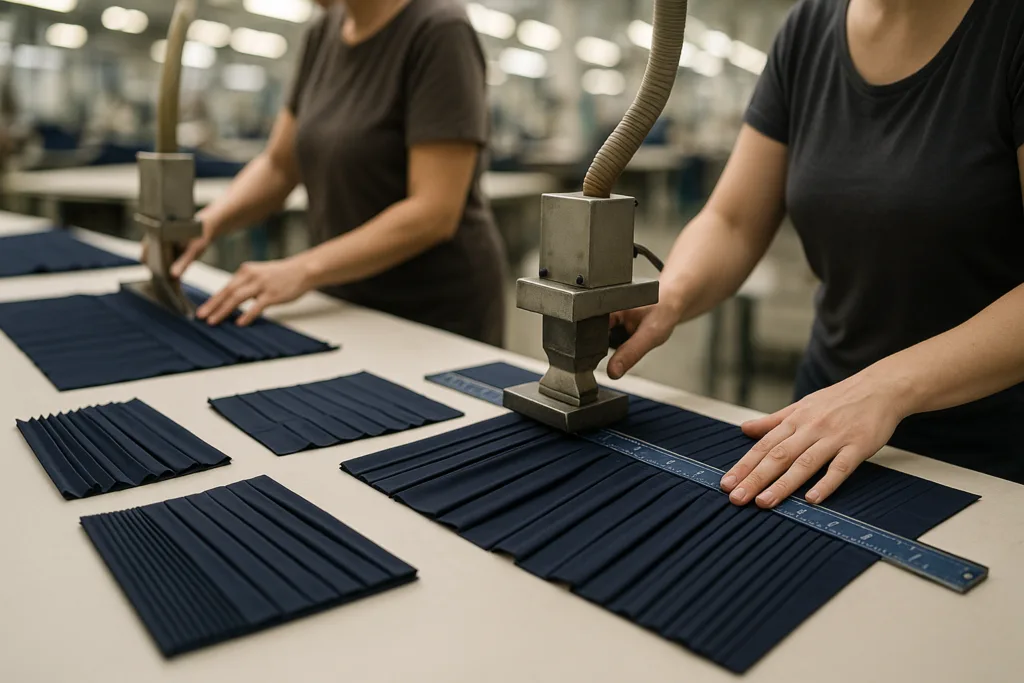
In actual production, three pleat types dominate both classic and modern clothing: knife pleats, box pleats, and inverted pleats. Each delivers unique visual effects and functional results.
Knife Pleats
Knife pleats are tight, uniform folds facing the same direction, like blades in a set. Usually, the pleat is set at 1-2 cm width, evenly spaced, and pressed flat for consistency. Knife pleats are common in school skirts, tunics, and some outerwear flares. For factory sewing lines, careful stacking and pressing are vital to avoid skewed run-off when pleating large batch quantities.
Box Pleats
Box pleats are made by forming two knife pleats facing away from each other, which creates a box-like protrusion on the outside, and a flat overlap on the inside. These appear in kilts, trench coats, and uniforms—whenever a structured, dimensional effect is required. Proper pattern extension and seam allowance for the pleat fold are essential to avoid tightness or bulk at the seam join.
Inverted Pleats
Inverted pleats are the opposite of box pleats—the folds meet on the inside, so the exterior looks flat and clean, with hidden fullness. Inverted pleats add movement to tailored skirts, A-line dresses, or even jacket backs, without visible bulk. They require careful alignment during fabric cutting and accurate pressing so the concealed fold opens symmetrically when worn.
| Pleat Type | Visual Effect | Best Uses | Notes for Sewing/Finish |
|---|---|---|---|
| Knife Pleat | Narrow, all folds one way | School skirts, some dresses | Requires uniform pressing & topstitching for bulk orders |
| Box Pleat | 3D box shape, with visible depth | Coats, kilts, uniforms | Seam allowances must consider pleat thickness |
| Inverted Pleat | Flat exterior, hidden fullness inside | A-line skirts, back panels | Precise pattern marking, pressing for symmetry |
History and Evolution of Pleats in Apparel
Pleats have a deep history in garment culture—from ancient Egyptian pleated linen to European court dresses to today’s performance wear. Their universal appeal comes from structural integrity and decoration. Early pleats were hand-pressed and stitched; modern high-volume production uses specialized pleating machines, but hand-pressing remains vital for couture details and QC corrections.
Each era has its pleating heroes—Victorian crinolines, 1920s accordion skirts, 1980s power suit pleats, and contemporary micropleats. Understanding this evolution informs both design direction and feasibility studies when taking on complex pleated garments for bulk or custom production.
Pleated Garment Construction: Step-by-Step Method & Quality Control
Consistent pleat formation is a mark of factory skill. Here are the standard steps for pleated garment production:
- Pattern Making: Add pleat extensions to main panels. Mark fold lines, underfolds, and any tacking/stitch points. Allow extra for overlap—typically 2 x pleat depth.
- Fabric Cutting: Cut panels with laser, band-knife, or auto-cutter for accuracy. Relax fabric before pleating to prevent post-press shrink.
- Pleating: Use hot pressing (industrial pleater, hand iron for samples), aligning fold lines to ensure pleats are straight and uniform. Topstitch where required for knife pleats.
- Stitching: Secure pleat heads with bar-tack or staystitch. Attach pleated sections to yoke, waist, or bodice as per spec.
- Finishing: Final press, quality check for symmetry, overlap, and fall. Test pleat recovery after gentle handling per buyer standard.
Consistent inspection includes checking pleat width tolerance (±2-3 mm for most wovens), pattern match at joins, and correct alignment even after wash tests for shrinkage and setting.
Rain’s Tip: For synthetic fabrics, always confirm pleat permanence with a shrinkage and pleat retention test after bulk press—what looks crisp in QA can distort 24 hours later without steam set.
Specialized Pleats: Accordion, Sun Ray, and Cartridge Pleats
Factory professionals also encounter these advanced pleat types:
- Accordion Pleats: Successive narrow knife pleats, producing flexible, springy fabric. Used in chiffon skirts, dress trims.
- Sun Ray (Fan) Pleats: Variable-width pleats radiating out from a fixed point, creating flared hems in evening, bridesmaid, or stage wear.
- Cartridge Pleats: Rounded pleats sewn into a band for heavy, period-style volume—often in costumes or curtain headers.
These types require more complex patternwork and careful pressing, sometimes needing specialist pleating molds or forms.
Fabrics Best Suited for Pleating and Their Performance
Wovens
Wovens with crisp hand and dimensional stability—like polyester-taffeta, cotton poplin, blended broadcloth—pleat sharply and hold crease better, especially after heat-set. Pure cotton pleats are softer but may loosen with laundering unless starched or stabilized with synthetic blends.
Knit Fabrics
Pleating on knits (single jersey, interlock) is challenging; the inherent stretch resists sharp pleats and can lead to roping or breakage at fold lines. If pleats are used, secure with stitching or bond with thin interlining, or use them as design additions rather than structural features.
Specialty Textiles
For permanent pleats, polyester and nylon blends are preferred—these fibers retain pressed creases after synthetic resin or steam treatment. Foil-laminated or metallic blends add visual drama but need lower, carefully controlled heat during pleating to avoid damage.
Pleats in Ready-Made vs. Custom Garments: Industrial Insights
Ready-Made Production
In mass production, pleats are pressed and semi-set before assembly, with strict folding jigs for uniformity. QC at this stage is critical. The risk is misaligned folds carried through the entire line. Knife and box pleats are most feasible for ready-made lines due to their repeatability.

Custom and High-Fashion Applications
Couture and bespoke garments allow for more experimental pleats—hand-molded sun ray pleats, deep cartridge pleats for show pieces, and one-off fabric manipulations. These require slow handwork, ironing, and in some cases, complete garment hand-pressing post-assembly.
Uses and Common Applications of Pleated Garments
Pleats are not mere decoration—they solve functional challenges and add fashion value. Here are frequent applications:
- Skirts and Dresses: School, tennis, and uniform skirts utilize knife pleats for movement and easy care. Sunray pleats are a mainstay in evening and festival dresses.
- Outerwear: Box pleats in back panels or pockets add structure and volume to trench coats and pea coats.
- Tops: Inverted pleats in blouse backs or sleeves improve range of motion and fit flexibility.
- Pants: Traditional trousers may have front knife pleats for classic fullness and ease at the hip.
- Children’s Wear: Pleated trims combine comfort with style, often stitched down for safety.
- Technical Garments: Sports and dancewear may use micropleats for stretch with style.
Pleats deliver specific value in each use—allowing the garment to expand, move, or hold shape in wash-and-wear cycles, while enhancing overall aesthetics.
What Are “Pleats”? (Pleats Definition, Structure, Key Parameters & Best Practice)
The industry-facing answer to “What are pleats?” involves both the conceptual foundation and technical best practices for production:
Pleats Definition
Pleats are intentional, engineered fabric folds, stabilized by pressing or stitching, which add shape, volume, and flexibility to a garment. Their construction must take fabric memory and finishing into account—what appears sharp in sampling can dull or distort over multiple washes if not properly set and tested.
Why Pleats Matter in Garment Manufacture
Pleats define a garment’s movement and silhouette. For volume skirts, pleats allow for dynamic flow while minimising bulk at the waistband. In uniforms, pleats ensure fitting flexibility without adjustment mechanisms. In practical terms, pleats also influence fabric utilization rates, labor time, and cost structure—an area Rain Chen has optimized in countless bulk apparel programs.
Key Quality and Production Parameters
- Pleat Depth/Width: Dictates fullness and visual rhythm; typical 1–3 cm per pleat in apparel fabrics.
- Pleat Spacing: Tolerance usually ±2 mm in mass production for school or uniform skirts.
- Pleat Fixing: Heat-setting for synthetics, topstitching or bartack for natural fibers, sometimes chemical finish for permanent micropleats.
- Shrinkage Allowance: Plan at least 2–3% extra panel fabric in wovens for heat loss after pleat pressing.
- QC Steps: Measure across multiple points—not just at center front/back—during final inspection.
Common Mistakes and Factory-Level Solutions
- Marking Errors: Use fabric pens or soft chalk to avoid ghost lines after pressing.
- Bulk at Seams: Reduce layers at the join; sometimes cut out the underfold section to keep the seam flat.
- Poor Pleat Retention: Test a sample garment for pleat staying power after simulated laundering—especially with cotton and blended fabrics.
- Heat Damage: Always test pressing temperature on offcuts before committing the bulk batch, especially for metallic or coated fabrics.
Practical Tips for Successful Pleated Garment Orders
- Provide clear pleat diagrams and physical swatches with your spec packs.
- Agree with your factory on final pleat width after heat-set—not just pattern intent.
- Inspect not only the first-off but a random sample post-press, post-assembly, and after QC wash trial.
Following these steps reduces the risk of costly reworks or rejects seen so often in export orders involving pleated garments.
Pleats in Care, Finishing, and Lifespan: Avoiding Problems & Maximizing Value
Pleated garments require dedicated finishing steps in the factory and special care guidelines for wearers:
- Avoid over-ironing after washing, especially for synthetic heat-set pleats. Too much heat can erase factory-pressed structure.
- Pack pleated skirts/dresses with tissue roll between each pleat for shipment, maintaining shape and avoiding creases.
- Instruct buyers/consumers on hang vs. fold storage—some pleats can stretch if hung in damp conditions.
- For high-wear uniforms, test abrasion and repeated wash for pleat edge integrity, especially if used in workwear or schoolwear.
Structured finishing and realistic care instructions can add multiple seasons to a pleated garment’s life.
Decoration, Branding, and Customization of Pleated Garments

Pleats offer branding and differentiation opportunities. Embellishments can be positioned only on pleat faces, within the pleat valley, or at the waistband, such as:
- Screen printed patterns that reveal as the wearer moves and the pleat opens.
- Contrasting color blocking on box pleat underlays for dimensional impact.
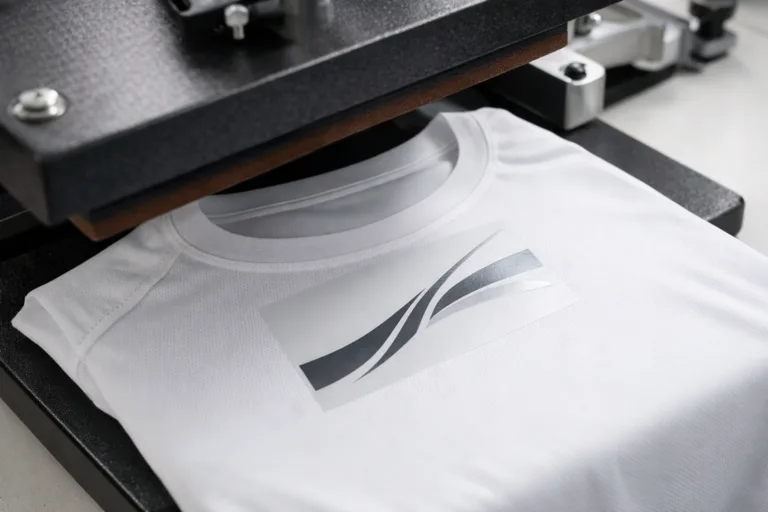
- Heat-transferred or embroidered logos at pleat base for uniforms and promotional wear.
Choose decoration techniques that survive pleating and pressing; always sample the process before bulk run.
Frequently Asked Questions
What is the main purpose of pleats in garments?
Pleats offer controlled fullness, create movement and volume, and add style details to garments without increasing bulk at waist or seams.
How are pleats different from gathers?
Pleats are structured, intentional folds aligned and sometimes pressed or stitched, while gathers are random bunches made by drawing fabric up with thread.
Can all fabrics be pleated?
Most stable woven fabrics can be pleated well; stretchy or loosely woven textiles are more difficult and may lose pleat definition over time.
What is the best way to maintain pleats after washing?
For permanent pleats, shape garments while damp, avoid over-ironing, and follow the care label closely to retain crispness and structure.
Why do synthetic fabrics hold pleats better than cotton?
Synthetics like polyester can be heat-set, giving pleats memory, while cotton lacks this property and may relax unless chemically treated or starched.
What should I include in a pleated garment spec sheet for factories?
Include pleat type diagrams, finished pleat width, extension allowance, finished measurements, and care requirements for accurate production.