What Is a “Dart”?
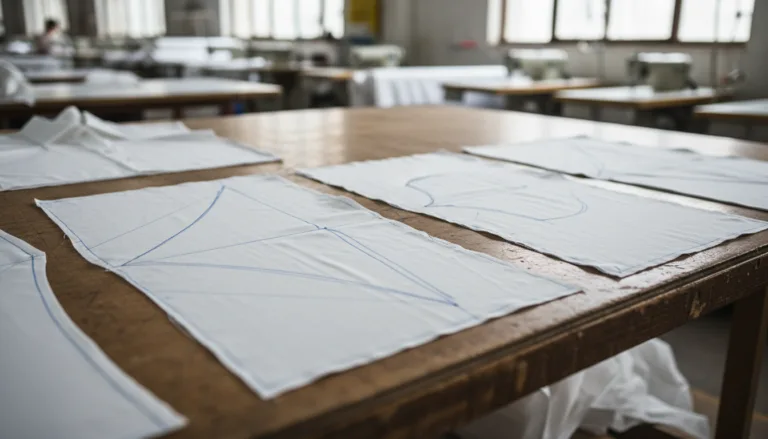
A dart is a wedge-shaped, folded, and stitched section of fabric that removes excess material to create three-dimensional shaping in a flat garment panel. Darts direct fullness, enabling the fabric to contour smoothly over curves of the body—especially at the bust, waist, and hips. The sewn dart blends back into the seam or panel, leaving no visible bulk on the outer side and creating a controlled shape beneath the surface.
Dart Meaning: The Core Principles
- Function: Darts sculpt flat fabric into three-dimensional forms by releasing or taking in fabric where shaping is needed.
- Structure: A dart has two legs (lines) that converge at a point (apex) and open into a wider base. The excess fabric between the legs is folded and stitched together.
- Result: After stitching, the dart adds subtle volume or removes slack, enabling the garment to fit specific body contours.
Why Understanding Darts Matters for Professionals
Darts are present in 80% of tailored women’s styles and many men’s shirts, trousers, and uniforms. They are integral to achieving the intended silhouette, comfort, and professional finish in production. Misplaced or poorly finished darts can lead to puckering, drag lines, or ill-fitting samples that fail PP or wear tests. The skillful handling of darts, from paper pattern through bulk QC inspection, distinguishes high-quality factories from the rest.
Fundamental Purpose of Darts in Sewing
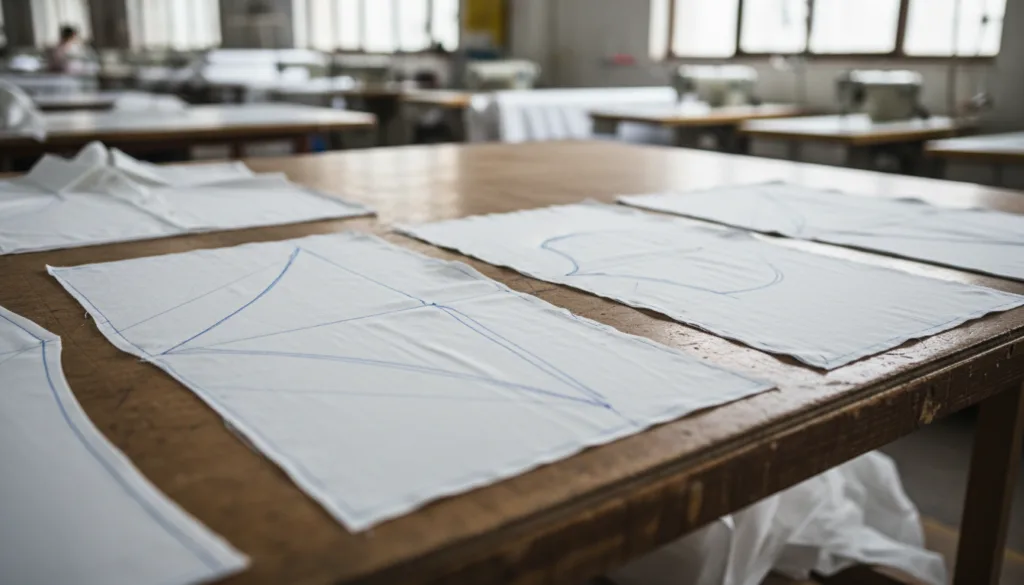
Darts purpose: Darts convert the two-dimensional nature of woven or knit fabrics into shapes that accommodate the convex and concave curves of the body. Their main roles include:
- Shaping to body contours (bust, waist, hip, shoulder, elbow, knee, and in some menswear, back and trouser legs)
- Controlling fullness and volume without adding bulky seams or gathers
- Defining the garment silhouette (fitting, semi-fitted, straight, or tailored looks)
- Providing shaping without visible external lines, maintaining clean design aesthetics
Example: In women’s blouses, darts refine the fit at the bust point, preventing gaping at the armhole and ensuring a smooth drape over the chest. In tailored trousers, back darts remove waist excess to create a contoured fit over the lower back and hips.
Types of Darts in Sewing Production
Different fabrics and garment categories require specific dart types to achieve the correct shaping and ease for movement. The most common dart in sewing variations include:
| Type of Dart | Typical Placement | Application | Garment Examples |
|---|---|---|---|
| Single-point (basic) Dart | Bust, waist, shoulder, elbow, skirt back | Simple shaping, removes fullness at one end | Blouses, shirts, dresses, skirts |
| Double-point (contour) Dart | Waist area | Shapes both bust and hip simultaneously | Fitted dresses, bodices, jackets |
| Sleeve/Elbow Dart | Sleeve elbow | Accommodates arm bend | Jackets, uniform shirts, workwear |
| Bust Dart | Bust point to side seam | Molds fabric over bust | Women’s blouses, dresses |
| French Dart | Side seam at waist, angled toward bust | Subtle front shaping | Dresses, semi-fitted tops |
| Shoulder Dart | Shoulder to bust | Lifts bust fullness up to shoulder | Tailored blouses, jackets |
| Fish/Eye Dart | Double-ended at waist | Sculpts fitted garments | Dresses, back waist, trousers |
| Released Dart | Any, not fully stitched | Creates ease/soft fullness | Fashion blouses, children’s wear |
Dart Variations in Practice
- Curved darts: For anatomical shaping in curved body areas (e.g., bust to waist on tailored dresses)
- Dart tucks: Folded darts not stitched along the full length, leaving controlled fullness
- Dart replacements: Sometimes, darts are converted into style lines (e.g., princess seams), pleats, or gathers for aesthetic or technical reasons.
How Darts Shape a Garment: Technical Mechanics
The dart’s effectiveness depends on strategic positioning, width (intake amount), and tapering. In mass production, consistently precise darts ensure grade-to-grade fit accuracy and batch-to-batch reliability in finished goods.
Main Parameters Affecting Dart Performance
- Width (Intake): The angle between dart legs determines amount of fullness removed; wider intake creates more defined shaping but may risk bulk or puckering in thick fabrics.
- Length: From base to apex, must be sized for targeted body region (e.g., a bust dart that ends too close to apex creates a pointy, unnatural shape).
- Placement: Matching garment pattern and wearer’s anatomy. Standard bust dart ends 2–2.5 cm (approx. 1 inch) before the bust apex for most women’s blocks.
- Taper & Pressing: Properly tapered darts avoid point bulges. Seam pressing, often with a tailor’s ham for curved darts, sets the final shape and smoothness.
Common Dart Issues and Remedies
- Puckering or twisting: Stems from high SPI (stitches/inch), thick thread, or poor pressing technique. Solution: Adjust SPI to match fabric weight, use steam or tailor’s ham during pressing.
- Dart points too close to apex: Creates a visible bump; move end back by 2–2.5 cm.
- Mismatched dart intake: Can cause fit imbalance. Check pattern grade consistency and use bulk measurement specs for every size.
Where Darts Are Used in Garment Construction
Darts are integral to shaping and fit across multiple product categories. Their quantity, placement, and finish vary with gender, silhouette, end use, and fashion intent:
- Women’s Apparel: Bust, waist, back, hip, shoulder, and sleeve areas in blouses, dresses, jackets, tailored pants, and skirts.
- Men’s Apparel: Back waist darts in slim-fit shirts and jackets; occasional sleeve, trouser or vest darts for shaping.
- Uniforms & Workwear: Waist and dart tucks for mobility, especially in medical scrubs and hospitality wear.
- Children’s Wear: Fewer darts, often replaced by soft gathers or released darts to allow movement and comfort.
- Knitted Fabrics: Fewer darts due to mechanical stretch, but used in fitted or fashion-forward pieces, often converted to style lines.
Most bulk shirt production uses darts for sizes above a certain chest circumference to balance ease and drape without excess side seam intake.
Patternmaking: Adding and Adjusting Darts for Fit
Pattern technicians apply darts as part of the flat pattern drafting process. Key steps include:
- Marking dart location based on body/garment measurement charts and fit model size (refer to base blocks for bust, waist, hip, back builds).
- Calculating dart intake width and length per size; ensuring consistent grading.
- If splitting or combining darts (for complex shapes or high volume), subdivide the intake (e.g., double bust darts, or shared between side and waist darts).
- Transferring darts to muslin, sewing, and conducting wearer fit trials for bulk approval.
Factory Note: For higher-end tailoring, single-welt (French) darts are pressed on a ham. In mass sewing lines, final dart inspection checks for symmetry in intake and position within ±0.5–1 cm per measurement spec for woven shirts.
Dart Construction and Quality Control in Production
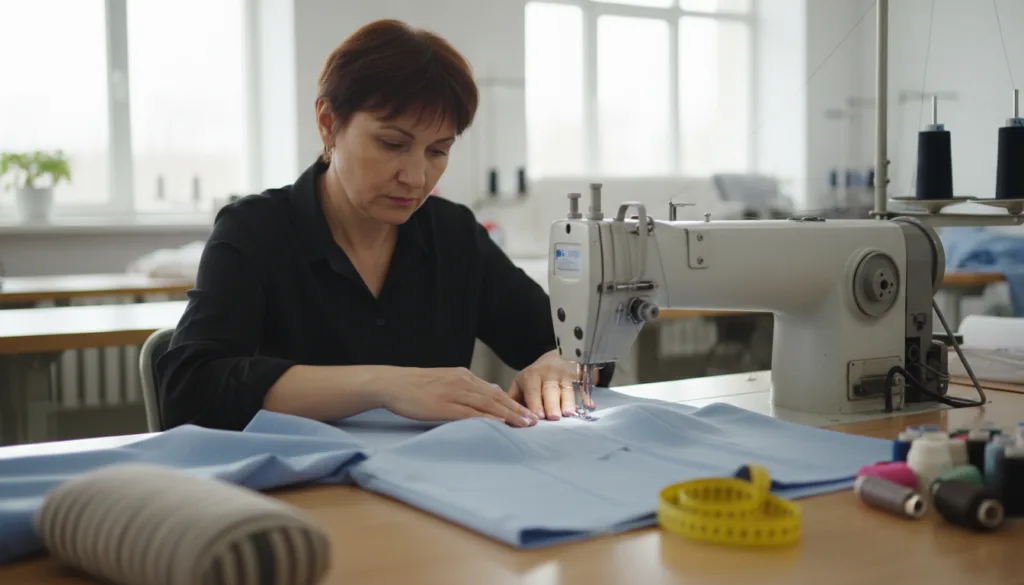
During manufacturing, achieving consistent dart construction reduces risk of rejection at buyer inspection. Key factory procedures include:
- Pre-sewing check: Accurate chalk or marker lines on all cut panels, especially in patterned or dark fabrics. Operators should check panel left/right orientation before folding and stitching darts.
- Stitching: Most woven darts use ISO 301 lockstitch with standard SPI (8–12 SPI for light-medium broadcloth, 6–8 SPI for heavier workwear cotton).
- Thread: Use fine thread for delicate or lightweight fabrics to avoid bulk at the apex. For heavy trousers or jackets, polyester core-spun thread (Tex 24–30) gives good seam integrity.
- Backtack: Avoid backtacking at the dart point—this can create a hard knot and show through on the outside. End stitch lines with graduated seam tapers, then knot and hide thread tails inside apex for clean results.
- Pressing: Press dart towards the panel’s lower side (waist for bust darts, center for waist darts) using a tailor’s ham—steam pressing for wovens, dry pressing for synthetics or spandex blends to avoid shine.
Final QC should check for symmetrical dart lines, smooth curvature, and no visible puckering, especially at the dart point and base.
Comparison: Darts vs. Alternatives in Pattern Shaping
| Feature | Dart | Princess Seam | Pleat/Fold | Shirring/Gathers |
|---|---|---|---|---|
| Shaping method | Fabric folded and sewn | Panel seam, removes/controls fullness | Fabric folded, stitched or released | Multiple gathers from elastic or stitching |
| Main use | Sharp anatomical form (fitted tailored look) | Smooth, rounded contour over bust/waist | Soft design interest, mobility | Soft volume, decorative looks |
| Bulk/factory cost | Low-Medium | Medium-High (extra seams) | Low | Low-Medium |
| Fit result | Crisp, professional shaping | Smoother curves, no dart point | Less shaping accuracy | Soft, fashionable silhouette |
| Main garments | Shirts, dresses, pants, blouses, jackets | Form-fitted dresses, outerwear, uniforms | Skirts, trousers, blouson styles | Childrenswear, casual dresses, volume tops |
Case Studies: Dart Application in Key Garment Categories
Women’s Tailored Blouse:
Uses bust and waist darts for a defined feminine silhouette in lightweight poplin or cotton-rich blends. Darts ensure the button front lays flat, avoiding gaping over chest curve.
Men’s Slim-Fit Shirt:
Back waist darts take in fabric at the lower back and hip for a trim, modern cut, often in fine yarn-dyed or Oxford cloth. Factory lines align dart positions with yoke seams for batch consistency.
Semi-fitted Workwear Tunic:
Released waist darts give subtle shaping and mobility in wash-and-wear twill; typically pressed soft for comfort under aprons or layered garments.
- Tip: When sampling, always check actual wearer comfort and movement in live fitting—not just on mannequin—before bulk approval.
Best Practices for Darts in Bulk Production
- Ensure dart locations and widths are included in every pattern spec sheet.
- Train line operators to fold and stitch darts accurately with minimal handling to avoid orange peel, drag lines, or twisted points.
- Use bulk shrinkage test data to verify that dart positions remain accurate after garment washing or preshrinking—adjust allowances if required.
- Press darts with form-shaped tools (tailor’s ham or sleeve board) suited to the garment curve. For non-iron or resin-finish shirts: use lower heat to prevent shine.
- QC check for symmetrical intake, smooth finish, and position within allowed tolerance in all sizes. Reject or repair any puckered or imbalanced darts.
Rain’s tip from the production line: “Time invested in precise dart marking, sewing, and pressing pays back with fewer fit complaints and post-shipment claims. If you ever see repeated dart issues on-cloth, review your markers, thread, and operator skill promptly.”
What Is a “Dart”?: The Key Takeaway
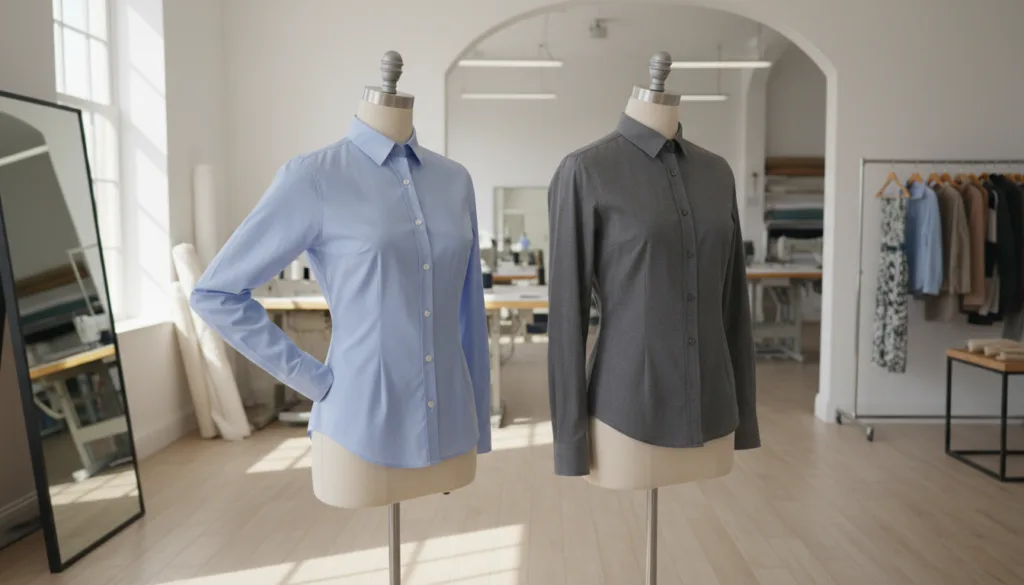
In summary, a dart is a precisely sewn fold that shapes fabric to follow human contours, with countless applications across nearly every apparel type. Mastery of darts—from definition and patternmaking to technical sewing and final QC—distinguishes true garment professionals. Whatever your sector, appreciating the subtle science of darts translates directly to improved fit, customer satisfaction, and lower rejection rates in any production environment.
Frequently Asked Questions
What is the meaning of a dart in sewing?
A dart in sewing is a wedge-shaped, stitched fold that removes fabric fullness to create a three-dimensional fit that curves smoothly around the body.
Why are darts important in garment making?
Darts shape flat fabric to fit body contours, especially at the bust, waist, and hip, enabling garments to follow curves rather than hang loose or gape.
Where are darts most commonly found?
Darts are most commonly found at the bust, waist, back, and hip areas in women’s garments and the back waist of men’s fitted shirts and trousers.
What kinds of darts are used in production?
Factories use types such as basic single-point, double-point, bust, waist, shoulder, French, fish-eye, and released darts, selected for their fit and garment style.
How does a dart differ from a seam or pleat?
A dart removes excess fabric by folding and stitching, while a seam joins two panels, and a pleat folds fabric but does not remove shaping for fit in the same way.
How can dart defects be identified in QC inspection?
QC teams check for smooth dart lines, accurate placement, no puckering or twisted points, and matching intake width across all production pieces.