Introduction to Woven Fabrics: Definitions, Weaves & Common Applications
In garment manufacturing, understanding woven fabrics and their weave structures is essential for both designers and factory professionals. Woven fabrics underpin countless products ranging from crisp shirts to rugged workwear. Knowing how woven fabrics differ from knits, how to read weave patterns, and how to match fabric weight and durability to your application will directly impact product quality and performance.
Woven Fabrics vs. Knit Fabrics: Key Differences
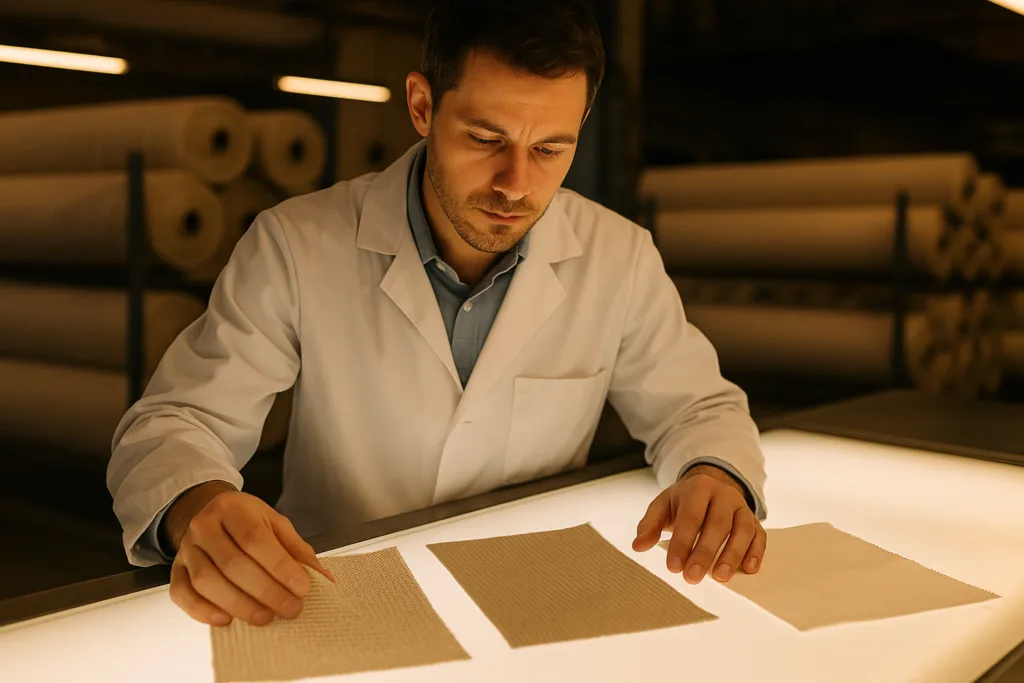
The first touchpoint for any apparel practitioner is recognizing the structural differences between woven and knit fabrics. Woven fabrics are produced on looms by interlacing two sets of yarns—warp (lengthwise) and weft (crosswise)—at right angles. This grid-like construction produces stable, low-stretch materials ideal for tailoring, uniforms, and industrial uses.
- Knit fabrics are made by intermeshing loops with one set of yarn, resulting in superior stretch, drape, and comfort—ideal for T-shirts, activewear, and socks.
- Woven fabrics offer dimensional stability, sharp silhouettes, and durability but generally lack the elasticity of knits except in blended or stretch constructions.
From the factory floor, knowing whether a fabric is woven or knit determines necessary machinery, seam choices, and shrinkage control during washing and finishing.
The Main Weave Structures: Plain, Twill, and Satin Weaves
The basic DNA of woven fabrics is the weave. Weave types determine surface texture, mechanical properties, and best-use scenarios. The three foundational patterns are:
- Plain Weave: The simplest and tightest weave; each weft thread passes over and under each warp thread, forming a checkerboard. Results in firm, durable fabrics like poplin, canvas, and muslin.
- Twill Weave: Characterized by diagonal ribs; weft thread passes over two or more warps, shifting by one in each row, creating the signature twill line—seen in denim, chino, and gabardine.
- Satin Weave: Made by floating yarns over several others before interlacing, creating a glossy, smooth face. Used for luxurious fabrics—satin, charmeuse, and lining materials.
Choosing the right weave is a practical decision impacting the ultimate look, feel, and function of the garment.
Woven Fabrics: Definitions, Weaves & Common Applications
Woven fabrics are textiles manufactured by interlacing yarns on a loom. They are defined by weave structure, fiber type, yarn count, and finishing processes. In textile specification sheets, woven fabrics are classified by:
- Weave type (plain, twill, satin, dobby, jacquard, etc.)
- Fiber blend (cotton, polyester, viscose, CVC, TC, etc.)
- Yarn count and density (e.g., 40×40/133×72 for shirting)
- Fabric weight—GSM (grams per square meter) or oz/yd²
- Finishes (e.g., mercerizing, brushing, enzyme wash)
| Weave Type | GSM Range | Main Properties | Typical Garment Uses |
|---|---|---|---|
| Plain Weave | 100–250 | Firm, strong, good abrasion resistance, crisp feel | Shirts, blouses, linings, lab coats |
| Twill Weave | 180–350 | Durable, flexible, less wrinkle, diagonal lines | Jeans, chinos, jackets, uniforms |
| Satin Weave | 80–220 | Glossy, smooth, moderate strength, elegant drape | Dresses, linings, evening wear |
In factories, precise specification of these parameters supports bulk production planning, quality inspection, and shrinkage control.
Selecting Fabric Weight: GSM, Applications, and Wearability
Fabric weight—measured as GSM or oz/yd²—is a decisive factor in determining suitability for different garments. Higher GSM usually means denser and more durable fabric but may compromise drape or comfort. For example:
- 120–150 GSM is ideal for shirts and summer dresses (lightweight, breathable).
- 200–320 GSM works well for jackets, workwear, and heavier trousers (durable, protective).
- Over 400 GSM is typical for canvas, tote bags, or heavy-duty aprons.
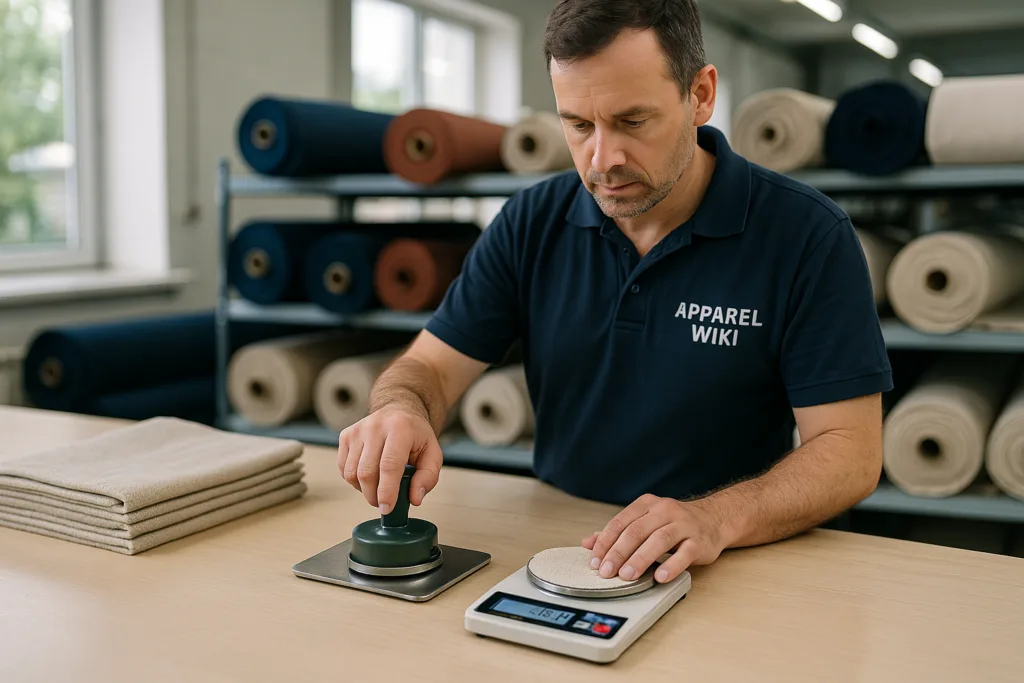
During sampling and bulk production, always measure GSM using a calibrated fabric cutter and scale. Tolerances of ±5% are standard but should be confirmed in buyer specs. For shrinkage-sensitive garments, allow for pre-wash and preshrinking in the production flow.
Durability and Shrinkage: Real-World Fabric Performance
Durability and shrinkage are critical when selecting woven fabrics for garments intended to last or face demanding laundries. Key factors influencing performance include:
- Weave structure: Plain weaves resist abrasion, twills handle repeated wash and wear, while satins offer less resistance but superior appearance.
- Fiber type and blend: Polyester blends (e.g., TC) reduce shrinkage and improve strength. Cotton offers comfort but may shrink 2–5% unless preshrunk.
- Finishing processes: Mercerizing, enzyme wash, and silicone softening can stabilize shrinkage and improve handfeel.
In Apparel Wiki’s factory inspections, dimensional stability is routinely tested per buyer requirements. For most woven fabrics, post-wash shrinkage should remain below 3% in both warp and weft directions for premium garments.
Plain Weave: Structure and Applications
Plain weave, the backbone of woven textiles, is produced by alternatively crossing each weft over and under the warp threads. Its grid pattern ensures firmness, tear resistance, and easy handling. Because of its simplicity, plain weave fabrics are easy to print and finish, making them versatile for both fashion and utility functions.
- Advantages: Stable shape, resists snagging, strong for its weight.
- Drawbacks: Less flexible, can wrinkle easily compared to twill.
- Common garments: Dress and shirt fabrics (poplin, broadcloth), linings, medical scrubs.
Rain’s tip from the production line: When specifying plain weave for high-use garments, mandate preshrunk finishing and test for seam slippage at stress points.
Twill Weave: Features and Benefits
Twill weave is defined by its visible diagonal lines, resulting from the weft floating over multiple warps before diving below one or more threads. Twills are famed for their flexibility, natural wrinkle resistance, and robust structure. This makes them ideal for heavy-duty garments subjected to tens of washing cycles and frequent movement.
- Advantages: Drapes well, resists creasing, hides stains and soil.
- Drawbacks: Costlier to weave, prone to fraying at cut edge if not handled correctly.
- Common garments: Denim jeans, work jackets, chinos, military uniforms.
In bulk cutting, extra care is needed to align the twill lines and compensate for possible fabric torque after washing. Factories often add 1–2 cm allowance in high-shrink twill, especially for jeans and jackets.
Satin Weave: Properties and Garment Applications
Satin weave delivers a lustrous, silky surface by floating warp (or weft) yarns above several other threads before interlacing. This construction offers unmatched visual elegance and a soft hand, but comes with trade-offs in durability and snag resistance.
- Advantages: High sheen, smooth drape, sophisticated appearance.
- Drawbacks: Can snag easily, weaker at seams, less abrasion resistance than twill or plain.
- Common garments: Evening gowns, lining for jackets/coats, lingerie, ties.
In production, always instruct finishing teams to avoid excessive agitation during washing—satin can rapidly lose its luster through abrasion. Consider backing or lining with a robust plain weave for high-use areas.
How to Match Weave Structure to Garment Application
Matching weave structure to intended use is a core garment engineering decision. Consider:
- Plain weave for tailored shirts, school uniforms, and medical wear needing crisp shape and easy care.
- Twill weave for trousers, jackets, and items facing harsh use or frequent laundering.
- Satin weave for fashion-forward products prioritizing drape and appearance over ruggedness.
Other specialty weaves (dobby, jacquard) unlock unique textures but often increase price and MOQs. Discuss with your factory the critical stress zones, expected laundering cycle, and required appearance so the weave structure aligns with real-world expectations.
- Review specification sheets for weave code and density.
- Request actual fabric swatches and lab testing reports for shrinkage and abrasion resistance.
- If unsure, run small pilot batches and conduct in-house wear tests.
Quality Control & Performance Testing for Woven Fabrics
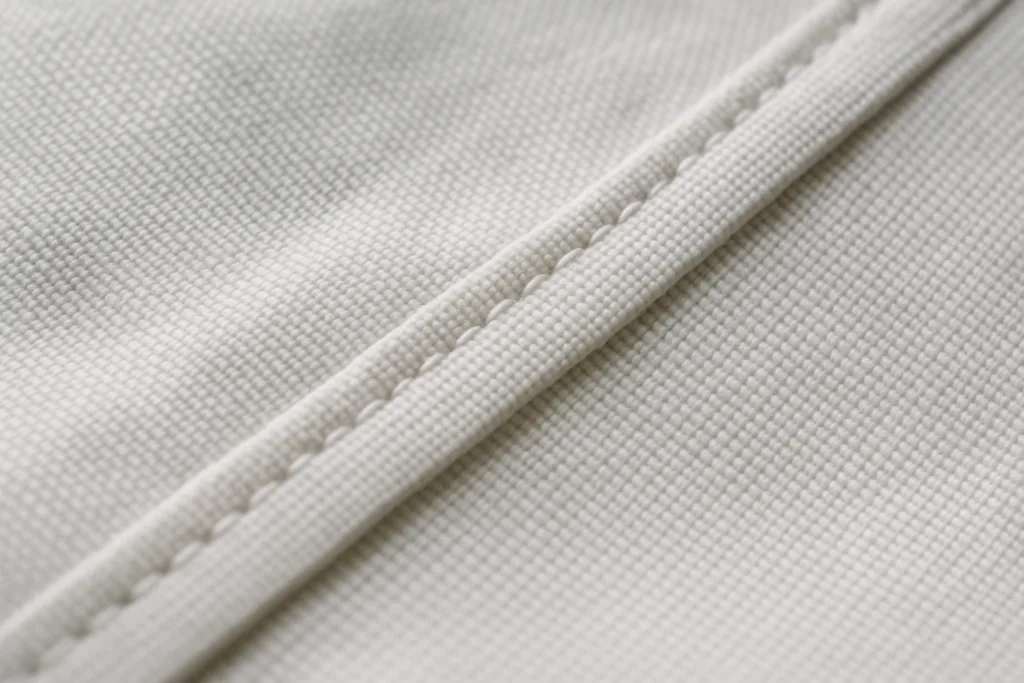
Robust QC practices ensure woven fabrics meet buyer standards and consumer expectations. In export factories, we routinely conduct:
- Dimensional stability/shrinkage tests – before and after washing.
- Seam slippage and tensile strength checks – especially on lightweight plain weaves and satin linings.
- Pilling and abrasion resistance tests – critical for twills and high-use items.
- Colorfastness validation – to washing, rubbing, and light, reported as grades (e.g., ISO/EN methods).
For compliance, OEKO-TEX® certified woven fabrics are recommended for children’s wear and sensitive markets. Always check restricted substance lists for trims and coatings on high-end or safety-critical garments.
Frequently Asked Questions
What are the main types of woven fabric weaves?
The three primary woven fabric weaves are plain weave, twill weave, and satin weave. Each offers different surface finishes, durability, and suitability for specific garments.
How do woven fabrics differ from knit fabrics?
Woven fabrics are made by interlacing two sets of yarns on a loom, resulting in low-stretch, stable materials. Knit fabrics use loops and generally offer better stretch and comfort for active wear.
What does GSM mean for woven fabrics?
GSM (grams per square meter) is a measurement of fabric weight, directly affecting durability, drape, and application. Higher GSM means heavier and usually more durable fabric.
How do I reduce shrinkage in woven garments?
Use preshrunk or blended fabrics, specify stabilization washes like enzyme or mercerizing, and test shrinkage on production samples before bulk cutting.
Which weave is best for workwear and uniforms?
Twill weave is generally preferred for workwear and uniforms due to its superior durability, flexibility, and resistance to stains and creasing.
Why choose satin weave for linings or evening wear?
Satin weave delivers a glossy surface and soft drape ideal for linings, dresses, and ties. It is chosen for appearance but is less durable than twill or plain weave.