Choosing a sourcing model is one of the first decisions that shapes how an apparel business develops products, spends money, manages risk, and works with factories. Many new buyers hear terms like OEM clothing, ODM clothing, private label clothing, and white label clothing, but the terms are often used loosely, and that creates confusion. In practice, these models are not just different labels. They affect who owns the product idea, how much customization is possible, what kind of development work is needed, how fast you can launch, and how much control you actually have over fabric, fit, trims, branding, and quality.
For readers trying to sort out where private label sits compared with custom development or ready-made factory options, this private label vs OEM and ODM factory selection guide is useful because it helps connect sourcing language to real production choices. That matters when a buyer is deciding whether to build a product from scratch, adapt an existing factory style, or launch quickly with lighter development work. It also helps clarify where branding control ends and where technical product control really begins.
A common mistake is to compare only unit price. In apparel sourcing practice, the better question is: what level of product uniqueness, development involvement, and production responsibility fits your stage? A startup with a small budget may not need the same model as a growing brand building a signature fit. A retailer testing a seasonal category may not need full custom OEM clothing. On the other hand, a brand that cares about exact fabric hand feel, silhouette, wash effect, and construction details may find that white label clothing or basic private label clothing is too limiting.
Why these clothing sourcing models matter
These four models sit on a spectrum from high customization to low customization. They also sit on a spectrum from high development effort to fast launch speed. The reason this matters is simple: the sourcing model affects almost every downstream step, including tech pack detail, sampling rounds, fabric approvals, labeling, MOQ, production lead time, and quality control checkpoints.
Before choosing, it helps to understand business models and first-step planning for a clothing brand, because the right sourcing route usually depends on your sales channel, target price point, expected order volume, and product positioning. A premium niche brand, a school apparel program, and a general online retailer may all choose very different models even if they are all buying T-shirts or hoodies.
Quick definitions of OEM clothing, ODM clothing, private label clothing, and white label clothing
OEM clothing
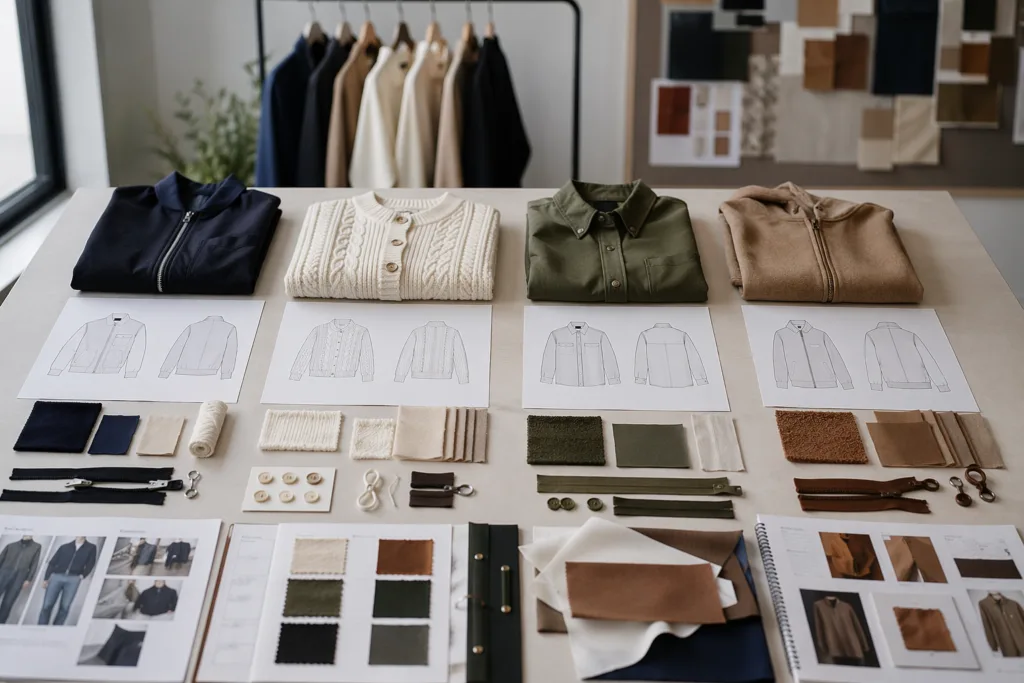
OEM clothing usually means the buyer brings the product concept, specifications, or design direction, and the factory manufactures it. In apparel, this can range from a fully developed tech pack with patterns and measurements to a rough concept that the factory helps engineer. The key point is that the product is being made specifically for that buyer, with a higher level of custom development.
ODM clothing
ODM clothing usually means the factory already has an existing product design or development base, and the buyer selects from those styles with some level of customization. That customization may include color, fabric substitution within limits, logo application, labels, packaging, and sometimes pattern adjustments. The factory drives more of the original design foundation than in OEM.
Private label clothing
Private label clothing usually means a buyer sells apparel under its own brand name, but the base product may come from existing factory styles or pre-developed garments. The main focus is brand identity on the product rather than creating a fully original garment from zero. In many projects, private label sits between ODM and more customized development, depending on how much the garment is modified.
White label clothing
White label clothing usually means a standard product is produced by a manufacturer and offered to multiple buyers, who then apply their own brand name with minimal or no product changes. This is the fastest and simplest model, but it provides the least exclusivity and the least product control.
How the four models differ in real apparel work
At a surface level, all four models can result in a finished garment with your label on it. That is why people mix them up. But from a garment development perspective, they are different in three important ways: who created the product base, how much can be changed, and how much responsibility the buyer has to define the details.
| Model | Who owns the starting design | Customization level | Buyer development workload | Typical speed |
|---|---|---|---|---|
| OEM clothing | Buyer or buyer-led concept | High | High | Slower |
| ODM clothing | Factory | Medium | Medium | Moderate |
| Private label clothing | Usually factory base style | Low to medium | Low to medium | Moderate to fast |
| White label clothing | Factory standard product | Very low | Low | Fastest |
This difference affects not only design freedom but also fit consistency, fabric selection, and inspection logic. If you control the pattern and bill of materials, you also carry more responsibility to define tolerance, shrinkage expectations, print placement, label content, and packaging standards. If you use a ready-made factory style, your development burden drops, but some important technical choices may already be fixed.
OEM clothing explained
OEM clothing is usually the right model when the brand needs a specific product identity that cannot be achieved by simply relabeling an existing style. This often applies when fit is part of the brand promise, when fabric selection is central to the product, or when the garment includes unique construction details such as custom panels, pocket shapes, seam placements, wash effects, or performance requirements.
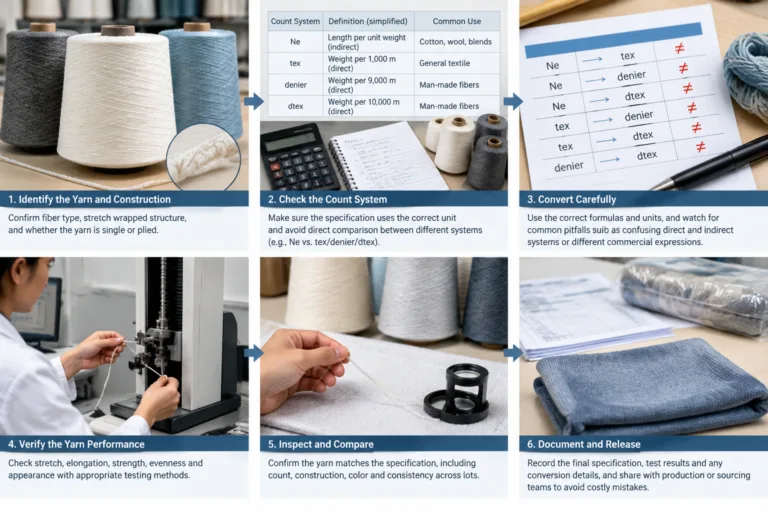
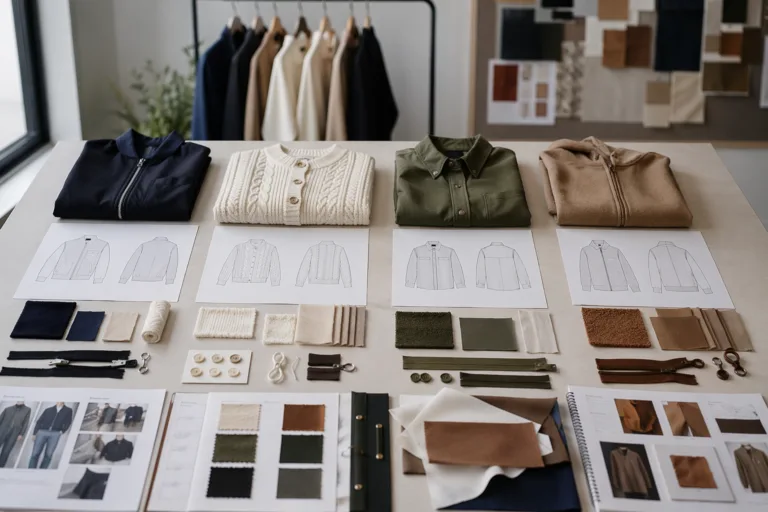
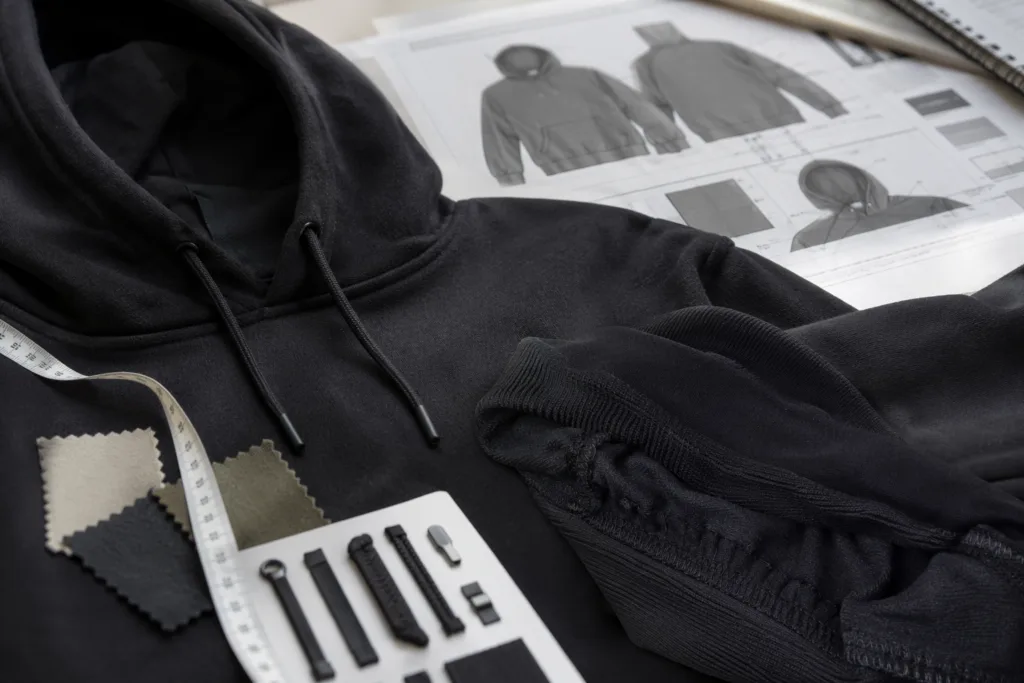
In many cases, OEM clothing involves more technical preparation than beginners expect. The factory may need a tech pack, measurement chart, point of measure guide, artwork files, print specifications, embroidery details, label instructions, packaging requirements, and approved sample comments. If the garment is complex, there may also be pattern revisions, size set samples, pre-production samples, and wash tests before bulk starts.
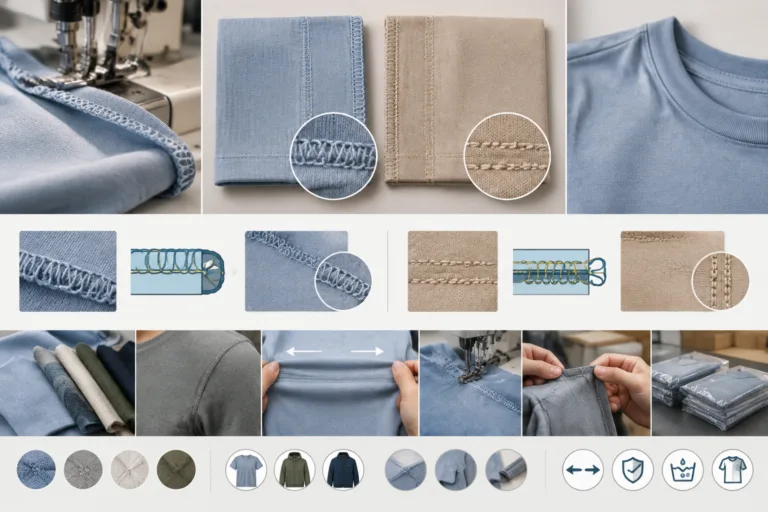
This is where how apparel product development decisions are evaluated becomes relevant. In apparel development, small choices in fabric composition, GSM, rib quality, stitch type, shrinkage allowance, and grading logic can change the final cost and the wear result more than many buyers realize.
When OEM clothing makes sense
- You need a custom fit block or signature silhouette.
- You want full control over fabric, trims, and branding details.
- You are building a differentiated brand rather than testing a generic product.
- You can manage a longer development cycle and more sample revisions.
What buyers often underestimate in OEM
- The number of approvals needed before bulk production is stable.
- The cost of mistakes caused by incomplete tech packs.
- The effect of fabric behavior on fit after washing.
- The higher MOQ that may come with custom fabric, dyeing, or trims.
OEM gives the highest control, but it also gives the highest room for communication failure if requirements are not clearly documented.
ODM clothing explained
ODM clothing works well when a factory already has useful product development capability and the buyer wants to reduce complexity without using a completely generic item. In this model, the factory may offer developed silhouettes such as activewear sets, hoodies, polo shirts, uniforms, or outerwear that can be adjusted within a defined range.
For example, an ODM hoodie program may allow the buyer to choose among several fleece compositions, garment colors, logo methods, neck labels, hangtags, and size specs, but the core shape and construction method may remain close to the factory’s base design. That can save time because the pattern, sewing sequence, and production feasibility are already established.
ODM clothing is often practical for brands that want more differentiation than white label clothing but do not yet want the full cost and complexity of OEM. It can also be useful for buyers entering a new category. A brand known for T-shirts may use ODM to test a tracksuit or lightweight jacket before investing in full custom development.
Typical limits in ODM projects
- Pattern changes may be limited or cost extra.
- Fabric substitutions may be restricted to materials the factory already sources well.
- Some trims or components may be standardized.
- The same base design may be sold to other buyers with differences in branding.
That last point matters. Buyers should always ask about exclusivity. A product can feel customized because the color and branding are yours, but the garment structure may still be part of the factory’s standard offering.
Private label clothing explained
Private label clothing is widely used, but it is also one of the most misunderstood terms in apparel sourcing. In practical use, it usually means you sell a garment under your own brand even though the base product development did not start with you. The level of customization can vary a lot. Some private label projects are close to ODM, while others are barely different from white label clothing except for the label.
The key question is not whether a supplier says it offers private label clothing. The key is what that actually includes. Does it only mean neck label replacement? Does it include custom colors, fabric choices, hangtags, packaging, and measurement adjustments? Can you approve a fit sample? Can you add branded trims or specific finishing details? The term alone does not answer those questions.
Private label is often suitable for smaller brands, retailers, distributors, gyms, clubs, and organizations that need branded apparel without a heavy development process. It can be a good step between testing the market and building more original products later.
Good use cases for private label clothing
- Launching core basics such as T-shirts, hoodies, joggers, or polos.
- Building branded merchandise with cleaner presentation than blank resale.
- Testing category demand before investing in custom blocks.
- Adding private branded apparel to an existing retail or organization offering.
The practical risk is assuming private label automatically means unique. It does not. It means your brand is on the product. The underlying garment may still be shared or only lightly modified.
White label clothing explained
White label clothing is the simplest route when speed matters more than originality. The supplier already has finished or near-finished standard products, and different buyers can brand those items as their own with minimal changes. Usually this means the garment body, fabric, fit, and construction are fixed. Branding options may be limited to labels, packaging, and sometimes a simple logo application.
This model can work for fast market entry, event merchandise, promotional programs, trial collections, or buyers who need simple replenishable basics. It can also suit businesses that are still validating whether they can sell apparel consistently at all.
The trade-off is clear: low development effort, but low control and low exclusivity. If your business story depends on a specific fit, wash, fabric hand feel, or detailed construction, white label clothing may create limits very quickly. The product might be commercially usable, but not strategically strong for long-term differentiation.
Cost comparison across the four sourcing models
Cost is where many buyers focus first, but the important point is that apparel cost has layers. There is development cost, sampling cost, trim cost, fabric commitment, MOQ pressure, and then unit price. A lower unit price does not always mean lower total project cost if the product causes returns, poor fit consistency, or weak brand positioning.
| Cost factor | OEM clothing | ODM clothing | Private label clothing | White label clothing |
|---|---|---|---|---|
| Development cost | Highest | Medium | Low to medium | Lowest |
| Sampling rounds | More | Moderate | Fewer | Very few |
| Custom trims and labels | High flexibility | Moderate flexibility | Usually available | Limited |
| MOQ pressure | Often higher | Moderate | Moderate to low | Often lowest |
| Unit price | Can be higher at low volume | Moderate | Moderate | Often lowest initially |
MOQ is especially important because it affects whether a product is realistic for your launch size. If custom fabric knitting, dyeing, or trim development is involved, minimums can rise quickly. For readers who need that concept clarified before talking to suppliers, this guide to what MOQ means in clothing manufacturing helps explain why two products that look similar can have very different order requirements.
A practical rule is this: the more you customize, the more likely you are to pay through development time, minimums, or both. That does not mean OEM is wrong. It means the model has to match your product strategy and cash position.
Control comparison: what can you really influence?
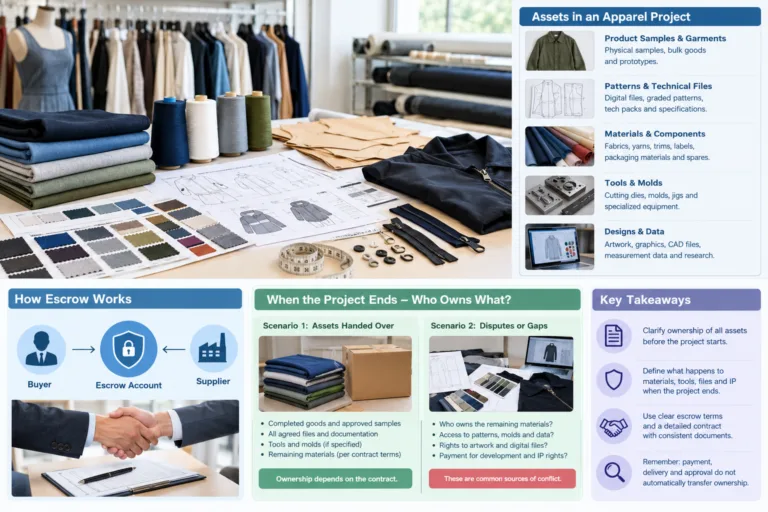
Control is where these sourcing models differ most sharply. Buyers often think branding equals control, but in apparel production that is only one layer. Real control includes fit block, grading, fabric composition, GSM, shrinkage management, seam construction, print method, trim quality, care label details, and finishing standards.
| Control area | OEM clothing | ODM clothing | Private label clothing | White label clothing |
|---|---|---|---|---|
| Pattern and fit | High | Medium | Low to medium | Low |
| Fabric selection | High | Medium | Limited to moderate | Low |
| Branding | High | High | High | Moderate |
| Construction detail | High | Medium | Low to medium | Low |
| Quality influence | High if specs are clear | Moderate | Moderate | Limited |
From Apparel Wiki’s perspective, this is one of the most important points for beginners: if you do not control the spec, you often cannot fully control the result. That does not make low-control models bad. It just means you should choose them knowingly rather than assuming that a private label or white label garment can later behave like a fully engineered product.
Development cycle comparison
Speed to market matters, especially for startups and seasonal programs. But speed is not only about factory production time. It is also about how many decisions must be made before production can even begin.
OEM clothing usually takes longer because more approvals are needed. Pattern review, fabric strike-off, lab dip, fit sample, revised sample, size set, pre-production sample, and packaging confirmation can all add time. ODM clothing usually moves faster because the base product is already developed. Private label clothing is often faster still if the base garment is stable and only labeling or simple branding changes are needed. White label clothing is usually the fastest because most decisions were already made before you entered the process.
If you are still learning the language of materials, trims, and garment construction, using Apparel Wiki as a reference point can help reduce avoidable delays. In many projects, the problem is not factory refusal. The problem is that the buyer approves too many open questions into sampling.
Which model is best for beginners?
There is no single best model for all beginners. The better question is what kind of beginner you are. A founder with strong design direction and technical support is different from a first-time seller testing a market with limited capital. Let’s look at what actually affects the result.
Choose OEM clothing if
- Your brand needs a product that does not already exist in standard supplier catalogs.
- You care deeply about fit identity, fabric quality, or custom construction.
- You can handle longer timelines and more sample communication.
- You have enough budget for development and possible revisions.
Choose ODM clothing if
- You want some differentiation without building everything from zero.
- You prefer factory-supported development.
- You need a balance of speed and customization.
- You are entering a category where the factory already has good experience.
Choose private label clothing if
- You want your own brand presentation on proven products.
- You are launching basics or branded merchandise.
- You want moderate speed with manageable complexity.
- You do not need full product exclusivity yet.
Choose white label clothing if
- You need the fastest route to market.
- You are validating demand before investing in development.
- You are comfortable with limited product uniqueness.
- You want simple operations and lower technical workload.
Common misunderstandings buyers should avoid
OEM and ODM are not just two words for manufacturing
Some buyers use OEM clothing and ODM clothing as if both simply mean “factory made.” In sourcing practice, the difference is about who starts with the product concept and how much of the design base is already owned by the supplier.
Private label does not automatically mean custom
A private label hoodie may be highly customized, or it may just be a standard garment with your neck label. The term alone tells you almost nothing about the actual level of development control.
White label is not the same as brand building
White label clothing can help you start selling, but it does not always help you build a strong product identity. For some businesses that is acceptable. For others, it creates a ceiling very early.
Low MOQ does not always mean lower risk
Low minimums reduce inventory exposure, but if the product quality, sizing, or branding execution is weak, the business risk may still be high. A cheap but inconsistent garment can cost more later through returns or customer dissatisfaction.
Side-by-side summary table
| Model | Definition | Customization | Cost level | Control level | Speed | Best fit |
|---|---|---|---|---|---|---|
| OEM clothing | Buyer-led custom manufacturing | High | High upfront | High | Slower | Brands building differentiated products |
| ODM clothing | Factory-developed products with buyer modifications | Medium | Medium | Medium | Moderate | Brands needing balance between speed and uniqueness |
| Private label clothing | Existing or semi-developed products sold under buyer brand | Low to medium | Low to medium | Medium for branding, lower for product engineering | Moderate to fast | Small brands and branded basics |
| White label clothing | Standard products branded by multiple buyers | Very low | Lowest upfront | Low | Fastest | Fast launch, simple programs, market testing |
Practical scenarios
A startup building its first drop
If the startup has limited budget and no technical team, private label clothing or a controlled ODM clothing program is often more realistic than jumping straight into OEM. The mistake many first-time founders make is trying to custom-build every item before they know what customers will actually buy.
A small brand known for fit and fabric
If the selling point is a specific silhouette, premium hand feel, and strong brand identity, OEM clothing may be worth the longer path. In that case, product consistency becomes part of the brand itself.
A seasonal collection with tight timing
ODM clothing or private label clothing usually gives a better balance. The base product already exists, which shortens development, but you still have room to align color, branding, and presentation with the season.
A fast promotional or event launch
White label clothing is often enough. If the real priority is turnaround and brand visibility rather than product originality, adding custom labeling and simple graphics to ready products may be the most practical route.
Questions to ask a supplier before choosing a model
This detail may look small, but it can create problems later if it is not confirmed early. Buyers should ask questions that reveal what the supplier actually means by its sourcing model, not just what terms appear on the website.
- Is the base style factory-owned, buyer-developed, or jointly developed?
- What parts of the garment can be changed: fabric, pattern, measurements, trims, labels, packaging?
- Are there extra charges for pattern changes or custom materials?
- What are the MOQ rules for colors, sizes, and fabric types?
- How many sample rounds are normal for this model?
- Can the same style be sold to other buyers?
- What quality checkpoints happen before bulk shipment?
- What approval documents are required before production starts?
For a more complete supplier conversation checklist, readers can review these questions to ask a clothing manufacturer before moving into sampling or production. That is often where confusion around OEM, ODM, private label clothing, and white label clothing starts to become visible.
How to match sourcing strategy with brand goals
The right model is not the one with the most customization or the lowest initial price. It is the one that fits your current business stage, your product promise, and your ability to manage development. A beginner brand selling standard basics may do better with private label clothing or ODM clothing and move into OEM later. A brand built around signature fit and construction may need OEM clothing from the start. A short-term or low-risk test may be fine with white label clothing.
In apparel sourcing practice, the strongest decisions usually come from aligning five things: target customer, product uniqueness, technical capability, budget tolerance, and launch timing. If those five do not match the sourcing model, problems show up later in sampling, cost negotiation, or bulk quality.
Apparel Wiki explains these models not as labels to memorize, but as decision frameworks. For buyers, the key is not only the product name or price, but whether the material, structure, branding method, and development path match the real use case. When that is clear, supplier communication becomes easier and product risk becomes more manageable.
FAQs
Is OEM clothing always better than ODM clothing?
No. OEM clothing gives more customization and control, but it also requires more development work, a clearer technical specification process, and often more budget. ODM clothing can be the better choice when the buyer wants faster development and is comfortable starting from a factory-developed product base.
What is the main difference between private label clothing and white label clothing?
The main difference is usually the degree of customization and exclusivity. Private label clothing often allows more branding control and sometimes moderate product adjustments, while white label clothing is usually a standard shared product with minimal changes beyond labels or simple presentation details.
Can a beginner start with OEM clothing?
Yes, but only if the beginner has enough budget, patience, and technical clarity to manage custom development properly. In many first projects, OEM clothing becomes difficult not because the idea is wrong, but because the specification, sample review, and approval process were not prepared well enough.
Does private label clothing mean the product is unique to my brand?
Not necessarily. Private label clothing means the product is sold under your brand, but the base garment may still come from an existing factory style that is also available to other buyers. You need to confirm what parts are exclusive and what parts are standard.
Which sourcing model usually has the lowest MOQ?
White label clothing often has the lowest MOQ because the product is already developed and standardized, but this is not automatic. Some private label clothing and ODM clothing programs also offer low minimums, while OEM clothing often has higher minimums when custom fabric, trims, or dyeing are involved.
How do I know which model fits my business stage?
Start by checking whether your priority is uniqueness, speed, lower risk, or stronger control. If you need a fast test, white label clothing or simple private label clothing may be enough. If your brand promise depends on a distinct product, OEM clothing or a more flexible ODM clothing program is usually the better fit.