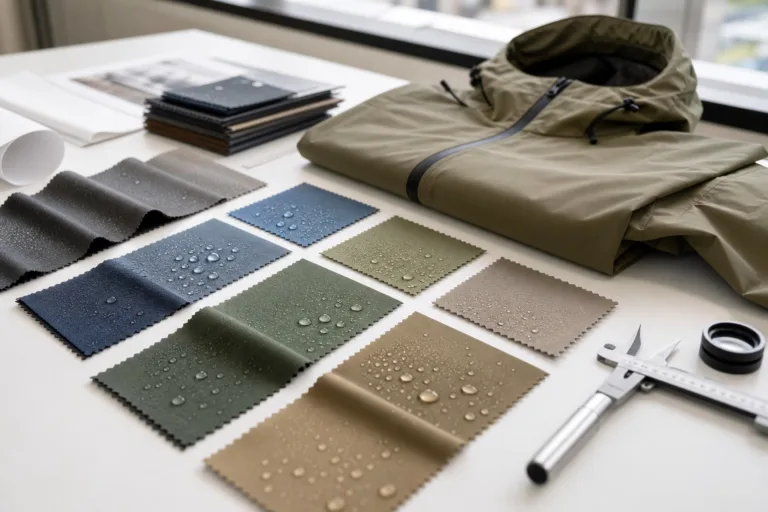
Waterproof and water-resistant are often used as if they mean the same thing, but in apparel development they describe different levels of protection, different fabric structures, and different limits in real weather. A jacket, backpack cover, or workwear shell can look similar on the hanger and still perform very differently once rain, pressure, movement, and seam stress are involved. That is why hydrostatic head ratings matter: they give buyers a more technical way to compare fabric resistance instead of relying only on marketing language.
If you are new to garment specs, the overview of apparel testing and compliance basics is a useful companion because it explains why test methods, pass or fail limits, and specification language matter before you compare weather-protection claims. In practical terms, the question is not just whether a product is called waterproof. It is whether the material, construction, seam treatment, and end use actually fit the weather exposure the product will face.
What waterproof and water-resistant actually mean
In plain language, water-resistant fabric slows water entry for a period of time, while waterproof fabric is built to stop water penetration much more effectively under higher pressure and longer exposure. That sounds simple, but real products sit on a spectrum. A lightly coated bag fabric may shrug off drizzle yet wet through under seated pressure. A laminated shell may hold out steady rain, but only if the seams are sealed and the design does not create weak points.
The home page at Apparel Wiki is useful when readers need a broader framework for comparing fabric behavior, garment construction, and sourcing terms. For waterproof versus water-resistant products, the main decision is not only the label. It is how the fabric is built, how the garment is assembled, and what kind of exposure the user actually expects.
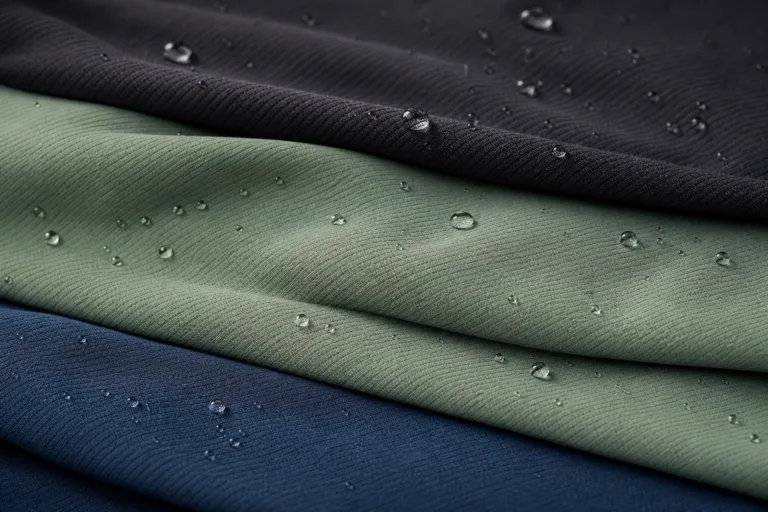
Apparel Wiki explains this distinction in a practical way: water-resistant usually means the fabric or finish provides limited protection, often against splashes, short showers, or brief exposure. Waterproof usually implies a much stronger barrier, often through a coating, membrane, laminate, or construction system that blocks water more reliably. In sourcing practice, those words should always be paired with measurable specifications, because the label alone does not tell you enough.
What hydrostatic head ratings measure
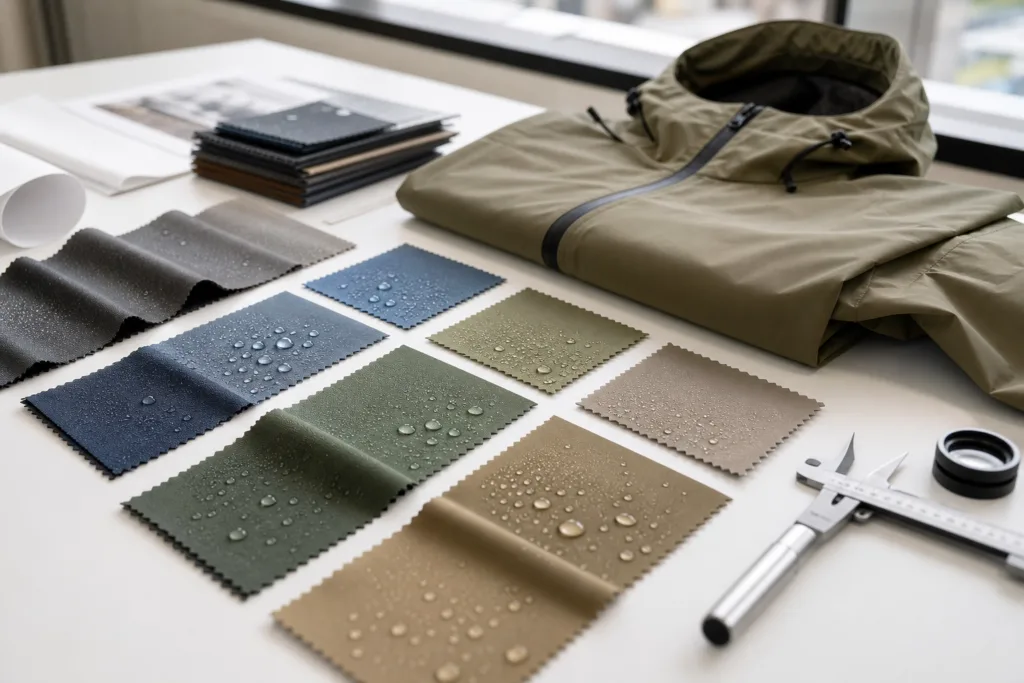
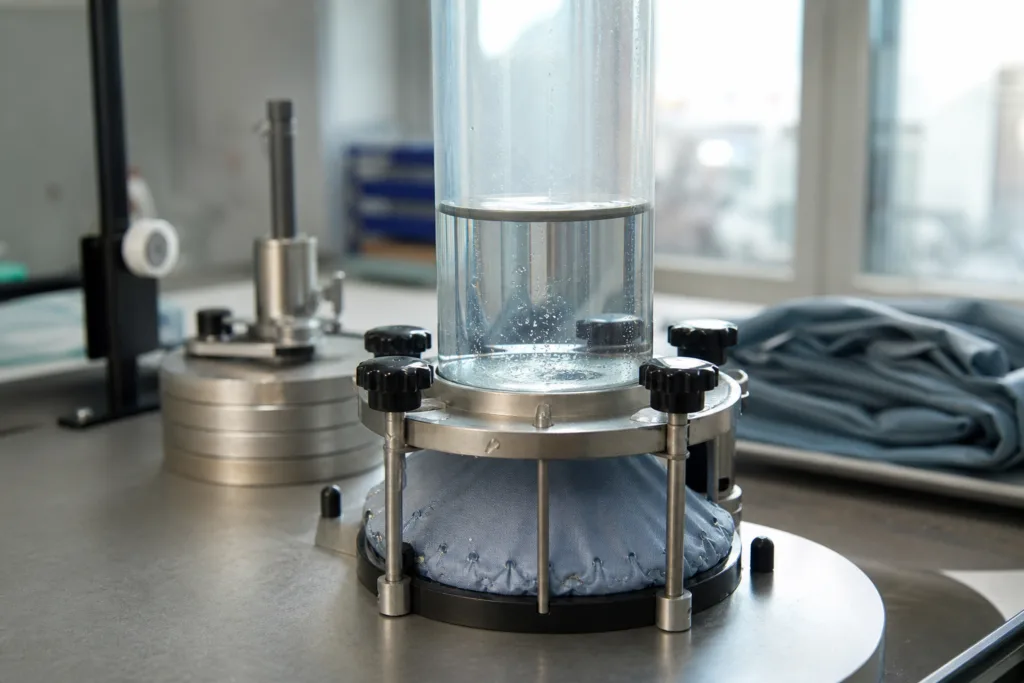
Hydrostatic head ratings measure how much water pressure a fabric can resist before water penetrates through it. The basic idea is straightforward: a water column is pressed against the fabric, and the height of that column increases until leakage appears. The higher the number, the more pressure the fabric resisted in that test. The rating is usually expressed in millimeters, which makes it easier to compare fabrics across products.
That test concept is formalized in the ISO 811 hydrostatic head test standard, which measures resistance to water penetration by increasing water pressure under controlled conditions. The important point for buyers is that the number comes from a defined test, not a vague claim. It is still not the whole story, but it is far more useful than a label that only says weatherproof or rain resistant.
How the test works in practice
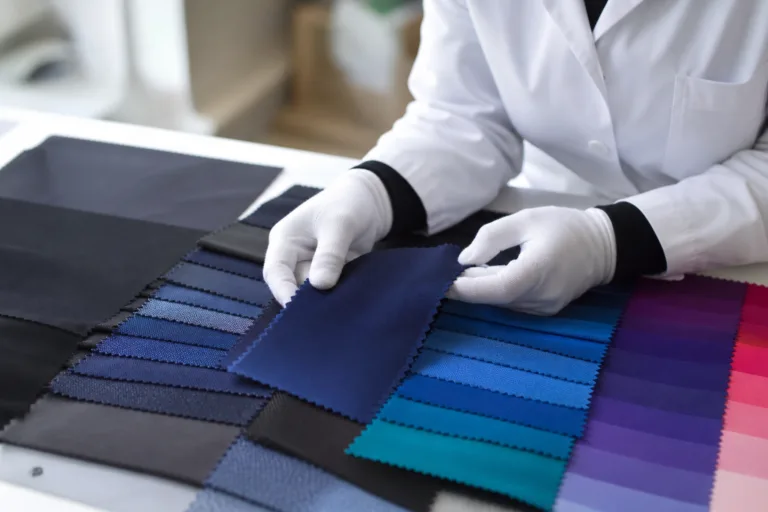
In a typical hydrostatic pressure test, a fabric sample is clamped into the test device and water pressure is applied gradually. The machine keeps increasing pressure until three points of water penetration are observed, depending on the method used. Because the fabric is tested as a sample, the result reflects the fabric layer itself more than the full finished garment. That is one reason why seam sealing, stitch holes, panel construction, and closures still matter so much.
In other words, the rating is a useful benchmark, but it does not mean every part of the final product will behave exactly the same way. A fabric can test well and still leak at an unsealed seam, zipper, pocket opening, or needle hole. For buyers, this is where product development questions matter as much as fabric questions.
| Hydrostatic head rating | Typical interpretation | Real-world note |
|---|---|---|
| Below 1,000 mm | Very light protection | Often fine for brief splashes or very mild exposure, but not reliable in steady rain. |
| 1,000 to 5,000 mm | Basic water resistance | Can work for short showers, commuting, or low-pressure exposure if the design is simple. |
| 5,000 to 10,000 mm | Moderate wet-weather protection | Often suitable for regular rain use, but comfort and seam construction still matter. |
| 10,000 to 20,000 mm | Higher waterproof performance | Usually better for heavier rain, longer exposure, or situations with more movement and pressure. |
| 20,000 mm and above | Strong barrier performance | Often used for demanding outdoor conditions, but breathability and durability need close review. |
These ranges are practical guides, not universal pass or fail rules. A lower rating can still be appropriate for a light rain shell or a pack cover. A higher rating can still be uncomfortable if the garment traps heat or if the seams and trims are poorly managed. The right rating depends on the use case, not only on the number.
Why fabric construction changes the result
The same face fabric can behave very differently depending on coatings, laminations, membrane systems, seam treatment, and finishing. This is why two products that both claim water resistance may not perform the same way once they are worn in real conditions. A tightly woven fabric with a durable water-repellent finish may shed water at first, but that finish can wear down. A laminated shell may hold water out much better, yet it may cost more and feel stiffer.
For a more testing-focused view of this issue, the AATCC hydrostatic pressure fabric testing method is useful because it shows how hydrostatic resistance is evaluated on fabrics that may rely on coatings, water-repellent finishes, or construction choices. In apparel sourcing, that matters because finish, yarn density, and laminate structure can all change how a fabric behaves under pressure and after use.
Construction details that matter most
- Coatings: A coated fabric can block water well, but coating thickness, flexibility, and long-term abrasion resistance all affect performance.
- Laminations: Laminated fabrics bond a membrane or barrier layer to a shell fabric, which often improves waterproof performance and helps control hand feel.
- Membranes: Membrane systems are designed to resist water entry while still allowing some moisture vapor movement, although the balance varies by product.
- Seams: Needle holes create weak points, so seam sealing or taped seams are often needed if the whole garment must stay dry.
- Finishes: Durable water-repellent finishes help water bead on the surface, but they do not replace a true barrier layer when strong protection is required.
The phrase water-resistant can therefore describe both fabric behavior and the effect of a finish. It does not guarantee the same level of protection as a true barrier fabric. In product development, that difference should be written clearly in the specification sheet so buyers know whether they are approving repellency, resistance, or real waterproof performance.
How breathability, comfort, weight, and durability change the trade-off
Waterproof performance is not free. The more a fabric blocks water, the more the developer has to think about heat build-up, garment stiffness, weight, and durability. A very strong barrier can make a garment feel less breathable. A lighter, more flexible fabric can be easier to wear, but it may give less protection under pressure or long exposure. This is why the best choice depends on use, not simply on the highest available number.
For moisture management inside the garment, readers should also understand how moisture-wicking fabrics manage sweat. A shell can keep rain out, but if the inside layer cannot move sweat away from the body, the wearer may still feel wet and uncomfortable. In practice, wet-weather comfort comes from both weather resistance and internal moisture control.
Fiber choice also affects the outcome. polyester fabric variants and performance differences matter because polyester is often used in shells, liners, and outerwear bases due to its dimensional stability and compatibility with coatings and finishes. By contrast, natural fiber properties for different conditions help explain why cotton can feel comfortable in dry wear but is usually less suitable for sustained wet exposure unless it is engineered into a specific system. For buyers, the question is not whether a fiber is good or bad. It is whether it suits the moisture, drying, and durability demands of the end use.
Some protective accessories and low-cost covers use non-woven fabric construction and uses, which behave differently from woven or knitted shells. Non-wovens can be useful for disposable or light-duty applications, but they are not a direct replacement for a properly engineered waterproof shell. If the product must survive repeated wear, abrasion, and rain exposure, the whole structure needs to be checked, not just the base material name.
Where each type fits best
Water-resistant products are often enough when the user needs short-term protection, light weather blocking, or a lower-cost option that does not need to survive long rain exposure. Waterproof products are usually necessary when the user will stay out in the rain, carry equipment that must stay dry, or work in conditions where wetting through creates a safety or performance problem.
Here is a practical way to think about common product types:
- Rain jackets: Water-resistant versions work for short showers and commuting; waterproof versions are better for prolonged rain, hiking, cycling, or exposed work.
- Shell jackets: Usually designed for stronger protection, but buyers should check seam sealing, hood design, zipper coverage, and breathability.
- Workwear: Needs to balance protection and movement, especially if the wearer is active and may generate heat and sweat.
- Backpacks and covers: Water resistance may be enough for drizzle, but waterproofing matters if electronics, documents, or tools must stay dry.
- Footwear: Water-resistant uppers may handle splashes, while waterproof boots or shoes need stronger barrier systems and careful seam management.
- Outdoor equipment: Tents, bags, and protective covers often need measured resistance because even small leaks can create large usability problems.
When the user expects short exposure only, water-resistant can be the right balance of comfort and cost. When the exposure is uncertain or sustained, waterproof becomes the safer choice. That is a simple rule, but it prevents many buying mistakes.
How to compare products using hydrostatic head ratings
A useful comparison starts with the rating, but it should not end there. Two products with the same hydrostatic head rating can still behave differently because the shell fabric, liner, membrane, seam treatment, and garment pattern are not identical. If the seller only gives a single headline number, ask for the supporting construction details.
For a broader comparison framework, Apparel Wiki helps organize the pieces that matter most in apparel evaluation: fabric structure, finishing, fit, and practical use case. In wet-weather products, the buyer should compare at least five items together: rating, seam sealing, breathability, fabric weight, and expected exposure.
Practical buying checklist
- Confirm whether the claim is water-resistant, waterproof, or simply water repellent.
- Check the hydrostatic head rating and note the testing method if it is provided.
- Ask whether seams are taped, sealed, or left open.
- Review zipper type, storm flap design, hood coverage, and closure points.
- Compare breathability or moisture management if the user will be active.
- Check whether the fabric needs special care to preserve the finish.
- Look for abrasion or durability concerns if the item will be used often.
In sourcing practice, this checklist is more reliable than a one-line label. It moves the discussion from marketing language to construction details, which is where most performance differences actually come from.
Common mistakes when judging weather protection by label alone
One common mistake is assuming that a water-repellent finish means the item is waterproof. It does not. A finish may help water bead and run off, but it can wear out with abrasion, washing, or contamination. Another mistake is treating a high hydrostatic head number as a complete guarantee. The fabric may be strong, but unsealed seams or poorly designed openings can still let water in.
Another error is ignoring fit and garment design. A loose hood, open cuffs, or poorly positioned pockets can create leak paths even when the base fabric is good. In some products, the buyer pays for a strong fabric but loses protection because the construction was not planned around real use. That is why sampling matters. A sample lets the buyer check feel, drape, movement, sealing, and failure points before bulk production.
A final mistake is comparing only the outer fabric and forgetting the whole system. Linings, trim, stitch density, needle choice, and even packaging decisions can influence how the product performs and ages. If a garment is meant for repeated wet use, every layer should be part of the decision.
Limitations of hydrostatic head ratings
Hydrostatic head ratings are useful, but they do not tell the full story. They do not fully measure breathability, condensation inside the garment, abrasion life, long-term seam durability, or the effect of repeated washing and wear. They also do not tell you how the product will feel after an hour of movement in changing weather.
That is why a good spec review combines the rating with end-use thinking. For a commuter jacket, comfort and packability may matter more than a very high barrier number. For field work, a lower number may be unacceptable if the wearer will be in standing water or heavy rain. For outdoor gear, the right answer is usually the product that matches the actual exposure profile, not the product with the biggest headline claim.
In short, waterproof and water-resistant are not just fabric labels. They are performance promises that depend on construction, testing, and honest use-case matching. When buyers understand that, they make better selections and fewer costly mistakes.
Conclusion
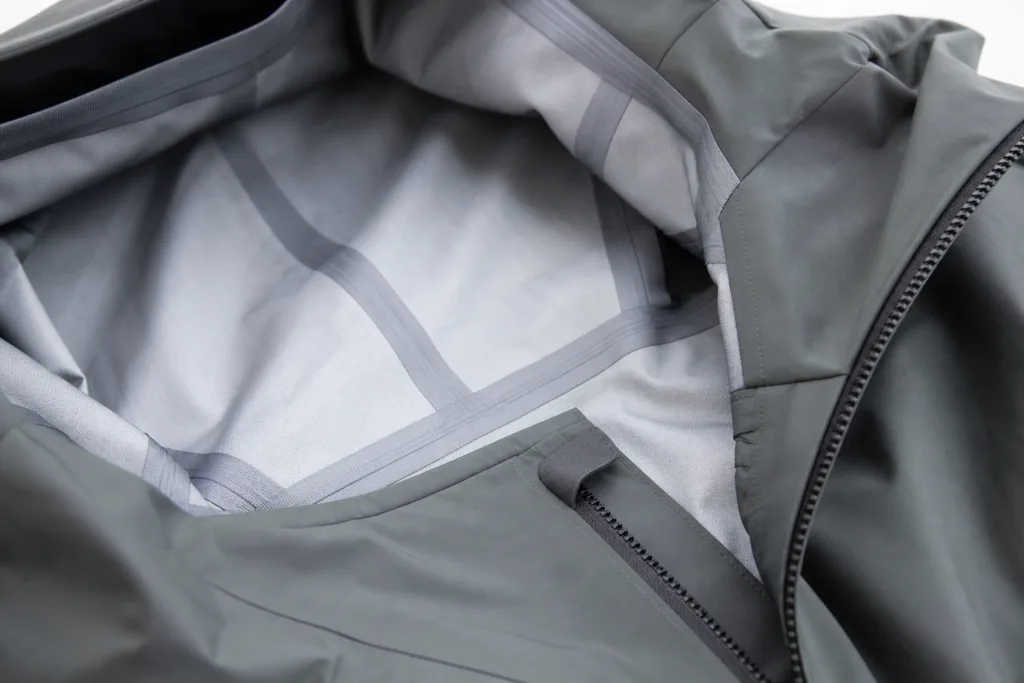
Waterproof versus water-resistant is a useful comparison only when it is tied to hydrostatic head ratings, fabric structure, and real-world use. A rating tells you something important about pressure resistance, but the final result still depends on seams, closures, finishes, and how the garment is worn. For simple drizzle protection, water-resistant can be enough. For sustained rain or exposed use, waterproof construction is the safer call.
For Apparel Wiki readers, the main lesson is practical: compare the number, but also compare the build. That approach gives you a much clearer picture of whether a fabric or garment will actually do the job once weather, movement, and time are added to the equation.
FAQ
Is waterproof always better than water-resistant?
Not always. Waterproof is better when the user needs stronger protection from rain, pressure, or long exposure. Water-resistant can be the better choice when the goal is lighter protection, lower weight, more comfort, or a lower price point. The right answer depends on use.
What hydrostatic head rating is enough for daily rain?
For daily rain, many buyers look for a rating that goes beyond basic splash protection and into the moderate or higher range. That said, the right level depends on commute length, activity, and whether the garment has sealed seams and good closure design. A number alone should not be the only filter.
Does seam sealing matter as much as the fabric rating?
Yes. A strong fabric rating can be undermined by unsealed seams, needle holes, or weak closure points. If the product is supposed to keep the wearer dry in real rain, seam sealing and construction details are just as important as the hydrostatic head number.
Why can two jackets with the same rating feel different?
They may use different shell fabrics, coatings, laminates, linings, and pattern shapes. One jacket may feel stiffer but block water more consistently, while another may feel softer and breathe better but be less robust in long exposure. Fit and design also change comfort.
Is a water-repellent finish the same as waterproofing?
No. A water-repellent finish helps water bead and roll off the surface, but it is not the same as a waterproof barrier. The finish can wear down over time, and it usually needs a supporting fabric structure if strong wet-weather protection is required.
What should buyers check besides hydrostatic head ratings?
Buyers should check seam sealing, zipper coverage, hood design, breathability, fabric weight, expected exposure, and care requirements. It also helps to request sampling and confirm how the product will be used in real conditions, because the best rating on paper still needs the right construction in practice.