Moisture-wicking fabrics are designed to move sweat away from the skin and spread it across the fabric surface so it can dry faster. That sounds simple, but the result depends on fiber chemistry, yarn behavior, knit structure, garment fit, and even finishing treatments. For athletic and performance apparel, those details matter because comfort is not just about feeling dry at the start of activity; it is about how the garment manages moisture during movement, heat, and repeated washing.
If you want a broader fabric reference point while comparing performance claims, Apparel Wiki’s fabric and garment knowledge hub is useful for terminology, construction basics, and practical sourcing context before you lock in a spec.
What Are Moisture-Wicking Fabrics?
In apparel development, moisture-wicking fabrics are textiles built to transport liquid moisture away from the skin faster than a standard absorbent fabric would. The key point is that wicking is a performance behavior, not a single fiber type. A fabric can be polyester-based, nylon-based, blended, or even specially treated cotton and still show some level of moisture transfer. What matters is how the material absorbs, spreads, and releases moisture.
That is why buyers should be careful with product names. A label can say performance, dry fit, or activewear, but the real question is whether the fabric actually manages sweat in the way the end use needs. For a training shirt, that may mean moving liquid quickly off the skin. For a workwear base layer, it may mean reducing clamminess during long wear. For a casual performance tee, it may mean balancing quick drying with a softer hand feel.
Why Moisture Management Matters in Apparel
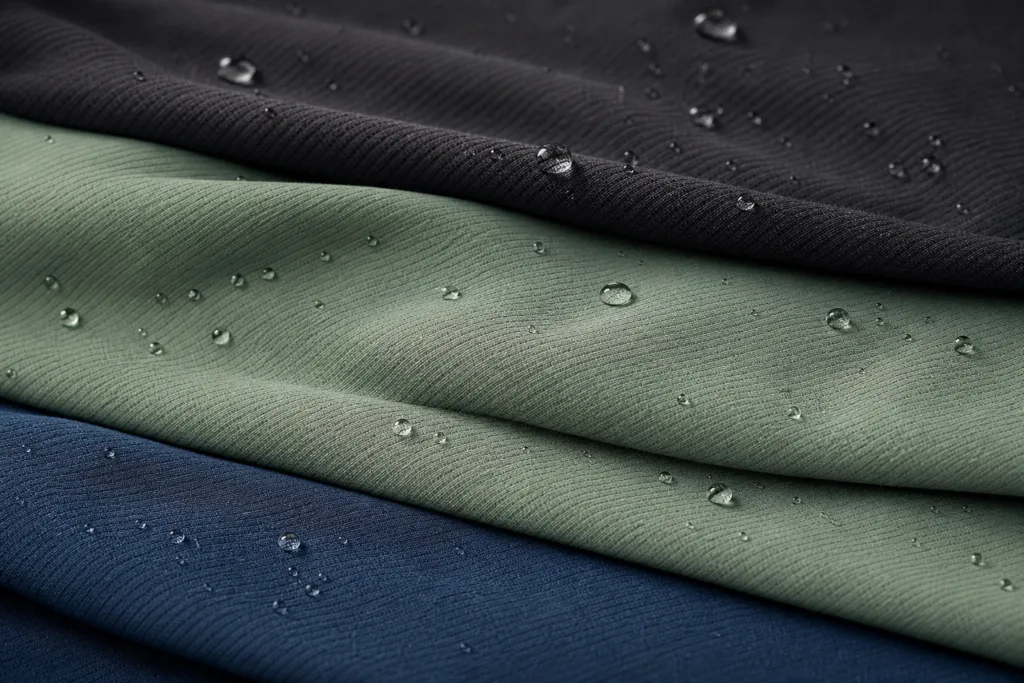
When sweat stays close to the skin, the body tends to feel heavier, stickier, and less comfortable. Moisture can also increase chafing, make the garment cling, and create a cold, damp feel once the wearer stops moving. In athletic wear, that can affect performance. In outdoor clothing, it can affect comfort and temperature control. In workwear, it can affect how long someone can stay comfortable in a physically demanding setting.
Moisture management also affects how a garment presents visually and physically. Wet fabric can become more transparent, lose shape, or feel rougher against the body. That is one reason fabric selection should be tied to the use case, not just the fiber name. A fabric that works well for a gym shirt may not be ideal for a polo, a base layer, or a lightweight uniform top.
How Moisture-Wicking Fabrics Work: Capillary Action and Moisture Transfer
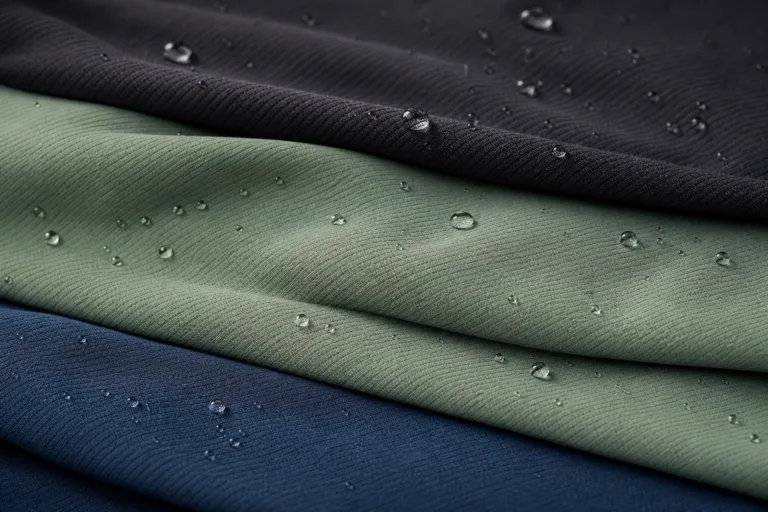
The basic mechanism is capillary movement. Sweat is pulled from a wetter area to a drier area through tiny spaces in the fabric structure. That spreading action increases the surface area exposed to air, which helps the liquid evaporate faster. In practical terms, the fabric does not need to hold a large amount of moisture to feel effective. It needs to move that moisture away from the skin and out into the open structure where drying can happen more quickly.
Controlled testing often looks at how liquid travels through or across the fabric rather than just how much the fabric can absorb. NC State’s liquid moisture management testing and capillary action in fabrics explains this distinction well: the best result is usually not maximum absorption, but a balanced transfer path that keeps the skin side from feeling saturated for too long.
From a sourcing perspective, that is an important detail. Two fabrics can both be called moisture-wicking, but one may move liquid quickly across the surface while another may simply absorb and hold it. Those are not the same performance outcome. The first usually feels drier during activity. The second may feel wet longer, even if it eventually dries.
Key Properties That Make a Fabric Moisture-Wicking
Several factors work together to create good moisture-wicking behavior. No single factor guarantees performance on its own.
| Property | What to Look For | Why It Matters |
|---|---|---|
| Fiber chemistry | Hydrophobic or engineered fibers such as polyester and nylon, or treated natural fibers | Controls how quickly moisture moves away from the skin and whether the fabric holds liquid |
| Yarn type | Fine filament yarns, microdenier yarns, or yarns with designed channels | Affects surface area, speed of liquid spread, and drying time |
| Knit structure | Open, breathable, or engineered knits | Creates pathways for air and moisture to move through the fabric |
| GSM | Weight matched to the end use, not just the lowest number | Heavier fabrics may feel durable but can dry more slowly |
| Finish | Wicking finishes, surface treatments, or yarn-level engineering | Can improve transfer initially, but performance may change after many washes |
| Fit and stretch | Enough movement without excessive cling | Closer contact can help transfer, but too much cling can trap heat and feel uncomfortable |
For buyers, the useful question is not only whether the fabric is technical, but whether the technical behavior matches the garment shape, activity level, and wash expectation. That is where spec-sheet details become more important than marketing language.
Fiber, Yarn, and Knit Structure Factors That Affect Wicking Performance
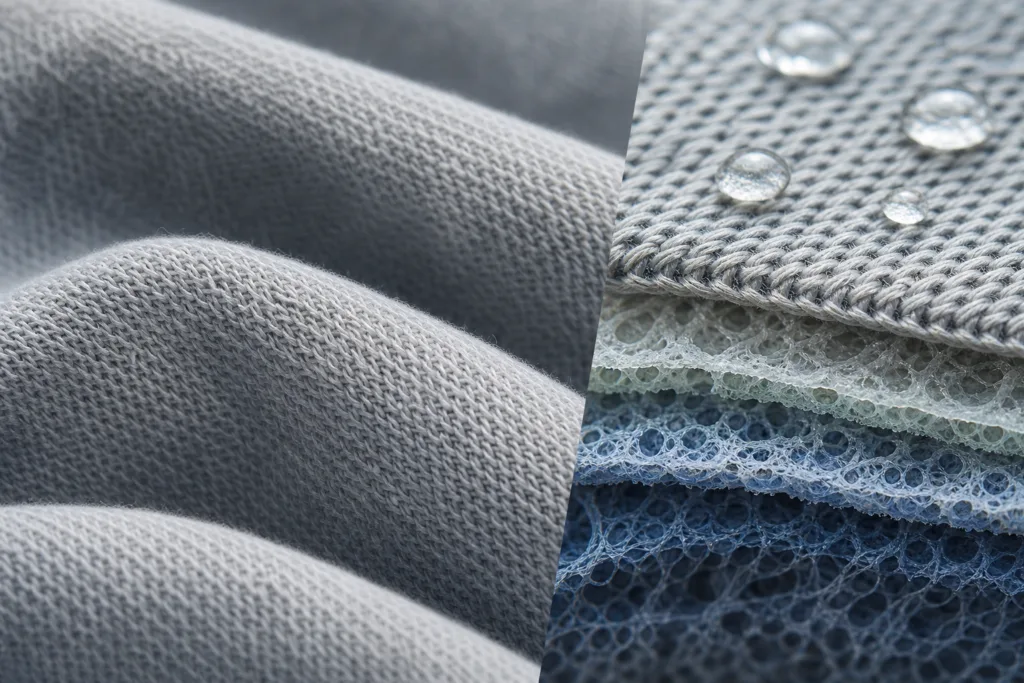
Fiber choice is only the starting point. Yarn and knit construction often make a bigger difference than buyers expect. Peer-reviewed work on yarn and knit structure effects on sportswear comfort shows that porosity, air permeability, dry rate, and vertical wicking can all change when the yarn type or knit geometry changes, even if the fabric category sounds similar.
That is why a fine-gauge single jersey knit can behave very differently from a dense interlock or a brushed back knit. A more open construction usually lets moisture spread and evaporate faster, but it may also reduce opacity or change the hand feel. A tighter construction may improve coverage and durability, but it can slow drying. The right answer depends on the end use.
As Apparel Wiki explains in how fabric structure affects drape and stretch, fabric geometry changes how cloth sits against the body and how it recovers in motion. That matters for moisture-wicking fabrics because cling, drape, and stretch affect skin contact, airflow, and where sweat tends to pool.
In practical terms:
- Microfilament polyester usually feels smoother and can spread moisture efficiently.
- Nylon can feel softer and stronger in some applications, but performance depends on knit and finish.
- Staple yarns may feel more natural, but they often absorb more liquid and dry more slowly unless engineered carefully.
- Open knits usually improve ventilation, but they can increase transparency or reduce warmth.
Moisture-Wicking Fabrics vs Traditional Fabrics: Cotton, Polyester, and Blends
The most common comparison is between cotton and polyester, but blends are often where real product decisions happen. Cotton feels comfortable to many wearers because it is soft and familiar, yet untreated cotton tends to absorb moisture into the fiber and hold it longer. That can make it feel heavy and damp during intense activity. Polyester, by contrast, absorbs far less water into the fiber itself and can be engineered to move liquid across the fabric surface more quickly.
Blends sit in the middle. A cotton-poly blend may improve hand feel and reduce the synthetic feel, but the exact performance depends on the ratio, yarn type, and finish. A blend is not automatically better. It is simply a different balance of comfort, appearance, cost, and drying behavior.
| Fabric Type | Typical Moisture Behavior | Main Strength | Main Trade-Off |
|---|---|---|---|
| Cotton | Absorbs and holds moisture | Soft hand feel and familiar comfort | Slower drying and more cling when wet |
| Polyester | Low absorption, good surface transfer when engineered well | Fast drying and strong moisture management potential | Can retain odor more easily if not treated or cleaned well |
| Nylon | Moderate moisture behavior with strong durability potential | Softness, strength, and good performance in close-fit garments | Can feel warmer or less airy in dense constructions |
| Blends | Depends on fiber ratio and construction | Balanced comfort and performance | Performance can be inconsistent if the blend is not engineered carefully |
For activewear, color stability matters too, especially when garments face repeated sweat, washing, and sunlight exposure. Apparel Wiki’s why fabric color performance matters in activewear is a useful reminder that fabric performance is not only about moisture. Fading, bleeding, and poor dye retention can make a technically good fabric look worn out too soon.
Common Applications: Athletic Wear, Workwear, Outdoor Clothing, and Everyday Performance Basics
Athletic wear is the most obvious use. Running tops, training tees, base layers, compression layers, and performance socks all benefit from fabrics that move moisture quickly. In these categories, drying time and skin comfort usually matter more than a cotton-like hand feel.
Workwear and uniform programs are a more practical version of the same decision. If the wearer is active, on foot, or moving between indoor and outdoor conditions, moisture management can improve comfort across the entire shift. The garment may not need elite sports performance, but it still needs to avoid cling, stickiness, and slow drying.
Outdoor clothing often needs a balance of moisture transfer, thermal control, and durability. A base layer for hiking or travel may need faster drying and odor control. A midlayer may need more warmth with enough airflow to prevent overheating. Everyday performance basics, such as commute tees or travel polos, sit between casual comfort and active use.
Benefits for Comfort, Breathability, Drying Time, and Performance
When moisture-wicking fabrics are chosen well, the benefits are easy to feel on body.
- Comfort: The fabric stays less saturated, so the wearer feels drier for longer.
- Breathability: Moisture movement often works best when air can also move through the structure, although the two are not the same thing.
- Drying time: Faster spread across the fabric usually means faster evaporation after activity or washing.
- Performance: Reduced cling and better temperature management can improve movement and endurance.
One common misunderstanding is to treat breathable and moisture-wicking as interchangeable terms. Breathability is about how well air and vapor move through the fabric. Wicking is about how liquid sweat moves away from the skin and across the fabric. A fabric can be breathable but not wick well, or wick reasonably well but still feel warm if the structure is dense.
Limitations and Trade-Offs: Odor, Heat Retention, Hand Feel, and Durability
No fabric solves every problem. Some moisture-wicking synthetics can hold odor more than natural fibers if the garment is not washed promptly or if the finish does not manage bacteria-related buildup well. Very smooth synthetic fabrics may also feel less soft than cotton to some wearers, especially in low-activity settings. Heavier or denser fabrics may improve coverage and durability but may trap more heat.
Durability is another trade-off. Wicking finishes can weaken over time, especially if the care instructions are ignored. That does not mean the garment fails immediately, but it does mean performance can drift after repeated wash cycles. In sourcing, it is smart to ask whether the fabric relies on a surface finish, a yarn-level construction, or a combination of both. Those choices affect how long the performance may last.
If the product uses prints, dyed panels, or color-blocking, wash appearance should also be checked. Moisture-wicking fabrics often live in categories where users wash the garment often, so color stability and surface appearance are part of the total performance story. The fabric may still wick well even if the garment looks old too quickly, and that can hurt consumer satisfaction.
How to Choose the Right Moisture-Wicking Fabric for Different End Uses
The right fabric depends on what the wearer is doing, how close the garment sits to the body, and how the brand wants the product to feel. That is why a spec should always be linked to use case first. If you need a lightweight running tee, choose for fast drying, low cling, and enough stretch for movement. If you need a travel polo, choose for a cleaner surface, better shape retention, and easier care. If you need a workwear base layer, choose for all-day comfort and durability before you chase the lightest possible hand feel.
For teams building a line, how to choose the right fabric for performance and comfort is a useful framework because it forces the decision back to use case, wearer expectation, and production reality. That approach helps prevent a common mistake: selecting a fabric because it sounds technical instead of because it actually solves the problem.
A simple decision guide:
- High-sweat training: prioritize quick moisture transfer, fast dry time, and stretch recovery.
- Everyday active basics: balance softness, wash durability, and reasonable wicking.
- Outdoor layering: prioritize moisture movement plus thermal balance and odor control.
- Workwear or uniforms: prioritize durability, color stability, and comfort during long wear.
In many projects, the mistake is choosing a fabric category first and the use case second. The better workflow is the reverse: define the activity, fit, climate, wash cycle, and price band first, then choose the fabric that can support those requirements.
What to Check in a Fabric Spec Sheet: Composition, GSM, Finish, Stretch, and Care Performance
A spec sheet is where marketing claims become technical choices. For moisture-wicking fabrics, the most useful fields are often the simplest ones.
| Spec Sheet Item | What Buyers Should Confirm | Production Impact |
|---|---|---|
| Composition | Fiber content and blend ratio | Affects moisture behavior, hand feel, and cost |
| GSM | Fabric weight in relation to the garment use | Influences opacity, warmth, and drying time |
| Finish | Wicking, anti-odor, anti-pilling, or softening treatments | Can improve performance, but may change after repeated washing |
| Stretch and recovery | How much the fabric stretches and returns | Affects fit stability and shape retention |
| Care instructions | Wash temperature, drying method, and ironing limits | Directly affects product lifespan and consumer satisfaction |
For sourcing and sampling teams, apparel manufacturing tools for fabric and production decisions help organize comparison notes, track options across mills, and keep technical decisions visible instead of buried in email threads. That matters when more than one fabric looks acceptable at first glance.
When comparing samples, ask for the same test basis whenever possible. A fabric with a great hand feel but weak stretch recovery may not hold its shape. A fabric with strong wicking in a lab demo may still feel too warm if it is too dense or too heavy for the target climate. The spec sheet should help the team predict those trade-offs before bulk production.
Common Misconceptions About Moisture-Wicking Claims
One common misconception is that all synthetic fabrics wick moisture equally well. They do not. Fiber choice matters, but so do yarn size, knit openness, surface finish, and how the fabric was made. Another misconception is that a fabric that feels dry to the touch must be the best performer. In reality, some fabrics feel dry but do not move sweat well during activity, while others move moisture efficiently but still feel slightly cool or damp at first contact.
It is also easy to assume that a garment only needs one strong feature. In practice, moisture management works together with fit, ventilation, stretch, and durability. If the fit is too tight, the fabric may cling and slow airflow. If the fabric is too open, it may wick well but lose coverage. If the finish is too aggressive, it may fade in performance after washing. Good product development is about balance, not one headline feature.
Care, Washing, and Longevity Considerations
Moisture-wicking fabrics usually last longer when they are cared for in a way that protects the finish and the fiber structure. Harsh heat, heavy softeners, and repeated misuse of drying settings can reduce performance over time. That is especially true for engineered synthetics and treated fabrics. Some softeners can coat the fiber surface and reduce the fabric’s ability to move moisture effectively.
Buyers should also think about consumer behavior. If the garment is intended for frequent washing, make sure the care label, performance expectation, and finish choice all line up. A fabric that performs well in a short demo but degrades quickly in normal home care will not satisfy the customer for long. In apparel sourcing, this is one of the easiest details to overlook and one of the most expensive to fix after launch.
When possible, ask for wash testing, abrasion feedback, and a simple explanation of how the wicking performance is built into the fabric. If the supplier can explain whether the effect comes from the fiber, the yarn, the knit, or a finish, you will usually have a clearer view of risk and lifespan.
Conclusion
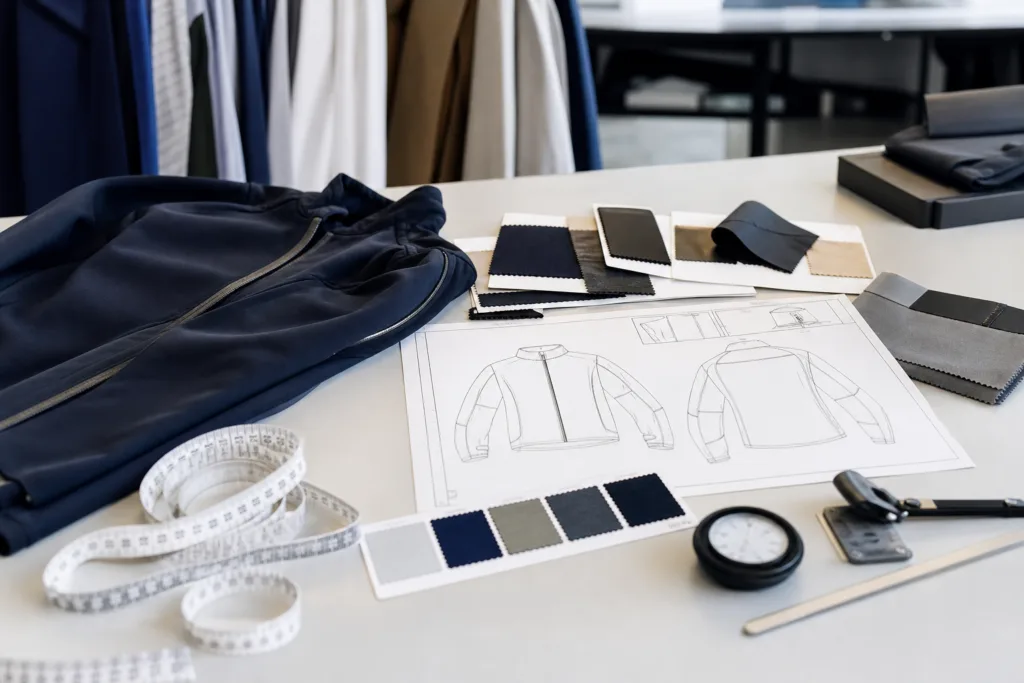
Moisture-wicking fabrics are not just about staying dry. They are about controlling how sweat moves, how fast the garment dries, how the fabric feels in motion, and how the product holds up after repeated wear and washing. For athletic and performance apparel, the best choice is usually the one that matches the real use case, not the one with the most technical-sounding label.
If you are comparing moisture-wicking fabrics for a new product, start with the wearer, the activity, the fit, and the care expectation. Then check the fiber content, GSM, knit structure, finish, and wash stability. That process gives you a much better chance of choosing a fabric that performs well in the field, not just on a swatch card.
FAQs
What makes moisture-wicking fabrics different from regular fabrics?
Moisture-wicking fabrics are built to move sweat away from the skin and spread it across the fabric surface so it can dry faster. Regular fabrics may absorb moisture without transferring it as efficiently, which can leave the garment feeling wetter for longer.
Are all synthetic fabrics moisture-wicking?
No. Many synthetic fabrics can be engineered for moisture-wicking, but not all of them are. Fiber type, yarn construction, knit structure, and finishing all influence performance. A synthetic fabric may still hold moisture or feel warm if it is dense or poorly designed for wicking.
Is moisture-wicking the same as breathable?
No. Breathability is about how well air and vapor move through the fabric, while moisture-wicking is about how liquid sweat moves away from the skin and across the fabric. A fabric can do one well and still be weaker in the other area.
How can you test whether a fabric wicks well?
Look for lab data, controlled moisture management results, or side-by-side sample comparisons. A simple check is to place a drop of water on the fabric and watch how quickly it spreads, but that is only a basic indicator. Real evaluation should also consider drying time, fit, and wash durability.
What fabric is usually best for athletic apparel?
There is no single best fabric for every athletic product, but engineered polyester, nylon, and well-designed blends are common choices because they can manage moisture and dry quickly. The right option depends on the activity, fit, climate, and the comfort feel the brand wants to deliver.
How should moisture-wicking garments be cared for?
Follow the care label, avoid unnecessary heat, and be cautious with heavy fabric softeners that can reduce surface performance. Frequent washing is normal for performance apparel, so the fabric should be selected with care habits in mind from the start.