Specifying camisoles shelf bra support starts with the wearer’s task, not the garment label. A shelf bra is an integrated inner layer or partial lining intended to add coverage, containment, shaping, or light support within a camisole. The term describes a construction approach; by itself, it does not establish a particular support level or show that the garment performs like a separate bra. For more apparel-development context, see Apparel Wiki’s editorial and sponsorship information.
A camisole designed for sleepwear, layering, everyday wear, or low-impact activity may need different coverage, fit, and movement control. Define the intended use first, then document what the finished garment should do and how it should feel. Support is a system: the inner layer, fabric, elastic, seams, neckline, straps, and overall fit interact.
What Is Shelf Bra Support in a Camisole?
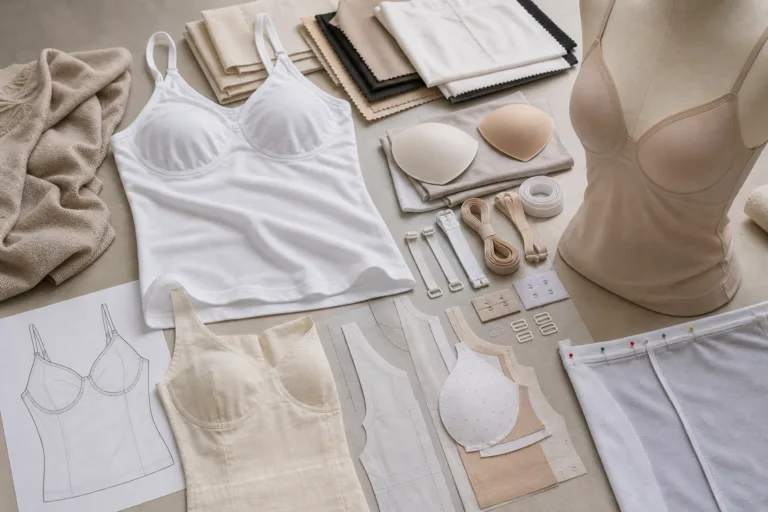
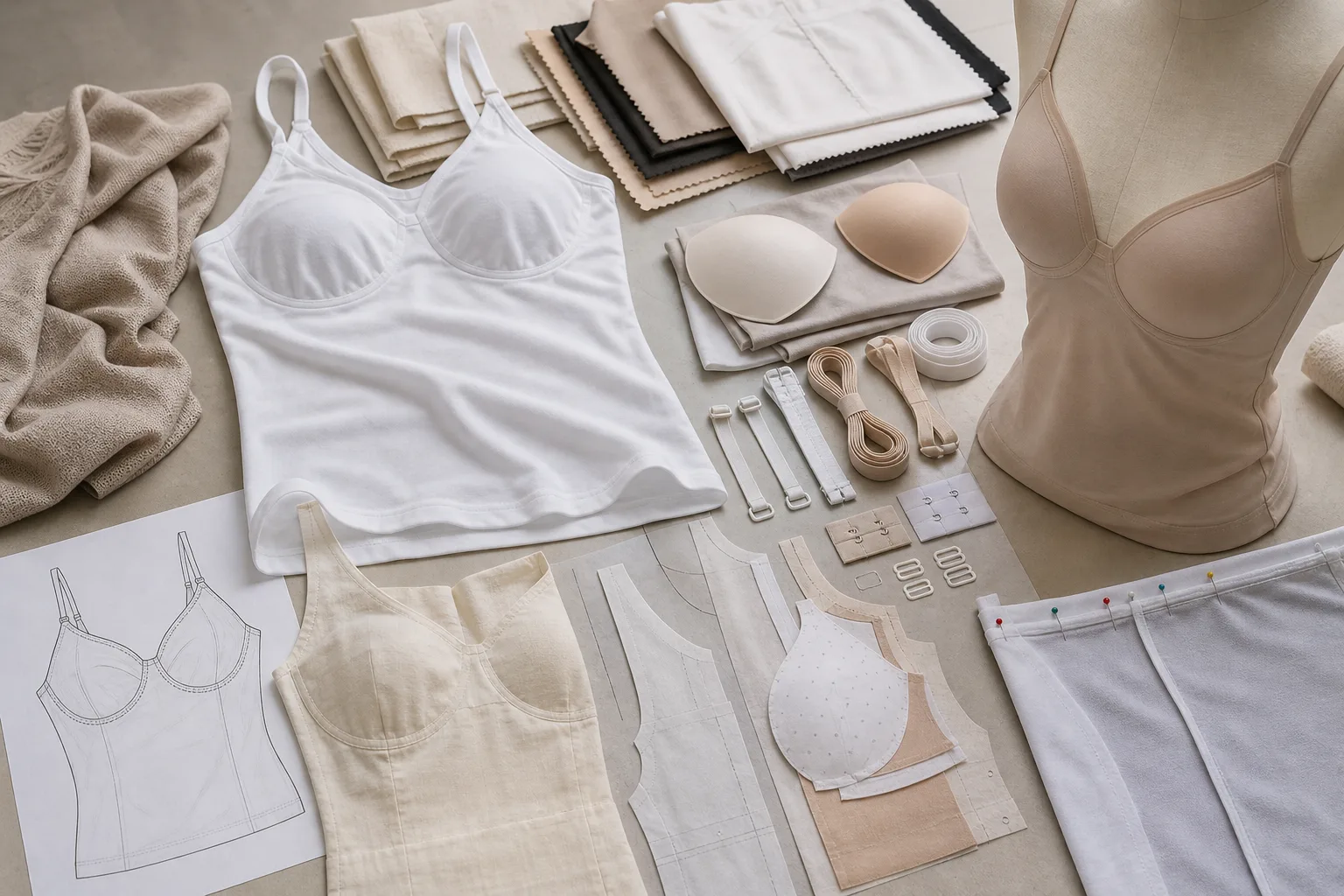
In a what is a shelf bra camisole question, “shelf bra” generally refers to a support layer integrated into the camisole rather than a separate garment. It may be a partial lining or extend farther across the front; its shape and attachment determine how it covers and contains the wearer. Some designs include shaped cup areas or stabilizing elements, while others rely mainly on layered fabric and fit.
A camisole with built-in bra support should not be assumed to provide the same hold, shaping, or separation as a dedicated bra. Nor does the category name guarantee consistent performance between styles. Treat “shelf bra” as a starting description, then specify the actual wearer outcome: desired coverage, acceptable movement, stable placement, comfort, appearance, and durability for the intended use.
Those requirements can differ even within one product category. A layering camisole may prioritize a smooth appearance beneath other clothing; a sleepwear style may prioritize ease and softness. A style intended for movement may need its support and coverage reviewed during the activities named in its brief. Avoid assigning a universal support level unless the product has been assessed against a defined, relevant method.
How the Shelf Bra Structure Creates Support
The inner layer contributes coverage and containment, but its effect depends on its configuration and relationship to the outer body. A partial layer, a full-front lining, a shaped panel, or a double-layer construction each distributes fabric differently. Cup seams, darts, gathers, or molded components may be used to shape the layer; none is automatically the best choice for every wearer or design goal.
Underbust elastic or another stabilizing element can help the inner layer stay positioned. Its placement, width, tension, recovery, and attachment are development variables: a band that shifts may fail to maintain coverage, while excessive tension can create pressure or restrict comfortable movement. The appropriate balance depends on the pattern, materials, wearer, and intended use, so it should be evaluated in the assembled garment rather than inferred from the trim alone.
Straps and the upper body of the camisole also affect how the support layer sits. Strap position and adjustability, neckline and armhole shape, side seams, and the vertical placement of the underbust area all influence coverage and fit. A change to one area can alter another: for example, a neckline that shifts during reaching may expose more than intended even if the inner layer itself has adequate coverage.
For product developers, the practical question is how the complete construction behaves on the wearer. Review whether the inner layer stays in place, whether seams and edges feel comfortable, and whether the garment provides the intended coverage during relevant movement. Component descriptions alone do not establish finished-garment support.
Translate the Intended Wearer Task Into a Support Specification
Replace a general request for “comfortable support” with a description of when, how, and for how long the camisole will be worn. Record intended activity and posture, movement, wear duration, layering, climate considerations, and desired coverage. The purpose is not to assume that a particular wearer group needs one fixed design, but to make the product brief specific enough to guide pattern decisions and sample review.
Describe the desired experience in observable terms. Depending on the brief, that might include stable underbust placement, no unwanted exposure during named movements, acceptable pressure, or reduced movement during the activity being evaluated. Set expectations for fit across the intended size range, including the grading approach and any body proportions the design is meant to accommodate. Confirm these assumptions through fitting observations and wearer feedback rather than relying on demographic labels.
Identify areas likely to need attention during review: the underbust, straps, neckline, armholes, and seams attaching the inner layer. Document design variables and approval criteria in a brief or worksheet. A useful starting structure is:
- Use and movement: intended wear context, duration, posture, and activities to review.
- Wearer outcome: required coverage and stability, with acceptable pressure and movement described.
- Fit scope: size range, grading assumptions, and wearer feedback to collect.
- Construction: inner-layer coverage, stretch direction, elastic behavior, strap configuration, and seam placement.
- Approval record: sample and wearer conditions, observations, criteria, and any revision needed.
Keep requirements tied to the product brief. If the design has special fit, access, or dressing needs, gather relevant user input and document fitting observations; do not infer a uniform need from a person’s age, body type, or other label. A garment category can guide the first question, but only the defined task and evaluation can determine whether the specification is appropriate.
Choose Materials, Components, and Pattern Details as a System
Material selection should follow the intended support task rather than a general preference for a firmer or softer hand. Stretch direction, fabric weight, recovery, lining configuration, and thermal or moisture comfort can all affect how the finished camisole feels and behaves. A fabric that gives useful containment in one pattern may feel unstable or restrictive in another, so the fabric, inner layer, and pattern should be evaluated together.
Firmer containment can reduce unwanted movement or exposure, but it may also increase pressure, heat, restriction, or visible compression. Softer construction may improve comfort and ease of dressing while providing less stability for some uses. Neither option is universally better. The appropriate balance depends on wear duration, movement, coverage expectations, body proportions, and the product brief.
Underbust elastic is likewise a system variable. Its width, stretch behavior, recovery, tension, placement, and attachment method can change the wearer experience. A narrow or highly tensioned elastic may create concentrated pressure, while a softer or broader option may distribute contact differently. The pattern must allow the elastic to sit in the intended position without excessive rolling, shifting, or distortion.
Straps and openings also contribute to the result. Strap width, adjustability, placement, and attachment strength should be considered alongside neckline depth, armhole shape, side seams, and the location of the inner layer. These details affect coverage, garment appearance, movement, and ease of dressing. Pattern features such as shaped panels, seams, darts, gathers, or double-layer construction should be selected for the specific fit objective.
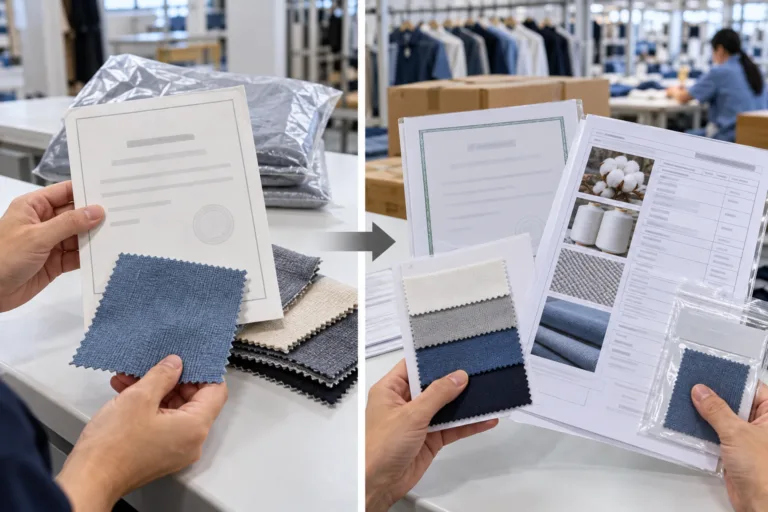
Approve the combination through prototypes made with production-representative materials and construction. The main fabric, lining, elastics, thread, labels, seam finishes, and assembly method can alter the finished result together. A component that performs well in isolation does not establish finished-garment support, comfort, durability, or compliance.
Evaluate Fit, Support, Comfort, and Durability on the Finished Camisole
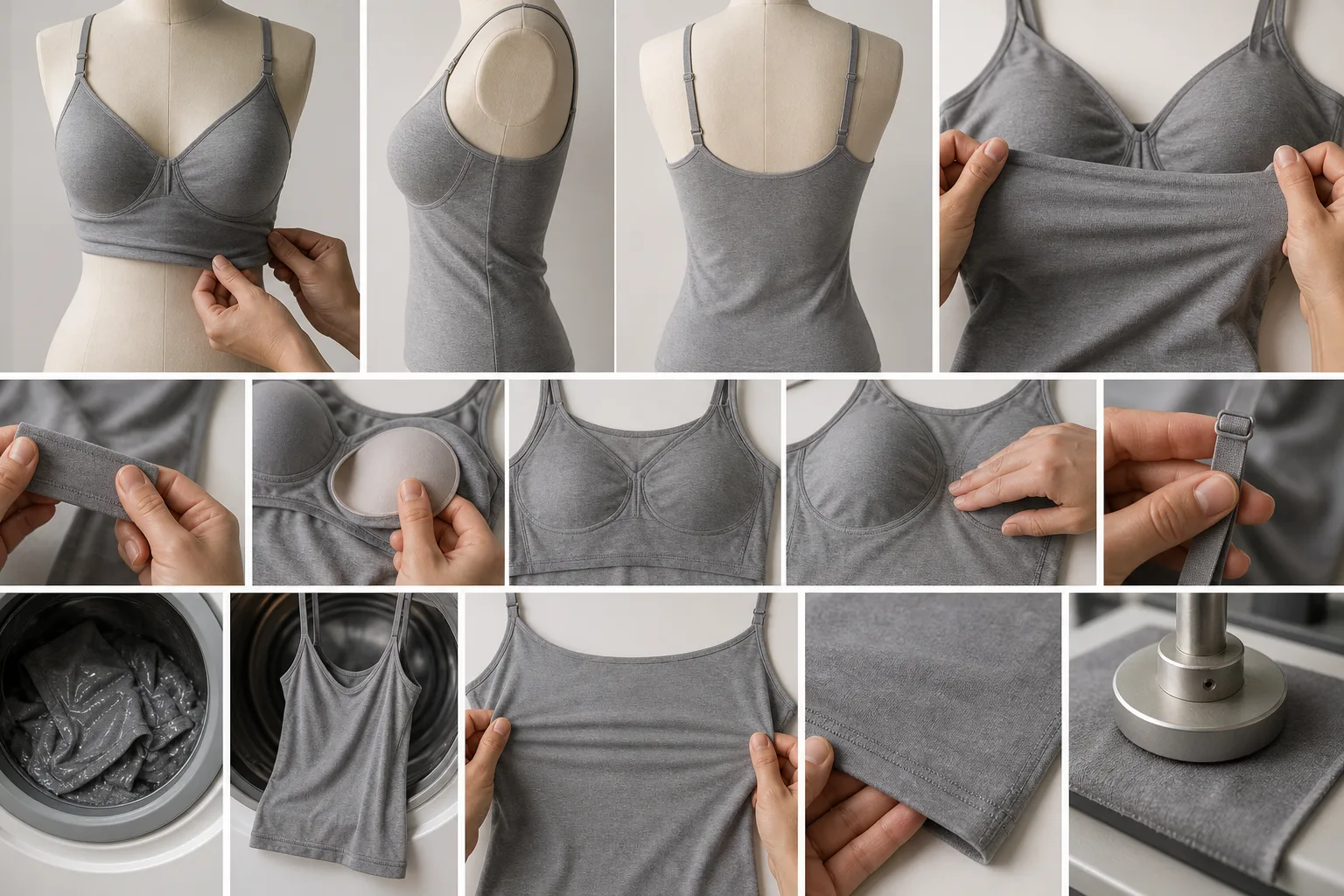
Review the finished camisole in the intended size range using final or production-representative materials. Begin with static fit before assessing movement. Check underbust placement, neckline and armhole coverage, strap position, fabric tension, seam comfort, and any gaping, rolling, folding, or unwanted exposure. Record observations by size instead of assuming that one approved sample represents the full range.
Next, assess movements that match the brief. Depending on the intended use, this may include walking, reaching, bending, sitting, layering, or another defined low-impact activity. Observe whether the inner layer and underbust area remain in position, whether coverage changes, and whether pressure or restriction becomes unacceptable. Describe the activity, duration, garment state, wearer or mannequin conditions, and observed response.
Separate different types of evidence in the approval record. Wearer comments can identify comfort, pressure, confidence, dressing, and movement concerns. Internal development criteria can determine whether the sample needs revision. Laboratory results may address selected material or construction properties. Compliance evidence belongs to the applicable product and market requirements. These evidence types should not be presented as interchangeable.
Inspect construction and repeated-use behavior according to the product brief. Relevant observations may include elastic recovery, seam integrity, layer distortion, pilling, appearance change, and the effect of laundering or repeated wear. Use an appropriate validated method when a measured result or formal pass criterion is required. Do not create a universal tolerance from one sample, one wearer, or one component test.
A compact review matrix can separate decisions into appearance, fit, support, comfort, construction, and durability. For each item, record the sample size, conditions, observation, decision, and corrective action. A result may be approved, revised, or held for more evidence. Support is successful only when the assembled garment meets the intended task without creating unacceptable fit or comfort problems.
Set Practical Limits and Revise the Specification
An integrated shelf bra may be unsuitable when the brief requires substantially greater support, highly specific shaping, strong separation, or activity demands beyond the tested use. The camisole category does not establish a fixed support level, and a built-in layer should not be marketed as a substitute for every separate bra or activity-specific support garment.
When a deficiency is localized, revise the support system before changing the entire concept. Possible changes include adjusting the inner-layer pattern, coverage, stretch direction, elastic behavior, strap configuration, fabric combination, or attachment method. Each revision should be reviewed for its effects on comfort, appearance, dressing ease, grading, production complexity, and the intended size range.
Increasing compression or adding structure can solve one problem while creating another. A more stable design may feel hotter, less flexible, harder to put on, or less visually consistent with a camisole. A lighter design may improve comfort and layering but require more careful fit control. Document these trade-offs rather than describing one construction as inherently superior.
Use a simple decision rule: retain the design when it meets the defined task; revise the support system when the problem can be addressed within the camisole concept; reconsider the garment concept when the requirement exceeds the garment’s practical role. Record unresolved risks and communicate them to design, product development, sourcing, quality, and merchandising teams before approval.
For the next development cycle, define the wearer task, document the support objective, prototype with final-material combinations, evaluate key sizes and intended movements, and record the evidence and limitations. This task-first process helps a team make a defensible specification without treating a category label as proof of performance.
What is the difference between a shelf bra camisole and a camisole with removable cups?
A shelf bra usually refers to an integrated inner layer that provides coverage or containment. Removable cups are separate inserts placed in dedicated pockets or openings. The two constructions can be combined, but neither term alone establishes a universal support level.
Does a shelf bra camisole provide the same support as a separate bra?
Not automatically. Support depends on the complete garment, its fit, components, construction, and intended use. A product-specific evaluation is needed before making a comparison with a separate bra.
Which camisole features usually affect shelf bra support?
Important variables include inner-layer coverage, fabric stretch and recovery, underbust elastic, strap placement and adjustment, neckline and armhole shape, seam location, and the fit of the finished garment.
How should a brand test shelf bra support before approving a style?
Use production-representative samples across the intended size range. Review static fit, relevant movements, coverage, shifting, pressure, comfort, construction, and repeated-use behavior, then document conditions, observations, decisions, and revisions.
Can fabric stretch and elastic recovery change after washing?
They can change depending on the materials, construction, care process, and repeated-use conditions. Treat laundering behavior as a product-specific question and evaluate it with an appropriate documented procedure.
When should a product developer use a separate support garment instead of a shelf bra?
Consider a separate support garment when the brief requires support, shaping, separation, or activity performance beyond what the camisole has demonstrated in its intended use. The decision should follow documented requirements and evaluation rather than the garment label alone.