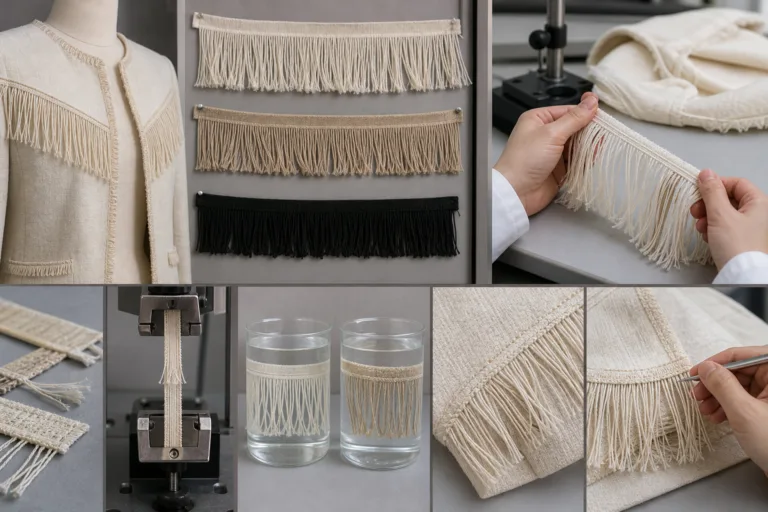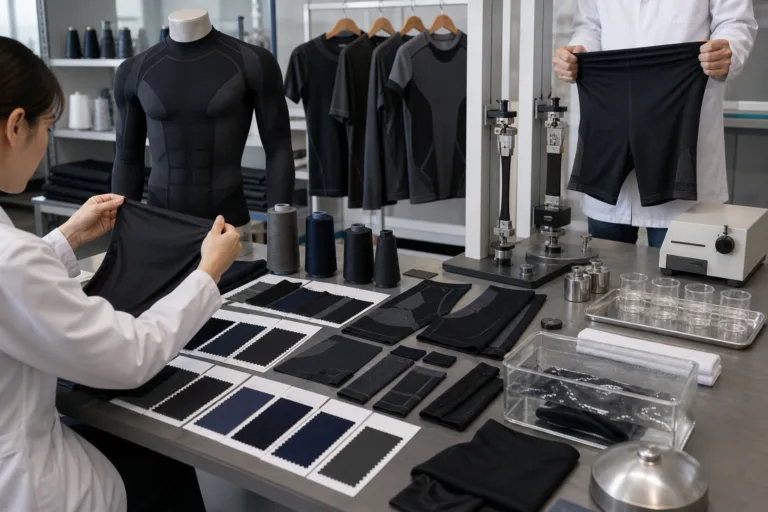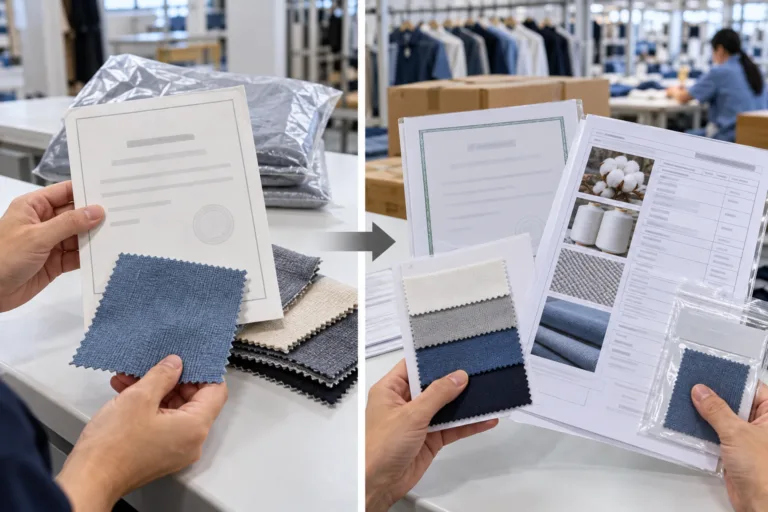
A backup supplier is a second source intended to reduce the risk of relying on one supplier. Backup supplier qualification is the process of checking whether that source can make the specific product under the project’s requirements, not simply whether it can produce a sample or quotes an attractive price. The most costly qualification mistakes often involve accepting claims about capacity, price, or sample quality without checking production fit, material controls, and evidence. This guide is independent apparel-industry education; it is not a manufacturing or sourcing service. Sponsor
What Backup Supplier Qualification Mistakes Cost Later
An unqualified backup can become a second source of supply risk. A development sample may look right while leaving unanswered whether the supplier can reproduce the approved garment in bulk, use controlled materials, follow the agreed process, and communicate problems promptly. Qualification needs to connect the supplier’s claims to the actual product and order, with evidence relevant to both.
The downstream costs are operational consequences, not fixed amounts. A gap found during development may mean more sampling and internal review; found after a bulk commitment, it could lead to rework, rejected goods, delayed launch decisions, or emergency sourcing from the primary supplier. The impact depends on factors such as garment complexity, the order stage, defect severity, timing, and the buyer’s tolerance for risk. The practical question is not whether a supplier looks capable in general, but what remains unverified for this product.
Mistake 1: Qualifying Capacity Without Confirming Production Fit
Equipment, stated capacity, and a broad product list can indicate what a supplier says it can handle, but they do not demonstrate fit for a particular garment. A backup supplier capability assessment should consider the project’s materials, construction details, finishing, order profile, and quality expectations. Experience with a similar product or its specific risk points can be more informative than a general company profile, but it still needs to be checked against the current specification.
Ask for relevant examples and records that help show how work moves from sample approval into production. Clarify who owns each process, whether any work is subcontracted, how changes are communicated, and whom to contact when an issue arises. Subcontracting is not automatically a performance problem; undisclosed or poorly understood process ownership is the concern. Capacity statements remain claims until they are tested against the project’s needs.
A capability gap discovered after commitment can trigger repeated development rounds, altered construction, missed approvals, or a late return to the primary supplier. Before approval, identify what evidence would reduce uncertainty: for example, relevant samples, process records, and production references. These can inform a decision, but none guarantees future results. A project-specific apparel manufacturing tool may help organize the assessment; it cannot replace confirming the supplier’s actual process and responsibilities.
Mistake 2: Comparing Quotes That Do Not Use the Same Basis
A lower quote may reflect a narrower scope, not a more economical way to deliver the same product. Compare suppliers using the same specification, quantity basis, material assumptions, packaging instructions, delivery point, and commercial terms. Where those inputs differ, the price comparison is not yet like for like. The comparison should also follow the project’s contract and agreed commercial terms.
Ask each supplier to state what is included, excluded, assumed, substituted, or priced separately. Differences in development work, material use, inspection, packaging, freight, or handling may surface later and offset an apparent unit-price advantage. These are possible cost sources, not charges that apply to every order. Quoted price and total delivery cost are related, but they are not interchangeable.
A simple comparison matrix can make gaps visible before a decision: record the price basis, scope differences, open questions, evidence received, and the person responsible for each confirmation. Treat unresolved items as unresolved rather than assuming they match. This editorial method helps teams make a more informed comparison; it does not establish a universal costing formula or replace commercial review.
Mistake 3: Approving Substitute Materials Without Equivalence Checks
Matching fiber composition does not establish that two materials are interchangeable. Weight, construction, finish, width, color, hand feel, and shrinkage behavior may differ, and those differences can affect fit, appearance, care, durability, or production. Which characteristics matter depends on the garment, its end use, and the buyer’s requirements.
An uncontrolled substitution could require new sampling, fit or pattern adjustments, further material validation, or a review of care information. It may also create shade variation or contribute to rejection if the finished product does not meet the approved specification. These outcomes are conditional, not inevitable; the risk is approving a change without understanding what it affects.
Use a clear approval path: identify the proposed change, compare the alternative with the approved material, assess the product characteristics it could affect, and carry out relevant validation before bulk use. Record the decision and any limits on approval. A buyer-approved alternative is different from a unilateral substitution. Define which material, process, or specification changes require reapproval, and retain the evidence supporting the decision. No single check establishes full equivalence for every garment.
Mistake 4: Accepting Samples and Certificates Without Traceable Evidence
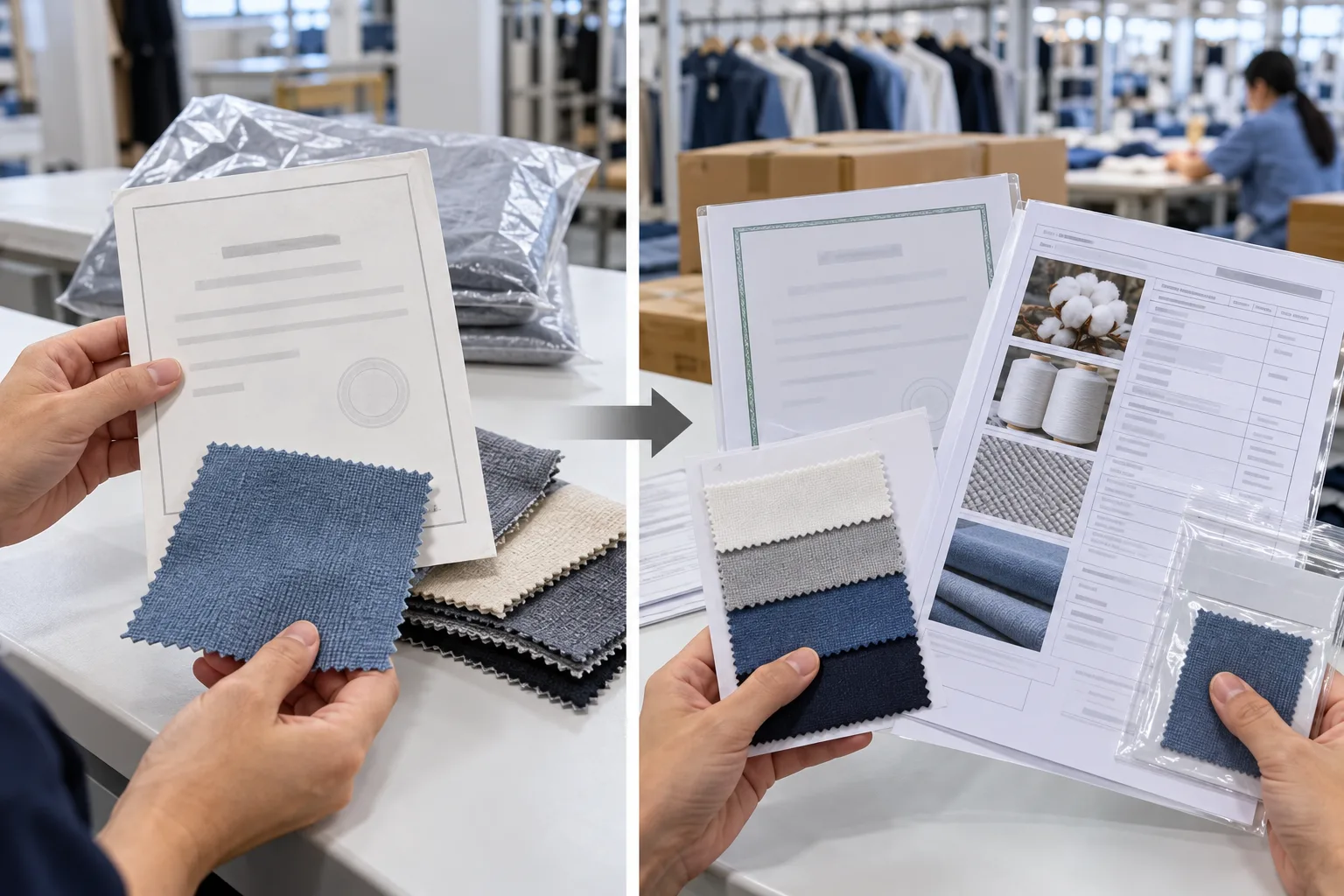
A sample can show how a garment or material looked at one development stage; it does not, by itself, show that bulk production used the same approved inputs and process. Keep development samples, production approval samples, and records tied to the actual order distinct. When a sample is approved, record what it represents and which specification or material version it was checked against.
For bulk, build an evidence chain where relevant: connect the purchase order and finished-goods lot to material batch references, processing steps, inspection records, approvals, and shipment documents. This makes it easier to investigate a shade difference, recurring defect, or process change and to determine which goods may be affected. A supplier name alone is too broad to identify a specific material or production batch.
Paperwork also needs context. A supplier declaration or certificate may describe an organization, activity, or defined scope; it does not automatically establish that every material lot or shipment is covered or conforms to the buyer’s product specification. Check the document’s issuer, scope, validity, and connection to the relevant goods. Treat declarations as declarations, and verify them against transaction-level records when the decision depends on that link.
Mistake 5: Relying on One Audit, Sample, or Unclear Quality Metric
One positive sample, visit, order, or inspection window offers limited evidence about performance under other conditions. A supplier may have handled a different product, order profile, material, or level of complexity. Use several relevant observations where available, and note what each one actually covers rather than treating a single result as a prediction of future performance.
Quality comparisons only help when the measures mean the same thing. Define what counts as a defect or rejected unit, how many units were checked, the time period, the product and order difficulty, and how exceptions were recorded. Keep sample results, recurring issues, corrective actions, response quality, and closure evidence together. If the information is incomplete or not comparable, mark it as unverified instead of using it to rank suppliers.
Describe a symptom before assigning a cause. Pilling, skew, fading, cracking, or seam failure should be recorded with its location, frequency, conditions, and batch context. Similar symptoms can have different explanations involving material, construction, equipment, care, or measurement. Preserve competing explanations until evidence narrows them; a photo or isolated inspection finding may help document a problem without proving its root cause.
A Staged Backup Supplier Qualification Procedure
Qualify the backup before the primary source fails. The following stages are practical editorial guidance, not a universal approval standard: adapt the evidence and checks to the garment, end use, buyer requirements, and project risk.
- Define the scope. Identify the product and specification, key risk points, commercial basis, evidence needed, and who has approval authority.
- Screen production fit. Review relevant product experience, material access, process ownership, quality controls, communication, and any project-specific compliance evidence. Clarify subcontracting and escalation contacts where relevant.
- Standardize the RFQ. Send the same specification and commercial assumptions to each supplier. Record inclusions, exclusions, substitutions, open questions, and who must confirm them.
- Evaluate samples and materials. Compare them with the approved requirements, document deviations, and identify what needs validation or reapproval before bulk use.
- Confirm performance proportionately. Where appropriate, use a controlled pilot or limited confirmation. Review quality evidence, traceability, response behavior, and whether corrective actions were closed.
- Record the decision. Mark the supplier approved, conditionally approved with explicit restrictions, or not yet approved. Set review triggers for changes to material, process, facility, or specification.
Keep a working record for each decision. A compact table can make gaps and accountability visible:
| Evidence | Finding | Downstream risk | Owner | Due date | Approval status |
|---|---|---|---|---|---|
| Relevant sample and specification | Record match or deviation | Identify product or approval impact | Assigned reviewer | Set by project | Open, conditional, or approved |
| Material and lot records | Record traceability gaps | Note investigation or substitution risk | Assigned reviewer | Set by project | Open, conditional, or approved |
| Quality and corrective-action evidence | Record scope and comparability | Note unresolved quality concerns | Assigned reviewer | Set by project | Open, conditional, or approved |
Conditional approval should name what the supplier may produce, which requirements remain open, and what evidence or change would trigger review. That turns backup qualification into a controlled decision rather than an urgent exception. Apparel Wiki is an independent educational publication; this guide does not provide supplier qualification or sourcing services.
For a useful next step, review the current backup supplier against the evidence in the table and assign an owner to each unresolved item before the next sourcing decision. Revisit the approval when relevant materials, processes, facilities, or product requirements change.

Frequently Asked Questions
What is a backup supplier qualification mistake?
It is a gap in verifying whether a potential second source can meet the specific product, material, process, quality, and documentation requirements. A general capability claim or successful sample alone may not establish bulk readiness.
Why is a lower backup supplier quote not always the lower-cost option?
Quotes may cover different specifications, materials, packaging, delivery points, or services. Costs from exclusions, changes, rework, or additional review can reduce or erase an apparent unit-price advantage.
Can a supplier use a different fabric if the fiber composition is the same?
Not automatically. Construction, weight, finish, width, color, hand feel, and shrinkage behavior can differ. Assess the change against the garment and buyer requirements, validate relevant characteristics, and record approval before bulk use.
What evidence should be checked before approving a backup apparel supplier?
Check relevant samples and specifications, material and lot links, process and inspection records, quote assumptions, corrective-action evidence, and communication practices. The required evidence depends on the product and project risks.
How can a buyer compare backup supplier quality fairly?
Use consistent definitions, inspection scope, time periods, product context, and exception records. Compare evidence from reasonably similar work, and label gaps rather than treating unlike results as equivalent.
When should a backup supplier be requalified?
Review qualification when a material, process, facility, product specification, or other important project condition changes. The buyer should define project-specific review triggers and document whether existing approval still applies.