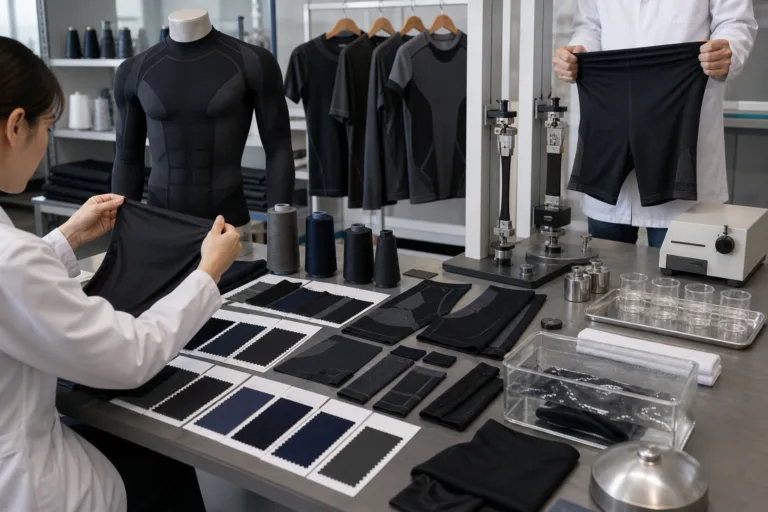
Compression apparel can provide close body contact and a designed pressure or support sensation, but it cannot guarantee consistent comfort, improved athletic performance, medical benefit, or protective performance. The main compression apparel limitations are variable fit and pressure distribution, heat and moisture discomfort, restricted movement, construction constraints, and claims that go beyond the available evidence. This independent Apparel Wiki guide follows the editorial independence described on our Sponsor page.
Compression apparel is a category of functional clothing designed to fit closely against the body, often using stretch materials, specific panel shapes, elastic components, or construction details intended to maintain contact. The finished result depends on the complete garment rather than fabric stretch alone. Body shape, size selection, posture, movement, activity level, climate, layering, and care can all change how the garment feels and behaves.
What Are the Main Limitations of Compression Apparel?
The first limitation is variability. A garment may be designed to apply pressure or create a close, stable fit, yet the pressure and perceived benefit may differ from one body area to another and from one wearer to another. Pattern dimensions, fabric recovery, seams, openings, and local body geometry affect the result. A garment that feels supportive on one wearer may feel restrictive, loose, or uneven on another.
Compression clothing also has a defined scope. Ordinary functional apparel is not automatically medical equipment, occupational protective equipment, or proof of improved speed, strength, endurance, recovery, or injury prevention. A product feature can express design intent, such as close contact or reduced garment movement, without establishing a health or performance outcome. Such outcomes require evidence that matches the exact garment, use case, comparison condition, and measured result.
In practical terms, what compression apparel can and cannot do should be considered conditionally. It may help maintain a close fit or provide a particular tactile sensation during a specified activity. It may also create problems if the fit is too tight, the garment rolls, seams chafe, heat accumulates, or the wearer cannot move freely. Product developers and buyers should therefore assess the garment as a system and separate observed behavior, user perception, measured results, and broader claims.
How Fit, Body Shape, and Movement Change Compression
Nominal size and fabric stretch do not guarantee consistent pressure or support. Compression garment fit is produced by the relationship between the graded pattern, fabric dimensions, stretch and recovery, panel orientation, seam placement, openings, and the wearer’s body shape. Two garments made from materials with similar stretch characteristics can behave differently because their patterns and construction distribute extension differently.
Pressure distribution can change when the wearer bends, sits, runs, reaches, or repeatedly extends a joint. A garment that feels appropriate while standing may become tighter across a bend, form folds in a less active area, or pull at an opening during movement. Bunching and rolling can create local pressure and discomfort, while insufficient contact may fail to achieve the garment’s intended close-fit function.
These effects make static try-on an incomplete evaluation. Pattern makers and product teams should consider relevant postures and movements, the target size range, and the body areas that the garment is intended to cover. A wear assessment can document rolling, bunching, chafing, restricted movement, or pressure that changes during use. These observations describe the tested garment and wearer; they should not be generalized to every compression product.
A tighter garment is not automatically a more effective or supportive garment. Excessive tightness can reduce practical wearability, while insufficient contact can undermine the intended design objective. The useful question is whether the complete garment provides an appropriate balance for its defined task, wearer, and duration of use. Medical or circulation-related needs require guidance from an appropriate clinical authority rather than a general apparel sizing assumption.
The Comfort Trade-Off: Heat, Sweat, and Restricted Feel
Close-fitting construction can improve garment stability while changing the wearer’s comfort experience. Compression level, body coverage, fabric weight, seam placement, and fit can affect perceived restriction and air movement. A garment that stays in place may still feel hot, damp, tight, or difficult to layer, particularly when worn for a long duration or during strenuous activity.
Heat and moisture comfort are related but distinct. Thermal resistance concerns how readily heat moves through the clothing system. Water-vapor transport concerns moisture in vapor form. Air flow describes exchange through or around the garment, while liquid sweat handling concerns how perspiration is spread, retained, or moved within the clothing system. These properties should not be treated as interchangeable, and a single breathability or moisture-management result cannot establish comfort in every situation.
Conditions matter. Climate, activity intensity, duration, body coverage, ventilation zones, underwear layers, outer layers, and the wearer’s own comfort response can all change the result. A laboratory measurement is tied to its test configuration and conditions; a subjective wear trial records an experience under particular circumstances. Neither should be presented as a universal guarantee of avoiding overheating or sweat accumulation.
For product evaluation, assess the complete clothing system rather than a fabric swatch alone. Record where heat or moisture is noticed, whether seams or edges irritate the skin, and whether the garment remains comfortable during the intended movements and wear duration. A design that performs acceptably in a cool, short trial may need further assessment in warmer conditions, under additional layers, or during longer use.
Movement and Performance Claims Need Careful Boundaries
Close fit may reduce garment movement, help stabilize a layering system, or provide a particular tactile and support sensation. Those mechanical or perceptual functions are different from proven improvements in athletic performance or health outcomes. A construction feature should not be converted into a broad promise about speed, strength, endurance, recovery, circulation, pain, or injury prevention without directly applicable evidence.
Movement can also become a design limitation. Stretch and recovery, panel direction, seam placement, gussets, hems, and opening construction may interact with the wearer’s range of motion. A garment can feel secure in one activity yet pull, expose the body, or restrict a different movement. The relevant evaluation should reproduce the task for which the garment is intended rather than relying on a general impression from standing or walking.
Performance findings are dependent on context. The exact garment, comparison garment, wearer group, activity, protocol, and outcome measure all influence what a test can show. A result about perceived support is not automatically a result about athletic output, and a short trial does not establish long-term recovery or injury-prevention effects.
Product copy should therefore identify the intended function and evidence level. “Designed for a close fit” describes construction intent. “Reported by wearers as stable during a specified activity” describes user feedback. A measured comparative result requires its test conditions, while medical or protective language requires the relevant authority and applicable evidence. Keeping these categories separate is essential to responsible development and communication.
Durability, Care, and the Difference Between New and Used Performance
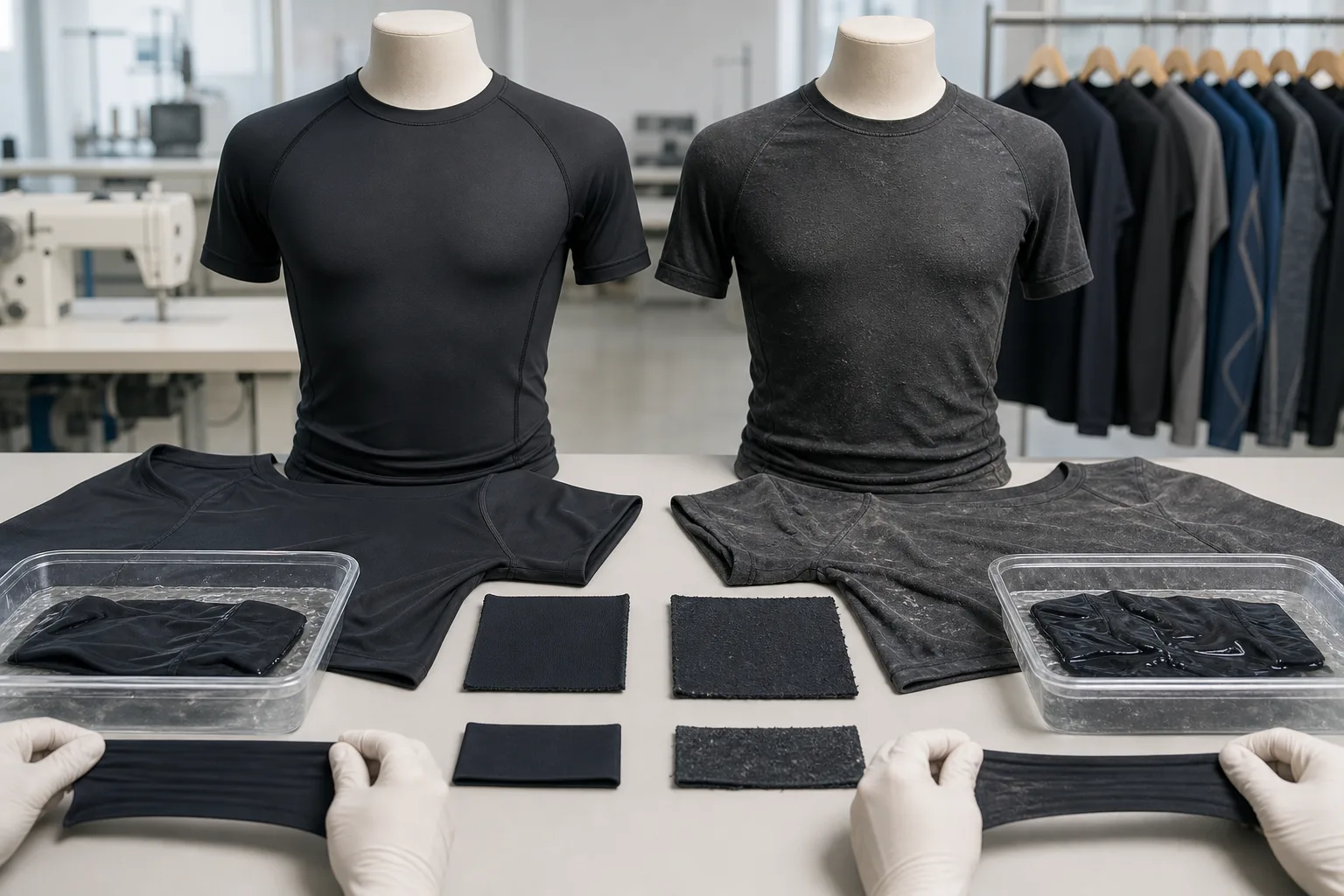
A new garment’s stretch, recovery, and fit do not establish how it will behave after repeated wear and care. Elastic components, seams, prints, bonded areas, and fabric finishes may respond differently to extension, abrasion, washing, drying, and storage. The result depends on the materials and construction, so there is no single service-life assumption that applies to all compression apparel.
For product development, define the care route and the kinds of use the garment is intended to withstand. When durability matters to the product claim, compare relevant outcomes before and after representative care or use. Dimensional change, seam behavior, pilling, visible damage, comfort, and pressure retention are distinct observations; a favorable result for one does not establish the others.
Report the garment configuration, care instructions, and evaluation conditions alongside any durability finding. A result from an initial fitting or a single test should not be presented as proof that compression or fit will remain unchanged indefinitely.
How to Evaluate Compression Apparel Before You Approve or Buy It
Start with the task, not a broad promise. Is the garment intended to provide a close fit, reduce shifting between layers, create a particular support sensation, or manage heat and moisture? Record the target wearer, body areas, activity, climate, wear duration, layering, care route, and acceptable movement and comfort trade-offs. These details make comparisons more meaningful.
Review the complete garment system: material, pattern, size range, fabric recovery, seams, openings, and care instructions. A fabric swatch cannot show how panel placement, body shape, and garment construction interact in wear. Assess fit in relevant sizes and postures, then reproduce the intended movement where practical. Note rolling, bunching, chafing, overheating, or restricted movement as observations, not as evidence of a medical effect.
Match evidence to each claim. Ask what was evaluated, under which conditions, and whether the evidence concerns a material, a finished garment, wearer feedback, or a measured outcome. Compare like with like rather than treating isolated figures as interchangeable. Keep vendor-supplied information distinct from findings your team observes or verifies.
A practical review can cover six areas: intended use, fit and movement, comfort, claim evidence, durability after care, and wording. Record unresolved questions and criteria for approval before evaluation. If the intended use involves treatment, a diagnosed condition, occupational protection, or regulated claims, pause ordinary apparel review and seek the appropriate specialist or applicable requirements.
Where Compression Apparel Is Not the Right Solution
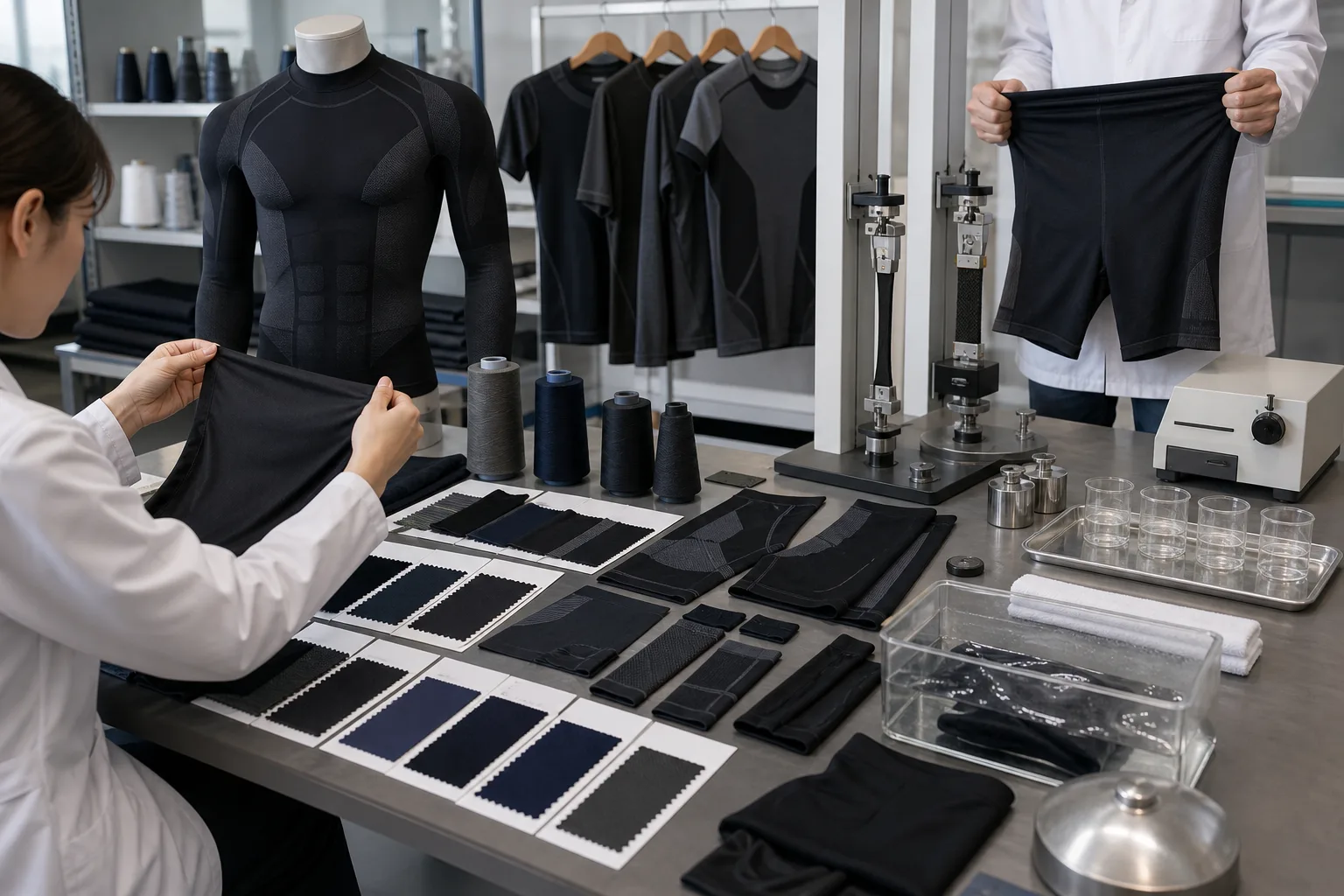
Ordinary compression apparel should not be treated as a substitute for clinical assessment, prescribed medical compression, or protective equipment selected for a defined hazard. A material report or a single garment measurement does not establish medical efficacy or whole-garment protection. Those uses call for evidence and requirements matched to the specific claim and context.
If the main need is protection from impact or chemical exposure, improved visibility, or a response to a health condition, another garment category or specialist assessment may be more appropriate. Define the problem first, identify the relevant authority or evaluation method, and assess the finished product for its intended use. Apparel Wiki is an independent educational publication; its Apparel Manufacturing Tools page is a reference point, not a manufacturing or testing service.
For a related next step, compare the garment’s intended function with the material, construction, care, and evidence needed to support it. That framework can also help when assessing other functional clothing categories.
Frequently Asked Questions
Can compression apparel guarantee better athletic performance?
No. A close fit or support sensation does not guarantee changes in speed, strength, endurance, recovery, or injury risk. Outcomes depend on the garment, wearer, activity, comparison, and test method.
Why can compression clothing feel too hot or restrictive?
Coverage, fit, fabric, seams, activity, layers, and the environment can all affect comfort. Air movement, heat transfer, water-vapor transport, and liquid sweat handling are different properties; no single measure guarantees comfort in every use condition.
Does a tighter compression garment always work better?
No. More tightness can create discomfort or interfere with movement, while insufficient contact may not meet the design intent. Fit depends on the garment and wearer, not tightness alone.
How does washing affect compression apparel?
Care can affect materials and construction differently. Follow the garment’s care instructions, and do not assume that an initial fit or test result describes performance after repeated washing and wear.
Can ordinary compression apparel replace medical compression garments?
No. General functional apparel is not a substitute for prescribed medical compression or clinical advice. Medical use should be discussed with an appropriate health professional.
What should product developers test before approving a compression garment?
Evaluate fit and movement for the intended use, relevant comfort factors, construction and care effects, and evidence for each product claim. Choose methods and conditions that match the finished garment and the claim being assessed.