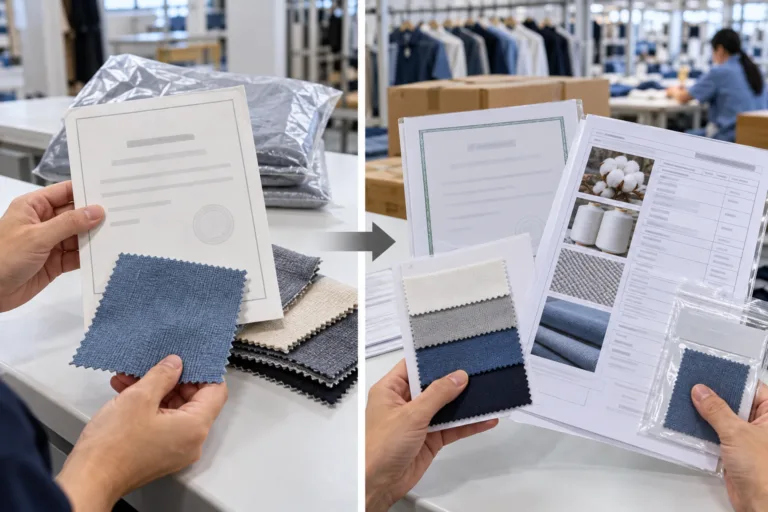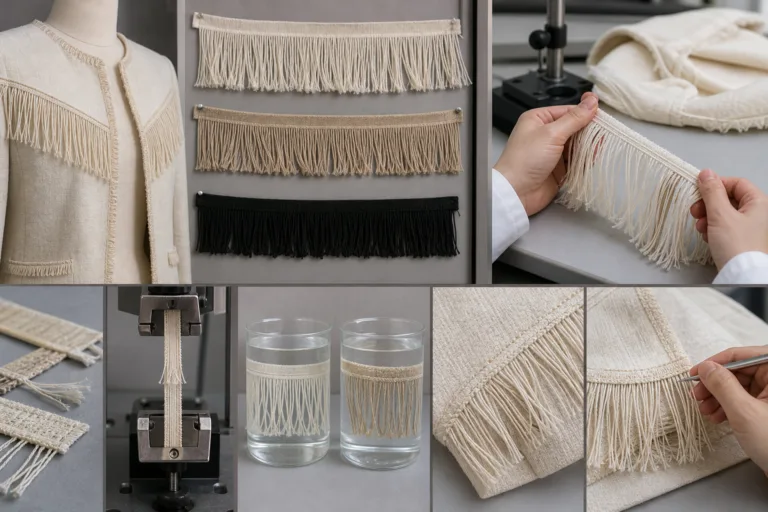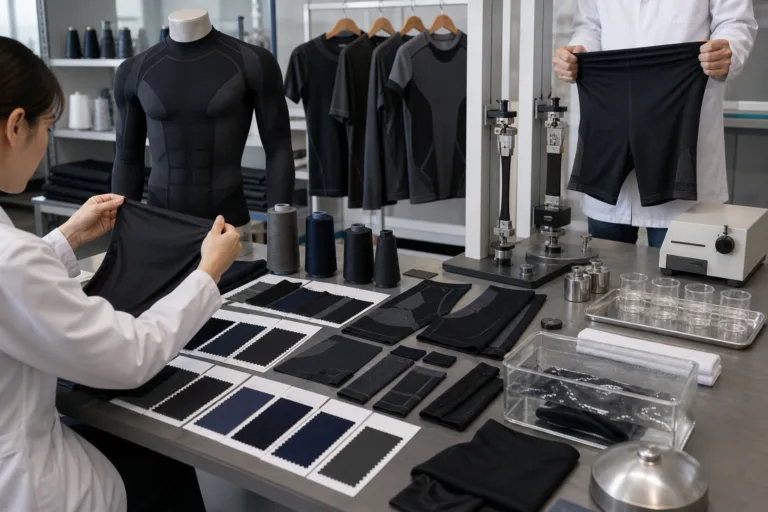
Stock style customization risks begin when a ready-made garment is treated as unchanged after it has been modified. A stock style is an existing garment or pattern adapted for a brand through selected changes such as labels, color, fabric, trims, artwork, packaging, or measurements. The main risk is that each change can affect fit, appearance, durability, care information, product responsibility, or ownership, even when the development effort appears limited.
For founders, designers, merchandisers, and procurement teams, the practical rule is simple: map every requested change to a specification, approval, test, ownership check, or production control. Apparel Wiki is an independent educational publication, not a manufacturer, factory, laboratory, or private-label service provider. Its Sponsor information should not be treated as approval of any supplier, product, or claim.
What Stock Style Customization Is and Where Risk Begins
Stock style customization means adapting an existing garment or base pattern instead of developing every element from the beginning. The starting point may be a finished stock garment, a repeatable pattern, or an established product specification. The requested adaptation can be narrow, such as applying a brand label or changing packaging, or extensive, such as replacing the fabric, revising measurements, adding embroidery, changing construction, or introducing a new wash or finishing process.
Not all changes carry the same review obligation. A cosmetic change may leave the garment’s construction and material behavior substantially unchanged, but that assumption still needs to be checked. A new label or package can affect identity information, claims, traceability, or permissions. A new fabric, lining, trim, dye, print, or measurement can affect fit, hand feel, dimensional behavior, strength, shade, care instructions, or appearance after use.
That is why low development effort does not automatically mean low product risk. The original stock style may have been reviewed under a particular material, construction, size range, or process. Once one of those variables changes, earlier observations may no longer describe the customized product. This does not prove that the new version is defective; it means that the old evidence should not be treated as conclusive without checking what changed.
A useful risk map records four questions for each requested modification:
- What changed? Identify the component, version, material, process, or information affected.
- What could the change influence? Consider fit, appearance, care, durability, identity, claims, ownership, or market requirements.
- What evidence is needed? This may be a controlled specification, an approved sample, a measurement review, a test result, or a permission document.
- Who approves the result? Assign responsibility for design, materials, fit, artwork, labeling, quality, and compliance decisions.
Which Customization Changes Create Hidden Product Risks?
The following matrix is a decision aid, not a universal defect list or testing schedule. The appropriate review depends on the garment, material, intended use, destination market, and extent of the change. Its purpose is to prevent teams from treating every customization as an equivalent branding exercise.
| Customization area | Potentially affected | Review focus |
|---|---|---|
| Labels and packaging | Product identity, traceability, claims, permissions | Compare the approved artwork and information with the intended market and commercial terms. |
| Fabric, lining, trims, and construction | Fit, hand feel, dimensional behavior, strength, appearance, care | Confirm the exact component and reassess the properties that matter for the product’s use. |
| Dye, print, embroidery, wash, and finishing | Shade consistency, placement, surface appearance, behavior after care | Review color, artwork position, process conditions, and any relevant performance evidence. |
| Measurements and grading | Pattern control, size consistency, fit across the range | Check measurement points, grading logic, and fit approval across the relevant sizes. |
Labels and packaging are often described as simple brand updates, but they can introduce separate questions about what the product represents and which assets the brand is permitted to use. Existing supplier wording, images, claims, or design elements should not automatically be copied into a new brand presentation. Review the approved version and the underlying permissions before treating the change as administrative only.
Material and construction changes deserve closer product review because they can alter how a garment fits, feels, responds to care, or looks after use. A fabric substitution can affect more than fiber description: it may change thickness, stretch, recovery, shrinkage behavior, seam interaction, or surface appearance. The relevant consequences depend on the actual materials and construction, so avoid assuming that a previous sample or test result transfers automatically.
Decoration and finishing can also create interactions that are easy to miss in a product photograph. Printing, embroidery, washing, pressing, or other finishing may influence placement, shade, surface handle, or appearance after care. Measurement and grading changes create a different risk: a sample in one size may look acceptable while the full size range remains inconsistent. Fit approval should therefore correspond to the sizes and measurement points that matter for the intended product.

How to Spot Specification and Consistency Risks Before Sampling
The strongest pre-sample review is built around traceable evidence rather than a supplier assurance or a single product photograph. Start a change log from the original stock reference. For every requested modification, record the affected component, the requested version, the reason for the change, the supporting file or specification, and the person responsible for approval.
Then check whether the customized product is described precisely enough to compare later. At minimum, the working package should identify the relevant fabric construction and composition, trims, measurement points, seam details, artwork version, packaging, and label version. Terms that sound similar can conceal different requirements, so compare the language used in the tech pack, quotation, sample comments, and approval records.
Pre-sample checks
- Record the original stock style and its revision or reference information.
- List every requested change, including changes described informally in messages or meetings.
- Confirm the exact component, color, artwork, measurement, and labeling version for each change.
- Ask how unavailable materials, proposed substitutions, color variation, or batch differences will be identified and approved.
- Compare measurement points and terminology across all documents before judging a discrepancy.
- Retain dated photographs, reference samples, measurement records, artwork files, and available batch or source information.
A specification gap is an unresolved risk, not proof that the garment is defective. For example, an unclear fabric description may prevent a reliable comparison, but it does not by itself establish that the material is wrong. Separate confirmed discrepancies from hypotheses that still require inspection or measurement. This distinction keeps the team from escalating an unverified suspicion while also preventing ambiguity from being quietly accepted.
A Practical Procedure for Evaluating Fit, Materials, and Construction
Begin with a documented description of the concern. Record its location, direction, frequency, affected size or batch, and the conditions under which it appears. A report such as “the garment looks wrong” is difficult to investigate; a description such as “the side seam twists after care on two recorded samples” gives the team a starting observation without claiming a root cause.
Next, review the approved specification and compare the customized sample with the original stock reference when both are available. Check the relevant measurements and fit across the intended size range. Then inspect construction, seam appearance, closures, trims, artwork placement, and finishing. The sequence should reflect the change scope: a fabric change may require closer material and care review, while a measurement change requires particular attention to pattern control and fit.
Assess behavior under the care, wear, storage, or use conditions that matter for the product. Record observations and measurements rather than treating one image as proof. Visual inspection can identify an appearance symptom, but it cannot alone confirm fiber content, durability, colorfastness, safety, or the underlying cause. Where a measured property matters, use the applicable project specification or an appropriate authoritative method rather than inventing a universal pass value.
Keep competing hypotheses when the same symptom could result from material, construction, equipment, care, or measurement error. Select the smallest useful verification step that can distinguish between them. Finally, record a disposition: approved, approved with a defined limitation, revise and resample, or reject. Include the reason, evidence considered, revision level, and approver so that the decision remains understandable when the sample or production batch is reviewed later.
Ownership, Labeling, and Market-Readiness Risks
A garment can look acceptable in a sample review and still be unsuitable for sale because the commercial rights or product information are unclear. Purchasing a stock garment does not automatically grant the right to use its pattern, artwork, product photographs, brand elements, or exclusive sales territory. These rights depend on the actual agreement, license, purchase terms, and applicable law.
Before approving a customized stock style, list the assets the brand intends to use and clarify the permitted scope for each one. Check the territory, duration, sales channels, exclusivity, permitted modifications, and responsibility for approvals. Treat a supplier’s statement about ownership or exclusivity as information to verify, not as a substitute for reviewing the relevant commercial documents or obtaining qualified legal advice.
Market readiness requires a separate review. Brand information, fiber and care information, origin statements, responsible-party details, packaging text, and product-safety information may depend on the destination market and garment category. An existing supplier label is not automatically suitable for a new brand, market, or distribution channel. The brand should verify what customers will be told and retain the evidence supporting those representations.
Claims such as sustainable, recycled, organic, performance, hypoallergenic, or made-in claims need particular care. A claim may require defined evidence, careful wording, or market-specific review. Industry practice, internal brand policy, and binding legal requirements are different things. Do not treat a familiar label or marketing phrase as proof that the customized product meets every requirement relevant to its sale.
How to Control Supplier, Approval, and Production Risks
Controls work best when each decision has an owner. Assign responsible approvers for the base style, materials, fit, artwork, labels, packaging, quality, and market-related information. A small team can combine these roles, but the approval record should still show who made each decision and which revision was reviewed.
Build one controlled approval package around the customized product. It should identify the stock reference and revision level, materials, measurements, colors, trims, artwork, labels, packaging, and any agreed substitutions. Keep the approved sample, dated photographs, artwork files, measurement records, and relevant source or batch information with the package. A single product photograph is useful evidence, but it cannot replace a complete specification.
Agree in advance how proposed changes will be handled. A replacement fabric, trim, packaging component, artwork version, or process may require review, resampling, or reapproval depending on its effect. The important control is not a universal procedure; it is a clear rule that prevents an unreviewed deviation from becoming the production version by default.
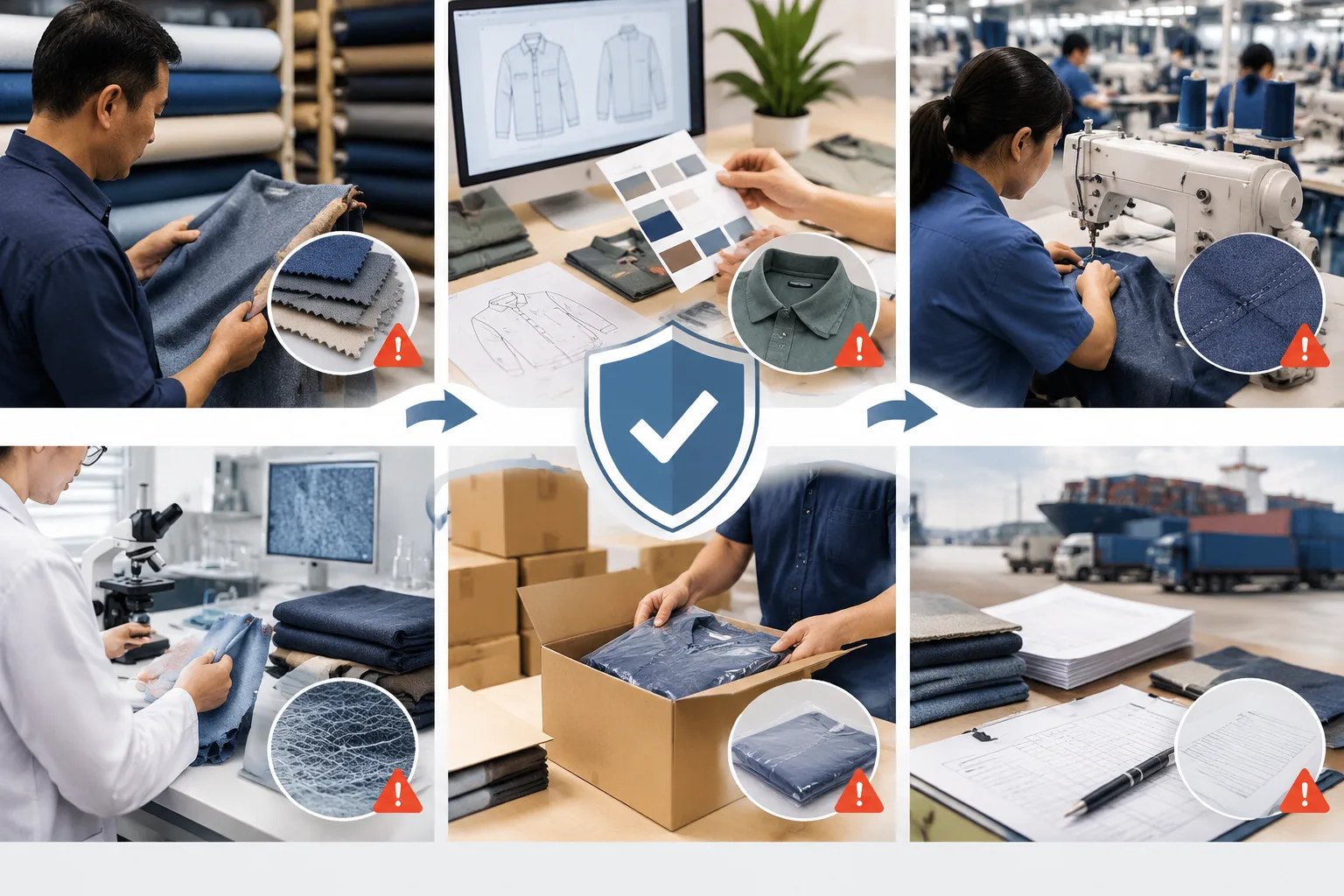
Place checks where risk is introduced: material confirmation, customized sample review, pre-production approval, production monitoring, and final review. Track recurring issues by location, direction, frequency, batch, and conditions of appearance. This helps the team distinguish a repeated production problem from an isolated sample symptom and supports corrective action based on evidence.
When Stock Customization Is Suitable and When to Reconsider It
A stock base is usually easier to evaluate when its construction, materials, fit, and available documentation can be verified against the intended use and destination market. Limited changes may be reasonable when their effects are understood, recorded, and confirmed through the project’s approval process. This is a project judgment, not a universal guarantee that every stock style will remain suitable.
Pause and reconsider the base when the requested changes affect core fit, pattern geometry, material behavior, safety characteristics, required claims, or the product’s distinctive identity. Repeated substitutions, unclear ownership, inconsistent sizing, missing records, and unresolved sample defects are also signals that the base may no longer provide adequate control. Ordering more carefully does not remove an unresolved product requirement.
There are three practical paths: retain the stock style with limited, verifiable changes; revise the stock base and validate the revised product; or begin a more controlled custom-development route. Custom development is not automatically superior, and stock customization is not inherently unsafe. The appropriate choice depends on the change scope, available evidence, consequences of failure, and the team’s actual requirements.
Next step: Document every requested change, request missing ownership and product information, approve a controlled sample, define the evaluation criteria, and confirm destination-market obligations before committing production. Apparel Wiki is an independent educational publication, so use this framework to structure internal review and obtain qualified technical or legal advice where the project requires it.
FAQ
What is stock style customization in apparel?
Stock style customization adapts an existing garment or pattern for a brand by changing selected elements such as labels, colors, fabric, trims, artwork, packaging, or measurements. The risk depends on what changes and whether the resulting product is rechecked.
What are the most common stock style customization risks?
Common risks include unclear specifications, hidden substitutions, inconsistent sizing, altered material behavior, unverified claims, unsuitable labels, unclear ownership rights, and production changes that were not approved.
Does changing the fabric require a new sample or additional testing?
It may. A fabric change can affect fit, appearance, care behavior, dimensional stability, strength, or other project requirements. Review the intended use and specification, then determine whether resampling or an applicable test method is needed.
How can a brand check whether a customized stock garment is consistent across sizes and batches?
Use controlled measurements, approved reference samples, clear measurement points, dated records, and source or batch information. Review the relevant size range and compare production observations with the approved specification rather than relying on one photograph.
Does buying a stock garment include the right to use its pattern, artwork, or photos?
Not automatically. Rights to patterns, artwork, photographs, brand elements, and exclusivity depend on the actual agreement, permissions, and applicable law. Review those terms before using the assets commercially.
When should a brand choose custom garment development instead of modifying a stock style?
Consider a more controlled custom-development route when changes affect core fit, pattern geometry, material behavior, safety characteristics, required claims, or the product’s distinctive identity, or when the stock base cannot be documented and validated adequately.