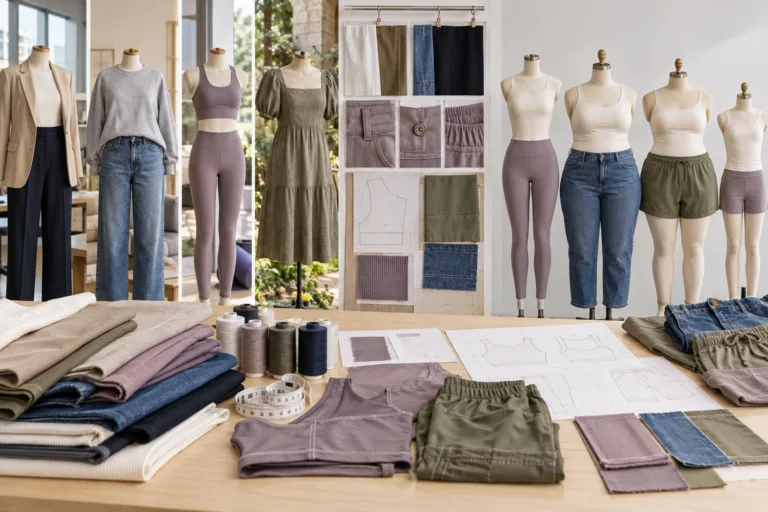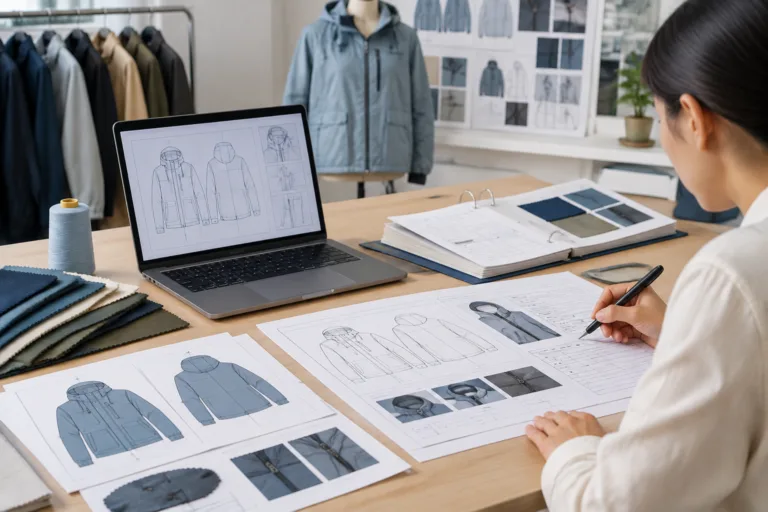
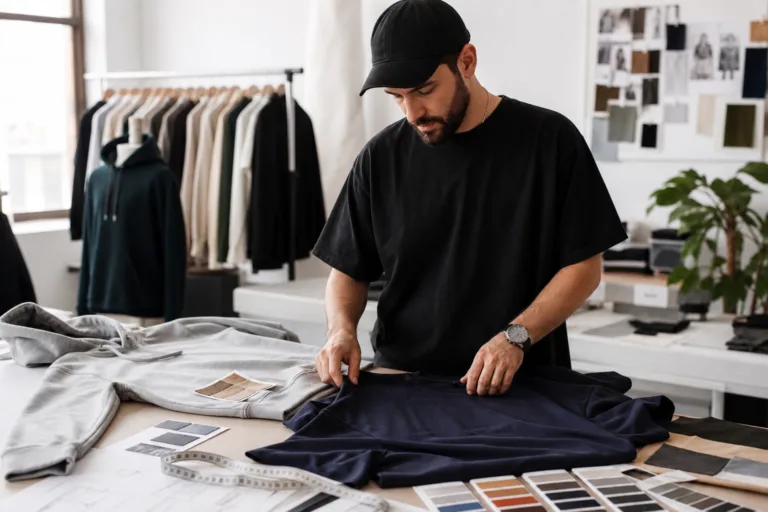
Before you commit to bulk production, you need more than a strong idea and a design file. You need evidence that the product has real demand, that the design looks right on an actual garment, and that the style can move through sampling and production without creating avoidable cost, quality, or timing problems. That is why smart founders test clothing designs before manufacturing instead of treating bulk production as the first real experiment.
If you are still shaping your first collection logic, price range, or product concept, this framework for validating a clothing idea before production helps connect design testing with the bigger decisions around audience fit, product positioning, sourcing expectations, and launch risk. It is especially useful when you are deciding whether a design problem is actually a market problem, a product problem, or a communication problem.
What design validation really means in apparel
In apparel development, validation means checking whether a design should move forward in its current form. It is not only about whether people say they like it. A T-shirt graphic may get strong reactions online but still fail because the fit is off, the print looks cheap on fabric, the price feels too high for the target customer, or the style is too complicated for a first production run.
For small brands, the risk is usually not one big mistake. It is a series of small untested assumptions: the wrong fabric weight, too many colorways, weak size grading, unclear brand positioning, or a design detail that looks good in a mockup but not on-body. Testing helps separate opinion from evidence before money gets locked into bulk fabric, trims, print setup, packaging, and finished inventory.
How to test clothing designs before manufacturing
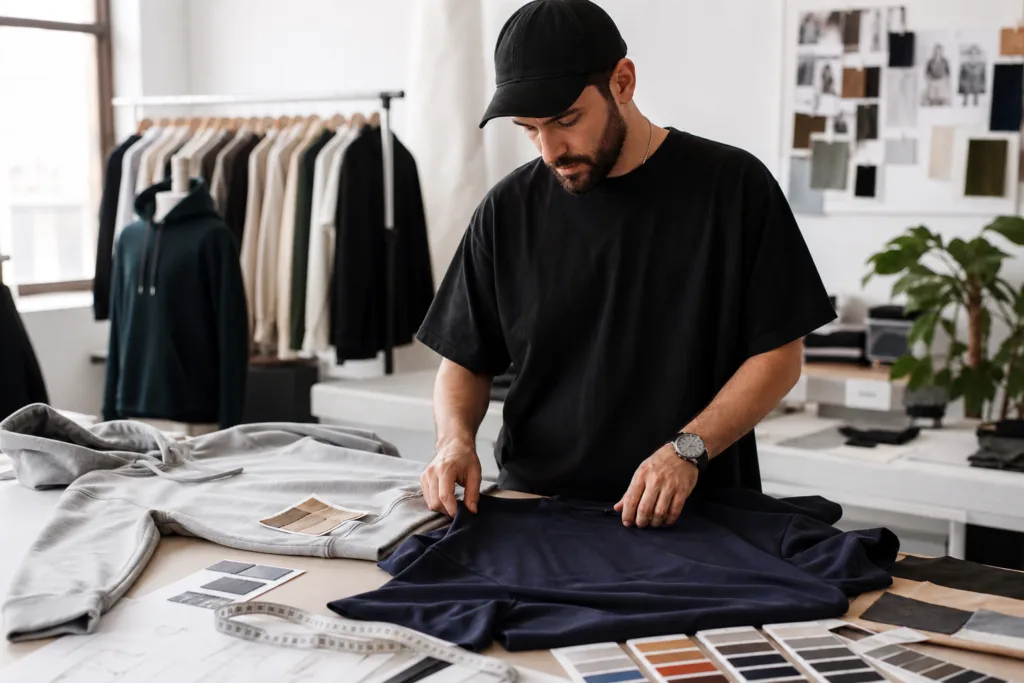
Apparel Wiki explains this topic through three things you should test first: demand, product appeal, and production feasibility. If one of these is weak, scale becomes dangerous. A design can be visually strong but commercially weak. It can be commercially promising but technically unstable. It can also be easy to manufacture but still wrong for your customer.
| What to test | Main question | Useful methods | What it does not prove alone |
|---|---|---|---|
| Demand | Will people actually buy this style? | Polls, waitlists, pre-sales | Whether the garment performs well in production |
| Product appeal | Does the garment look right on the body and fit the brand? | Samples, photo shoots, audience response | Whether customers will complete payment |
| Production feasibility | Can this style be made consistently at an acceptable cost and quality level? | Proto samples, fit samples, small-batch runs | Whether long-term demand is strong enough |
The best testing process combines these signals. That is more reliable than betting everything on one data point, especially social engagement.
Use social media polls to gauge early demand
Polls are useful because they are fast, cheap, and directional. They help you see whether your audience reacts more strongly to one silhouette, colorway, graphic placement, sleeve length, wash effect, or price band. That said, polls are only early-stage demand indicators. They are not the same as purchase behavior.
If you are using polls, ask questions that mirror real product decisions. Instead of asking, “Do you like this design?” ask which of two neck shapes feels more wearable, which colorway looks more premium, which print size feels more balanced, or which price range feels realistic for the fabric and finish. The more specific the choice, the more usable the answer.
From a business perspective, this stage is close to basic market research to confirm demand before production. Founders often over-trust internal taste, but early customer feedback is what helps test whether the offer matches the audience you actually want to sell to.
What to ask in clothing polls
Which colorway would you wear first?
Which graphic placement looks more balanced: center chest, left chest, or back print?
Do you prefer oversized, relaxed, or standard fit for this style?
Which fabric weight sounds right for the use case: lighter everyday wear or heavier premium feel?
What price range feels acceptable for this category?
Would you rather buy this as a single item or part of a matching set?
These questions matter because they connect design with real product variables. In many projects, customers do not reject the concept. They reject the execution details.
How to read poll results without overreading vanity metrics
A poll with high views and low action can still be useful, but it should not be treated as proof of launch readiness. Likes, comments, and saves show attention. They do not show buying intent. If 70 percent of respondents choose one hoodie color, that means you have a clearer development direction, not guaranteed sales.
Look for patterns instead of isolated wins. A strong signal usually means one option keeps winning across multiple questions: same colorway, same fit direction, same styling response, same audience segment. If feedback is scattered, the design may still be underdeveloped or your audience may not be clear enough yet.
Create sample garments and run a sample shoot
Once you have an early direction, the next step is to see the product as a real garment. Mockups hide many problems. A flat digital drawing cannot fully show drape, collar behavior, sleeve balance, hem shape, fabric opacity, print hand feel, or how the proportions change on-body. This is why sample making is one of the most important stages when you test clothing designs before manufacturing.
A practical starting point is learning how to evaluate a prototype sample before you invest in multiple revisions. Founders often rush from first sample to content creation, but the sample should first be checked for pattern balance, sewing quality, fabric suitability, measurement accuracy, and whether the design intent actually comes through in the finished garment.
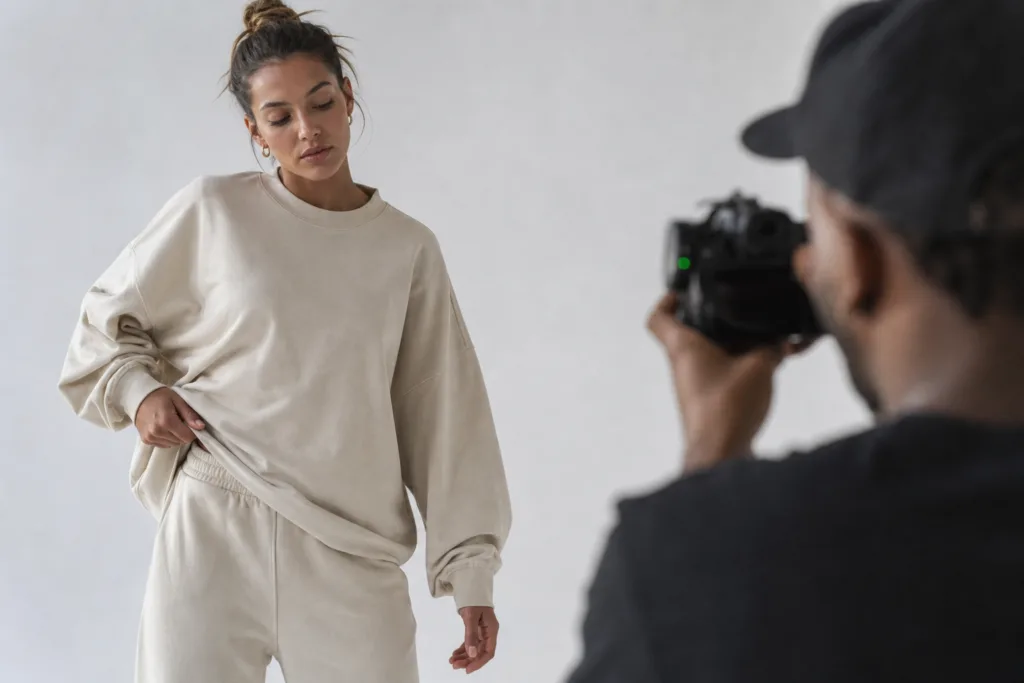
A sample shoot does not need a large budget. The goal is not polished campaign photography. The goal is decision clarity. Good sample images help you judge whether the product looks wearable, whether the silhouette is convincing from multiple angles, and whether the styling matches your brand position.
What to evaluate from sample images
Fit and proportion: shoulder drop, body width, sleeve opening, length, rise, leg shape, and overall balance.
Fabric drape: whether the fabric hangs cleanly or looks stiff, limp, thin, or bulky for the intended style.
Opacity and surface appearance: whether light colors show through, whether slub or texture supports the design, and whether the finish looks clean.
Print or embroidery quality: placement, scale, edge clarity, puckering, hand feel, and whether decoration overwhelms the garment.
Brand fit: whether the garment actually looks like something your customer expects from your label.
This stage is also where review discipline matters. If the sample is close but not ready, document the issues clearly and send structured comments. A useful reference is how to give effective sample feedback, especially for founders who need to turn visual opinions into production-level corrections.
A strong sample response from your audience is helpful, but it still mainly proves visual appeal. People may love the photos and still not buy at the final price if the fabric, fit, or delivery timing does not match expectations.
Launch a pre-sale to test real purchase intent
Pre-sales are where interest becomes measurable commitment. If polls tell you what people prefer and sample shoots tell you what looks convincing, pre-sales tell you whether people are ready to spend money.
This matters because apparel buyers often confuse engagement with intent. Someone may save a post because the design looks good, but purchasing requires trust in fit, value, delivery timing, and brand credibility. Pre-sales are not perfect, but they are much closer to real market validation than comments alone.
Common pre-sale structures for apparel brands
Deposit model: Customers pay a smaller amount first, then complete payment later. This can reduce friction, but it also lowers the strength of the demand signal because the commitment is partial.
Limited drop pre-order: Customers pay in full before production begins. This gives a stronger signal on demand, but it requires clear communication about lead times, returns, size guidance, and production status.
Waitlist-to-order flow: You collect emails or size interest first, then open a short purchase window. This is weaker than payment validation but stronger than casual social feedback.
When you structure a pre-sale, do not only track total order count. Track conversion by size, color, and price point. Many brands discover too late that one design sells well only in one color or that interest is concentrated in sizes they did not plan carefully. That can affect grading, fabric usage, and future reorder logic.
Run a small-batch test before committing to bulk
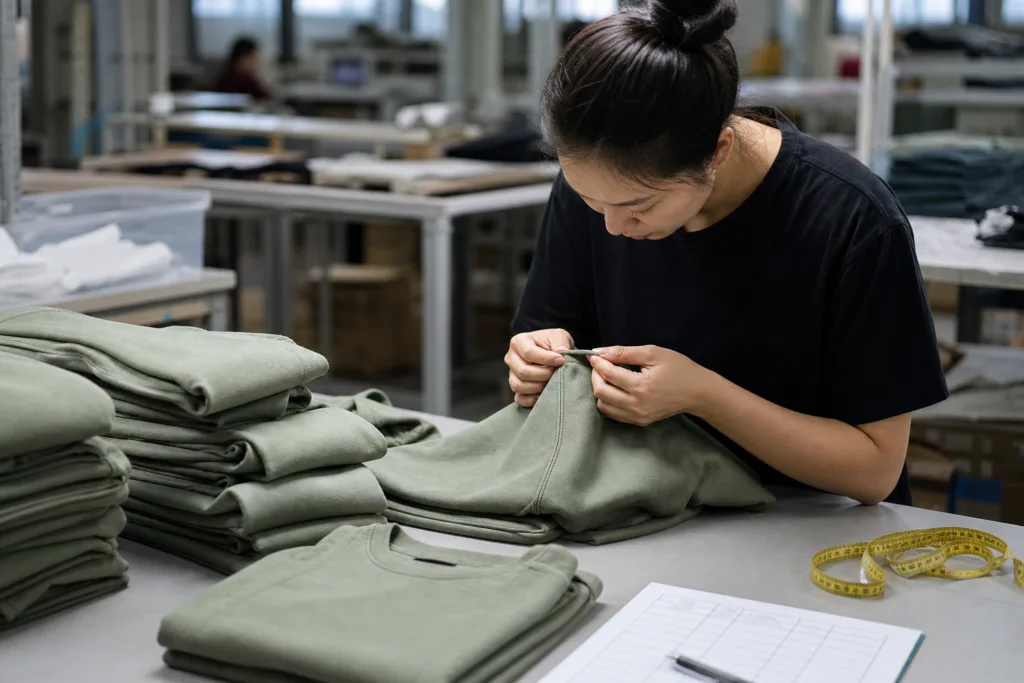
Small-batch testing sits between sampling and full-scale manufacturing. It helps you check whether the style still works when it moves from one or two sample pieces into a controlled production run. This stage is not only about sales. It is also about quality repeatability, packaging flow, defect risk, and fulfillment problems that do not show up in a single sample.
For readers comparing broader development and sourcing decisions, Apparel Wiki is useful as a structured knowledge base because the real challenge is often not one design choice, but how fit, material, MOQ, decoration method, and supplier communication interact once the style moves toward production.
A small run does not need to be large. The right quantity depends on your category, target audience size, and sourcing setup. For a small brand, the first run may be just enough to test size spread, print consistency, and early sell-through. The goal is to learn before your inventory exposure becomes expensive.
Some founders explore how MOQ shapes first-run testing because supplier minimums can force decisions on color count, size range, and order volume earlier than expected. This detail may look small, but it can create problems later if it is not confirmed early.
What to measure in a small batch
Sell-through speed: how quickly units move relative to your audience size and launch channel.

Return reasons: fit issues, color mismatch, fabric expectations, construction defects, or decoration quality.
Defect rate: sewing faults, measurement inconsistency, print defects, labeling mistakes, trimming issues, or packaging errors.
Customer feedback: what people actually say after wear, wash, and first handling.
Fulfillment friction: picking, packing, SKU confusion, missing sizes, or delayed dispatch.
This is also the stage where acceptance criteria should be defined before you inspect the lot. A useful technical reference for small-batch testing and go/no-go decisions is the NIST explanation of lot acceptance sampling. The principle is simple: do not judge readiness from a casual glance at a few pieces. Decide in advance what defect level is acceptable and inspect the batch against that threshold.
Compare methods together instead of trusting one signal
No single test gives the full answer. Social polls are fast but weak on buying intent. Samples and shoots are strong for visual and fit assessment but weak on actual sales confirmation. Pre-sales are stronger for demand but still do not fully test production consistency. Small batches are strong for operational learning but cost more and still may not predict long-term repeat demand.
| Method | Best for | Main risk if used alone |
|---|---|---|
| Social polls | Direction and preference testing | Overvaluing attention instead of intent |
| Sample shoots | Visual appeal and product refinement | Assuming good photos mean strong sales |
| Pre-sales | Testing willingness to pay | Ignoring production complexity or delivery risk |
| Small-batch runs | Operational and quality validation | Learning too late if demand is weak |
The best reading comes from overlap. If one colorway wins in polls, looks stronger in sample photography, converts better in pre-sale, and shows fewer issues in a small run, that is a much more reliable go signal than any one of those indicators on its own.
A simple go or no-go framework
Before bulk manufacturing, score the design against four decision areas: demand strength, margin potential, production complexity, and brand fit.
Demand strength
Did the design earn repeated positive signals across polls, sample response, waitlist or pre-sale activity, and early sales? One good post is not enough. You want consistency.
Margin potential
Can the style absorb fabric cost, trim cost, decoration cost, packaging, shipping, and possible returns while still landing at a workable price? A design that only works at a price your audience resists is not ready.
Production complexity
Does the style require unstable fabric behavior, difficult print placement, complex grading, multiple panels, or trims that increase lead time and defect risk? For early-stage brands, simple consistency often beats ambitious construction.
Brand fit
Even if a design gets attention, ask whether it supports the identity you are trying to build. In apparel sourcing practice, the wrong hit product can still confuse the brand if it pulls you away from your core direction.
A practical decision rule is this: move to bulk only when at least three of the four areas are clearly strong and the fourth is manageable with a defined fix. If two or more areas are weak, revise first.
Red flags that mean you should revise the design
Strong social interest but weak pre-sale conversion
Good photos but repeated fit complaints in wear testing
Healthy demand but margins collapse once actual production costs are included
One sample looks good, but consistency drops in a small run
Excessive returns tied to sizing, fabric feel, or decoration quality
Customers like the idea but are confused about use case, fit, or price justification
These are not reasons to quit the product category. They are signs that the current version is not yet production-ready.
Common mistakes when testing clothing designs
The first common mistake is testing too many variables at once. If you change fabric, fit, print scale, and price at the same time, you will not know what caused the result. The second mistake is asking audiences broad opinion questions instead of specific purchase-related questions. The third is skipping sample review discipline and trying to decide everything from digital art.
Another common problem is treating a small batch like a mini bulk order instead of a learning tool. If you are not measuring returns, defect patterns, size movement, and customer comments, you are paying for inventory without getting the full value of the test. Some founders also scale too fast after one good signal and ignore weak evidence elsewhere.
Finally, many brands forget that communication quality matters. If your size chart is vague, your product page under-explains fabric weight, or your lead time message is unclear, weak conversion may not mean the design is bad. It may mean the offer was not presented clearly enough.
Recommended testing workflow for new brands
A practical sequence looks like this:
Start with 2 to 4 narrowed design options, not a large collection.
Run targeted polls to test color, fit direction, and graphic preference.
Develop a real sample and review fit, drape, measurements, and decoration.
Shoot the sample in clean, useful images that show front, back, and detail views.
Open a pre-sale or waitlist to measure purchase intent.
If signals stay strong, run a small batch to test consistency and operations.
Use the go or no-go framework before placing a larger order.
This workflow is slower than guessing, but usually cheaper than fixing avoidable inventory mistakes later.
Conclusion
To test clothing designs before manufacturing, you need to treat validation as a layered process. Social polls help you compare options. Samples and shoots show whether the design works as a real garment. Pre-sales test willingness to pay. Small-batch runs expose quality and operational issues before inventory risk grows. The point is not to find one perfect signal. The point is to collect enough reliable evidence to decide whether the design deserves bulk production, needs revision, or should be dropped.
FAQs
How much testing is enough before manufacturing?
Enough testing means you have evidence on demand, visual appeal, and production feasibility, not just one of them. For many small brands, that means at minimum a real sample review, some direct audience feedback, and either a pre-sale or a limited first run before committing to deeper inventory.
Can social media engagement replace pre-sales or small-batch testing?
No. Engagement is useful for direction, but it is a weak substitute for paid intent or production learning. A post can perform well because the image is attractive, while the actual product still fails on price, fit, fabric expectations, or manufacturing consistency.
What metrics matter most when deciding whether to go into bulk production?
The most useful metrics are pre-sale conversion, size and color demand concentration, projected margin, defect rate in samples or small runs, return reasons, and whether the style can be produced consistently within your target lead time. Looking at these together gives a more reliable decision than any single metric.
Should I test every colorway and size before bulk production?
No, not always. It is usually smarter to test the highest-confidence colorways and the most commercially important size spread first. If early results are mixed, narrow the assortment instead of funding a wide range that has not been validated.
How many sample rounds are normal before a pre-sale?
There is no fixed number, but one round is often not enough unless the style is simple and the first sample is very close. Most teams should keep revising until fit, measurements, construction, and decoration are stable enough that the product page will represent what buyers will actually receive.
When should I cancel a design instead of trying to fix it?
Cancel or pause the design when weak demand combines with poor margins, repeated fit or quality issues, or a style direction that does not support your brand. If the product needs too many changes at once, the safer decision is often to stop, simplify, and test a clearer version later.