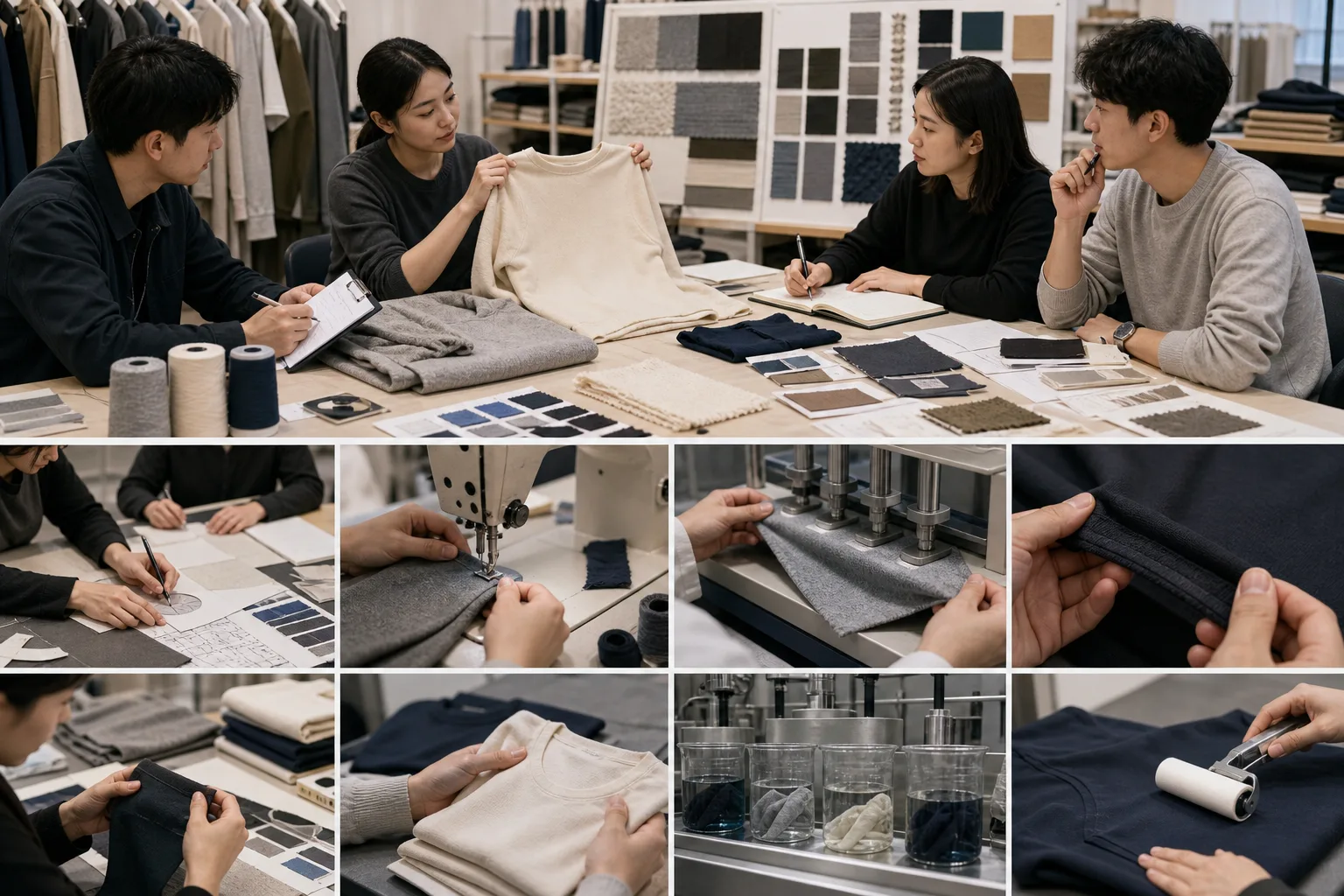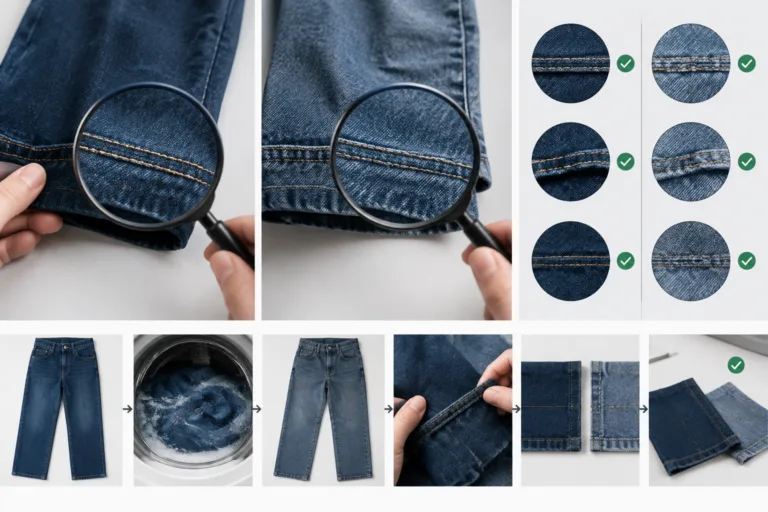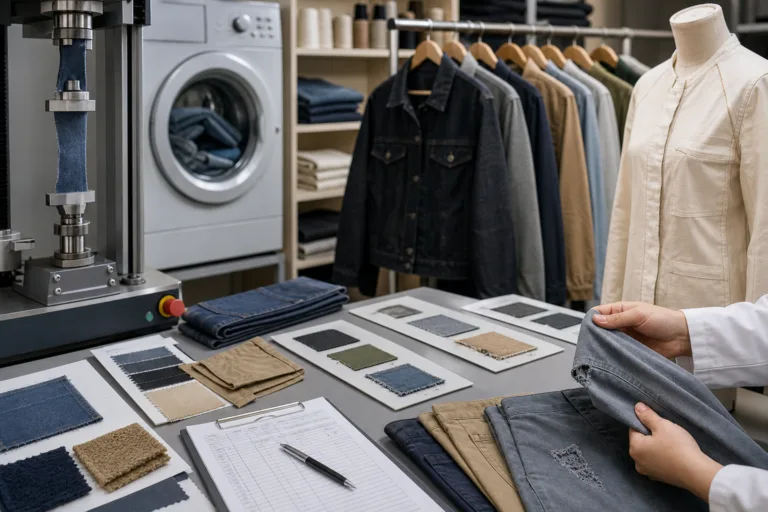
Clothing durability expectations are what people believe a garment should withstand, retain, or continue to do during its intended use and care. Useful clothing durability expectations survey questions make those beliefs specific to a garment and situation instead of asking whether someone simply wants “good quality.” This guide is independent editorial guidance from Apparel Wiki, an educational publication, not a manufacturer, factory, testing laboratory, or certification body.
What Should Clothing Durability Expectations Questions Measure?
Durability research asks what a wearer expects to remain usable over time, and what they count as a failure. That can mean continued function, intact construction, or an acceptable appearance after the garment’s expected wear and care. It does not automatically include comfort, fit, style, value, repairability, or sustainability. Measure those separately unless comparing them with durability is part of the research question.
Keep four kinds of evidence distinct. A stated preference describes what someone says they want; a reported experience describes what they remember happening; observed behavior records what they do, such as wearing or repairing an item; and transaction behavior includes actions such as purchasing, returning, or replacing it. Each can inform a different decision. A respondent’s expectation or account is self-reported evidence, not a laboratory result or verified product-performance finding.
For each question, identify the garment, intended use, and relevant time period or event. Ask what the respondent expected to retain, what they noticed changing or failing, and what consequence it had for them. There is no universal lifespan or wash count that defines durability for every garment. Expectations can vary with the item and its intended use, and they are not, by themselves, legal requirements or technical thresholds.
How Do You Turn “Durable” Into Specific Wear Situations?
Replace “How durable should clothing be?” with a prompt tied to something the respondent can picture. Depending on the garment, relevant situations might include repeated wear, laundering, stretching, abrasion, a seam opening, a fastener becoming unusable, color change, pilling, shape change, or fabric damage. These are possible topics, not a checklist of defects every garment must resist.
Start with context: “Think about the last pair of trousers you wore regularly. Where and how often did you wear them, and how did you care for them?” Workwear, activewear, everyday basics, occasionwear, and children’s clothing can involve different activities and priorities. Climate, setting, frequency of use, and maintenance routine can also help explain an answer. Avoid assuming that a demographic group shares one definition of durability.
Event-based questions can be easier to answer than broad hypotheticals: “Tell me about the last garment you stopped wearing because something changed or no longer worked as expected.” Follow by asking what changed, when the respondent noticed it, and what they did next. Ask about desired outcomes separately from perceived failure: retaining fit, appearance, function, and structural integrity are not interchangeable.
Durability may compete with other preferences. A person might accept a shorter period of use in exchange for lower price, lighter weight, softness, or easier care, or might not see such a trade-off. Ask neutrally: “When choosing this type of garment, how do you weigh durability against price, weight, softness, and care?” Let respondents describe priorities rather than suggesting that maximum durability is always best.
How Should You Write Survey Questions About Durability Expectations?
First decide what the survey should help the team do: prioritize product features, improve care information, refine a product description, or identify expectations that are not being met. Then name a reference garment or purchase. “What do you expect from clothing?” is broad; “Before buying your most recent everyday shirt, what did you expect it to remain suitable for?” gives the answer a clearer frame.
Ask one thing at a time. Do not combine durability, comfort, sustainability, and value in one item, because a single answer will not show which consideration shaped it. Choose a response format to match the question: a rating for importance or satisfaction, multiple selections for problems experienced, a ranking for trade-offs, or open text for issues the options did not anticipate. Include “not applicable” or “do not know” when respondents may lack the experience to answer.
Separate expectations from experience. For example, ask what someone expected before purchase, then ask what they noticed after wearing and caring for the garment. A survey response still reflects the respondent’s interpretation and recall; it does not directly measure garment performance. Keep language neutral and avoid implying a preferred level of durability.
A short example set might be:
- “What type of garment are you thinking about?”
- “Before purchase, what did you expect it to remain suitable for?”
- “After wearing and caring for it, what changes, if any, did you notice?”
- “Did any change affect how often you wore it, repaired it, returned it, or replaced it?”
This is an adaptable example, not a validated questionnaire. Adjust the garment, wording, reference period, and response choices to the research decision and respondent group.
How Are Interview Questions Different From Survey Questions?
A survey usually asks people comparable questions with planned response options. An interview can begin with an open prompt and use follow-up questions to understand what the respondent means. Texas A&M University’s guide to creating interview and survey questions and Purdue University’s survey and interview question guidance provide general methodological context; they are not apparel testing sources.
Start with a recent event: “Tell me about a garment you bought recently and how it held up in use.” Then probe consistently but neutrally: “What happened?”, “When did you first notice it?”, “What did you expect instead?”, and “What did you do afterward?” Ask what care instructions the respondent saw, what care they followed, and whether the product information prepared them for use. Let respondents describe a problem in their own words before introducing technical terms.
After establishing the garment situation, ask how durability compared with other purchase priorities. You can also ask what product information, design change, service, or guarantee might have changed the experience. Treat such answers as suggestions, not proof of demand. Interviews can illuminate reasoning and lived experience, but they do not establish population percentages. A respondent’s belief about why a garment failed is also not a technically verified cause.
How Do You Separate Expectations From Actual Clothing Behavior?
A strong clothing durability study separates what people say they want from what they have experienced and what they actually do. A respondent may describe durability as very important, yet choose a softer, lighter, less expensive, or easier-care garment in a real purchase. That answer is still useful, but it represents a stated preference rather than verified buying behavior or product performance.
Organize the research around the question each evidence type can answer. Self-reported expectations can show which qualities respondents believe matter before purchase. Reported garment experiences can reveal perceived problems, consequences, and unmet expectations. Observed wear or care behavior can show what happens in practice. Transaction, return, repair, replacement, or disposal records can describe actions, but they do not automatically explain the reasons behind them.
| Evidence type | Useful question | Important boundary |
|---|---|---|
| Stated expectation | What should this garment retain or withstand? | It is not proof of a future purchase or performance. |
| Reported experience | What happened during wear and care? | Recall and personal interpretation may affect the account. |
| Observed behavior | How was the garment worn, washed, repaired, or stored? | Observation covers a particular setting and period. |
| Transaction behavior | Was the item bought, returned, replaced, or repurchased? | The action may not identify the cause without additional research. |
Record how participants were recruited, when the research took place, which garment categories were discussed, and which groups were absent. Current customers may not represent nonbuyers, former customers, or people who returned an item. A small convenience sample can help identify themes, but it should not be presented as a population percentage.
Keep related signals separate. Willingness to buy, willingness to pay, wear frequency, repair, return, disposal, and repeat purchase are different forms of evidence. A hypothetical choice between durability and another attribute can be useful when the decision is central to the study, but state the assumptions and avoid treating the answer as a confirmed market action.
How Should Teams Analyze and Act on Durability Feedback?
Begin by grouping responses according to garment context, expected use, reported problem, consequence, and requested improvement. For example, comments about a shirt losing shape should remain distinguishable from comments about color change, uncomfortable care requirements, or a fastener becoming difficult to use. These may all be described as quality concerns, but they suggest different follow-up questions.
Compare responses by relevant use situations rather than relying on broad demographic assumptions alone. Workwear, activewear, everyday basics, occasionwear, and children’s clothing may create different expectations because the activities, care routines, and consequences differ. Age, identity, or lifestyle can be descriptive variables, but they should not be used as shortcuts for assuming what every person in a group values.
Next, translate recurring feedback into a specific action. A pattern may support clearer care information, a change to product descriptions, a construction review, a prototype comparison, or a follow-up wear study. Define what will change and what result would count as useful before presenting the action as a recommendation. A consumer comment can identify what deserves investigation; it cannot by itself verify a technical cause or prove that a proposed design change will improve sales, retention, or measured durability.
Keep an analysis record that includes contradictory answers, missing responses, uncertain interpretations, and issues requiring technical validation. If several respondents attribute damage to a particular material or construction detail, preserve that explanation as a respondent perception until an appropriate technical review supports it. This distinction keeps consumer insight connected to product development without making Apparel Wiki, a research guide, or the research team appear to be a testing laboratory or manufacturer.
How Can You Pilot and Refine a Durability Question Set?
Before launch, review every question against four basic checks: does it ask about one concept, identify a clear garment or reference period, use language the target respondent understands, and provide a response option that fits the possible answer? A question that combines fit retention and color change may produce an answer that cannot be interpreted. A question about “your clothing” may also be too broad if respondents are thinking about unrelated garment categories.
Test the draft with people similar to the intended respondents. Ask them to explain what they thought each question meant, what garment they had in mind, and how they selected an answer. This can reveal unfamiliar terms, hidden assumptions, confusing time frames, or a mismatch between the research objective and the question. It can also show whether respondents distinguish an expectation, a past experience, a current care practice, and a hypothetical choice.
Review the burden of the full instrument as well. Remove repeated concepts, add a not-applicable or do-not-know option where appropriate, and check whether any wording pressures people to describe their care or purchasing behavior in a socially desirable way. For interviews, examine whether probes are neutral and consistent while still allowing unexpected failure descriptions to emerge.
Revise the questions after the pilot and document what changed and why. Piloting improves clarity for the planned audience; it does not make the instrument universally valid. The final checklist should connect each question to a defined decision, such as improving product information, prioritizing a design investigation, or deciding whether further wear research is needed.
Next step: Build a small draft question set around one garment category and one research decision. Separate expectation, experience, behavior, and transaction questions, then pilot the wording before expanding the study. Use the results to identify what needs technical verification and what can be addressed through clearer product or care information.
What is a good first question for a clothing durability survey?
Start with a specific reference, such as: “Thinking about a garment you bought recently, what did you expect it to retain or withstand during normal use and care?” This is more answerable than asking what “durable clothing” means in general.
How can a survey measure clothing durability expectations without using technical terms?
Describe observable outcomes such as keeping its shape, remaining usable, looking acceptable, or avoiding damage during intended use. Let respondents describe problems in their own words before introducing specialized defect terms.
What is the difference between clothing durability survey questions and interview questions?
Survey questions are usually standardized so answers can be compared across respondents. Interview questions are more open and use neutral follow-up prompts to explore context, reasoning, and consequences.
Should clothing durability research ask about expected lifespan?
It can, when a time frame is important to the research decision, but lifespan should not be treated as a universal clothing standard. Specify the garment, intended use, care context, and whether the answer describes an expectation or an observed experience.
How can apparel teams avoid confusing durability preferences with actual buying behavior?
Ask separate questions about stated importance, past experience, observed use, purchase, return, repair, replacement, and disposal. Analyze each signal according to what it can actually show.
How many questions should a clothing durability questionnaire include?
Use enough questions to cover the decision, garment context, expectations, experience, and relevant behavior without adding repetitive items. Pilot the complete questionnaire to identify unnecessary burden and missing response options.