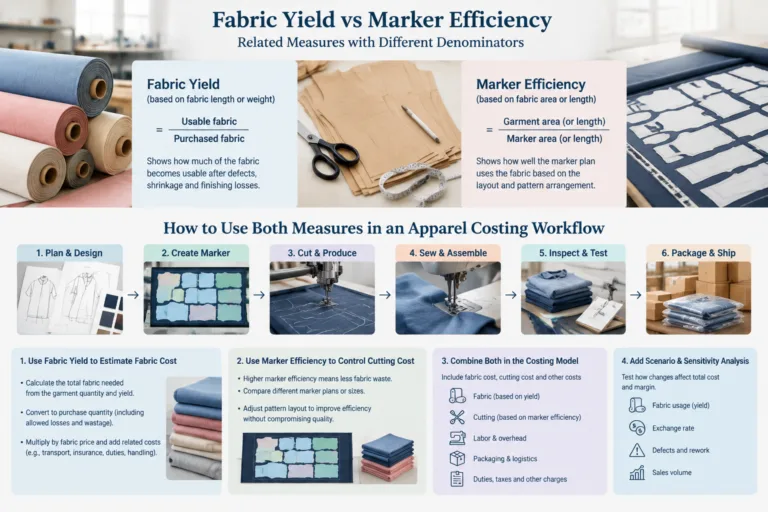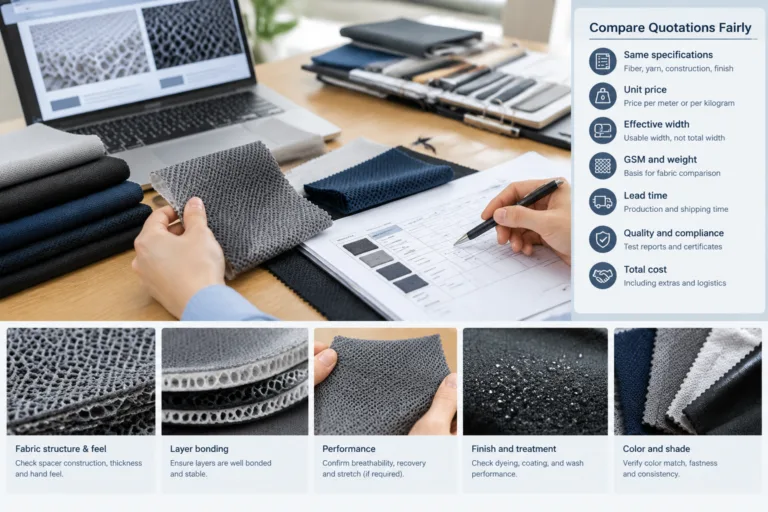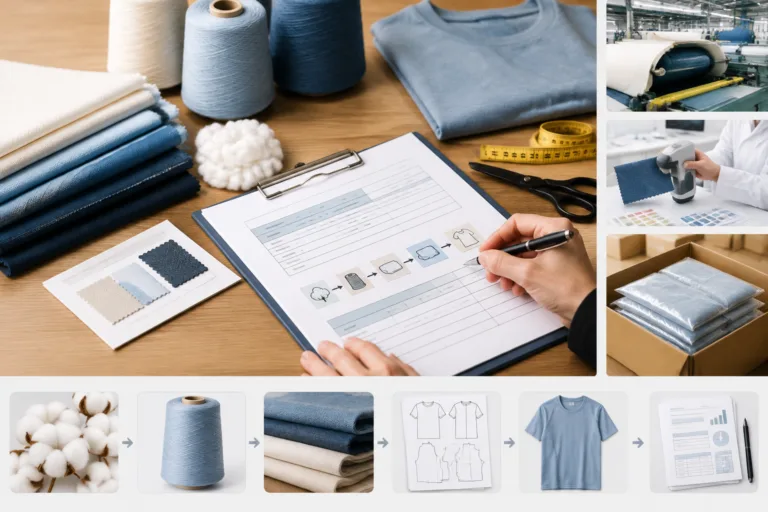
Size confidence is a shopper’s belief that a selected apparel size will provide an acceptable fit for its intended use, based on available information and prior experience. The main size confidence drivers may include the shopper’s previous fit experience, the garment’s design and fabric, the brand’s sizing system, the clarity of product information, and the context in which the purchase is being considered. This editorial framing helps explain apparel size selection; it is not a universal industry standard. Apparel Wiki is an independent educational publication, and its Sponsor information does not change the independence of this editorial approach.
Confidence is not the same as size preference, purchase intention, an actual purchase, wear frequency, fit satisfaction, or return behavior. A shopper may feel confident choosing a size but abandon the purchase, or purchase despite uncertainty and later report a fit problem. Research should therefore treat confidence as one stage in a broader decision process rather than as proof that a garment fits well or that a commercial outcome will follow.
What Are Size Confidence Drivers?
In practical research, size confidence describes how certain a shopper feels that a chosen size will meet the fit requirements of a particular garment and use case. “Acceptable fit” is deliberately contextual. A close-fitting shirt, a layered jacket, work trousers, and an occasion garment may each involve different expectations for movement, coverage, ease, appearance, and comfort.
The question is not simply whether a person knows a nominal size. It is whether the available evidence allows that person to make a decision they consider sufficiently reliable. That evidence might include previous experience with the brand, a size chart, garment measurements, model information, customer comments, or an understanding of how the garment is expected to fit.
Researchers can organize the factors affecting size confidence into five broad areas:
- Shopper factors: prior fit experiences, body-measurement uncertainty, preferences, and expectations.
- Garment factors: silhouette, ease, stretch, construction, intended movement, and layering requirements.
- Size-system factors: the meaning of labels such as S, M, L, or regional numeric codes within a particular brand and product range.
- Information factors: measurement definitions, fit notes, images, model details, and guidance about how the garment is intended to be worn.
- Context factors: purchase channel, budget, occasion, climate, maintenance needs, perceived return risk, and time available for comparison.
These categories are useful hypotheses, not a ranking of universal drivers. Their importance can change by product, audience, channel, and situation. Apparel research should also keep a shopper’s stated confidence separate from observed behavior. A confidence rating can show a perception; it cannot, by itself, establish actual fit, payment behavior, long-term satisfaction, or the reason for a return.
Which Factors Shape Confidence When Shoppers Choose a Size?
Prior fit experience is often a natural starting point for investigation. A shopper may rely on familiarity with a brand, a previous garment, or a known fit preference. That experience can increase confidence, but it may also create uncertainty when the new product has a different silhouette, fabric, construction, or intended use. Brand familiarity and product familiarity should therefore be recorded as separate variables.
Body-measurement uncertainty is another possible driver. Shoppers may not have recent measurements, may measure different body points inconsistently, or may be unsure how a body measurement relates to a garment’s finished dimensions. Research should examine the decision difficulty directly rather than assuming that a demographic category explains it. People within the same age group, identity group, or geographic market can have different fit histories, priorities, and information needs.
Product design changes the question being asked. Ease and silhouette affect how closely the garment is expected to follow the body. Stretch may change how movement or comfort is judged, but its effect depends on the product and the wearer’s expectations. A structured garment may prompt concern about restriction or appearance, while a relaxed garment may shift attention toward proportion, coverage, or layering. These should be investigated as product-specific possibilities rather than generalized across all fabrics and categories.
Intended activity also matters. For work, shoppers may prioritize movement, durability, maintenance, or compatibility with other layers. For leisure, comfort and ease may be interpreted differently. An occasion garment may place greater emphasis on appearance, coverage, or confidence in a particular setting. Budget and perceived return risk can influence how much uncertainty a shopper is willing to accept, but they do not have a fixed meaning for every audience.
Clearer information may increase confidence when it answers the shopper’s actual decision question. More information is not automatically better: conflicting measurements, unexplained terminology, or irrelevant detail can make selection harder. A useful research question is therefore not “How much information do shoppers want?” but “Which information helps this audience compare this product under this use condition?”
How Should You Research Size Confidence?
Begin by defining the decision the research is meant to support. The possible intervention might involve a size chart, garment measurements, model presentation, fit notes, a recommendation tool, customer service, or the product itself. Without that decision, research can collect broad opinions that are difficult to translate into action.
Use complementary methods because each evidence source answers a different question. Interviews and open-ended questions can reveal how shoppers reason about fit, uncertainty, and trade-offs. Observation can show what people do while comparing sizes or reading product information. Purchase data shows selected outcomes, while wear or fit feedback can add post-purchase context. Return descriptions may identify recurring problem patterns, but they do not always explain the underlying cause.
| Evidence source | Useful question | What it cannot prove alone |
|---|---|---|
| Interview or open-ended response | What reasoning and concerns did the shopper describe? | That the stated intention became a purchase or successful fit |
| Shopping observation | What information or actions shaped the selection process? | Why the shopper acted that way in every context |
| Purchase or exchange record | What size or outcome was selected? | The shopper’s complete motivation or fit experience |
| Fit, wear, or return feedback | What problem or experience was reported after purchase? | That one cause explains every similar outcome |
Record the product, market, date, channel, sample source, and relevant size information. These details make comparisons more responsible and help distinguish a product issue from a channel or audience issue. A mixed-method project does not necessarily need to be large or expensive; it needs a clear question and evidence that matches the question.
How Do Size Charts, Measurements, and Fit Information Affect Confidence?
Size information helps shoppers translate knowledge about their bodies and preferences into a product decision. The first distinction is between a body measurement and a garment measurement. A body chest measurement describes the person. A flat half-chest garment measurement describes a measured part of the finished garment. They are different objects and should not be presented as interchangeable.
Measurement information should identify the measurement type, unit, measurement point, and whether the garment was measured relaxed or under tension. A garment measurement also reflects design and movement allowance. For that reason, it should not be presented as the directly suitable body measurement without explaining how the product is intended to fit.
These distinctions create useful shopper-facing research questions: Can people identify what has been measured? Do they understand whether the figure describes the body or the garment? Can they compare the measurement with a similar garment they already own? Do the instructions help them judge the intended wearing condition, including movement and layering?
Labels such as S, M, and L, as well as regional numeric codes, are references that depend on the brand, target audience, and product design. They do not form a precise global conversion system. A generic international size-conversion chart may provide a starting reference, but it cannot predict size confidence or fit for every brand and garment category.
For research and product decisions, compare measured garment dimensions with intended use and fit expectations instead of relying only on a nominal label. Treat clearer measurement and fit information as a testable intervention. It may address one source of uncertainty, but it does not automatically resolve differences in body shape, preference, product variation, or context.
How Do Context, Product Design, and Audience Coverage Change the Findings?
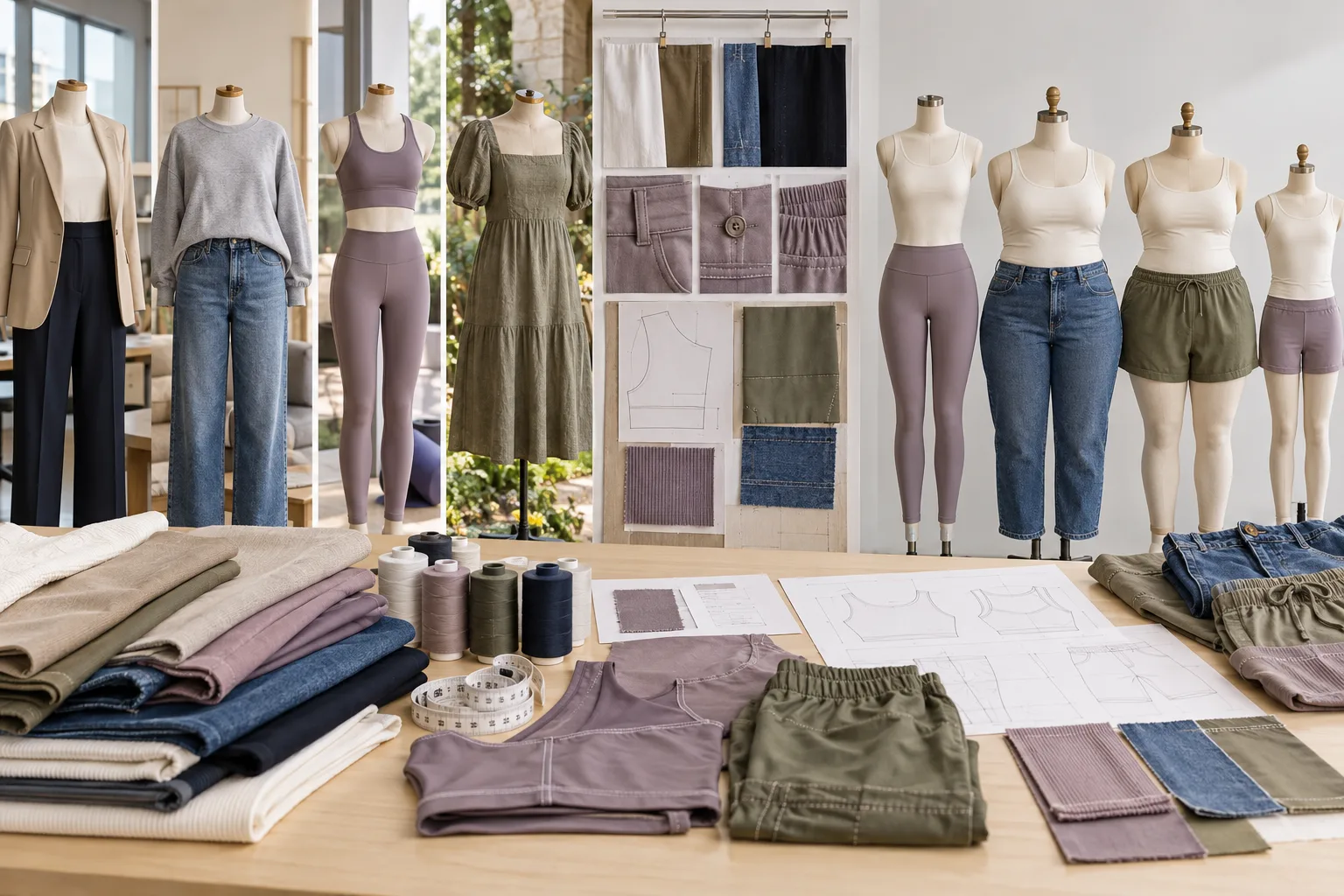
Size confidence is contextual. The same shopper may feel reasonably certain about a relaxed knit top but uncertain about a structured jacket, close-fitting trousers, or an occasion garment. Stretch, silhouette, ease, construction, and the expected level of precision all change the size-selection decision. A finding from one product category should therefore be treated as evidence about that product and situation, not as a universal description of apparel sizing behavior.
Research should ask what the shopper will do in the garment. Movement, sitting, reaching, layering, climate, maintenance, and the need for coverage can matter as much as the nominal size label. Comfort, durability, and value also acquire different meanings across work, leisure, active, travel, and occasion contexts. Scenario-based questions are more informative than asking only whether a garment seems “comfortable,” “flattering,” or “true to size.”
Product context should be recorded alongside shopper information. Useful fields include garment type, fit intention, fabric behavior, product range, sales channel, market, research date, and the conditions shown in product presentation. Ask what will be worn underneath, whether the item is expected to accommodate movement, and what degree of looseness or closeness is acceptable. These details help separate a product issue from an information issue or a preference difference.
Audience coverage is equally important. Current customers may not represent people who abandoned a purchase, returned an item, never reached the product page, or could not find a suitable size. Recruitment method, sample composition, timing, and omitted groups should be documented before findings are interpreted. Segmentation can reveal different needs, but it should explain variation rather than encourage assumptions about everyone in an age, identity, geographic, or body-size group.
How Can Size-Confidence Findings Be Turned Into Testable Improvements?
A useful finding should lead to a specific decision. If shoppers cannot tell what a measurement describes, revise the label or measurement diagram. If they cannot judge the intended ease, add clear fit notes and relevant garment details. If the product itself creates uncertainty, the appropriate response may involve pattern, construction, grading, or fabric decisions rather than another paragraph of guidance. Return and exchange information may address perceived risk, but it does not replace accurate product information.
Before making a change, write down the expected experience or behavior in neutral terms. The expectation might be greater confidence during size selection, fewer fit-related questions, clearer comparison with a garment already owned, or better understanding of movement allowance. Do not assume that a change will produce a particular sales result. The purpose of the expectation is to make the intervention observable and to clarify what evidence would support, weaken, or complicate the hypothesis.
Where practical, compare the revised experience with an appropriate earlier version or comparison condition. Review stated confidence alongside actions and later feedback: selected size, purchase behavior, exchanges, return descriptions, complaints, and repeat-wear comments. Each signal answers a different question. A shopper may report high confidence but return the item for a reason unrelated to sizing, while a return may identify a pattern without explaining whether the cause was measurement confusion, fabric behavior, preference, or product variation.
A simple decision checklist keeps the interpretation bounded: what changed, for whom, on which product, in which channel, and during which period? Then specify what would count as improvement and what alternative explanations remain possible. Apparel Wiki offers an educational perspective on this process; it is not a manufacturer, laboratory, certifier, or fit-testing service. Feedback should generate hypotheses that brands, designers, product developers, and quality teams validate in their own relevant setting.

What Are the Limits of Size-Confidence Research?
Every method captures only part of the decision. A survey can show perceived confidence, reported uncertainty, or remembered reasoning, but it cannot by itself establish actual fit, payment behavior, or long-term satisfaction. Interviews can reveal language and trade-offs, yet participants may forget details or describe what they believe is socially acceptable. Observed shopping behavior shows actions, but it may not reveal the private reason behind them.
Return data can identify a recurring problem pattern, but a return description may be brief, incomplete, or influenced by several issues at once. Product variation, inconsistent measuring practices, changing use conditions, and differences between photographed and received garments can also affect interpretation. These limitations do not make the evidence useless. They determine how narrowly the conclusion should be written and what additional evidence is needed.
Document the product scope, audience, channel, recruitment method, timing, measurement definitions, missing groups, and important assumptions. Keep self-reported confidence separate from purchase, wear, satisfaction, and return outcomes. Avoid converting a limited sample into a population claim, and avoid treating a relationship between a change and an outcome as proof of causation without a suitable comparison or follow-up design.
The practical next step is a repeatable sequence: define the decision, map the likely size confidence drivers, collect complementary evidence, test one focused improvement, and reassess by product, audience, and use case. This approach makes uncertainty visible while helping research produce decisions that can be examined rather than conclusions that merely sound plausible.
What does size confidence mean in apparel shopping?
Size confidence is a shopper’s belief that the selected size will provide an acceptable fit for the intended use. It is not the same as actual fit, purchase, wear frequency, satisfaction, or return behavior.
What are the main size confidence drivers?
Common research categories include prior fit experience, brand familiarity, body-measurement uncertainty, garment design, fabric stretch, intended activity, coverage needs, budget, return risk, and the clarity of available fit information. Their importance can vary by product and shopper.
Should researchers use surveys or actual purchase and return data to study size confidence?
Use them for different questions. Surveys and interviews can describe perceived confidence and reasoning, while purchase, exchange, wear, and return evidence describes selected outcomes. Combining sources is more informative than treating one measure as a complete explanation.
Why should body measurements and garment measurements be kept separate?
They describe different objects. A body measurement describes the person, while a garment measurement describes the finished item and may include design and movement allowance. Mixing them can make size guidance appear more precise than it is.
Can one international size-conversion chart predict size confidence for every brand?
No. S, M, L, and regional numeric labels depend on brand, target audience, product design, and intended fit. A conversion chart may offer a starting reference, but measured dimensions and wearing conditions provide more relevant research evidence.
How can a brand test whether clearer fit information improves size confidence?
Define the information change and expected effect, compare it with an appropriate alternative where feasible, and review stated confidence with size selection, questions, exchanges, returns, and later fit feedback. Keep the conclusion specific to the studied product, audience, and channel.