Sponsor does not control this comparison; Apparel Wiki is an independent educational publication. In air jet yarn vs ring spun yarn, the central difference is how fibers bind together. Ring spinning inserts continuous twist through the yarn, while air jet spinning uses airflow to wrap some fibers around a more parallel core. These arrangements can influence a knit surface, but fiber type, yarn construction, fabric structure, and finishing also shape the result.
Both spinning methods can use the same fiber types, so the comparison is about yarn construction rather than a required difference in raw material. The process name alone cannot predict every fabric outcome: it offers a starting point for understanding the yarn, not a substitute for evaluating the intended knit.
Air Jet Yarn and Ring Spun Yarn at a Glance
Ring spun yarn is made by drafting fibers and inserting twist as the strand is formed. The fibers are drawn into a bundle and bound by twist running through the yarn body. Most fibers generally follow the yarn axis, although their exact orientation and degree of integration vary with the fiber and yarn construction.
Air jet yarn is formed when airflow acts on a drafted fiber bundle. Some fibers wrap around the outside of a more nearly parallel core, helping hold the bundle together. The yarn’s cohesion therefore comes largely from surface wrapping rather than continuous twist through the entire body. Commercial terminology can vary, and air jet and vortex labels may be used for related approaches; they should not be assumed to identify an identical process in every supplier’s catalog.
The distinction is not the same as a fiber distinction. Cotton, polyester, and blends may be used in different spinning systems when the fiber characteristics and process are suitable. A generic process name describes a way of making yarn; a brand or commercial designation is a separate naming category and may cover a particular product or technology. Ask the supplier which process a named yarn actually uses and what the designation covers.
How Ring Spinning Arranges Fibers Inside the Yarn
In ring spinning, fibers leave the drafting system as a thin, controlled strand. The spindle rotates the yarn while the traveler moves around the ring, inserting twist as the yarn is taken up. That twist binds fibers together along the yarn rather than relying mainly on an outer wrapping layer.
Many fibers lie roughly along the yarn axis, with twist pressing them into contact with neighboring fibers. Friction between fibers helps the strand hold together under tension. This structure is commonly described as compact, but actual compactness and strength depend on fiber properties, yarn count, twist level, and processing. The spinning method alone does not establish a strength value.
Ring spun yarn is often associated with a softer hand and a more integrated fiber surface than some alternative yarn constructions. That is a tendency, not a guarantee that every ring spun yarn will feel smooth or show little fuzz. Fiber length and condition, the degree of twist, and later fabric processing all affect how many fiber ends appear at the surface.
Ring spinning also involves multiple process stages, including drafting and twist insertion. That production route can differ from other spinning systems, but process-stage comparisons should not be read as fixed specifications for every mill or yarn. For fabric decisions, observe the yarn or knit sample rather than treating the process label as proof of a particular hand, strength, or surface.
How Air Jet Spinning Wraps Fibers Around a Core
In air jet spinning, a drafted fiber bundle passes through an airflow zone. The air causes some fibers to move around the bundle’s exterior, forming wrapping fibers that help hold the yarn together. Many fibers in the core remain more nearly parallel and less twisted than fibers in a ring spun yarn.
This arrangement gives air jet yarn a different internal structure: cohesion comes largely from the wrapped surface fibers, not from continuous twist throughout the yarn body. The wrapping pattern and core structure depend on the spinning setup and the fibers being processed. The term “air jet” should not be treated as a complete specification of a yarn without supplier clarification.
Air jet yarn is often described as having relatively low surface hairiness and an even appearance. Those are common characterizations, not measured promises for every yarn. Fiber type and length, blend proportions, yarn construction, and finishing can change the result. Two yarns with the same nominal count may therefore differ in feel and appearance, especially when their fiber blends or process settings differ.
A blend does not have one predictable effect simply because a particular fiber is present. Fiber form and proportion interact with the spinning structure and the eventual fabric construction. When comparing yarns, identify those variables instead of attributing every visible difference to the spinning method alone.
Air Jet Yarn vs Ring Spun Yarn: Side-by-Side Yarn Characteristics
The table summarizes typical tendencies, not laboratory results or guaranteed specifications. Read the fabric column as a prompt for what to inspect in a knit sample; fiber, yarn parameters, construction, and finishing can change the outcome.
| Characteristic | Ring spun yarn (typical tendency) | Air jet yarn (typical tendency) | What it means on the fabric |
|---|---|---|---|
| Fiber arrangement | Most fibers follow the yarn axis and are bound by twist. | A more parallel core is held by some fibers wrapped around its surface. | Different internal structures can affect how fibers present at the knit surface. |
| Binding method | Continuous twist through the yarn body. | Surface wrapping contributes much of the cohesion. | The yarn’s construction is one factor in how it behaves during knitting and finishing. |
| Hairiness or fuzz | May show more surface fiber ends, depending on fiber and construction. | Often characterized as lower in hairiness, but not uniformly so. | Inspect the actual fabric; yarn labels do not establish a pilling result. |
| Hand feel | Often associated with a soft, familiar hand. | May feel different because of its core-and-wrapping structure. | Gauge, fiber, and finishing can shift the hand substantially. |
| Surface evenness | Varies with yarn and fabric construction. | Often described as even, but the result is process- and material-dependent. | Judge the knit under consistent lighting and construction conditions. |
| Typical presentation in knit goods | Can present a softer or more textured surface. | Can present a cleaner-looking surface. | Jersey, rib, and other knit structures mediate the visible effect. |
Neither system is universally better; each can suit a different balance of surface character, hand, and yarn structure. If a specification gives a count or ply notation such as 30/2, confirm what the notation means and which count system applies. Direct and indirect count systems are not directly comparable by their numbers alone.
How Fiber Arrangement Shows Up on Knit Fabric Surfaces
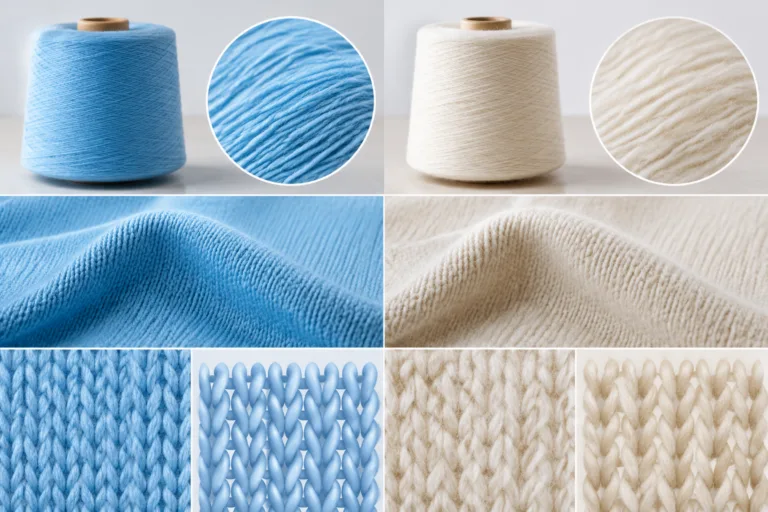
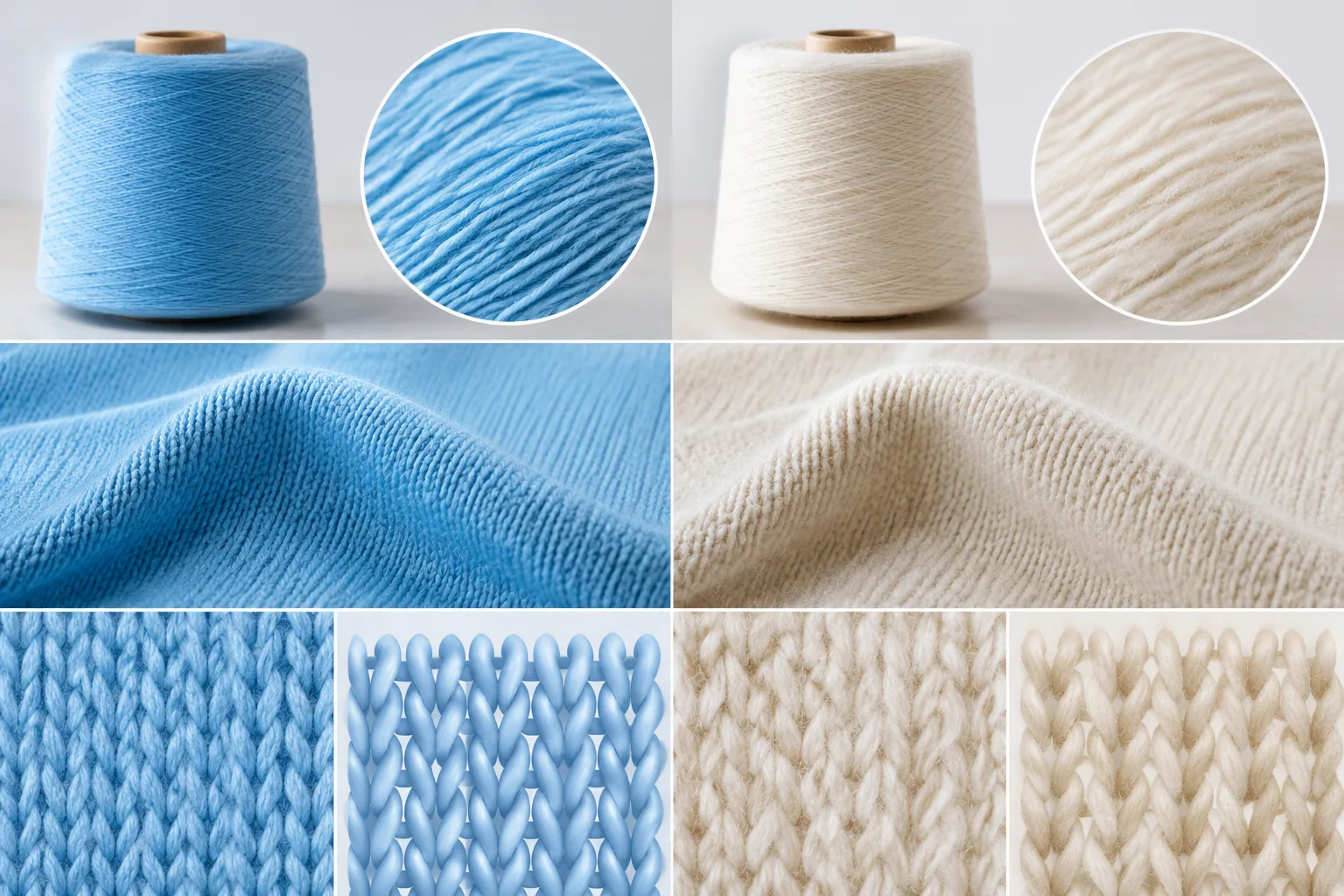
Fiber arrangement affects how a yarn presents at the surface of a knit, but it does not determine the finished appearance by itself. A yarn with more exposed fiber ends can produce a fuzzier-looking fabric. A yarn with fewer exposed ends may read cleaner and more defined. The wrapping structure commonly associated with air jet yarn can support a lower-hairiness appearance, while ring spun yarn may present a softer or more textured surface. These are tendencies, not guaranteed results.
Hand feel also depends on more than the spinning method. Fiber type, blend proportion, yarn count, ply structure, fabric gauge, knit construction, dyeing, and finishing can all change the result. The same yarn may feel different in a lightweight single jersey than in a denser rib or interlock. A soft hand in the yarn does not automatically produce the same hand after knitting and finishing.
Wear and washing add more variables. Surface fuzz and pilling behavior depend on the interaction of fiber form, fiber length, yarn structure, fabric construction, and finishing. The yarn alone cannot establish which fabric will pill less. Washing conditions, abrasion, and use can also change the surface over time, so a new swatch is only one point of evaluation.
For that reason, inspect the actual knit structure. Single jersey may reveal surface fuzz differently from rib, while interlock can present a more stable and covered surface. Compare fabrics under consistent lighting and handling conditions. Look at the face and reverse, check the surface after relevant laundering, and connect any visible change to the complete material system rather than assigning it to the yarn process alone.
Choosing Between Air Jet Yarn and Ring Spun Yarn for a Knit Program
For a jersey tee where a clean-looking surface and a smooth print base are important, an air jet yarn may be worth evaluating because its commonly reported lower-hairiness character can support clearer surface definition. If the brief instead emphasizes a soft, cotton-forward hand, a ring spun option may fit the intended character better. Fiber choice and finishing can change either result.
For a knit where texture, loft, or a more visible surface character is part of the design, a ring spun construction with a softer or fuzzier presentation may be useful rather than undesirable. That does not make it the better yarn in general. The decision depends on what the garment needs to communicate and how the fabric must perform in use.
Review the fiber type and blend, yarn count and ply structure, fabric gauge, knit construction, dyeing and finishing route, and end-use requirement. Print appearance, next-to-skin hand, wash behavior, surface durability, and pilling should be considered together. Blend effects also depend on fiber morphology and proportion, not simply on adding one named fiber.
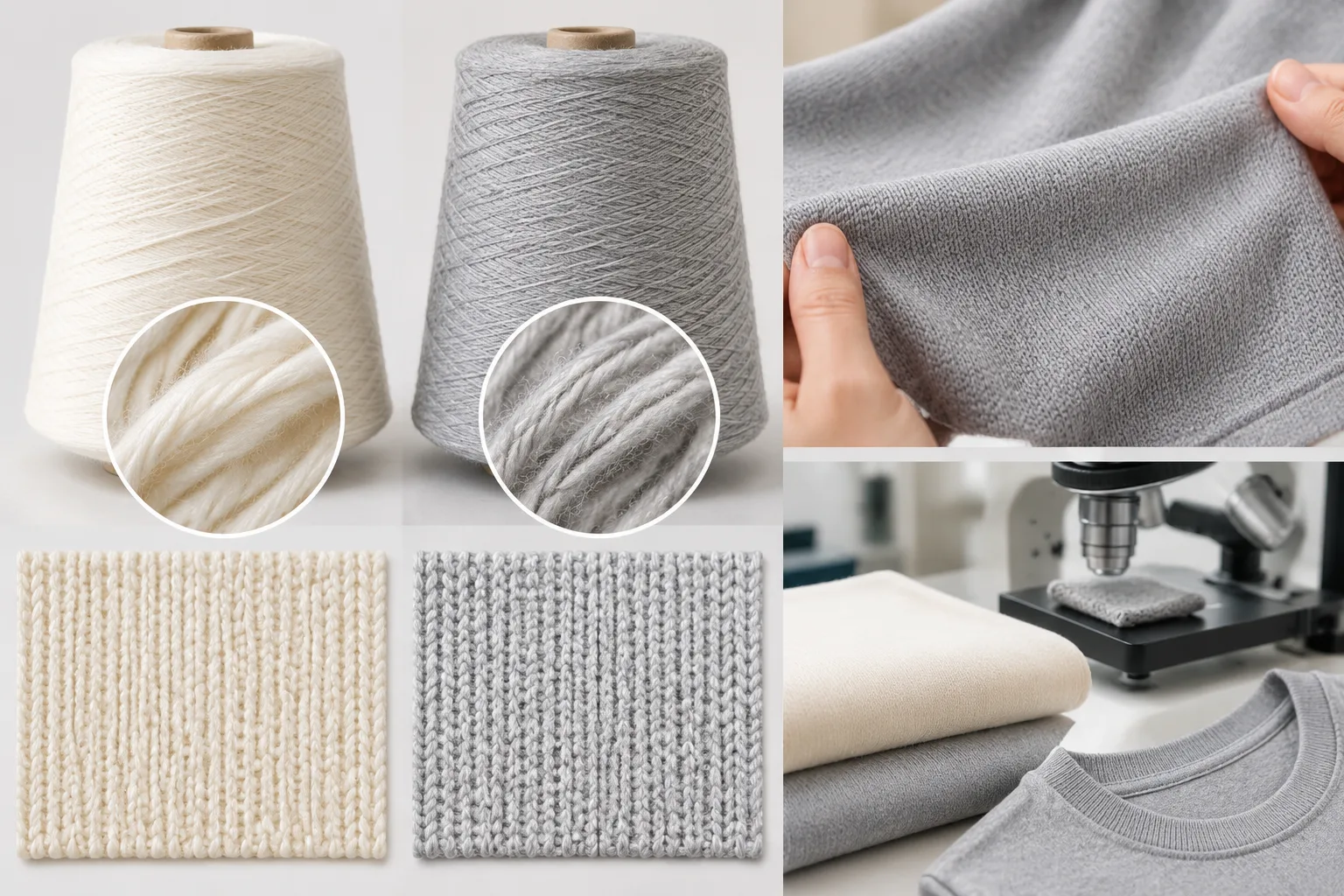
Compare candidate yarns under matched conditions: the same or equivalent fiber, count, fabric construction, and finishing route. Like-for-like knit samples reveal more than isolated yarn descriptions or data from different setups. Confirm what the yarn name means, especially when a commercial designation may refer to a broader family of processes.
Evaluating Yarn and Knit Surface Claims Before You Commit
Use a short verification sequence before treating a yarn description as a material expectation:
- Ask the supplier which spinning process the yarn name refers to and whether the description is generic or commercial.
- Confirm the count system and the meaning of any ply notation, such as 30/2. Direct and indirect count systems are not comparable by number alone.
- Request knit swatches in the intended gauge and construction, rather than evaluating yarn character in isolation.
- Inspect the fabric when new and after laundering conditions relevant to the end use.
- Ask whether numeric hairiness, pilling, or other surface claims are measured results or typical descriptions.
- When a number is supplied, request the applicable test method, specimen preparation, and test conditions.
Sample-lot behavior does not automatically represent every later bulk lot. Where surface quality matters, repeat key checks on production-representative fabric and, where feasible, on actual bulk material. This approach also helps separate a real process difference from changes caused by fiber, finishing, gauge, or lot variation.
Key Takeaways on Air Jet and Ring Spun Yarn for Knits
Ring spun yarn binds fibers through continuous twist, while air jet yarn relies largely on surface wrapping around a more parallel core. That difference can influence hairiness, hand, and knit surface definition, but fiber, fabric construction, and finishing remain important. As an educational next step, compare like-for-like knit swatches and check the applicable method and conditions behind any numeric surface claim before choosing a program.
Frequently Asked Questions
Can air jet yarn and ring spun yarn be made from the same fiber types?
Yes. The spinning system and the raw fiber are separate variables. The same general fiber type may be processed into either yarn, although fiber properties, blend proportion, and spinning setup affect whether each process is suitable and how the finished knit behaves.
Which yarn type pills less on knit fabrics?
Neither process guarantees lower pilling. Pilling depends on fiber characteristics, yarn structure, fabric construction, finishing, and abrasion. Compare fabrics made under the same conditions and evaluate them using the test method and conditions relevant to the intended use.
Is air jet yarn the same as open-end yarn?
No. Air jet and open-end are different spinning process categories. Commercial terminology can vary, so confirm the actual process with the supplier instead of treating a broad label or brand name as a complete technical definition.
Does yarn count alone tell me how a knit surface will look?
No. Count describes yarn fineness within a specified counting system, but surface appearance also depends on fiber, ply, spinning structure, knit gauge, fabric construction, and finishing. Confirm the count system and inspect a fabric sample made for the intended application.
How do I confirm which spinning process a supplier’s yarn name refers to?
Ask the supplier to state the generic spinning process in writing and explain any commercial or brand designation. Also request the count system, ply meaning, fiber composition, and relevant yarn or fabric specifications so the sample can be compared on consistent terms.
Do finishing treatments change the surface difference between these two yarns?
Yes. Finishing can change hand, smoothness, surface definition, and the way fuzz is perceived. It may reduce or emphasize differences created by yarn structure. Evaluate both yarns through the intended knit and finishing route rather than relying on unfinished yarn descriptions.