A hero product is the item expected to attract early attention and represent your clothing brand. Revisit the choice when its customer problem is unclear, enthusiasm lacks meaningful commitment, launch variations obscure the concept, or financial assumptions require everything to go well. These are warning signs of hero product selection mistakes, not automatic reasons to abandon a garment. Apparel Wiki offers independent educational guidance; its Sponsor page explains that sponsorship does not buy editorial control.
The central question is whether the garment deserves further commitment based on what you know. A useful review separates observed behavior from assumptions and identifies what evidence would change the choice.
Warning signs of hero product selection mistakes
An attractive garment can express a visual idea without giving someone a clear reason to buy it. A familiar product can be convenient to develop without being the strongest introduction to the brand. Neither quality alone establishes its suitability as a hero product.
Start with the intended wearer, use occasion, and problem. “People who like casual clothing” gives little direction. A clearer proposition identifies what the wearer needs from the garment and where existing choices disappoint. Without that context, positive feedback is difficult to interpret.
Watch for a widening gap between the concept and its justification. Warning signs include praise offered without purchase context, variations added before the core idea is understood, financial plans that require ideal sales, and feedback with no defined consequence.
Use this diagnostic sequence before committing further:
- State the customer problem: name the wearer, occasion, and unmet need.
- Identify the evidence: separate opinions from contact sharing, payment, and repeat purchase.
- Count the commitments: identify variations and development decisions the launch requires.
- Inspect the assumptions: distinguish documented inputs from hopeful expectations.
- Define the learning: state what finding would change the product or launch sequence.
A warning sign identifies an unanswered question. The response might be a narrower concept, stronger evidence, or a different launch sequence. Keep the product under consideration while investigating the assumption most likely to change the selection.
When interest is being mistaken for demand
Likes, compliments, and mood-board reactions show attention or visual approval. They do not establish that the respondent understands the garment, accepts its trade-offs, or intends to purchase it. To validate a hero product idea, ask what each response actually demonstrates.
Read apparel product demand signals as a sequence of different questions:
- Visual approval: does the appearance attract attention?
- Stated preference: does someone say it suits their needs?
- Contact capture: will they share details to hear more?
- Payment behavior: will they commit money under the stated offer?
- Repeat purchase: after experience, will they choose to buy again?
More meaningful commitment generally provides stronger evidence, but each action has limits. An email address does not establish price acceptance. A purchase does not explain satisfaction. Repeat purchasing in a small group does not establish broader, lasting demand.
Someone may admire a graphic while rejecting the garment’s fit, fabric care, price, delivery timing, or intended occasion. If people praise the graphic but cannot describe when they would wear it, revisit the use case before expanding the range.
Use small, staged tests that gradually ask for greater commitment. Keep the offer clear enough that respondents understand what they are evaluating. While the customer or use case remains unclear, further testing is more informative than adding colors or sizes.
For each test, record the concept shown, audience, wording, sample size, response, and what respondents understood. Note recruitment limitations beside the interpretation, then identify the unresolved assumption. Treat the record as decision evidence, not a sales forecast.
When the launch scope hides the product decision
A broad assortment can make a product decision harder to read. If silhouettes, fabrics, colors, and construction details all vary, feedback may not reveal which feature attracted or discouraged the intended wearer.
Each added option increases the combinations requiring specification, sampling decisions, tracking, and support. A stock keeping unit, or SKU, identifies a distinct inventory variation, such as a particular style, color, and size. More combinations can spread attention and inventory commitments across less understood choices.
This does not mean every SKU requires a separate sample. It means the team must decide how to evaluate differences and represent them accurately. Customer service also needs clear information about sizing, materials, care, and availability across the assortment.
Consider a lightweight knit proposed in several colorways and sizes. A focused first assortment could retain the intended size coverage while limiting optional colors. That may make feedback about the silhouette and material direction easier to interpret.
A broader assortment could make sense if color choice serves a documented customer need or the selling channel requires meaningful variety. Narrowing sizes, however, could exclude intended wearers and distort whose feedback the launch captures. A smaller range is not automatically a better range.
Map each variation to a customer need, learning objective, or defined brand role. Question options that serve none. Separate the core product question from optional styling choices, and make any loss of customer access explicit before removing a variation.

When the business case works only under optimistic assumptions
A product can appear profitable because its plan assumes the intended price, full sell-through, and perfectly timed receipts. Revisit the selection if no returns, no discounts, or immediate repeat demand are necessary to keep it attractive.
Separate the inputs before judging the outcome:
- Revenue: expected selling price, discounts, returns, and channel deductions.
- Costs: product, packaging, development, and freight commitments relevant to the launch.
- Quantity: the proposed launch volume and assumptions about unsold stock.
- Timing: deposits, balances, channel receipts, and further commitments.
Keep planned profitability separate from cash availability. Sampling payments, deposits, freight, and sales receipts may occur at different times. A plan showing a profit can still leave insufficient cash for the next obligation. Identify what becomes payable before revenue is available.
Build a base case from the brand’s documented inputs. Mark uncertain entries as assumptions. Then create a pressure case using less favorable inputs with a clear rationale: slower sales, lower realized revenue, additional returns, or later receipts. Keep the timing visible alongside the totals.
The purpose is to discover which assumption controls the choice. If a modest change removes the product’s appeal, investigate that dependency before making further commitments. Do not treat an untested selling price as established simply because the cost plan requires it.
A weak pressure case may support revising the garment, narrowing the initial scope, delaying commitment, or gathering stronger demand evidence. Choose the response according to the exposed dependency: reducing variations addresses complexity, while uncertain price acceptance calls for evidence about the offer.
When the product cannot teach you anything useful
A financially plausible plan still needs a way to learn. Useful learning connects feedback to a specific product decision: whether the intended wearer accepts the fit, understands the garment’s purpose, or finds its care requirements manageable. General praise or dissatisfaction rarely identifies what to change.
Start by recording why the garment has its current silhouette, material, construction, and styling. Link feedback to the relevant SKU, sample version, or production batch. Without that connection, comments about different versions can become mixed together, leaving the team unable to identify which decision needs attention.
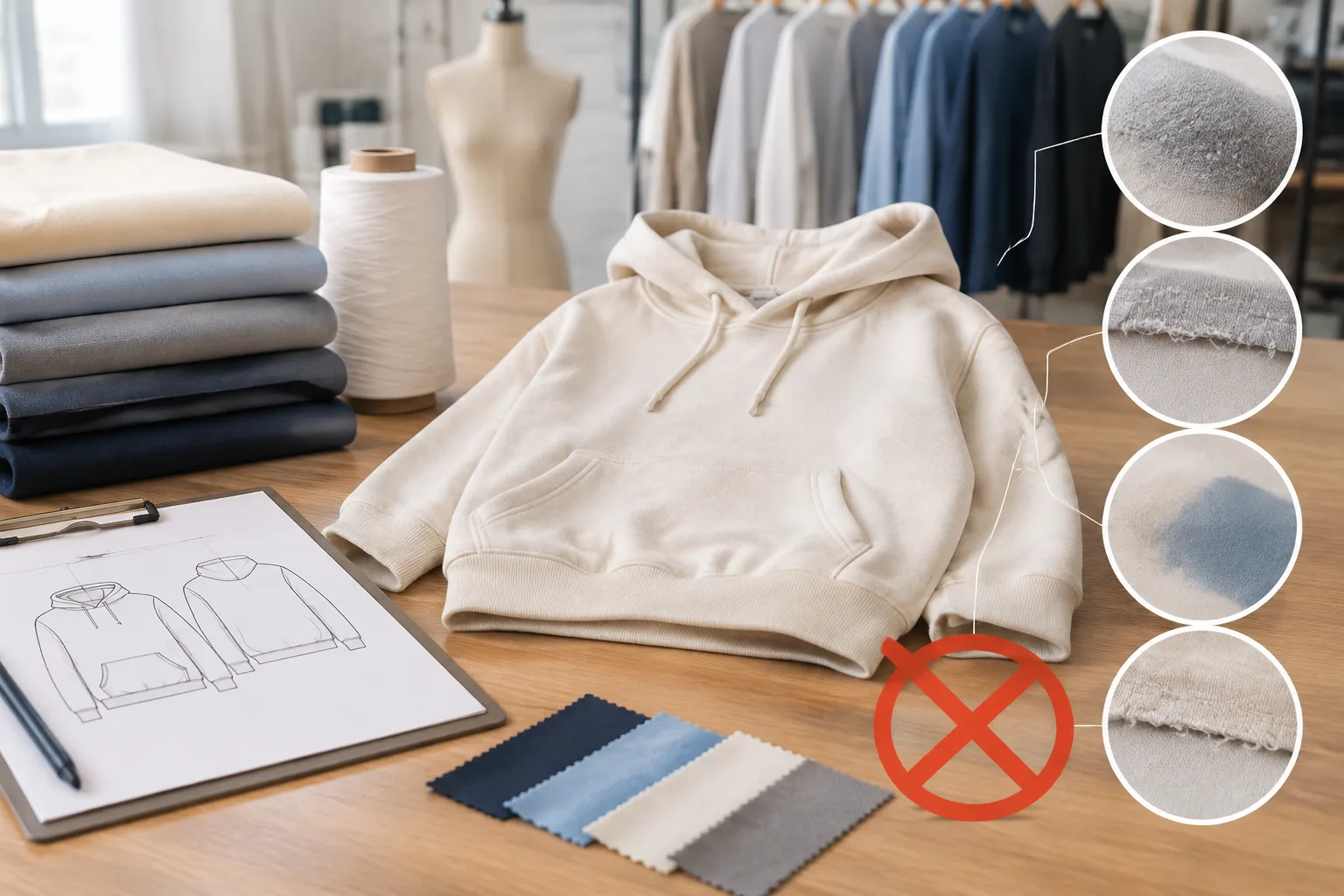
For fit or quality concerns, describe the observable symptom before naming a cause. Record its location, direction, frequency, and appearance conditions. Note whether it appeared during fitting, after wear, or after care. Keep photographs, measurements, garment identification, and the reported sequence of events together.
If a wearer reports twisting after washing, record where the garment shifts and which care steps preceded it. That report does not establish a material or construction fault. Materials, construction, equipment, care, use, and measurement can produce similar-looking symptoms. A single photograph cannot separate those explanations.
For each plausible explanation, write down what supports it, what contradicts it, and what observation could distinguish it from alternatives. Choose an evaluation appropriate to the garment and question. Keep the explanation provisional until the evidence separates it from competing causes.
Preserve interpretability when revising the concept. If fabric, fit, styling, and price all change together, a stronger response will not reveal which change mattered. Where practical, hold other relevant conditions steady and document unavoidable differences. Otherwise, record the result as feedback on the combined revision.
Revisit the selection when the team cannot state what evidence would support, reject, or refine its product hypothesis. An unresolved technical question may justify further evaluation before release. A test with no defined decision consequence needs redesigning before it can guide broader commitment.
A practical checklist for deciding whether to revisit the choice
Use this hero product selection checklist to identify the assumption controlling the next commitment. Mark each row as known, assumed, or unresolved, and attach the evidence behind that label. Do not turn the table into a numerical score or a universal launch threshold.
| Observable input | Warning sign | Likely implication | Initial choice | Variable that could change the choice |
|---|---|---|---|---|
| Wearer or wearing occasion remains undefined | Unclear customer problem | Responses are difficult to interpret | Clarify the intended use | A consistent need among intended wearers |
| Praise without meaningful commitment | Weak demand evidence | Purchase acceptance remains uncertain | Test a more consequential action | Response to the actual proposition |
| Variants lack distinct customer roles | Excessive assortment complexity | Optional choices obscure the core decision | Narrow optional variations | Audience access or channel needs |
| Less favorable assumptions undermine the plan | Fragile financial case | Commitment depends on optimism | Revise scope or delay commitment | Documented costs and payment timing |
| Fit or quality symptoms remain unexplained | Unresolved product questions | Readiness remains uncertain | Compare competing explanations | Evidence distinguishing likely causes |
| Feedback lacks version identification or decision criteria | Poor learning design | The next result may remain ambiguous | Define records and decision conditions | Traceable, interpretable feedback |
One warning sign may be manageable. Several unresolved signs can reinforce one another: an unclear wearer makes demand responses harder to interpret, while weak evidence makes a broad assortment harder to justify. Address the assumption most capable of changing the selection before resolving minor preferences.
If the use case is clear but optional variants obscure it, narrowing the assortment may preserve the concept. If the use case remains unclear, extra colors cannot resolve that uncertainty. Protect variations that provide meaningful customer access when deciding what to remove.
Finish the review with a dated revisit record: the current hypothesis, supporting evidence, unresolved risk, next observation or test, and condition that would change the selection. Name who will interpret the evidence and which commitment remains open until then. This makes the next review a comparison against a stated expectation.
Choose among four outcomes: proceed with the current concept, narrow the first release, gather further evidence, or replace the hero product. Proceed when the evidence supports the intended commitment; replace when it undermines the central proposition. Match the decision to the audience, garment, channel, and available resources.
Revisit the decision before expanding the commitment
Revisit a hero product when uncertainty prevents a reasoned next commitment. The aim is to make the selection explainable and learn from what happens next.
Write the product hypothesis on one page. Separate known facts from assumptions, compare proposed variants, and identify the smallest useful next test. Read the customer evidence, scope, financial assumptions, and learning plan together before expanding development. If a technical question remains, check the evaluation method appropriate to that garment, fit concern, or care condition before interpreting feedback as a confirmed cause.
Frequently Asked Questions
What is the clearest sign that a hero product should be reconsidered?
A central warning sign is being unable to explain who needs the garment, when they would wear it, and what evidence supports that proposition. Reconsider the choice when further commitment depends on leaving that uncertainty unresolved.
Are likes, comments, or email sign-ups enough to validate a hero product?
They provide evidence about attention or willingness to stay informed. They leave price acceptance, fit expectations, and purchase behavior unresolved. Interpret each response according to the action taken and the audience involved; none guarantees sustained demand.
How many colors, sizes, or variations should an initial hero product include?
There is no universal count. Retain variations with a clear customer, access, or learning role. Compare their specification, evaluation, tracking, and support needs. Removing optional colors may simplify the release, while removing sizes may exclude intended wearers.
How can a clothing brand test a hero product without treating a small sample as guaranteed demand?
Define the question and decision condition before testing. Record the audience, sample size, wording, proposition, response, and limitations. Increase commitment gradually where appropriate, and interpret the findings within those conditions rather than projecting them directly into sales.
What should be recorded when early garment feedback reveals a fit or quality problem?
Record the SKU, version or batch, symptom location and direction, frequency, and conditions of appearance. Add relevant photographs, measurements, wear, and care details. Separate the reported symptom from proposed causes, and preserve evidence that could distinguish competing explanations.
Should a brand narrow the product range or replace the hero product entirely?
Narrowing is appropriate when evidence supports the core proposition but optional variations create avoidable complexity. Replacement becomes more reasonable when evidence undermines the customer need or essential product proposition. Gather further evidence when the distinction remains unresolved.