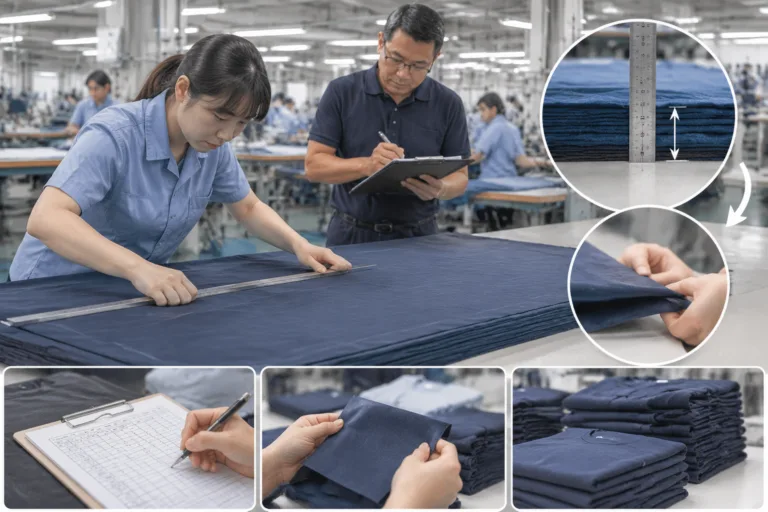
A lay height planning procedure determines how many fabric plies a cutting lay is intended to contain, then checks whether that plan fits the material, marker, equipment, handling process, and required cut quantity. The decision should begin with verified inputs, continue through a provisional plan and pre-cut checks, and remain open to revision when actual conditions differ. This educational approach follows Apparel Wiki’s independent editorial boundaries, as outlined on its Sponsor page. It does not make Apparel Wiki a factory, manufacturer, laboratory, certifier, or production-approval authority.
Lay planning affects more than the stack on the cutting table. Material preparation, spreading, marker placement, cutting, bundle control, sewing input, inspection, and packing can depend on earlier information being accurate. The useful question is therefore not “What is the correct universal height?” but “What provisional height is appropriate for this material and process, and what evidence is needed before cutting proceeds?”
What Lay Height Planning Means in Garment Cutting
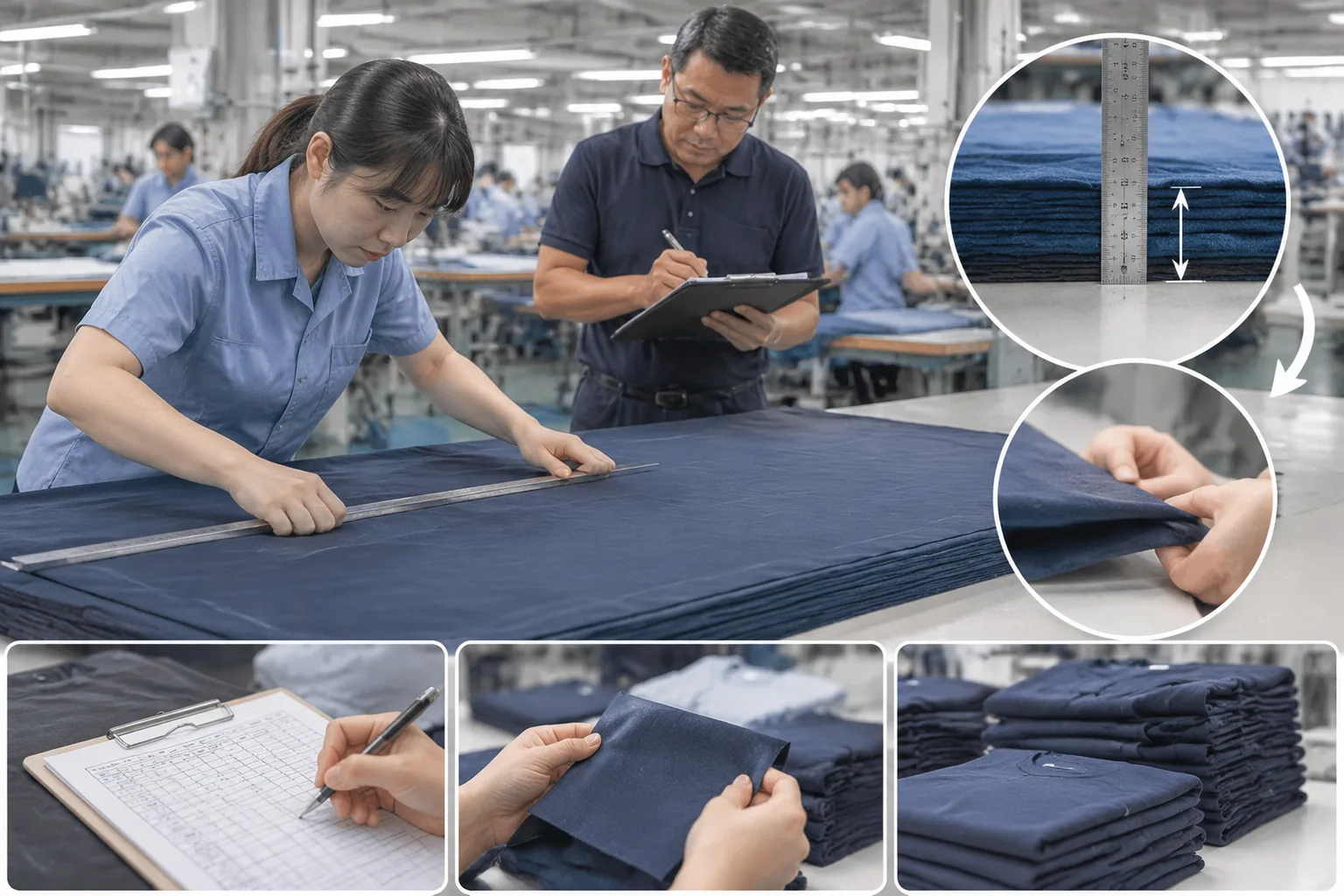
Lay height is the planned amount of fabric in a cutting lay. In practical terms, it is usually expressed through the intended number of fabric plies or the resulting material height. A ply is one layer of fabric in the stack. Terminology can vary between workplaces, so the planning record should state whether it refers to ply count, measured stack height, or both.
Lay height is separate from lay length, usable fabric width, marker efficiency, and total order quantity. Lay length describes how far the fabric extends along the spreading direction. Usable width describes the area available across the fabric. The marker determines how pattern pieces are arranged within those dimensions. Order quantity determines how many pieces are required. Lay height concerns the vertical accumulation of plies and how that accumulation can be handled and cut.
The central trade-off is operational. More plies may reduce the number of separate lays or handling events needed for a required cut quantity. However, a taller stack must still be spread, aligned, moved, supported, and presented to the cutting equipment consistently. Material behavior, surface direction, compression sensitivity, equipment design, and workplace handling can all change the practical choice.
A lower planned height may be easier to control for a material or process that is difficult to align, handle, or cut in a taller stack. A higher planned height may be workable when the material and equipment support it. Neither choice is universally best. A height that is suitable for one fabric, marker, or cutting process may be unsuitable when the material batch, garment category, or equipment changes.
For that reason, a lay height should first be treated as a provisional planning decision, not a confirmed production setting. The applicable operating limit must come from the relevant equipment information, material behavior, workplace process, and responsible technical instructions. A documented plan should identify the inputs used, the assumptions still unverified, and the point at which the plan requires review.
This makes the procedure a map of both material flow and information flow. Material must enter spreading with the required identity and condition. The marker and lay must support cutting. Cut parts must move into bundling and sewing with useful traceability. Later inspection and packing depend partly on these earlier conditions. Apparel Wiki presents this sequence as educational guidance, not as a fixed route that every product must follow.
Inputs That Determine a Provisional Lay Height
Before choosing a provisional fabric lay height, collect the information that describes the actual job. Start with the garment style, size ratio, required cut quantity, marker version, marker dimensions, fabric construction, usable width, batch or shade information, spreading condition, and planned cutting equipment. Also note direction, face, nap, or other surface requirements that affect how plies must be placed.
Check the production material rather than relying only on a sample. Usable width, shrinkage risk, color batch, and surface defects can vary across material or between batches. These are variables to investigate before confirming a plan, not reasons to assign a universal height. A sample check can inform planning, but it does not automatically represent every later batch.
| Observable input | Implication | Initial planning response | Variable that may change the choice |
|---|---|---|---|
| Fabric behavior and condition | Handling and alignment may become more difficult as the stack changes. | Review the batch, surface, direction, width, and spreading condition before selecting a height. | Batch variation, defects, width changes, or material response during preparation. |
| Marker and quantity requirements | The required pieces and marker dimensions determine how the lay supports the cut plan. | Match the marker reference and required quantity to the planned lay arrangement. | Size ratio, marker revision, order quantity, or usable width. |
| Equipment and handling constraints | The stack must be spread, moved, aligned, and cut through the applicable process. | Check responsible equipment and process guidance before treating the height as workable. | Cutter configuration, spreading method, support, lifting, or available handling capability. |
| Quality-control risks | Misalignment, surface damage, or material variation can affect cut-part consistency. | Identify the relevant pre-cut checks and define when the plan must be paused or reviewed. | Observed instability, compression, repeated alignment issues, or changed inspection information. |
Consider a lightweight knit whose width or surface condition varies across the production batch. Its initial plan may need closer verification than a stable material that is easy to spread and align. That does not establish a required ply count. It shows why the decision should remain conditional until actual material and process conditions have been checked.
The table is an evaluation aid, not a substitute for responsible technical instructions or a production trial. The planned lay must also fit the next operation. A stack that appears suitable for spreading may still create handling or bundling difficulties, while a marker choice may need review if usable width or material direction changes.
A Lay Height Planning Procedure From Inputs to Initial Plan
The following lay height planning procedure is a recommended educational workflow. The order may change by garment category, material, equipment, or workplace process, so it should not be read as a mandatory route for every product.
- Confirm the starting information. Record the style, size ratio, required cut quantity, marker version, usable material width, material batch, and any pre-cut conditioning or inspection information required by the responsible process. Resolve differences between the planning record and the material before selecting a height.
- Identify constraints. Review material behavior, face or nap, direction, surface requirements, spreading method, cutting equipment, stack handling, and the consequences of misalignment or compression. The purpose is to identify what could prevent the planned lay from being prepared or cut consistently.
- Select a provisional height. Choose a provisional ply count or material height only within the applicable technical and operational limits. Record which input drove the choice, such as material handling or equipment guidance, and identify assumptions that remain unverified.
- Check the quantity and marker relationship. Confirm that the provisional plan supports the required marker and cut quantity. Fewer lays do not automatically mean lower cost, greater productivity, or better utilization. Those outcomes require evidence from the complete process and should not be inferred from stack height alone.
- Document the review point. Record the planned height, material batch, marker reference, equipment or process reference, responsible approval point, and conditions that require review before cutting proceeds. Keep the assumptions visible so a later change can be distinguished from an execution problem.
In this workflow, the plan is useful because it makes dependencies visible. Material preparation must provide the condition assumed by spreading. Spreading must produce the alignment assumed by cutting. Cutting must create bundles that can enter the next operation with the required identity and control. If one input changes, the plan should be reconsidered rather than treated as automatically valid.
A practical record can therefore state both the decision and its boundary: the selected height is provisional, applies to the identified material and marker, and remains subject to applicable equipment and process guidance. Any later claim about cutting performance, defects, or productivity should come from validated technical evidence or internal process data, not from the height choice alone.
Monitoring, Revision, and Records After the First Lay
The first lay provides an opportunity to compare the planning record with actual process conditions. It does not, by itself, prove that the selected height is suitable for every later lay, material batch, or style. Review what happened against the assumptions that supported the provisional decision.
Record the style, marker reference, material batch, planned lay information, actual lay information, and the spreading or cutting equipment reference. Add observed deviations, their disposition, and the person or process responsible for review. These fields form a recommended control record, not a legal or certification requirement.
Useful observations include waiting, rework, alignment difficulty, material defects, handling problems, and issues with downstream bundles. Interpret them with care. A single deviation may result from a changed material condition, a marker issue, an equipment condition, or an execution error. It should not automatically be treated as proof that lay height caused the problem.
Look for recurrence and connection. If the same alignment issue appears across comparable lays, investigate the shared input or process condition. If the issue appears only once, preserve the record and examine what differed before changing the general plan. This distinction helps prevent an isolated event from becoming an unsupported universal rule.
Also check the effect on dependent operations. Increasing spreading speed or lay height upstream may only create more work in process when a downstream operation is constrained. Observe where bundles wait, accumulate, return for correction, or require additional handling. The constrained step should inform any adjustment, rather than assuming that a local increase will improve total output.
Revise the plan when a material, marker, equipment, handling, or quality input changes. Preserve the reason for the revision and identify which assumption changed. A revised record should make clear whether the change responds to new batch information, a process observation, a changed marker, or a different operational constraint.
- Style, size ratio, and marker reference
- Material batch, usable width, direction, and relevant condition
- Planned and actual lay information
- Spreading or cutting equipment and process reference
- Observed deviation, investigation, and disposition
- Review point, responsible role, and reason for any revision
Close the loop by comparing planned and actual results qualitatively. Numerical claims about productivity, defects, or utilization require validated internal data or an appropriate authoritative method. The record supports traceability and learning; it does not turn an unverified observation into a guaranteed performance result.
Use the Procedure as a Controlled Planning Record
Lay height is a conditional planning decision tied to the material, marker, equipment, handling process, and quality risks. Use verified inputs to select a provisional height, complete pre-cut checks, document revisions, and review downstream effects. Before relying on the plan, compare it with the actual material and the applicable equipment or cutting guidance for that specific process.
Frequently Asked Questions
What information should be confirmed before planning a garment cutting lay height?
Confirm the style, size ratio, required cut quantity, marker reference, usable material width, batch information, surface direction or nap requirements, relevant defects, spreading condition, and planned equipment. The responsible process may require additional information before the provisional plan can be reviewed.
Can the same lay height be used for different fabrics or garment styles?
Not automatically. Fabric behavior, surface requirements, marker dimensions, cut quantity, handling conditions, and equipment can change the appropriate planning decision. A height used for one material or style should be reconsidered against the inputs and limits of the next one.
How should the plan change when the actual fabric differs from the planning information?
Pause the assumption that the original plan still applies. Compare the actual batch, width, direction, surface condition, and defects with the record. Investigate the changed constraint and revise the plan through the responsible production process before continuing.
What is the difference between a provisional lay height and a confirmed production setting?
A provisional lay height is an initial decision based on available information and stated assumptions. A confirmed setting requires the applicable material, process, handling, equipment, and pre-cut conditions to support it. Confirmation is therefore process-specific, not a universal approval.
Which records are useful when reviewing or revising a lay height plan?
Keep the style and marker references, material batch, planned and actual lay information, equipment reference, deviations, investigation, disposition, review responsibility, and reason for revision. These records help separate changed inputs from execution problems and support later qualitative review.