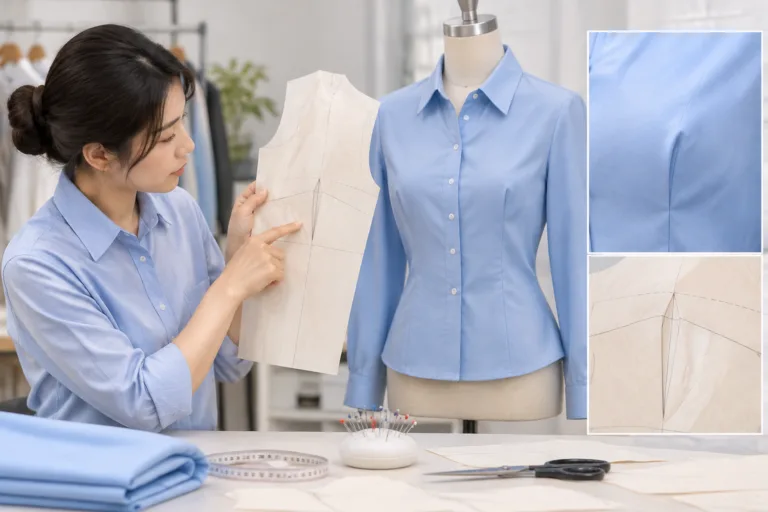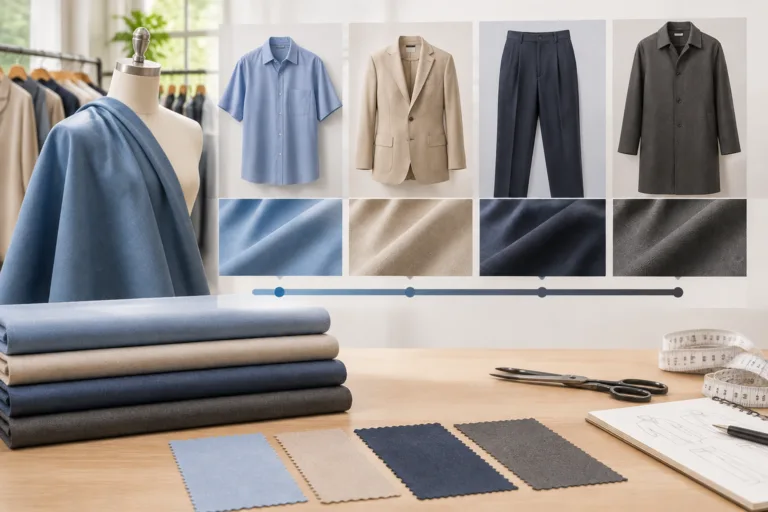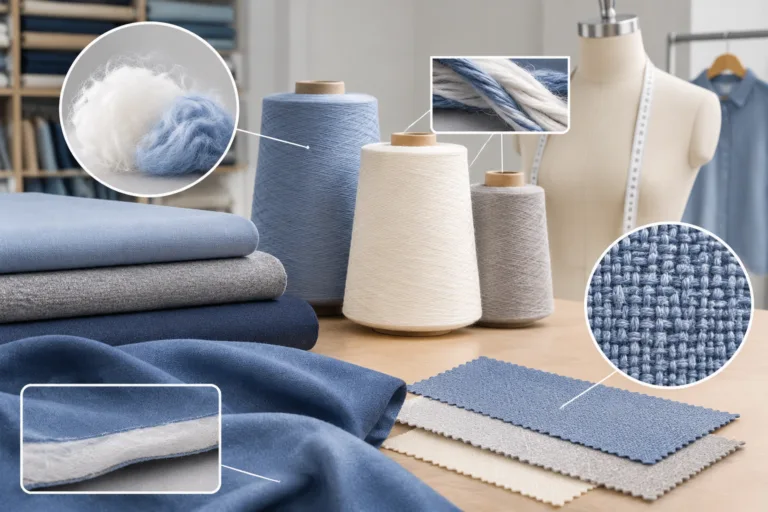
Design PTT fiber blends by starting with what the garment needs to do, then choosing a fiber composition, yarn construction, fabric structure, and finish that work together. A PTT-containing blend is a fabric whose stated composition includes PTT and at least one other fiber. The finished fabric’s hand and behavior depend on which fibers are present, their form and proportions, and how the textile is made and finished.
Before choosing a percentage, decide what would make a sample suitable for the garment. A soft hand, room to move, and a surface that holds up under the intended care routine are separate goals. Give each one a clear place in the brief.
Start With the Fabric’s Intended Use
Describe where the fabric sits on the body, how the garment fits, and how it will be worn and cared for. A fabric that touches the skin puts hand, or how the fabric feels when handled, high on the list. An area that bends during wear may call for both extension during movement and recovery after release.
Translate broad goals into questions you can answer from samples. For “soft,” ask which face will touch the skin and what feel you want on that face. For “holds its shape,” identify the area where shape matters and when you would check it. For surface durability, identify where rubbing is likely during wear or care.
When designing fabric blends with PTT, keep four parts of the fabric description distinct. Fiber composition identifies the fibers and their stated proportions. Yarn construction describes how the yarn is put together. Fabric structure describes how the yarns form the cloth. Finishing covers treatments applied to the material. Keeping those details separate makes it easier to see which design variables changed between samples.
Fiber form matters alongside proportion. Two fabrics with the same stated percentages can use different yarns, structures, or finishes and feel different in the hand. A composition gives you a starting point for a candidate. The construction details help you decide whether that candidate belongs in the same comparison as another fabric.
Write the brief around the intended use, the desired feel, and the constraints the fabric must meet. Rank priorities where they could compete. If the garment must recover its shape at a fitted opening, say how important that is alongside softness. Record what you would need to see in a sample or learn from a specification to judge each priority.
How to Choose PTT Fiber Blends for a Fabric Brief
Use the brief to select a short list of candidate fabrics. For each one, record the stated fiber identities and proportions, available yarn details, knit or woven structure, and finish. Note how the sample feels in hand and whether the stated care conditions match the garment plan.
Changing fiber proportions can shift the combination of properties a fabric offers. The direction and size of that change depend on the fiber form, yarn, structure, and finish. A ratio is therefore a design choice tied to a particular brief and construction. The table pairs common garment needs with a first comparison.
| Design input | What it may imply | Initial comparison to make | Variables that could change the comparison |
|---|---|---|---|
| Close-to-skin use | The inward face matters most for hand. | Handle the skin-facing side of each candidate and compare its texture and suppleness. | Yarn surface, fabric face, finish |
| Repeated care | Hand, appearance, or shape after care may guide selection. | Compare the same characteristics before and after a shared care routine that fits the brief. | Wash and dry conditions, construction, finish |
| Stretch or recovery matters | Extension during movement and return after release are separate priorities. | Compare extension and return in the direction that matters in the garment. | Yarn construction, fabric structure, specimen direction |
For a lightweight knit top worn next to the skin, start with candidates that fit the intended weight and offer the desired hand. Check how each sample drapes and how its inward face feels. If the top is fitted, also ask where the fabric needs to extend during wear and whether shape after release matters there.
A knit with a different loop structure or finish could suit that brief even if another candidate has a similar fiber composition. To explore the effect of a blend change, start with samples whose yarn construction, fabric structure, and finish are as similar as practical. Inspect the same fabric face and direction under comparable conditions. When constructions differ, use the comparison to choose between finished fabrics and treat the blend’s contribution as an open question.
Translate Fiber Choices Into Yarn and Fabric Construction
A fabric specification should show how the fiber choice is used. Record the blend composition and then list the available yarn information, including fiber form and whether the yarn is single or plied. If a fabric uses different yarns in different positions, record where each is used when that information is available.
Knits form through intermeshing loops. Wovens form through interlacing warp and weft yarns. Those descriptions help you decide where to look for construction differences. For a woven, check which yarn is used in each direction. For a knit, note the loop structure where known. Stretch, breathability, and durability still depend on the details of the construction and finish.
Copy yarn count or linear density with its original unit, system, and notation. Keep direct linear-density entries, such as tex, distinct from indirect yarn counts. If the source gives a plied-yarn notation, ask whether the value describes each single yarn or the assembled yarn. Clarify the notation before using the listed values to compare samples.
Record the finish next to the construction and note which face you handled. If two samples share the same blend and one feels smoother, check whether their yarns, fabric faces, or finishes differ. Recording those details leaves a clear account of what was compared and which differences could explain the change in hand.
Compare Candidate Fabrics With Relevant Evidence
Turn each priority in the brief into a question you can answer about the finished fabric. For an overshirt likely to be worn under a backpack, start with the surface that would contact the straps. If visible wear in that area matters to the design, look for evidence of surface change under conditions relevant to that use.
Keep four kinds of information in the comparison record. Each answers a different question about the candidate.
- Stated composition. Copy the fiber names and proportions as supplied, and record where the information came from. Use this entry to identify the blend being compared.
- Supplier specification. Record how the supplied document describes the yarn, fabric structure, and finish. Check that the specification refers to the same fabric version as the swatch.
- Sample observation. Describe what you saw or felt, including the fabric face and the sample’s condition. An observation such as a visible change in texture belongs with the conditions under which you saw it.
- Test result. Record the reported result, the method used, and the specimen conditions. Keep the result tied to the specific fabric and finish identified in the report.
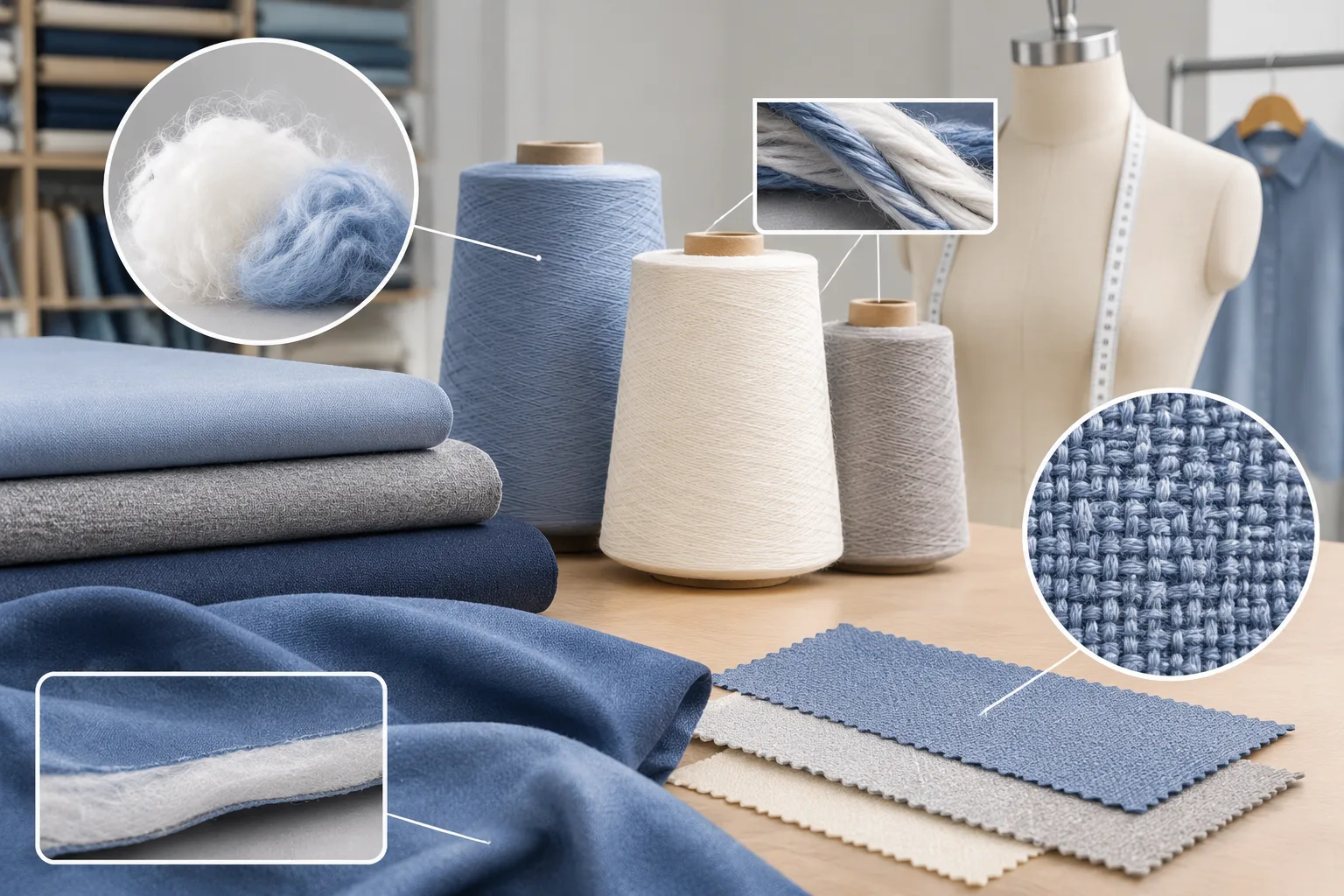
For a side-by-side inspection, handle samples in comparable states and examine the same face under similar lighting. If one swatch has been washed and the other is in its supplied state, record that difference before judging appearance. If the question concerns a proposed blend change, look for samples with closely matched constructions and finishes.
Before ranking candidates by their test results, check that the reports address the same property and use comparable methods and specimen conditions. Look for details that matter to the question, such as the face or direction tested and whether the specimens received any care treatment beforehand. A reported result describes the specimens under those conditions. A flat fabric specimen also leaves garment features such as seams and fit outside the comparison.
When a report omits a material detail or uses a different method, write down the specific limit. For instance, if the specimen’s care history is unclear, use the report to decide whether a comparable check is worth pursuing. Keep the after-care question open until you have evidence that addresses it. If a swatch observation identifies a concern, carry that observation forward as a screening clue and state what would resolve it.
Document the Blend Decision and Its Limits
Give each candidate a record that another reader can match to a swatch and specification. Start with the intended garment, the relevant use and care conditions, and the priority that drove the decision. Include the sample identifier and specification revision when available so a later reviewer can trace the evidence to the fabric you evaluated.
Record the fiber names and stated proportions, available yarn details, fabric structure, and finish. Mark missing entries as unknown. If the finish is described only by a commercial name, retain that wording and note which finish details still need clarification. This gives a reviewer a specific question to ask when a new sample arrives.
Keep the generic fiber name, commercial brand, manufacturing process, and raw-material origin in separate fields. The generic name identifies the fiber type, while the brand identifies a commercial offering. Record process and origin only when the available documentation supports those details for the material in question. Treat any label wording needed for a particular market as a separate, jurisdiction-specific verification.
Write the decision at the level the evidence supports. A candidate can advance to a garment sample on the strength of its hand and appearance while a wear question remains open. Record the evidence that justified advancing it and the comparison you still need before judging the fabric suitable for that use. If a later swatch changes in construction or finish, check which observations and results still apply.
A documented blend decision ties a specific fabric version to a specific garment use. As a next step, put two complete candidate specifications side by side and mark which details match, differ, or are missing. If the choice turns on a named performance claim, consult the applicable authoritative test method and check whether the reported specimen and conditions address your design question.
Frequently Asked Questions
Does a fabric containing PTT have a predictable performance profile?
The presence of PTT tells you part of the composition. To judge how the finished fabric might behave, consider the fiber form and proportions along with the yarn, fabric structure, and finish. Look for evidence specific to the property and use you care about.
What information should I compare besides the fiber percentages?
Compare the fiber form, yarn construction, fabric structure, and finish. If a candidate uses different yarns in different positions or directions, check where each is used. That detail can matter when you need to match the specification to the fabric face or direction you examine.
Can I choose a PTT blend ratio before deciding the yarn and fabric construction?
You can use a ratio as a starting point for development. Keep it provisional while you choose the yarn and fabric construction. Evaluate the resulting fabric against the brief before fixing the ratio in the specification.
How should I compare two PTT-containing fabric samples?
Pick the use-related question that could change your choice, then inspect the samples under comparable conditions. Note any differences in their construction or finish. If you need to compare test results, check that the methods and specimen conditions support that comparison.
Are a fiber’s generic name, brand name, and raw-material source interchangeable?
Each identifies a different aspect of the material. The generic name identifies the fiber type, the brand identifies a commercial offering, and the raw-material source describes where the input material comes from. Verify each detail separately when it affects a specification or purchasing decision.