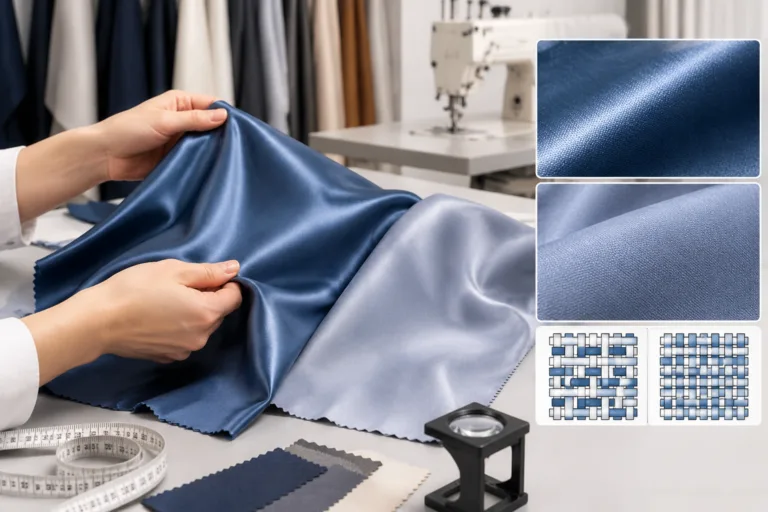
In the common satin vs sateen comparison, the main distinction is the direction of the yarn floats visible on the fabric face. Satin is generally described as warp-faced, while sateen is generally weft-faced. Both are woven constructions, but neither name tells you the fiber content by itself. A fabric called satin may use silk, synthetics, or a blend; sateen is often associated with cotton but is not limited to it. For practical fabric decisions, treat the name as a starting clue, then compare the stated composition, construction, yarn details, finish, and other specifications. This independent guide is supported by Apparel Wiki’s Sponsor information and editorial boundaries.
Satin vs Sateen: The Difference Is the Face-Float Direction
Woven fabric is formed by two yarn systems crossing one another. The warp runs along the length of the fabric, while the weft passes from side to side across the width. A float is a section where one yarn passes over or under several crossing yarns before interlacing again. Longer floats can make a yarn system more prominent on the face.
In common textile terminology, a warp-faced satin presents more warp yarns on its face. A weft-faced sateen presents more weft yarns. This is the central satin and sateen difference: not the fiber name, but which yarn direction predominates in the visible surface structure.
Commercial language is not always perfectly consistent. A product label may use “satin” or “sateen” as a style or market name without providing a full construction description. If float direction matters to development or quality comparison, request the supplier’s stated weave or construction rather than relying on the label alone.
It also helps to separate fabric identity into layers:
- Fiber: the material used, such as silk, cotton, or a manufactured fiber.
- Yarn: how that fiber is spun, combined, or otherwise formed into yarn.
- Weave structure: how warp and weft interlace, including the face-float direction.
- Finishing: treatments or processes that can change the surface or handling.
These layers interact, but they are not interchangeable. Satin construction is not synonymous with silk, and sateen construction is not a guaranteed cotton specification. Float direction provides a useful clue about face structure; it does not, by itself, guarantee a particular hand, durability, drape, shine, or care behavior.
Typical Fiber Choices for Satin and Sateen
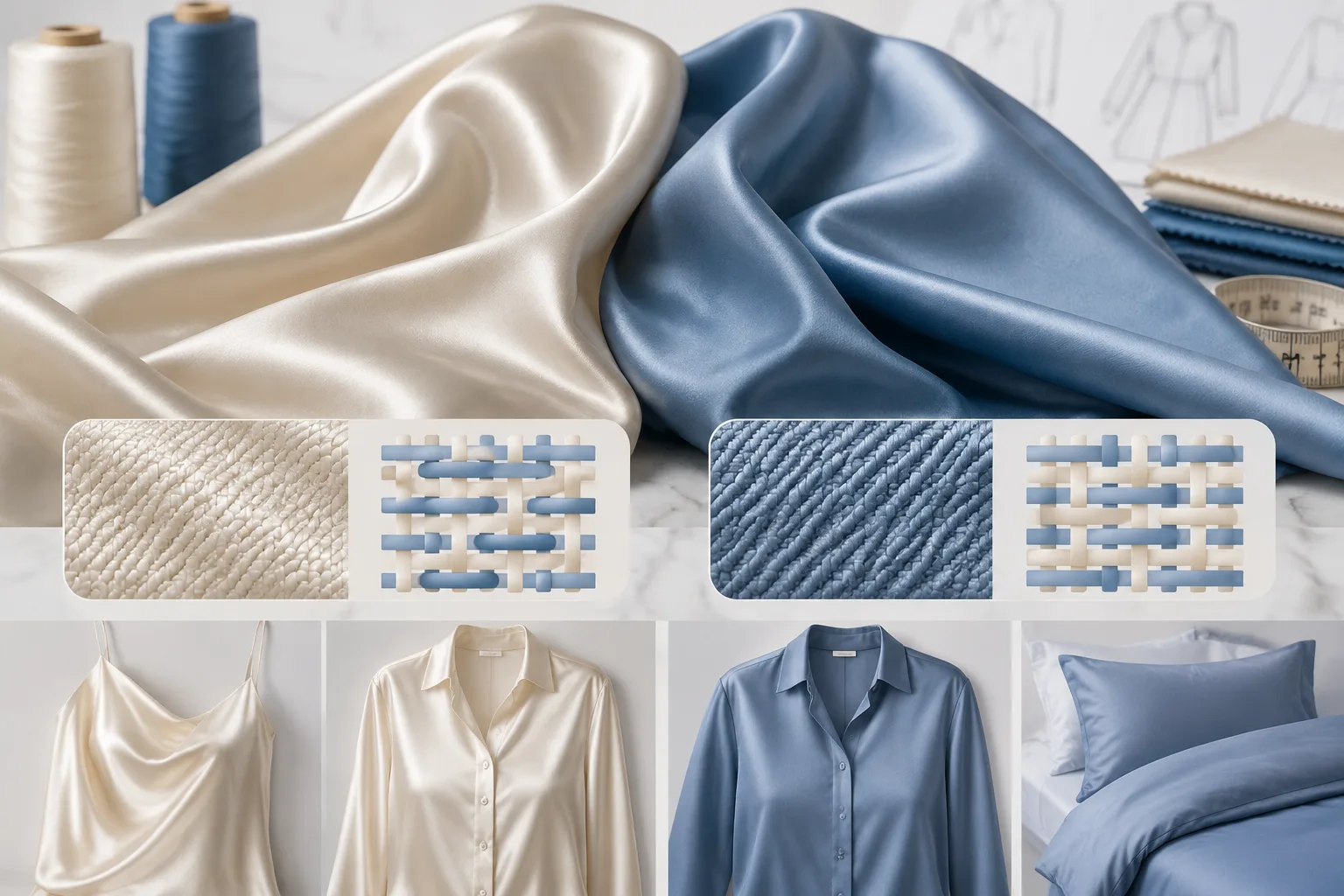
Silk is a familiar fiber association for satin fabrics, especially in contexts where the name describes a smooth, dress-oriented surface. Cotton is a familiar association for sateen, including fabrics marketed as cotton sateen. These are common associations rather than definitions. Neither weave is restricted to one fiber.
Manufacturers may produce satin or sateen fabrics from other fibers, blends, or different yarn arrangements. A synthetic satin and a silk satin can share a commercial construction name while differing in fiber composition and yarn characteristics. Similarly, a sateen fabric may be cotton-rich, blended, or made from another fiber. The word on the label does not establish exact composition.
Fiber content is therefore a separate specification from weave structure. Fiber can influence how a fabric looks and handles, but the result also depends on yarn construction, fabric density, finishing, and the particular design of the cloth. It is not reliable to assign a universal performance outcome to “silk satin” or “cotton sateen” without examining the actual fabric information.
When recording satin fiber content or sateen fabric fibers, preserve the stated composition separately from the construction description. For example, “silk satin” identifies a familiar material association plus a weave-style term, while “cotton sateen” identifies a cotton association plus a construction-style term. Neither phrase replaces a complete composition declaration.
This distinction prevents two common shortcuts: treating every satin as silk, and treating every sateen as guaranteed cotton. When fabrics have similar commercial names, check the fiber composition and construction independently. If the yarn type, finish, or weight is important to the garment, record those details separately as well.
Compare Satin and Sateen by Construction and Fabric Details
The following satin vs sateen comparison is a decision aid, not a ranking. It separates the common construction distinction from details that the fabric name cannot settle.
| Comparison point | Satin | Sateen | What to verify |
|---|---|---|---|
| Common face-float direction | Warp-dominant or warp-faced terminology | Weft-dominant or weft-faced terminology | The supplier’s actual weave or construction description |
| Typical fiber association | Silk is a familiar association | Cotton is a familiar association | Full stated fiber composition; neither association is exclusive |
| What the name does not settle | Yarn details, finish, weight, care, or garment suitability | Yarn details, finish, weight, care, or garment suitability | Relevant specifications and the intended garment requirements |
In a satin weave vs sateen weave comparison, the float direction helps explain the face structure. It does not prove the fiber content or provide a complete performance profile. A visual surface can support an observation about appearance, but it cannot establish the construction details that are missing from a commercial name.
Hypothetical decision scenario: a dress fabric
A development team is comparing a silk-labeled satin with another satin-like fabric for a garment where face appearance matters. The useful evidence is not the word “satin” alone. The team should compare the composition declarations, construction descriptions, samples, yarn information where available, and finish. The silk option may fit the intended material brief, but the trade-off and final suitability depend on the actual fabric and care requirements rather than the name.
Hypothetical decision scenario: a structured cotton-associated garment
A designer is considering cotton sateen for a garment that requires a particular surface and construction behavior. Cotton sateen is a reasonable initial candidate because cotton is a familiar association, but the decision should remain conditional. The stated blend, weight, yarn details, finish, and sample may support or change the choice. Comparing like with like is more useful than assuming that every sateen fabric shares the same properties.
For either fabric, ask what is confirmed and what is only inferred. Verify composition, construction, yarn details where available, finish, and fabric weight or another relevant specification. Appearance and a commercial name can guide the first comparison, but they cannot establish whether a satin or sateen fabric suits a particular garment.
How to Choose Between Satin and Sateen for a Garment
Choose from the garment requirement outward. Start by recording the intended appearance, use conditions, care expectations, and construction needs. Satin or sateen can identify a useful weave clue, but neither name completes the fabric specification.
When the face appearance matters, compare actual samples under consistent viewing conditions. Note the surface, handle, and visual effect, then check the stated fiber composition and construction description. A familiar association can help form an initial comparison, but it should not replace the fabric record. A satin is not automatically silk, and a sateen is not automatically cotton.
A cotton-associated sateen may be an initial candidate for a garment brief that suits its stated composition and sample. That preference could change if the fabric is a blend, has a different finish, uses different yarn characteristics, or differs in weight from the comparison fabric. Similarly, a silk-labeled satin may fit a material brief, but its suitability still depends on the actual fabric and the garment’s requirements.
Compare like with like wherever possible. Record the commercial name, composition, weave or construction description, finish, available weight information, and relevant yarn details. Then relate those details to the garment design. A fabric used for a loose flowing style may be assessed differently from one used for a structured garment, even when both are sold under a similar name.
Do not infer comfort, shine, durability, breathability, stretch, or care behavior from float direction alone. These properties can vary with the fiber, yarn, construction, finishing, garment design, and use conditions. If one of these properties matters, identify the product information or suitable evaluation method needed to assess it.
The practical question is therefore not simply, “Should this garment use satin or sateen?” Ask which documented fabric, in its intended state, provides the required appearance and handling for the garment. If composition or construction details are missing, treat the choice as provisional until those details are available.
What to Check When Evaluating a Satin or Sateen Sample
Use a repeatable record for each sample so commercial names do not collapse several material layers into one label. Begin with the following information:
- Commercial fabric name and supplier description
- Stated fiber composition, including any listed blend
- Weave or construction description
- Finish or treatment information, when provided
- Stated fabric weight and unit
- Yarn details, width, or other specifications relevant to the garment
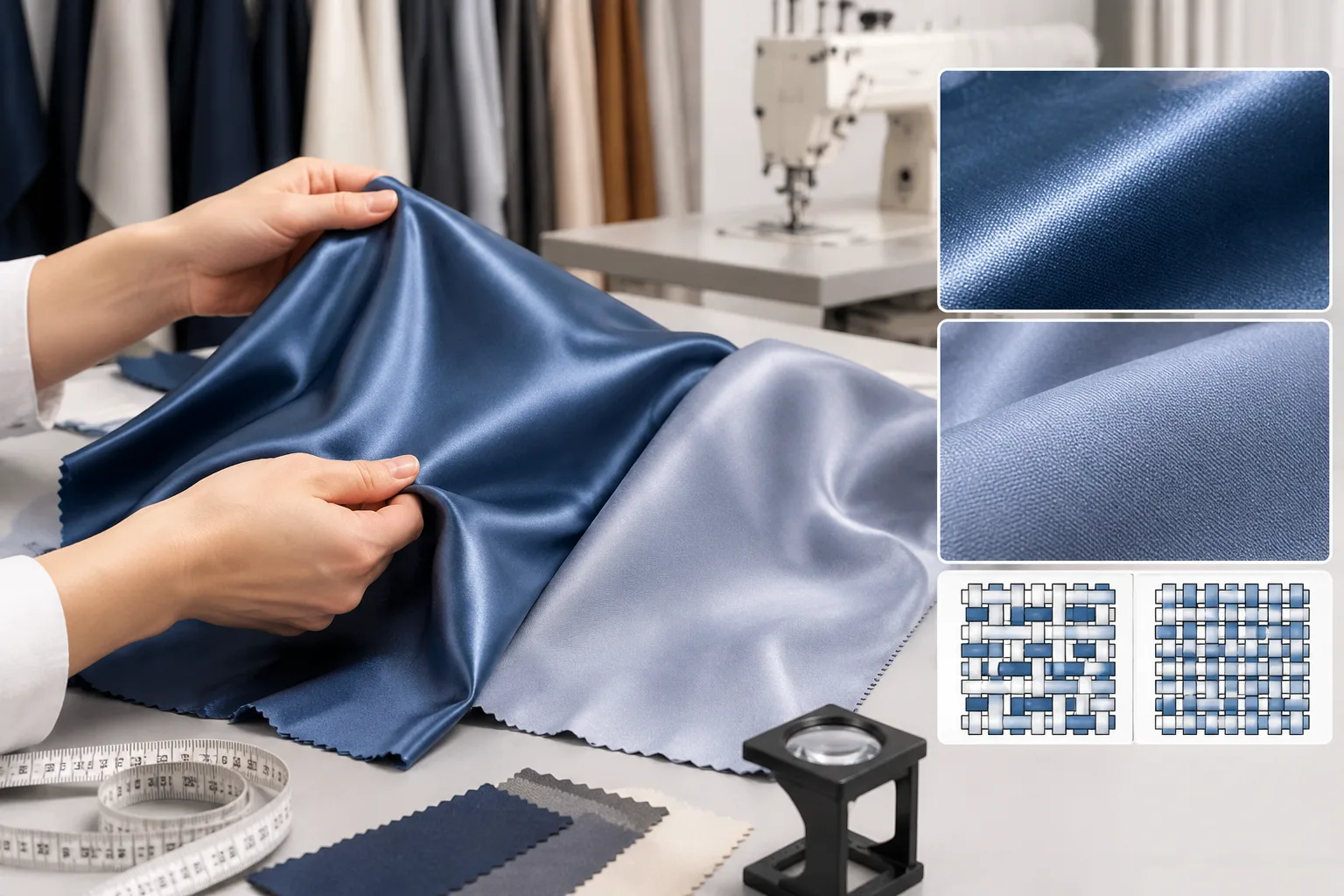
Inspect samples under comparable lighting and viewing conditions. Observe the face appearance, reverse appearance, surface regularity, and handle. Record what the sample does in your hands rather than turning an observation into a universal claim. A sample’s appearance can help compare two fabrics, but it does not independently confirm fiber content or construction.
Check that the specifications describe comparable fabric states and use the same units. Record the stated weight without treating it as a direct measure of thickness or quality. Weight can support a like-for-like comparison, but it should be read alongside composition, construction, finish, and the garment’s requirements.
When a required property cannot be settled by the label or visual inspection, identify the missing information. The next step may be a fuller construction description, a composition declaration, or a suitable evaluation method for the property in question. Do not use the word “satin” or “sateen” as a substitute for evidence about a specific performance requirement.
Keep the fabric type in view during evaluation. Satin and sateen in this comparison refer to woven constructions. Do not import assumptions about knit stretch or other construction types. Woven structure can provide useful clues, but it does not independently settle stretch, breathability, durability, or care behavior.
A useful sample record separates three kinds of information: what is stated, what is observed, and what remains unresolved. For example, the composition may be stated by the supplier, the surface appearance may be observed by the evaluator, and the effect of a finish may require additional information or evaluation. This separation makes the final garment decision easier to review and revise.
Make the Choice from the Fabric, Not the Name Alone
In common usage, satin and sateen are distinguished by the direction of their dominant face floats: warp for satin and weft for sateen. Fiber content is a separate specification. For a practical satin vs sateen decision, compare the sample with its stated construction, composition, finish, weight, and intended garment requirements. Record what is confirmed and what is inferred before settling on a fabric choice.
Frequently Asked Questions
Is satin always made from silk?
No. Silk is a familiar association for satin, but satin describes a weave construction rather than an exclusive fiber. Other fibers and blends may also be used. Check the stated composition separately from the commercial fabric name.
Is sateen always made from cotton?
No. Cotton is a familiar association for sateen, but the name does not guarantee cotton content. A sateen fabric may use another fiber or a blend. Confirm the composition and construction description before comparing fabrics.
What does float direction mean in satin and sateen?
A float is a yarn that passes over or under multiple crossing yarns before interlacing again. In common terminology, satin has warp-dominant face floats, while sateen has weft-dominant face floats. Commercial naming can vary, so supplier details may still matter.
Can the names satin and sateen alone tell me how a fabric will perform?
No. The names provide a construction clue, not a complete performance profile. Fiber, yarn characteristics, finishing, weight, garment design, and use conditions can all affect the result. Performance-related decisions require relevant fabric information or evaluation.
What should I compare when choosing a satin or sateen fabric for a garment?
Compare the intended appearance and use with the actual sample, stated fiber composition, construction, finish, weight, and available yarn details. Also record care expectations and garment requirements. Treat the commercial name as a starting point rather than the final specification.