Wild silk fiber traceability is the documented connection between a textile product and the relevant upstream material, processing, and custody stages. A product description that says “wild silk” identifies a claimed material description; it does not, by itself, connect the finished fabric to a defined collection area, raw-material lot, or processing record. For an independent overview of Apparel Wiki’s editorial context, see the Sponsor page.
For sourcing teams, the practical task is to build an evidence map. Record what each source states, connect each stage where the records support a link, and mark reported or unknown information separately. This approach helps distinguish material identity from origin, processing history, custody, and broader environmental or social claims.
What Wild Silk Fiber Traceability Means
Wild silk is not a complete traceability description. The term may be used for silk obtained from non-domesticated or otherwise source-specific production systems, but the applicable material description should remain tied to the supplier’s records and the product brief. Named wild-silk types, raw-material sources, and commercial terminology can require separate confirmation. Treat the name as a claim to document, not as automatic proof of origin or performance.
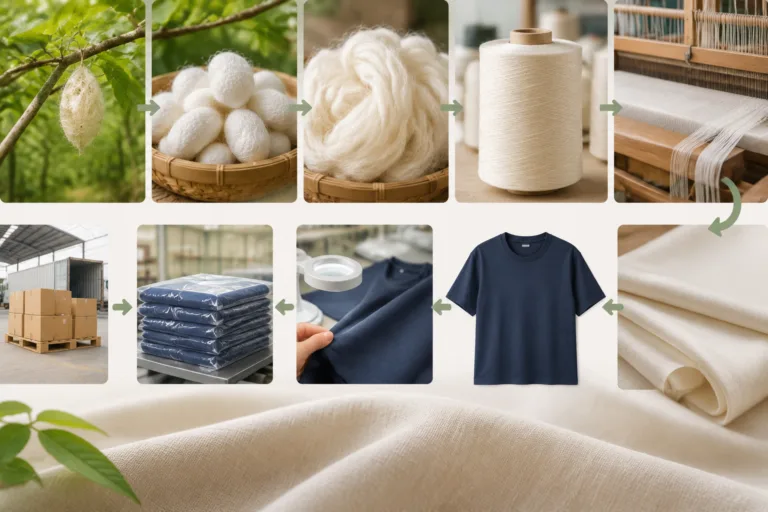
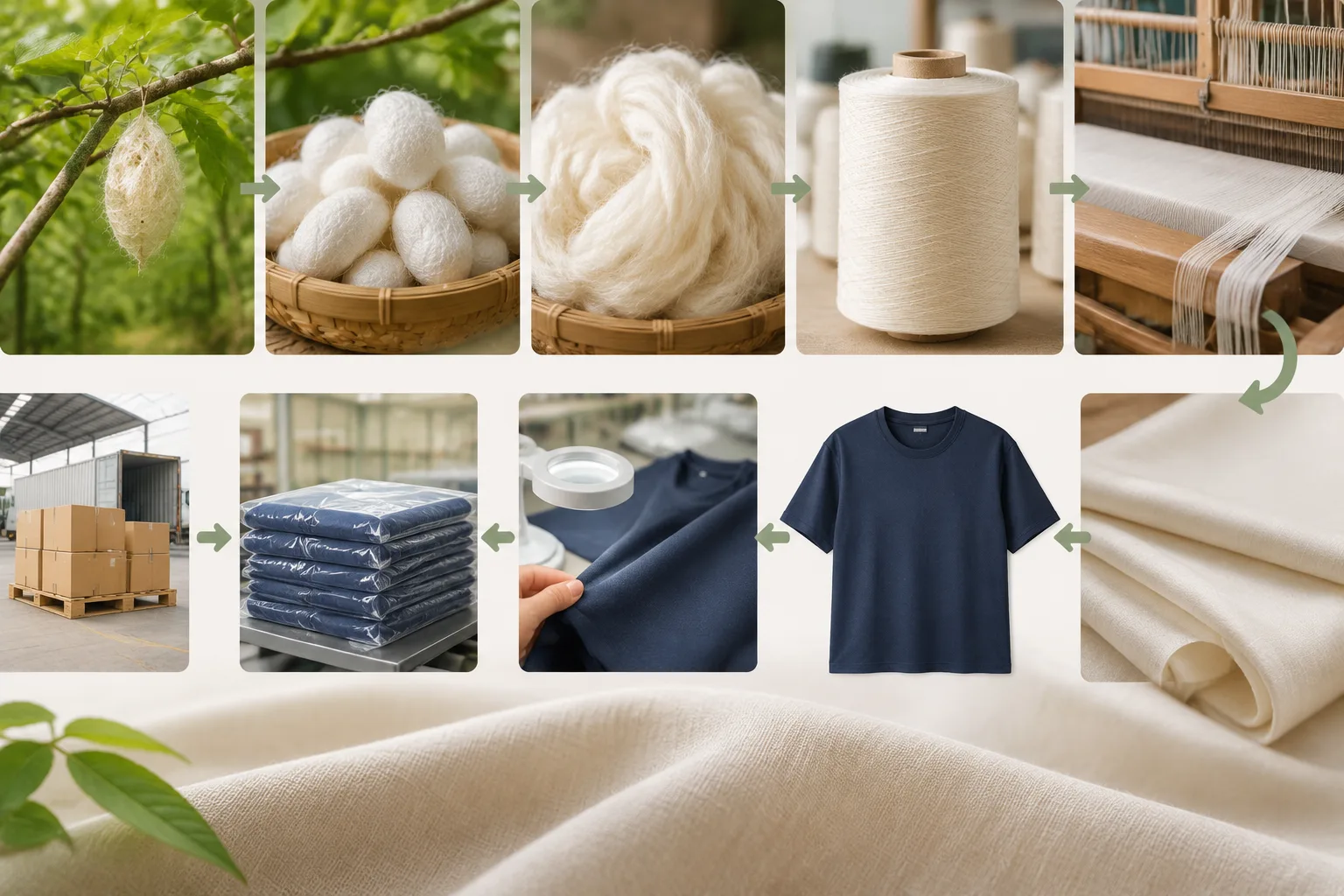
Traceability of wild silk fiber asks whether a reader can follow the material through the stages that actually apply:
- collection or raw-material aggregation;
- initial processing, which may include degumming or another preparation step;
- fiber, waste, or sliver preparation;
- spinning into yarn;
- weaving or knitting into fabric;
- dyeing or finishing; and
- cut-and-sew assembly, where the product is a garment.
Each stage can involve a different party, location, lot reference, or custody change. A useful record therefore connects an input to an output and identifies the organization responsible for the activity. It may also show where material was aggregated, blended, re-spun, or transferred. The level of detail needed depends on the material format, intended market, product specification, and risk that material could be mixed or substituted. There is no single documentation package that fits every wild silk supply chain.
Traceability evidence also has limits. A connected set of records can support a statement about a documented material pathway. It does not independently prove biodiversity benefits, ethical collection, worker conditions, fiber quality, durability, or other performance outcomes. Those claims need their own appropriate evidence. Apparel Wiki’s role is to help readers assess the information; it does not verify suppliers, collection sites, or origin claims.
Map the Wild Silk Fiber Traceability Chain
Begin with the actual participating nodes rather than placing the entire chain under the garment or fabric supplier’s name. A fabric supplier may purchase yarn from another company, which may obtain prepared fiber from an aggregator. That aggregator may receive material from several collection or processing points. A supplier address identifies one node. It does not establish where the upstream material was collected, processed, or transformed.
For wild silk supply chain mapping, draw a node-and-link map from the raw-material source toward the finished product. Label each link as confirmed, reported, or unknown. Preserve unknowns instead of replacing them with the location of the most visible supplier.
| Supply-chain stage | Observable records or inputs | What the records can support | Initial sourcing decision | Variables that could change it |
|---|---|---|---|---|
| Collection or aggregation | Raw-material description, lot reference, collection or aggregation party | A stated upstream source and an input for later reconciliation | Ask for the link to the next processor | Multiple collection points, aggregation, or missing lot identity |
| Initial processing and fiber preparation | Processing record, output description, input reference | A documented transformation or preparation step | Compare input and output descriptions | Material loss, blending, re-spinning, or changed terminology |
| Spinning and fabric formation | Yarn record, transaction or custody record, fabric production record | A reported connection between yarn, fabric, and responsible facilities | Check whether the yarn links to a defined upstream lot | Subcontracting, mixed lots, or incomplete transfer records |
| Dyeing, finishing, and assembly | Processing records, facility information, finished-goods description | The later processing and custody path | Map the final product back to yarn and fiber | Material changes, outsourced work, or separate components |
These records support review; their availability and reliability remain project-dependent. A batch or lot identifier may help connect documents, while a transaction or custody record may show a transfer between parties. A processing record can describe an activity, and a composition declaration can state what a supplier describes in the material. None should automatically be treated as conclusive proof of geographic origin, non-mixing, or every claim made about the product.
Consider a fabric supplier that can document the yarn purchase and finishing operation but cannot connect the yarn to a raw-material lot. The documented chain may support a narrower statement about the supplier-described yarn and later fabric processing. It does not support a precise collection-origin statement without a relevant upstream record, such as a source-linked input or transfer record. The gap should remain visible in the map.
Aggregation, blending, re-spinning, subcontracting, and changes in material format can weaken or alter the available link. A map should show those points explicitly, including where a product moves from fiber to yarn, yarn to fabric, or fabric to garment. The result is a practical view of the wild silk traceability chain, with documented relationships separated from assertions that still need clarification.
Evaluate Evidence Quality at Each Node
Review each record with four questions. Does it identify the material, batch, or other usable reference? Does it identify the relevant party and activity? Does it connect to the preceding and following record? Do the dates, quantities, descriptions, locations, and names remain consistent? These questions test continuity without treating a complete-looking file set as independent verification.
Different records answer different questions. A supplier declaration reports what a supplier states about the material. An internal production record can describe an activity performed by that organization. A transaction document may show a transfer between parties. An independent test or inspection result may provide separate evidence about the item or sample examined. Each record has a defined scope; none should be assigned a universal ranking without knowing its method, coverage, and relationship to the claimed material.
Log the status beside each claim. “Confirmed” can identify a link directly supported by the available records. “Reported” can identify information attributed to a supplier or other source but not independently connected in the file. “Indirect” can describe evidence that relates to the material without establishing the full upstream link. “Missing” identifies a required or important record that is not available. This vocabulary keeps limitations beside the claims they affect.
Watch for contradictions. An inconsistent fiber name may reflect different commercial terminology, but it may also indicate a material-description problem. An unexplained quantity change may result from processing, aggregation, or a documentation error. A missing subcontractor hides an activity and a responsible party. A new lot identifier without a documented transfer breaks continuity until the supplier explains the change.
Preserve the original units and wording when entering records. If a yarn document uses a count notation such as “30/2,” record the notation as supplied and ask what the single-yarn and plied descriptions mean before comparing it with another document. Different yarn systems and commercial conventions are not automatically interchangeable. Exact terminology can prevent a false match created by simplifying the record too early.
For wild silk traceability evidence, the goal is not to assemble documents for appearance. It is to determine which record supports which statement, where the connection ends, and what clarification would narrow the uncertainty. A document checklist can guide review, but it is not itself a certification, audit conclusion, or proof of origin.
Decide What the Traceability Record Supports
A traceability file can support different statements at different levels. Start by separating the claim you want to make from the records you have collected. A material description, a processing-chain statement, a defined origin claim, and a broader social or environmental statement are not interchangeable.
- Material identification: The records describe the material as wild silk or use another supplier-provided designation. This records what the material is called, but does not by itself establish the raw-material source.
- Processing-chain connection: The records link the stated material to identified preparation, spinning, fabric formation, dyeing, finishing, or assembly activities where those stages apply.
- Origin or collection claim: The records connect the material to a defined collection or geographic origin through an understandable upstream chain. The required support depends on the wording and the intended market.
- Additional impact claim: A statement about ecological benefit, worker conditions, biodiversity, or another social or environmental outcome requires evidence directed to that outcome. Traceability alone does not establish it.
Consider a woven or knitted product whose yarn records are complete, while the yarn comes from an aggregated raw-material source. The sourcing team may be able to retain a narrower material description and describe the documented processing path. It should avoid presenting a precise collection origin until the aggregation record connects the yarn to that claim.
Product format can change the review. Blending, recycled or regenerated content, subcontracting, re-spinning, and material changes may introduce additional nodes or alter what the records describe. The intended market can also affect the wording that remains appropriate. These are documentation and claim-boundary questions, not conclusions about legal compliance.
For each proposed statement, record the wording, supporting documents, evidence status, unresolved questions, and the person or supplier responsible for clarification. Keep the limitation beside the claim it affects. A traceability record does not automatically establish fiber quality, hand feel, durability, regulatory conformity, or environmental performance. Those subjects require separate assessment.
A Practical Review Workflow for Wild Silk Traceability
Use the following workflow as an educational review of a product file. It organizes information for comparison, but it is not an audit, certification process, or independent verification.
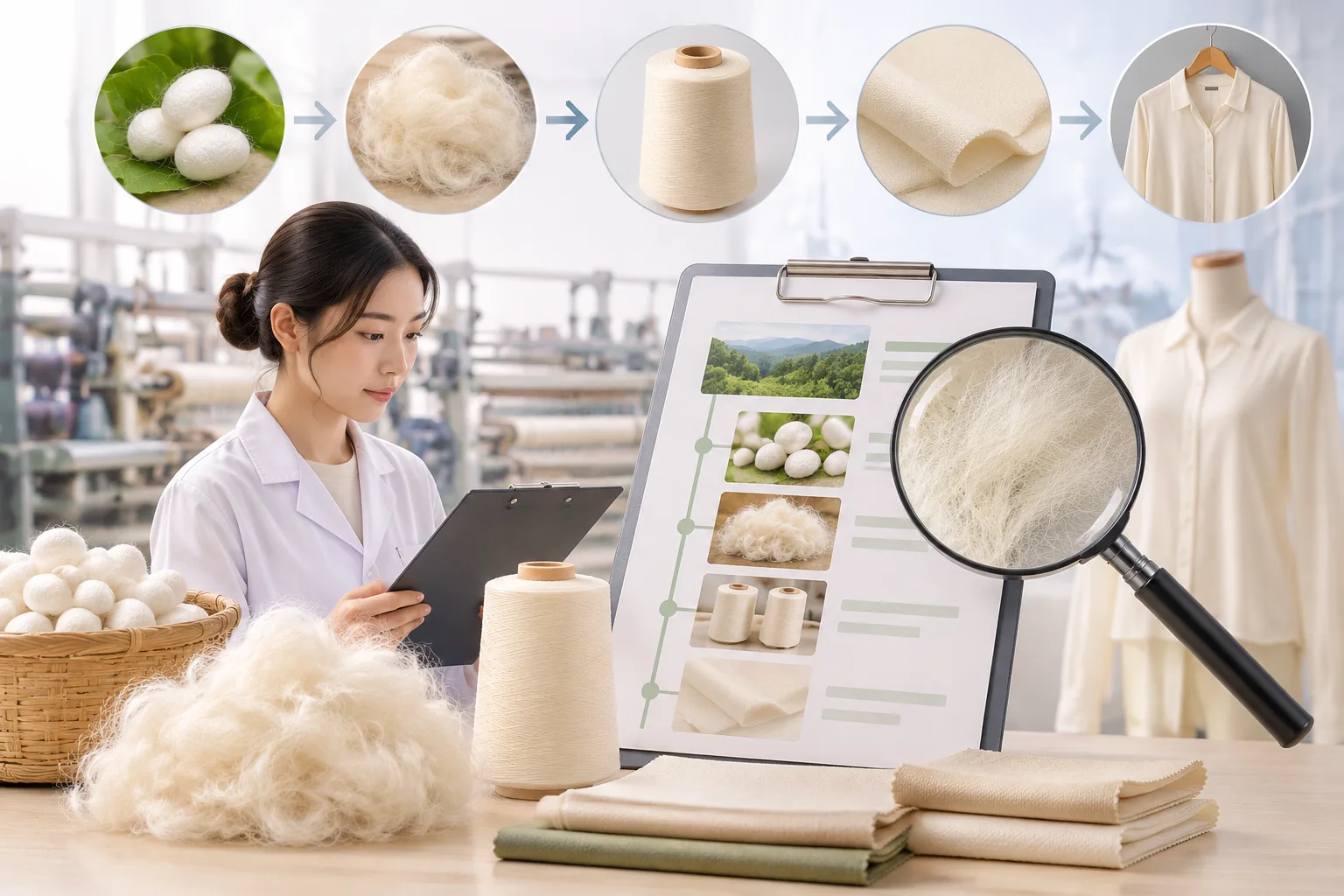
- Define the product first. Record the finished product, fabric format, stated material description, blend information if available, and the claim the team is considering. List known processing and custody nodes, including aggregation points and possible subcontractors. Mark assumptions before requesting additional records.
- Build a node ledger. Create one entry for each participating party or activity. For every input and output, record the material description, lot or batch reference where available, date or sequence, responsible party, location as reported, and document source. Leave unknown fields blank or mark them as unknown. Do not replace a missing upstream location with the address of the most visible supplier.
- Reconcile in both directions. Work backward from finished fabric or garment to yarn, fiber preparation, initial processing, and raw material. Then work forward again. Compare names, quantities, composition descriptions, locations, custody changes, and lot references. A changed identifier, unexplained quantity difference, inconsistent fiber term, or missing subcontractor should trigger clarification rather than an automatic match.
- Separate record types. A supplier declaration records what a supplier states. An internal production record may describe an activity at that party’s node. A transaction or custody document may help connect parties and materials. An independent test or inspection result may address a defined property or observation. Each can contribute to the review, but none should be treated as universal proof of origin without appropriate supporting evidence.
- Apply the intended-claim rule. Communicate only what the linked records support. Qualify unresolved portions, and omit a claim when its critical connection cannot be validated. A useful status vocabulary is confirmed, reported, indirect, and missing. The status should describe the evidence for the specific statement, not the apparent completeness of the file.
For a lightweight fabric made from supplier-described wild silk yarn, ask whether the yarn record connects to a defined raw-material lot. Also ask whether aggregation, blending, or further processing could change the claimed identity. The answer may depend on the supplier’s records and the fabric’s construction, so preserve the question rather than assuming either outcome.
Finally, compare the documentation with the buyer’s specification and any applicable market requirements. Identify the single most important missing link for the next review cycle. The next step is educational and concrete: select one material specification or sourcing file, draw its participating nodes, mark the strongest unresolved connection, and check the applicable authoritative method or market rule before making a public statement.
Conclusion: Use Evidence to Narrow the Claim
Wild silk fiber traceability depends on linked, stage-specific records rather than a single supplier statement. A clear node map can show both supported facts and meaningful unknowns without treating missing evidence as verified. Review one real material specification or sourcing file, compare it with the node and evidence distinctions in this guide, mark the strongest unresolved link, and check the applicable authoritative method or market rule before making a public claim.
Frequently Asked Questions
What does wild silk fiber traceability prove?
It can show how identified material, processing, and custody records connect across relevant supply-chain stages. It does not automatically prove the truth of every material, origin, environmental, social, quality, or performance claim.
Which supply-chain stages should be included when tracing wild silk fiber?
Include the stages that apply to the product: collection or aggregation, initial processing, fiber preparation, spinning, weaving or knitting, dyeing or finishing, and garment assembly. Mark unused, unknown, subcontracted, or blended stages explicitly.
Can a fabric supplier’s address prove the origin of wild silk fiber?
No. The address identifies the supplier’s node. It does not, by itself, establish where upstream material was collected, processed, aggregated, or transformed. Origin wording needs a connected upstream record appropriate to the claim.
What records help connect wild silk yarn to an upstream material source?
Useful records may include material descriptions, lot or batch references, processing records, transaction or custody documents, and information about aggregation or blending. Their value depends on whether they connect clearly to preceding and following records.
What should a sourcing team do when a traceability link is missing?
Mark the link as missing, identify the exact claim it limits, and request clarification or an upstream record from the responsible party. Until the connection is supported, narrow the statement or omit the affected origin or composition claim.