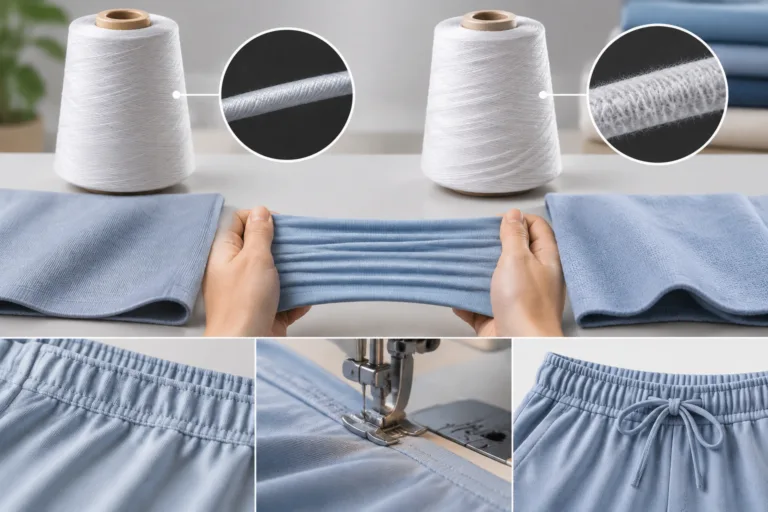
Production escalation problems are best diagnosed by comparing like with like before assigning blame to a person, machine, or material. When output or quality weakens after a product moves from development, a pilot run, or limited production into a larger and more demanding context, use the available records and observations to identify what changed. The Sponsor page is separate from this independent educational guidance; Apparel Wiki is not a factory auditor, manufacturer, or production service provider.
This guide treats escalation as an evidence problem. First describe the weak result, then establish comparable measures, preserve competing explanations, and run the smallest informative check. Only after the evidence supports a change should the working method be updated.
How to diagnose production escalation problems
Production escalation is a change from a smaller, earlier, or more controlled production context to a larger or otherwise different operating context. The change may involve volume, operators, equipment, materials, work sequence, training, workload, or several of these at once. A larger run can therefore expose a difference without proving which difference caused it.
Begin with the observable result. Rising defects, lower first-pass approval, more rework, slower output, and unstable measurements are not interchangeable symptoms. Quality loss concerns the condition of the product or operation. Output loss concerns how much work is completed. Measurement inconsistency concerns whether the comparison itself remains reliable. These problems may overlap, but combining them into one score can hide the useful question.
Record where the result appears, when it began, which operation or product version is involved, and whether it occurs consistently. Note the batch or time window, defect location and direction, frequency, and the conditions under which the appearance is found. A photograph can help locate a problem, but one image or anecdote does not establish its cause.
Keep the diagnostic sequence explicit:
- Describe the result in observable terms.
- Establish measures with the same definitions and comparison frame.
- List material, construction, equipment, method, workload, inspection, and measurement hypotheses.
- Run the smallest safe check that can distinguish the strongest alternatives.
- Update the process only when the comparison supports the change.
A weak result is evidence of a change, not a confirmed root cause. This distinction prevents a familiar explanation, such as operator error or machine condition, from becoming a conclusion before the relevant records have been compared.
Build a comparable baseline before changing the process
A baseline should state what was counted, where it was counted, and under which conditions. Keep the product version, operation or inspection point, time window, batch definition, and counting rule consistent wherever possible. If any of these changed, record the difference before ranking the results. A percentage with a different numerator or denominator is not a reliable basis for comparison.
First-pass yield describes the share of pieces that pass the first inspection without correction. Final approval after rework answers a different question. It may look stable even while the process loses time and labor to correction. Display final approval with rework quantity and defect type so that a high post-rework result does not conceal process loss.
For bounded illustration, using example inputs, defective-piece rate is calculated as defective pieces divided by inspected pieces. Thus, 12 defective pieces among 200 inspected pieces gives 6%. Defects per hundred units, or DHU, uses total defects rather than defective pieces: 18 defects among 200 inspected pieces gives 9 DHU. First-pass yield uses first-inspection passing pieces divided by first-inspection pieces; 230 pieces passing on first inspection out of 250 gives 92%. These are arithmetic examples, not measured factory results, sampling rules, or acceptance limits.
Efficiency percentages also require a declared denominator. State how standard time and actual input time are defined, and whether training, downtime, rework, indirect labor, overtime, or other losses are included. Do not rank two efficiency percentages as equivalent until their definitions match.
| Observable input | Possible implication | Initial diagnostic choice | Variable that could change the interpretation |
|---|---|---|---|
| More defects at one operation | A local method, material, construction, or equipment difference may be involved. | Compare defect location, operation records, product version, and operator or equipment assignment. | A changed defect definition or inspection point could create the apparent increase. |
| Lower first-pass approval with stable final approval | Rework may be absorbing process loss. | Compare first-pass pieces, rework quantity, defect type, and correction time. | Different inspectors or repeated inspection counts could alter both figures. |
| Rising rework hours | Defect frequency, repair difficulty, or recording practice may have changed. | Separate hours by defect type, operation, and product or batch. | More complete time recording can look like a process decline. |
| Lower output with stable quality | Flow, workload, downtime, staffing, or the efficiency denominator may have changed. | Compare completed units with available time and recorded interruptions. | Product mix, training time, or rework excluded from the measure may reverse the interpretation. |
| Apparent change after a new inspection method | The measurement system may have changed rather than the physical process. | Reconcile defect definitions, sampling, inspectors, and inspection points. | A genuine product or material change may still be present. |
Separate the competing causes of weak escalation results
Similar symptoms can arise from different parts of an apparel process. Start with material and product variables: fabric-lot behavior, component variation, pattern details, seam or construction features, and changes between the earlier and escalated version. A visible distortion, skipped stitch, shade difference, or fit-related issue may have more than one plausible explanation.
Next examine the method and equipment. Compare the operation sequence, guides, attachments, settings, maintenance state, tool access, and workstation arrangement. Differences between operators can matter even when the written method appears unchanged. The question is not which person is at fault, but whether the operating conditions and method were actually comparable.
Human and flow variables also belong in the investigation without becoming blame statements. Training, feedback, ergonomics, line balance, interruptions, overtime, staffing changes, and unclear handoffs may affect quality or output. Treat operator feedback as process evidence. It can identify a recurring difficulty, but it does not by itself prove the cause or guarantee that one management response will solve it.
Inspection and data collection should remain competing explanations. Changed inspectors, repeated counting, different defect definitions, inconsistent sampling, or a new inspection location can make a result appear weaker without showing that the physical process changed. Reconcile the records before treating a shift in the number as a shift in product condition.
For each hypothesis, write three questions:
- Support: What observation or record would be expected if this explanation were involved?
- Contradiction: What finding would make the explanation less likely?
- Minimum check: What is the smallest safe comparison that could distinguish it from the alternatives?
For example, if a seam-related symptom appears after volume increases, compare fabric behavior, construction details, operation sequence, equipment condition, and inspection location rather than selecting the most familiar cause. Washing or use conditions may also matter when the symptom appears only after those conditions. A cause checklist organizes inquiry; it does not confirm the cause. Preserve the competing hypotheses until comparable evidence narrows them.
Run controlled checks before approving a corrective change
Once the baseline and competing hypotheses are clear, choose the smallest informative check. The check should separate plausible explanations without changing the entire process at once. Depending on the symptom, that may mean comparing the same operation with a controlled material lot, checking equipment condition, matching operators while keeping the method unchanged, or reviewing the same defect at adjacent process points.
Write down what changes and what remains constant. Record the product or batch identity, operation, observation window, defect location, first-pass result, rework, and any safety or ergonomic concern. Avoid changing material, settings, sequence, staffing, and inspection rules together. If the result improves, you then have no reliable way to know which change mattered.
For example, a lightweight knit may show seam distortion only after volume increases. Before rewriting the standard, compare fabric behavior, handling sequence, equipment setup, and inspection location. If the symptom appears only after washing, the useful comparison changes. If it appears in one component before washing, the component or its construction deserves earlier attention.
Define the observation criteria before reviewing the result. Note the defect type and location, not merely whether the piece was accepted. Include rework and unintended effects, because a temporary improvement that increases handling or conceals a defect is not a complete solution.
Interpret a short check cautiously. A better run may reflect easier pieces, different operators, temporary extra attention, or a changed inspection rule. Repeat the comparison under the relevant escalated conditions when practical. A minimum verification trial can narrow a hypothesis, but it does not establish long-term production capability or a universal limit.
Stop or redesign a check if it could create unsafe work, conceal defects, compromise reasonable working conditions, or turn a temporary workaround into an unapproved permanent method. This is a reasoning tool for local investigation, not a factory test performed by Apparel Wiki.

Convert findings into stable work and escalation follow-through
When evidence supports a likely cause, document the change in observable terms. Record the operation sequence, tools, relevant settings, inspection point, defect definition, training need, and conditions under which the method is expected to work. “Improve handling” is difficult to compare; a described sequence and inspection point are easier to review.
Standard work should help people compare the process, not detach instructions from actual operations. Ask operators where the method becomes difficult, whether tools or access interfere with the sequence, and whether the written instruction matches the product version. Feedback can reveal process variation without proving that one person or one intervention caused the result.
After the change, keep the same measurement definitions used in the baseline. Track first-pass results, rework quantity, defect type and location, output, and relevant downtime. Comparing only final approval can hide renewed process loss. Also record whether the product version, material lot, equipment, or inspection practice changed during follow-through.
| Record | Why it matters |
|---|---|
| First-pass result and rework | Shows whether improvement occurred before correction, not only after it. |
| Defect type and location | Shows whether the original symptom changed or moved. |
| Output and relevant downtime | Separates quality improvement from an output loss. |
| Product, material, equipment, or inspection changes | Identifies events that may reopen the competing hypotheses. |
Assign a review trigger for recurrence, a product-version change, material-lot change, equipment change, or a shift in inspection practice. These events can make an earlier comparison invalid. If the result weakens again, return to product, material, equipment, method, flow, or measurement review rather than simply demanding more output.
Separate containment from prevention. Holding affected pieces, separating a batch, or adding temporary inspection may limit immediate exposure. Those actions do not, by themselves, remove the underlying cause. A supported process change should remain understandable, observable, and open to review when operating conditions change.

Use the evidence to decide the next escalation step
Use four steps: define the weak result, compare consistent measures, test the strongest competing causes, and monitor the revised method. If the evidence remains unresolved, narrow the question or collect another observation instead of assigning blame. As an educational next step, compare the product specifications, inspection and rework records, material or product changes, operation-level observations, and applicable evaluation method against this decision logic.
Frequently Asked Questions
What does production escalation mean in garment manufacturing?
Production escalation means moving from a smaller, earlier, or more controlled context to a larger or otherwise different operating context. The change may involve volume, operators, equipment, materials, sequence, training, workload, or inspection conditions.
Why can first-pass yield fall while final inspection approval stays high?
First-pass yield counts pieces that pass without correction. Final approval may include pieces repaired or reworked first. Final approval can therefore remain high while rework, handling, labor, and process loss increase.
How can I tell whether a weak result comes from fabric, equipment, method, or inspection?
Keep those explanations separate and compare the smallest informative differences. Review material and product identity, equipment condition, operation sequence, operator feedback, defect location, and inspection definitions. Supporting and contradictory evidence is more useful than a familiar cause list.
Should production efficiency percentages be compared between different factories or lines?
Not without checking the definitions. Percentages may use different standard-time and actual-input-time boundaries, including or excluding training, downtime, rework, indirect labor, or overtime. Compare the numerator, denominator, and included losses before interpreting a difference.
What is the smallest useful check to run before changing standard work?
Choose a matched comparison that changes one important input while keeping other conditions as stable as practical. Record the product or batch, operation, observation period, defect details, first-pass result, rework, and unintended effects.
When should a temporary containment action be replaced with a permanent corrective change?
Containment limits immediate exposure but does not confirm or remove a cause. Replace or supplement it when comparable evidence supports a change, the method is documented, relevant people understand it, and follow-up uses the same baseline measures.