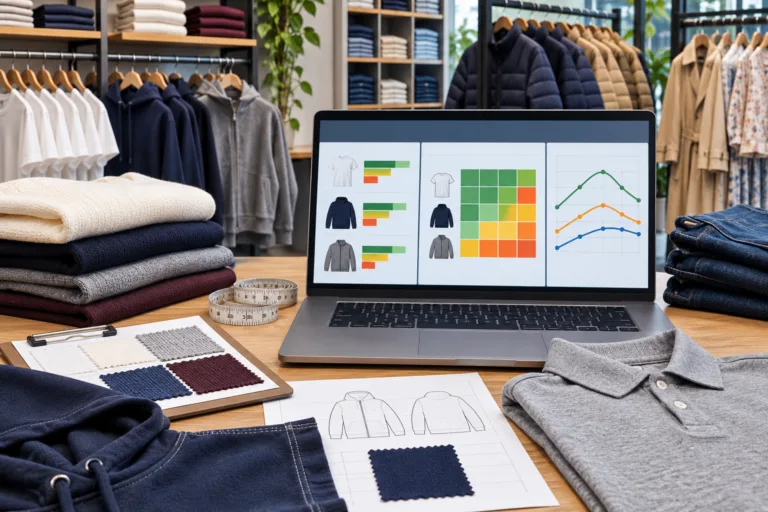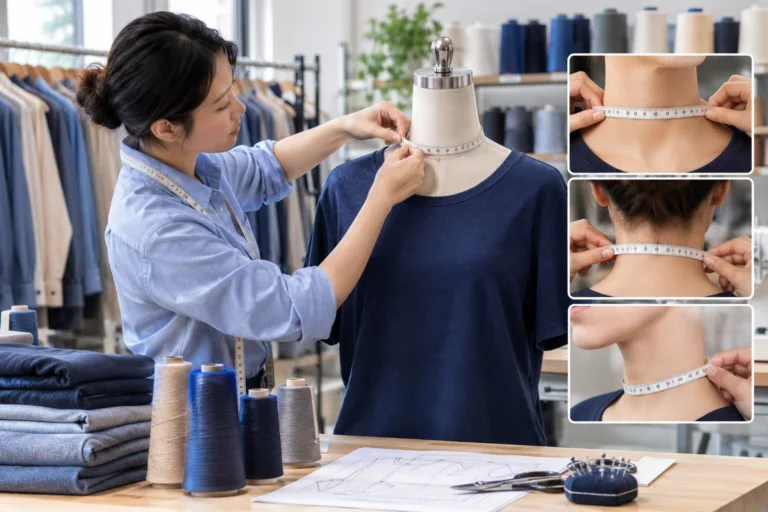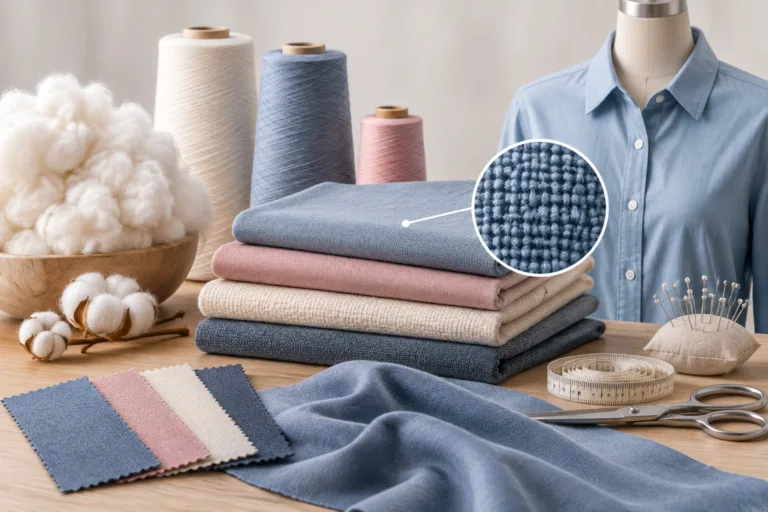
A practical apparel industry education follows the decisions that turn material inputs into finished clothing. Start with fibers, yarns, and fabrics. Then connect material behavior to design, specifications, patterns, samples, construction, finishing, and garment evaluation. Apparel Wiki presents this pathway as independent education; its Sponsor page explains the publication’s editorial independence.
Use the pathway to identify what you need to do, observe, or document next. Learning terminology is useful, but production literacy develops when you connect an observation to a product decision and understand when specialist guidance is required.
How apparel industry education connects fibers to finished clothing
This apparel production learning path builds connected production literacy. Material inputs influence fabric structure and behavior. Fabric and garment construction affect development choices. Observations from samples and finished garments then inform revisions or future products. Each stage gives context to the next instead of functioning as an isolated vocabulary topic.
A concise learning sequence runs as follows:
- Identify the fiber or other material input.
- Study yarn and fabric formation where they apply.
- Observe the fabric’s construction, surface, stretch, drape, and finish.
- Connect the material to product specifications, components, and pattern development.
- Review samples against the intended design and measurement information.
- Follow cutting, assembly, finishing, and finished-garment evaluation.
- Record issues and use them to refine earlier decisions.
This is a learning sequence, not a universal factory route. A knitted product, woven shirt, nonwoven item, or highly structured garment may involve different operations. Some products bypass yarn formation, while others combine several materials and construction methods. Development can also return to an earlier stage when a sample reveals a material, pattern, component, or assembly question.
The practical benefit depends on the learner’s role. A designer can ask whether a silhouette and material work together. A product developer can trace missing information in a specification. A pattern maker can separate shape questions from material effects. A sourcing or quality learner can record observations clearly enough to request the appropriate technical review.
These activities represent different capabilities. Knowing a seam name is not the same as making and documenting a seam sample. Reading a measurement specification differs from deciding how to measure a garment consistently. Interpreting a result also requires more than recognizing its terminology. Each capability needs an appropriate task, evidence, and feedback.
Foundational knowledge therefore does not demonstrate an ability to operate machinery, approve production, or manage an entire manufacturing process. It helps learners recognize the next question and the type of expertise needed to answer it.
Start with fibers, yarns, fabrics, and material behavior
Material literacy begins with relationships rather than broad performance claims. Stated fiber content and fiber form can lead into a yarn structure or directly into a fabric structure. Fabric construction, weight, stretch, surface, and finish can then affect handling and potential use. No single characteristic determines garment suitability by itself.
Build a consistent record for every swatch or sample. Include:
- Supplier, source, or sample identification.
- Stated composition, if reliable information is available.
- Visible or documented construction clues, such as knitted or woven structure.
- Qualitative observations about hand, surface, drape, stretch, or recovery.
- The intended garment, component, or learning task.
- Photos, related settings, and notes from any comparison.
Keep reported information separate from personal observations. For example, a composition statement belongs in a different category from a learner’s description of softness or drape. If construction is inferred from visual inspection rather than documented by the supplier, label it as an observation rather than a confirmed specification.
A material description is not yet a garment-use conclusion. A label can identify stated content, while a swatch can reveal characteristics under limited handling. Neither establishes that the material suits every silhouette, seam, finish, care condition, or use environment. Garment material selection also involves the pattern, components, construction process, intended use, and evaluation criteria.
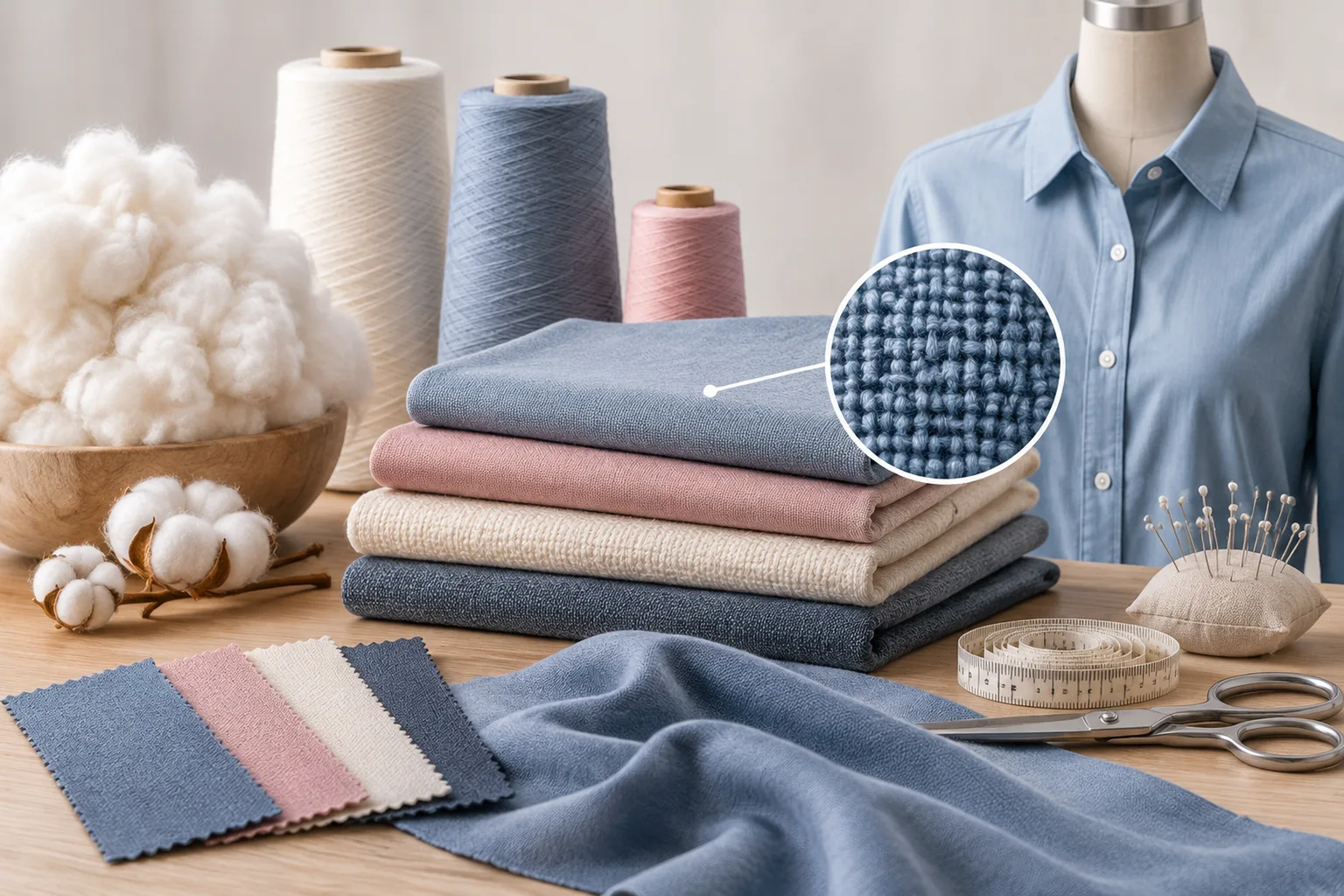
Small comparisons can make yarn and fabric basics more concrete. Contrast two swatches while keeping the observation task as consistent as practical. Alternatively, change one construction or handling variable and document the difference. Retain the swatches, photos, settings, and notes so the observation remains connected to its context.
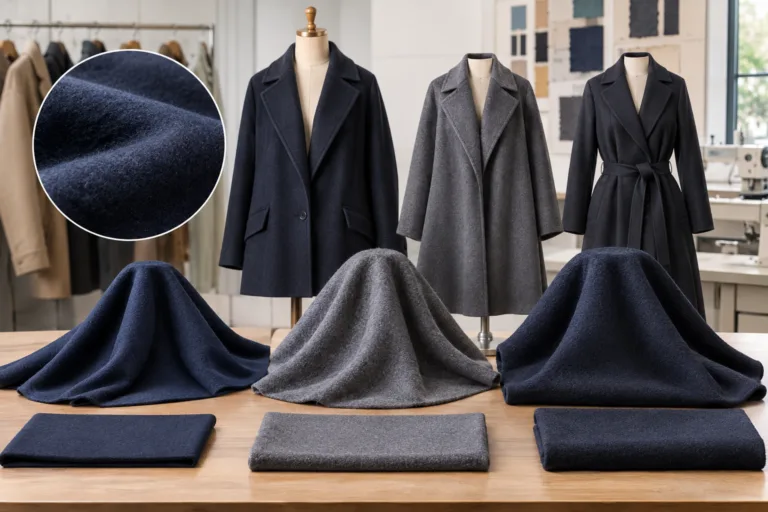
For instance, a learner could compare how two fabrics fall over the same form, then note differences without declaring one universally better. A later project may introduce another fabric structure, garment shape, finish, or use condition that changes the conclusion.
Treat each swatch as evidence about that sample under those comparison conditions. Do not generalize its behavior to every material sharing a fiber name or broad fabric category. More specific performance conclusions require an applicable method, suitable specimens, and an authoritative basis for interpretation.
Connect fabric choices to garment design and development
A sketch communicates an idea, but it does not resolve garment development. A workable product connects intended use, silhouette, material, components, construction, measurement expectations, pattern geometry, and finish. Changing one element can create new questions elsewhere, so apparel product development is an iterative communication process.
Several tools carry different parts of that communication:
- Specification package: Records the agreed product information needed by the project, which may include measurements, construction details, materials, artwork, finishes, or review comments.
- Pattern: Translates garment shape and construction intent into pieces used for sampling and, when approved for that purpose, production preparation.
- Bill of materials: Identifies the fabrics, trims, labels, and other components required for the product.
- Sample: Provides a physical checkpoint for comparing an interpretation with the agreed design and garment specification.
The contents and level of detail depend on the product, development stage, and team. These tools should support one another. A component listed in the bill of materials may need a location or application detail elsewhere. A measurement point may require a clear definition before different reviewers can interpret it consistently.
Consider the same visual design idea in a lightweight knit and a structured woven fabric. The knit version may raise questions about stretch, recovery, seam behavior, edge control, and how the pattern uses the material. The woven version may shift attention toward shaping, seam placement, stabilization, internal components, or the intended structure. These are investigation prompts, not universal outcomes for every knit or woven fabric.
Sample review turns those questions into documented evidence. Compare the sample with the current design, pattern, measurements, materials, components, construction information, and finish intent. Record where the observation occurs, what was expected, what is visible, and any relevant sample context. Avoid vague comments such as “fit is wrong” when a more precise location or condition can be described.
Next, classify the unresolved question. Does it concern material behavior, pattern shape, component choice, assembly, finishing, or the clarity of the documentation? That classification guides the next review instead of assuming a single cause. A sample is therefore a learning artifact and communication checkpoint. By itself, it is not proof that the design is ready for repeatable production.
Learn how garment construction becomes repeatable production
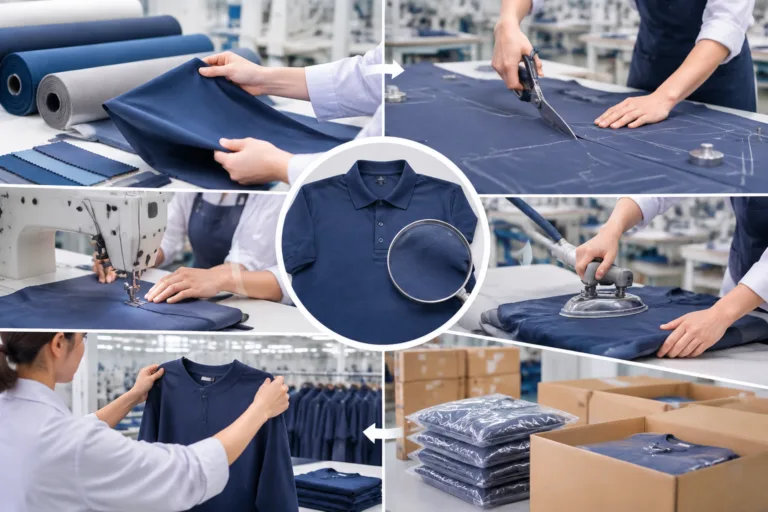
Moving from an approved sample toward production requires controlled handoffs. Each team needs the current information for its task, while observations and corrections must travel back to the people responsible for earlier decisions.
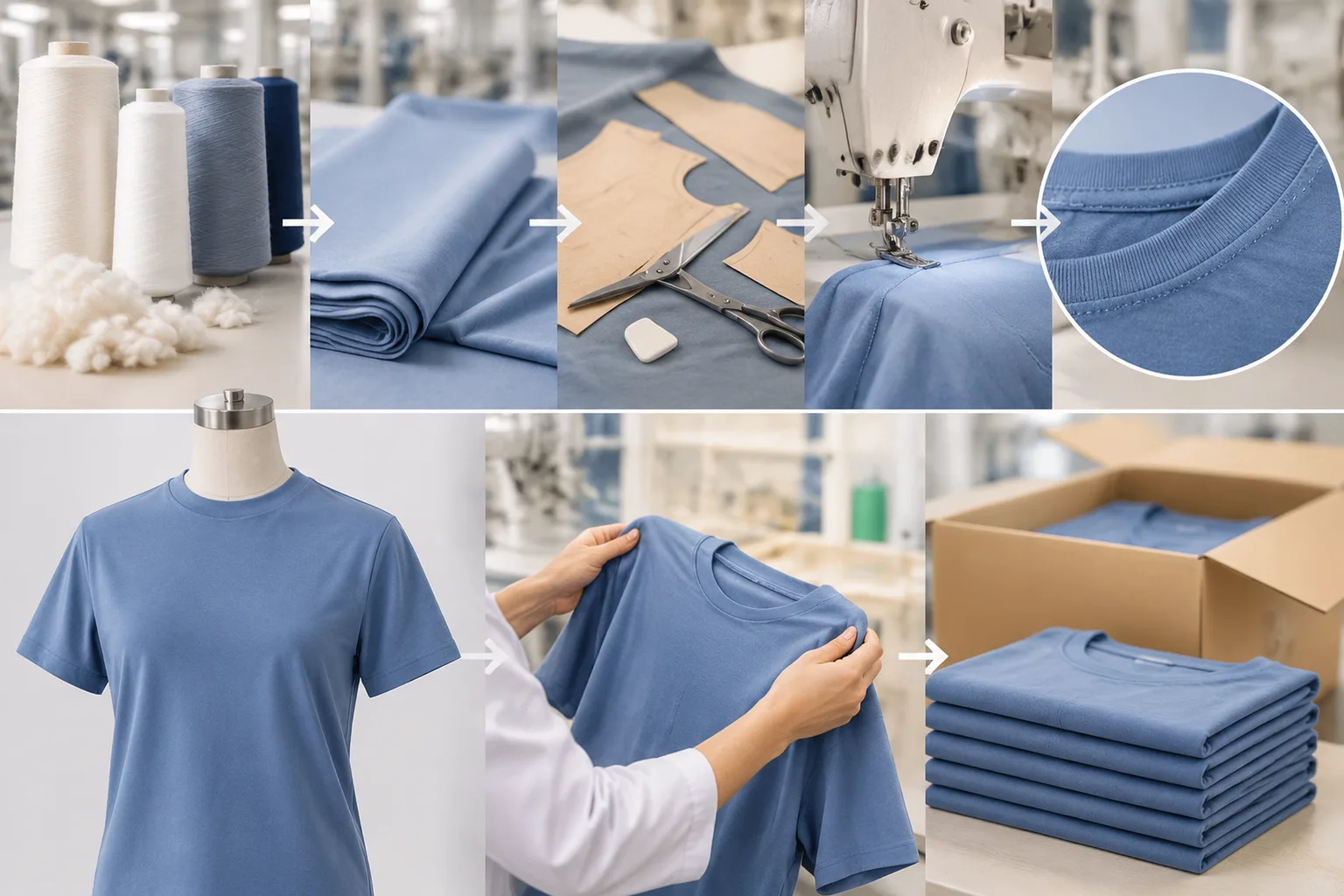
- Confirm the approved material, components, pattern, and construction information.
- Prepare the marker and cutting instructions where they apply.
- Cut and identify garment parts for the intended assembly sequence.
- Assemble the garment using the defined seams, components, and handling approach.
- Complete the specified finishing operations.
- Inspect or evaluate the result and record issues for correction.
Repeatability depends on how clearly the product and process are defined. The responsible team must be able to interpret the garment, material, construction sequence, and acceptable observations consistently. A facility photograph, equipment list, quoted price, factory size, or country does not establish capability for a particular product. One successful sample does not establish consistent production either.
When an issue appears, trace it through the connected variables before assigning a cause. Record the garment location, material, pattern version, component, seam or assembly method, relevant setting, handling context, finishing stage, and what was observed. This approach turns a vague defect comment into a question that can be investigated.
For example, visible distortion near a seam could prompt separate questions about material behavior, pattern shape, component interaction, assembly, handling, or finishing. The appearance alone does not identify which variable caused it. Comparing documented samples or process stages can help narrow the question without turning one observation into a universal rule.
Practical training also has safety boundaries. Machine operation, chemical use, protective products, children’s products, and other safety-sensitive work require appropriate supervision, equipment guidance, and qualified technical direction. General apparel education can explain what to document and when to seek help, but it cannot replace supervised instruction or applicable requirements.
Build a task-based apparel learning plan and evidence portfolio
Start an apparel learning plan with a role-relevant outcome, not a long terminology list. The outcome might be describing a fabric consistently, reading a measurement specification, documenting a supervised seam sample, or explaining the significance of a sample-review observation.
| Learning stage | Question | Practical task | Evidence to retain | What could change the conclusion |
|---|---|---|---|---|
| Material observation | What can be reported or observed? | Describe and compare identified swatches. | Swatches, identification, photos, and notes | Composition information, structure, finish, or intended use |
| Development documentation | How is product intent communicated? | Compare a specification, pattern, bill of materials, and sample. | Document versions and annotated observations | Design revision, measurement definition, material, or component |
| Construction observation | How does assembly affect the result? | Examine a seam sample or assembly stage under appropriate supervision. | Sample context, method, settings, and visible result | Material, seam method, setting, handling, or equipment |
| Finished-garment review | Does the garment match its documented intent? | Review defined locations and record differences. | Garment identity, photos, notes, and relevant documents | Pattern, assembly, finish, review condition, or unclear criteria |
Match the source to the question. Introductory explainers can build vocabulary, while technical guidance supports application. Primary standards or research may be necessary when a claim requires a defined method or greater authority. Marketing material can describe an offered product, but it should not be treated as independent research.
Use a simple feedback loop for every task: record the context, retain the sample or document, note what changed, and describe what was observed. Ask a qualified reviewer when the interpretation exceeds your current knowledge. Then select the next gap instead of repeating material you already understand.
An evidence portfolio shows completed tasks, retained context, and increasingly precise questions. It does not automatically qualify someone to operate equipment independently, approve production, interpret every technical result, or make claims about regulated products.
Use the pathway to choose the next useful lesson
Connected production literacy grows by following evidence across stages. Study the material and structure, relate them to product and process choices, evaluate the resulting garment in context, and use the record to refine the next question. Apparel Wiki supports this process as an independent educational publication, not a production-approval service. For your next lesson, select one garment or swatch and map what you know about its material, development, construction, and evaluation. Identify one missing document, observation, or qualified source that you need before drawing a stronger conclusion.
Frequently Asked Questions
What should I learn first if I am new to apparel production?
Begin with a specific task, such as describing a fabric or reading a measurement specification. Learn the vocabulary needed for that task, complete it, retain the evidence, and identify the next material, development, construction, or evaluation question.
Do I need to understand fibers before learning garment construction?
You need enough material knowledge to recognize that construction choices interact with fabric behavior. You do not need complete fiber expertise first. Develop material and construction knowledge together, while keeping stated composition separate from your own observations.
How can I practice apparel development without operating industrial equipment?
You can compare swatches, examine garments, annotate specifications, review bills of materials, study patterns, and document samples. You can also classify observations by material, pattern, component, assembly, or finish before seeking supervised practical instruction.
What is the difference between a garment sample and proof that production will be repeatable?
A sample records one product result under a particular set of conditions. Repeatable production also requires clear information, controlled handoffs, consistent interpretation, and evidence from the relevant process. A single sample cannot establish those conditions by itself.
How should I record fabric and garment observations for future projects?
Record the sample identity, stated information, observed structure or features, intended use, review conditions, location of each observation, and relevant document versions. Retain swatches or garments, photographs, settings, and notes when appropriate.
When do I need qualified technical guidance instead of a general apparel education resource?
Seek qualified guidance when work involves equipment operation, chemicals, safety-sensitive products, regulated claims, or results requiring a defined technical method. General resources can organize questions, but they cannot replace supervised training or applicable authoritative instructions.