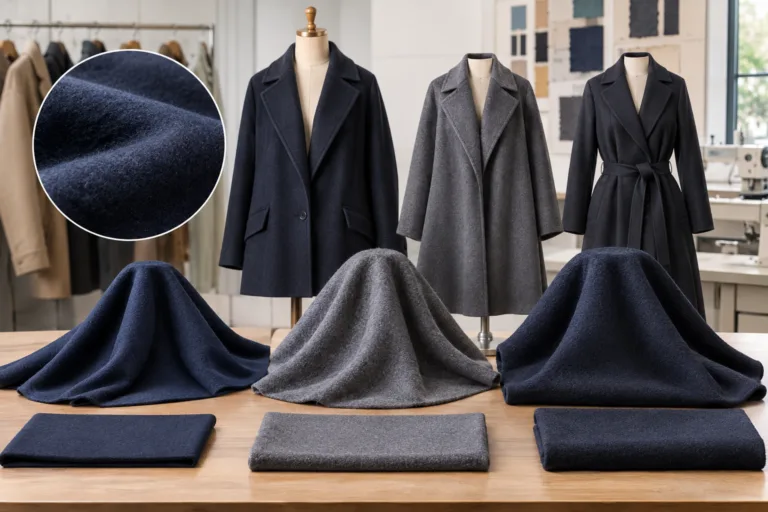
Wool melton weight provides a useful direction for judging drape, but it cannot predict the finished hang by itself. A heavier option may support a more substantial silhouette, while a lighter one may move more readily. Composition, construction, finish, and garment architecture can reverse that expectation. Apparel Wiki approaches this as an independent educational comparison; its Sponsor disclosure explains how sponsorship is kept separate from editorial control.
Here, drape means how fabric hangs under its own weight, forms folds, and follows or resists the intended silhouette. Compare the supplier-stated weight per unit area alongside the material details, then assess representative samples in the intended garment context.
How wool melton weight changes drape
Wool melton weight is one clue to drape, not a stand-alone rating. When two materials have comparable composition, construction, finish, and intended use, their stated weights can help establish an initial direction. The heavier option may feel more substantial and may hold a supported shape. The lighter option may form folds or respond to movement more readily.
Neither outcome is guaranteed. Weight does not tell a designer how easily the fabric bends, how its surface responds at a fold, or whether a cut edge appears firm or relaxed. It also does not account for seams, lining, interfacing, closures, or pattern shape. Those elements contribute to the final silhouette.
Supplier documents commonly list melton fabric weight as GSM, meaning the reported fabric mass per unit area. Use that figure as a comparison field rather than a quality grade. GSM is not the same as thickness, stiffness, wool content, warmth, or perceived quality. A compact material and a loftier material could have similar stated weights yet feel and hang differently.
A more complete description separates four material layers:
- Fiber content: the declared wool content and any other fibers.
- Yarn: the available description of the yarn used to build the fabric.
- Structure: the stated construction and any relevant density information.
- Finish: the treatment or surface condition represented by the supplied sample.
This approach prevents the commercial name “melton” from carrying more meaning than the documentation supports. It also makes weight comparisons more useful. Compare wool melton drape only between options that are reasonably alike in those four areas. Then hang the samples or make a toile or representative section. The preferred material is the one that serves the intended garment, not automatically the one with the highest or lowest number.
Why meltons with the same weight can hang differently
Two wool melton fabrics with the same nominal weight can show different fold shapes, surface character, and resistance to handling. The shared weight establishes only one point of comparison. It does not establish that the materials have matching composition, yarn, structure, finish, or physical condition.
Start with declared fiber content. Do not assume a specific wool percentage from the word “melton.” Record the wool content and every other declared fiber for each option. If the compositions differ, treat the comparison as one between different material specifications, even when the melton fabric weight is identical.
Next, compare the available yarn and construction descriptions. Yarn character, fabric structure, and density may accompany noticeable differences in body or fold response. Without validated technical documentation, however, those details should be treated as comparison clues rather than proof of a particular result. Handle and hang the actual samples instead of predicting performance from a construction label.
The melton finish deserves the same attention. Ask what finish is declared and whether the submitted sample represents the proposed production color and surface. Inspect each sample under the same conditions:
- Fold it loosely and compare whether the fold appears rounded, sharp, broad, or narrow.
- Release the fold and note how the fabric returns or retains a temporary crease.
- Hang it in the same orientation and compare whether the lower area spreads, falls straight, or collapses inward.
- Look at the bend for changes in surface appearance or visible backing structure.
- Compare compactness and loft by observation without treating either as a quality ranking.
Apparent GSM comparisons can also be complicated by the information basis. Fabric width, relaxation state, moisture condition, and the supplier’s stated measurement condition may not match across records. Use like-for-like documentation where possible. Keep total width separate from usable cutting width when width is supplied. If measurement details are missing, record that limitation and let the physical sample comparison carry more weight in the decision.
Match the hang to the garment silhouette
Choose the desired silhouette before choosing an ideal wool melton weight for garments. A clean, shaped coat may need fabric that supports defined edges and panel shaping. A straighter overshirt or jacket may need enough body for a clear outline without excessive resistance. A relaxed design may depend on softer folds and visible movement. None of these objectives is inherently better.
| Observable fabric and garment inputs | Likely drape implication | Initial selection direction | What could change the direction |
|---|---|---|---|
| Crisp fold response versus fluid folds | Crisper folds may preserve definition; fluid folds may show more movement. | Match the fold character to the design lines. | Finish, seam construction, and panel size. |
| Lined versus unlined construction | Added layers can alter how the shell moves and settles. | Compare samples with the intended lining where practical. | Lining type, attachment, interfacing, and seam allowances. |
| Simple versus shaped panels | Shaped sections place more importance on edge, seam, and curve behavior. | Evaluate a representative joined section for a shaped design. | Pattern geometry, pressing, seam treatment, and support materials. |
| Supported versus relaxed silhouette | A supported form favors shape retention; a relaxed form allows softer collapse. | Select by the intended outline rather than weight alone. | Closures, garment length, layering, and finish. |
When evaluating wool melton for coats with a defined shape, check whether the sample supports the intended edges, seams, and panel forms. Include the proposed lining or interfacing in a representative assembly where those materials are important. A flat shell swatch cannot show their combined effect.
For a simpler jacket or overshirt, compare movement and visible folds at the intended garment scale. Review proposed colorways and finishes separately when representative samples are available. A change in finish or construction may overturn the expectation created by weight alone. The useful question is not whether one melton has “better” drape, but whether its hang fits the silhouette, construction, and use of this design.
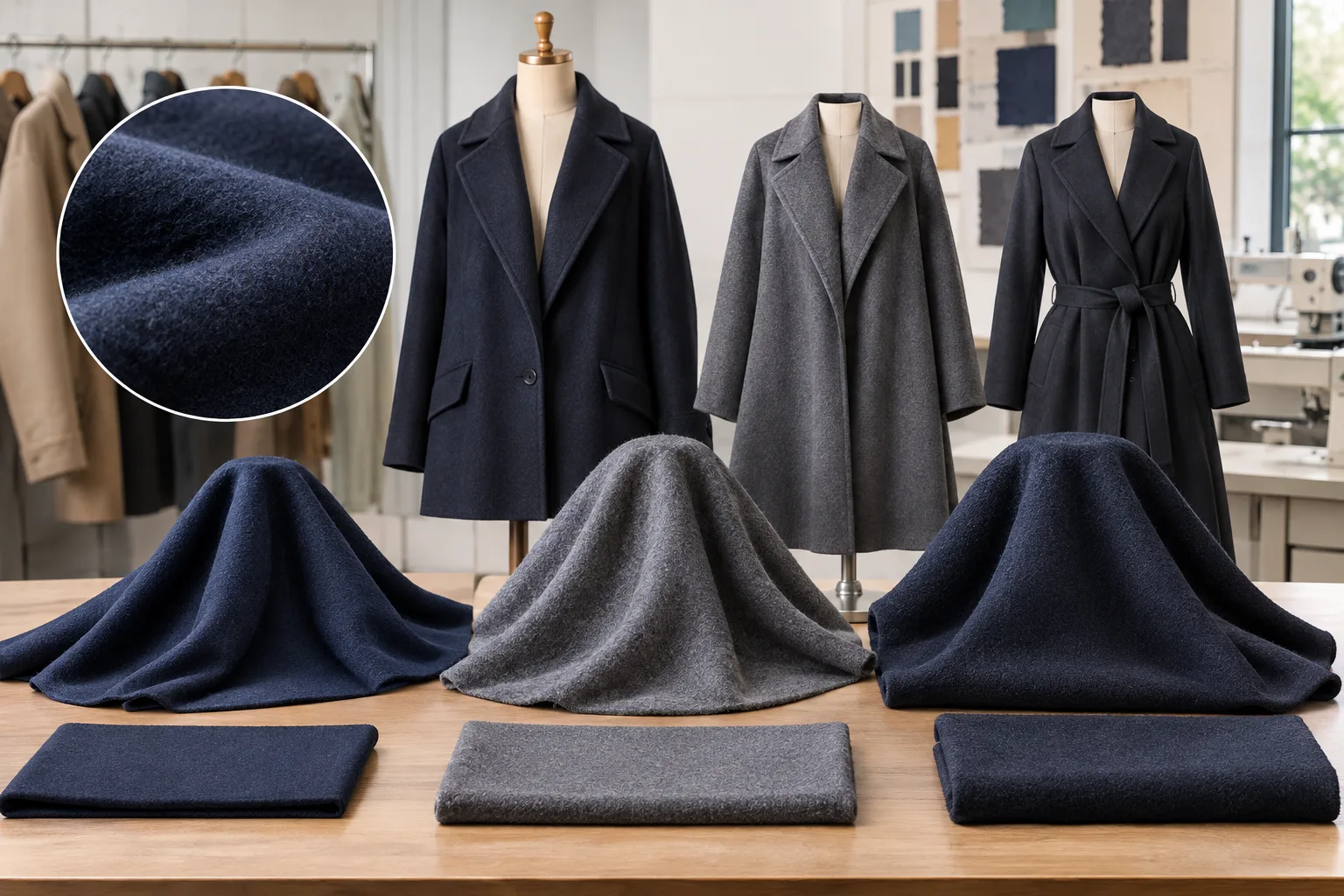
Evaluate wool melton drape on samples before committing
A controlled side-by-side sample comparison provides more useful evidence than judging isolated swatches. Begin with samples that represent the proposed material, color, and finish. Record their declared information before handling them so that visible differences remain connected to identifiable specifications.
- Document the samples. Note the declared fiber composition, stated GSM, color, and available construction or finish description. Record usable cutting width separately from total width when both are supplied. Also ask how the fabric was stored or conditioned when its weight was reported.
- Use comparable sample sizes. Small swatches can hide the folds that appear across larger garment panels. Hang sufficiently large pieces in the same direction and under similar conditions. Keep the orientation consistent because a rotated sample may not offer a fair comparison.
- Observe the hang. Compare fold size, edge behavior, and how readily each sample supports or collapses away from the intended outline. Fold each piece consistently, release it, and note how it settles. Inspect whether bends create a visible surface change or alter the apparent body.
- Build a representative section. Pin or sew a small assembly when the design depends on shaped seams, structured edges, closures, or layered panels. Use the intended seam allowance where practical. Add the proposed lining, interfacing, or other support materials if they contribute to the silhouette.
- Recheck under relevant product conditions. If care or conditioning information is available, compare samples under the conditions relevant to the product plan. Do not improvise a care process that conflicts with the available fabric information. One result should not become a general durability claim.
Record observations in garment-specific language. For example, one option might hold a front edge more clearly, while another forms softer folds through a long panel. These notes explain a selection without turning an informal comparison into a universal rating. A flat wool melton sample can narrow the choice, but it cannot establish the complete behavior of a finished garment.
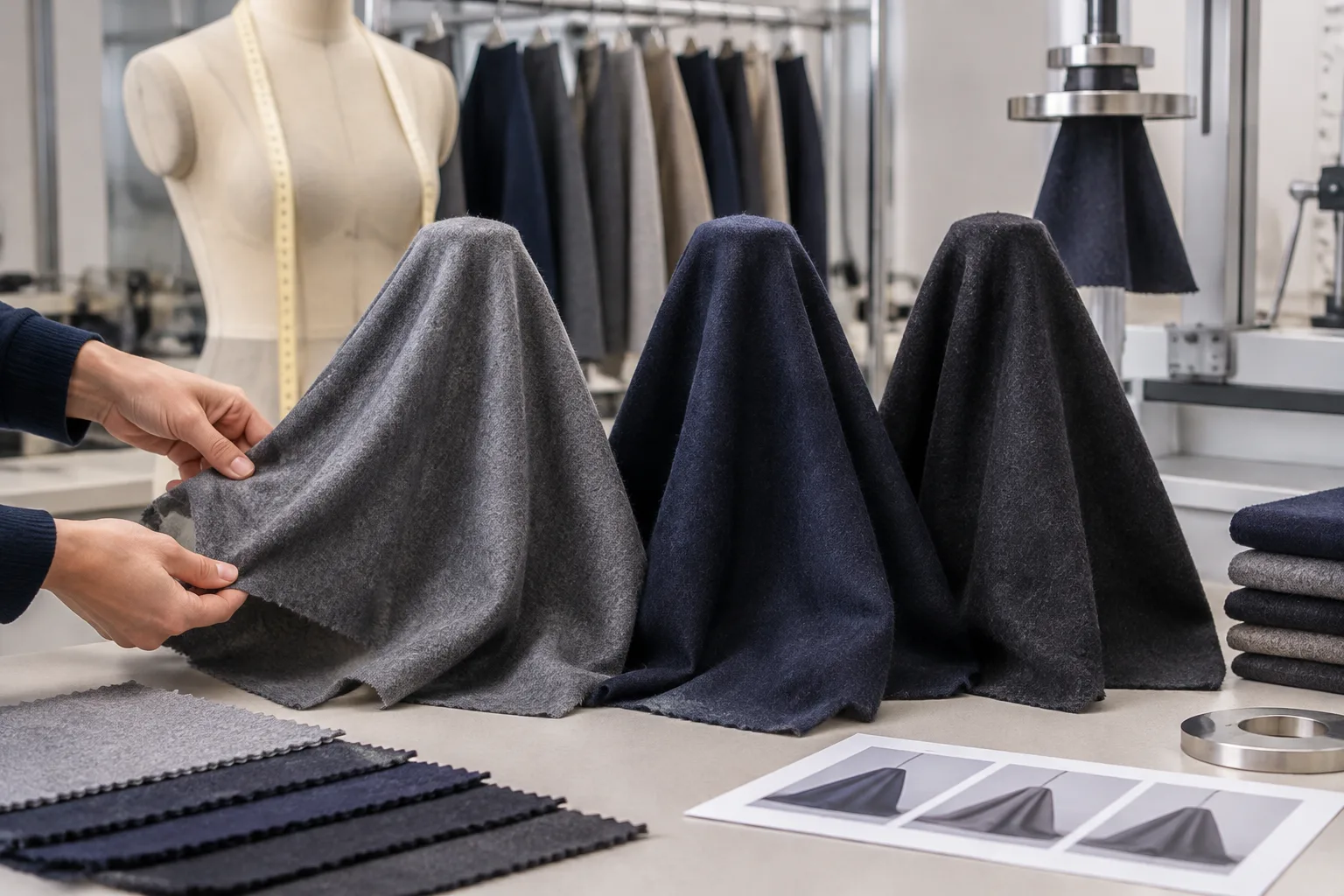
Build a usable wool melton specification request
A wool melton specification should connect material information with an observable design intention. “Heavy melton” or “soft drape” alone leaves too much open to interpretation. Describe what the fabric must do in the proposed garment, then identify the sample or comparison notes that illustrate that intention.
A compact request can include:
- Garment and silhouette: Identify the product, approximate form, and whether the intended outline is supported, straight, shaped, or relaxed.
- Material identity: Request the declared fiber composition plus available yarn, structure, and finish information rather than relying on the melton name.
- Weight information: State the target or comparison GSM and ask for the measurement condition or reporting basis. Treat this as a question to document, not an assumed universal convention.
- Width basis: Ask whether the reported width is total width or usable cutting width, especially when width affects consumption or pattern placement.
- Proposed version: Specify the color and finish. Request a representative sample when possible because another colorway or finish may not have the same hand and hang.
- Garment support: List the intended lining, interfacing, closures, seam treatments, or other components that could influence the final silhouette.
- Care assumptions: Record the care information being used for development and identify any relevant sample comparison required after that treatment.
- Drape observations: Describe the desired result, such as supporting a defined front edge or allowing softer folds through an unstructured panel.
Pair subjective language with an approved reference sample or documented observations. Instead of requesting “good drape,” state which edges, folds, seams, or panels should resemble the reference. This makes the requirement easier to review without presenting a sample as proof of universal suitability.
Stated GSM can remain a purchasing control point, but it should not stand alone. Review it beside composition, structure, finish, measurement condition, and garment-level behavior. If weight, width, composition, construction, color, or finish changes, flag the change and repeat the relevant comparison. Do not assume that matching one recorded value preserves the original drape.
Choose weight as one drape input, not the answer
Wool melton weight helps narrow a material search, but it does not determine the final hang. Construction, finish, panel shape, seams, lining, interfacing, and closures all influence how the garment settles. The useful choice is therefore design-specific rather than a ranking of one weight as inherently better.
Before finalizing the material, create a side-by-side record of declared specifications and garment-relevant observations. Compare representative samples within the intended construction, and document why one better supports the silhouette. If a formal result is required, check the applicable supplier documentation or a validated method rather than treating the informal comparison as laboratory evidence.
Frequently Asked Questions
Does a higher wool melton weight always mean a stiffer fabric?
No. A higher stated GSM may suggest a more substantial material when other details are comparable, but it does not guarantee stiffness. Fiber composition, yarn, structure, finish, and the sample’s condition can all accompany different bending and hanging behavior.
Is GSM the same as the thickness of wool melton?
No. GSM reports fabric weight per unit area. It does not directly state thickness, stiffness, fiber content, or quality. Compare thickness separately when it matters to seam bulk, garment construction, insulation planning, or the intended silhouette.
Why can two wool meltons with the same GSM drape differently?
The meltons may differ in composition, yarn, structure, density, finish, color treatment, or measurement condition. Matching GSM controls only one reported property. Compare representative samples and their accompanying specifications before assuming that their hang will be equivalent.
Should I choose wool melton weight before or after designing the garment silhouette?
Define the intended silhouette first, then use weight to narrow suitable options. A shaped coat, straight jacket, and relaxed garment place different demands on folds, edges, panels, and support. Confirm the direction with garment-relevant sample assemblies.
Can lining and interfacing change how wool melton drapes?
Yes. Added layers can change how the shell moves, settles, and holds an edge or shaped area. Compare the melton with the proposed lining and interfacing where they matter. Their placement, attachment, and interaction with seams also affect the result.