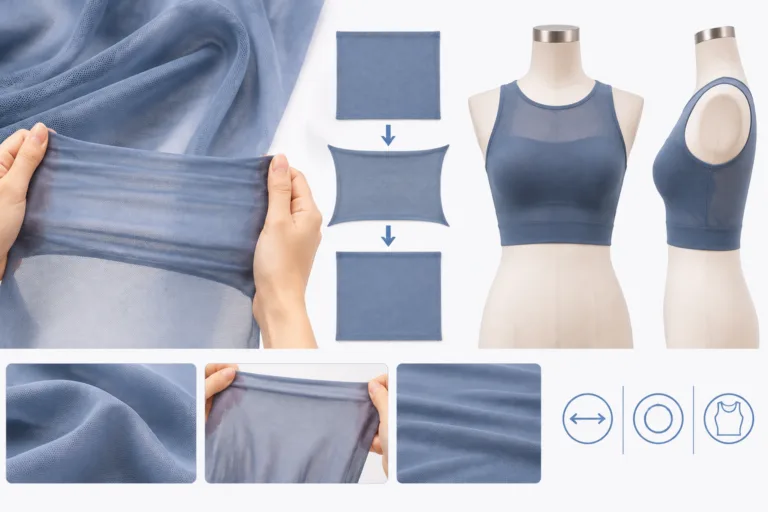
Power mesh stretch recovery is assessed by observing how far a controlled fabric sample extends and how closely it returns after the same loading and rest conditions. Record the material identity, stretch direction, sample condition, and loading approach for each comparison; a fabric name alone does not establish performance. For broader garment-production references, the Sponsor page also reflects Apparel Wiki’s independent editorial position.
Stretch is the extension produced in a stated direction under a stated loading condition. Recovery is the return that occurs after the load or extension is released and the fabric has had a defined opportunity to relax. A hand assessment can screen samples, but it cannot establish a standardized performance result without a defined method and suitable equipment.
How to assess power mesh stretch recovery
Start by identifying the sample. Record the commercial fabric name, composition if available, construction, finish, age, and whether the assessment concerns fabric alone or a finished garment panel. “Power mesh” is a commercial description that can cover different fibers, knit structures, finishes, and layered constructions. Treat the name as a starting point, not a complete specification.
Next, identify the principal directions. Mark a reference distance without damaging the fabric, then measure and assess the sample lengthwise and crosswise. A power mesh sample may extend or recover differently in each direction. Keep the sample dimensions, direction, loading approach, and observation timing consistent when comparing pieces. Otherwise, an apparent difference may come from the setup rather than the fabric.
Apply a consistent extension or force. A visual hand stretch is useful for early screening when the same operator uses the same extension cue and timing. It does not prove a numeric result. A controlled textile method uses defined conditions and equipment; the supplied ASTM method for stretch properties of knitted fabrics is relevant to the general need for controlled loading and subsequent evaluation, but its scope and instructions must be checked before applying it to a particular power-mesh fabric.
Release the sample, then observe or measure its return at a stated point. Separate immediate snap-back from delayed recovery after rest. Also distinguish both from behavior after repeated loading. One release can show how the sample responds in that moment, but it does not establish fatigue resistance, wash durability, or long-term shape retention.
Record the original reference length, the extended state, the return state, elapsed time, direction, and visible changes. If a lightweight mesh panel extends easily but returns slowly or leaves distorted openings, greater extension is not automatically better. A support panel may need stable coverage and shape retention, while another design may prioritize easier movement. The garment requirement determines which balance matters.
Set up a repeatable fabric comparison
Use matched samples whenever possible. Pieces from the same fabric lot provide a clearer comparison than pieces with unknown differences. If samples vary in composition, finish, mesh structure, age, or storage history, label those differences before drawing a conclusion. Do not compare a relaxed sample with one that has already been stretched, folded, compressed, heated, or exposed to moisture without recording that condition.
Mark a reference distance along the direction being assessed. Use a method that does not damage or permanently distort the fabric, and keep the sample size and edge treatment consistent. Sample width can affect the apparent response, as can an edge held by a seam, clamp, or finished garment opening. A flat fabric comparison should therefore be described as a comparison of that setup, not as a universal property of the material.
Choose one loading approach for the comparison. A hand-pull screen can help rank samples when the operator, starting condition, extension cue, and timing remain consistent. The operator should avoid changing the pull simply because one sample feels easier to extend. A measured approach requires validated equipment and instructions suited to the intended fabric. Exact force, extension, conditioning, repeat cycles, and acceptance limits belong to the selected method and product requirement.
A simple worksheet keeps observations traceable. Record:
- fabric identity, available composition information, lot or sample reference, and construction or finish notes;
- direction, sample condition, reference length, and loading approach;
- original length, extended state, return state, and elapsed time at each observation;
- visible changes such as mesh distortion, curling, bagging, edge movement, yarn damage, or opacity change; and
- the intended garment role and any unresolved question requiring another evaluation.
When the project needs to distinguish fast return from delayed relaxation, use more than one observation point and record each one. Do not assign universal time intervals or pass/fail limits without an applicable validated method. The worksheet is an editorial screening recommendation, not a certified test protocol.
Compare both principal directions for the same fabric. Knit structure can provide clues about directional behavior, but it does not independently determine breathability, durability, or garment performance. Record what you see rather than relying on memory, and keep the loading and observation conditions beside the result.
Identify the variables that change the result
Two materials sold as power mesh can respond differently because their fiber content, yarn, knit construction, mesh opening, fabric mass, finish, or bonding differs. Keep these information layers separate. Fiber content does not identify the structure, and a structure or trade name does not guarantee a particular recovery response. GSM is mass per area, not a direct measure of thickness, quality, or recovery; use it as one comparison input alongside construction and test conditions.
The assessment itself also changes the apparent result. Direction, sample width, edge restraint, seam placement, extension amount, and time under extension can all matter. For bonded or coated mesh, inspect the layers rather than judging the face fabric alone. Layer adhesion, bending, wash-state change, and seam-area behavior may require separate review.
| Observable input | Likely implication | Initial action | Variable that could change the choice |
|---|---|---|---|
| Fast return with little visible distortion | The sample may be suitable for a closer comparison, but one release does not establish durability. | Repeat the matched comparison and record direction and timing. | Finish, repeated loading, pattern tension, and intended garment role. |
| High extension with delayed return | Extension may be useful for movement, while delayed recovery may affect shape or coverage. | Observe again under controlled conditions and consider a sewn panel. | Panel size, fit pressure, rest period, laundering, and seam restraint. |
| Uneven behavior by direction | The fabric may need directional placement or a design-specific evaluation. | Compare both directions using matched samples. | Cutting direction, edge finish, seam allowance, and pattern geometry. |
| Mesh distortion or opacity change during extension | Visual coverage and surface stability may change with use. | Record the observation and evaluate the intended panel construction. | Lighting, extension level, lining, tension, and garment movement. |
| Laminated or bonded construction | Face-fabric behavior may not represent the layered material. | Investigate the layers and test a representative panel. | Adhesion, bending, wash state, heat exposure, and seam-area behavior. |
Consider the garment function before choosing a preferred result. A close-fitting supportive panel may require controlled extension with dependable return, while a lower-tension overlay may tolerate more movement and place greater emphasis on coverage or appearance. The same sample observation can therefore lead to different next steps. Investigate the construction and evaluate the fabric in the role it will actually perform.
Interpret recovery for the intended garment
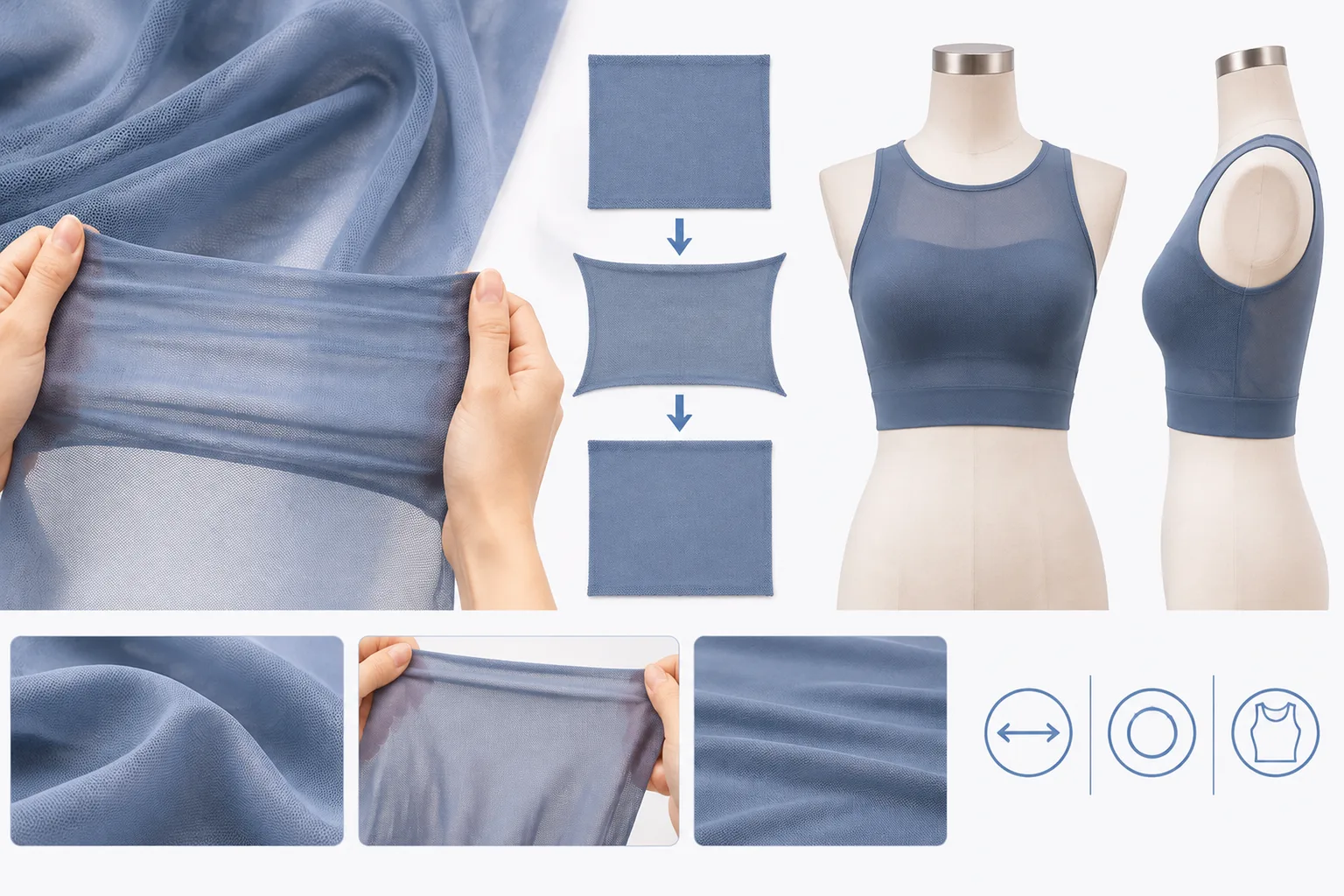
Power mesh recovery for garments should be interpreted against the job the fabric must perform. Extension can help a close-fitting design accommodate movement, but high extension may also allow shifting, distortion, or unstable coverage when the pattern depends on the fabric to hold its shape.
Recovery after one controlled release answers a narrow question: how the sample returned under those conditions. It does not establish resistance to repeated loading, laundering, heat, fatigue, seam stress, or long-term wear. It also does not prove comfort, opacity, support, or fit retention. Treat each as a separate evaluation question.
Move from flat-fabric screening to a sewn panel when construction is likely to change the result. Seams, elastic edges, lining, bonding, seam allowances, and pattern tension can restrain or redistribute stretch. Panel size and seam direction can also alter how force is carried through the material. A flat sample cannot independently show how a finished garment will behave.
For example, a sample with controlled extension and prompt return may be a useful candidate for a close-fitting support panel. The same material may need additional review as a lower-tension overlay if its surface changes visibly during extension or if coverage depends on stable mesh openings. The preferred balance depends on pattern geometry, fit pressure, movement, and construction.
Before choosing an acceptance decision, record the intended garment role, expected fit pressure, movement, laundering conditions, and visible-coverage requirements. Use the fabric result to decide the next evaluation, rather than treating it as a universal approval rule.
Recognize limits and document the next evaluation
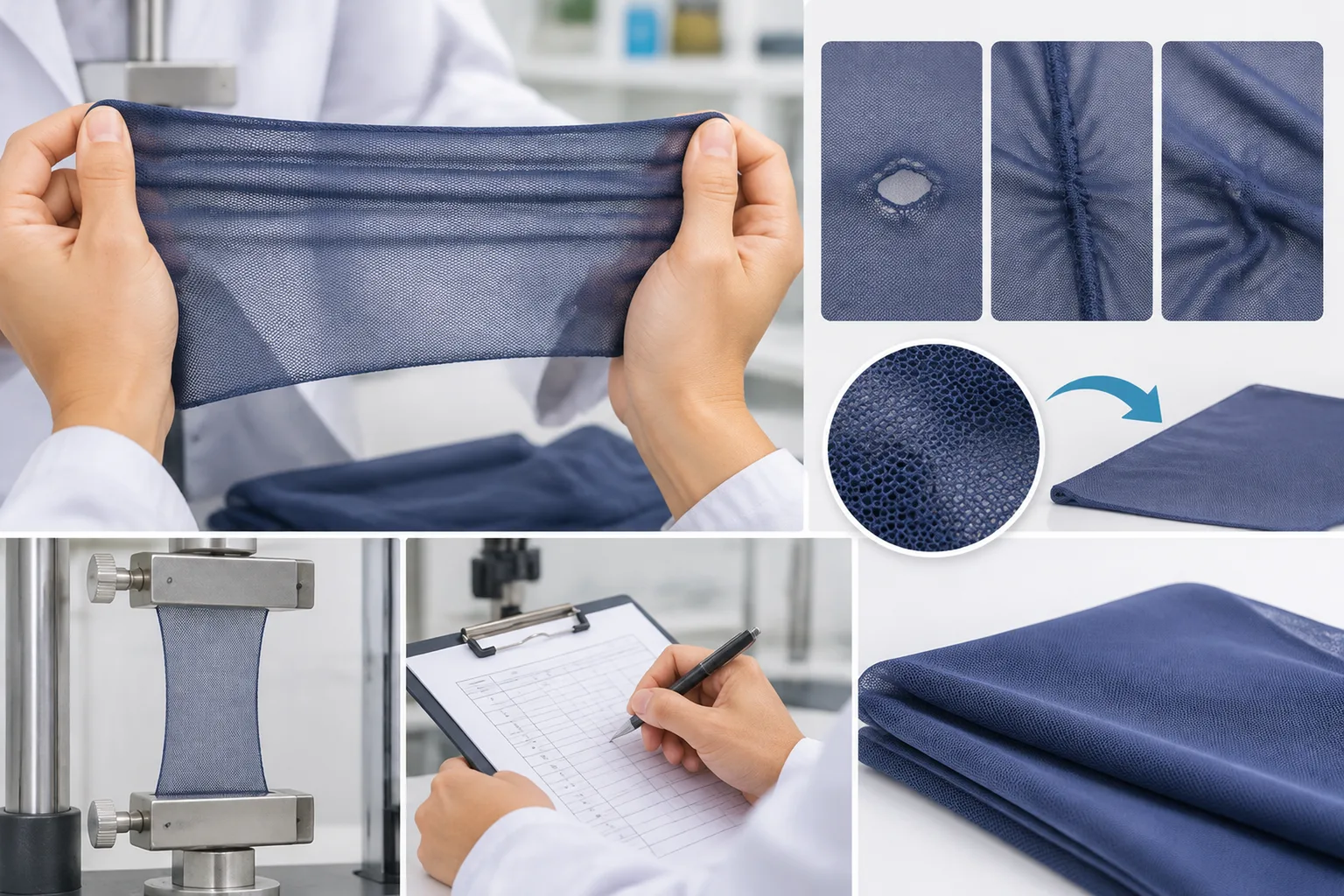
A hand stretch screen is useful for early comparison when the question is simply whether two labeled samples behave differently. It becomes weak evidence when sample dimensions, edge restraint, pulling force, extension cue, or observation time vary. Prior stretching, folding, moisture, heat, compression, and unrecorded construction can also make results difficult to compare.
Keep qualitative observations separate from quantified results. Bagging, curling, mesh distortion, edge change, yarn damage, or a visible change in opacity can justify further investigation. None of these observations establishes a pass/fail limit or a specified recovery rating by itself.
Repeated loading, washing, heat exposure, bonding, seam construction, and pattern tension may each require a separate comparison. Combining them into one informal pull does not show which condition caused a change. When a project has a numeric requirement, identify the applicable method and confirm that its scope fits the material and intended evaluation. Use validated equipment and instructions when that level of evidence is required.
A practical decision record can include:
- Sample identity: fabric name, lot or source label, composition if available, construction, finish, and layered materials.
- Direction and condition: lengthwise or crosswise direction, sample state, prior exposure, and whether the sample is fabric alone or part of a panel.
- Loading approach: hand screen or measured procedure, reference marking, applied extension or force, operator, and relevant timing.
- Recovery observation: return at each recorded observation point, plus any delayed relaxation or visible distortion.
- Garment context: intended role, fit pressure, seam arrangement, movement, laundering, and coverage requirement.
- Open evidence: unresolved questions about construction, finish, care, repeated loading, or the need for an externally validated method.
Preserve the sample label, notes, and photographs where useful. This makes later comparisons traceable without presenting the record as certification. The decision path is straightforward: screen comparable samples, verify the applicable method when numeric evidence is needed, then evaluate a representative sewn panel or garment under intended conditions.
Use the results to choose the next check
Power mesh stretch recovery is a comparison under defined conditions, not a property guaranteed by the fabric name. Compare matched samples in both principal directions, document the loading and observation conditions, and turn unresolved results into specific questions about fiber, structure, finish, layers, and garment role. When a product decision needs numeric evidence, check the applicable authoritative method or sewn-panel requirement before relying on a screening observation.
Frequently Asked Questions
What is the difference between stretch and recovery in power mesh?
Stretch describes how far the fabric extends under a stated direction and loading condition. Recovery describes how much of that extension is released after unloading and rest. Immediate return and delayed return should be recorded separately when relevant.
Should power mesh be assessed in both directions?
Yes. Compare the principal lengthwise and crosswise directions because a mesh fabric may extend or recover differently in each. Record the direction beside every observation so results are not mistaken for a single fabric-wide property.
Can a hand stretch test prove that power mesh will keep its shape?
No. A hand test can screen differences between samples when the process is controlled, but it cannot establish long-term recovery, wash durability, seam performance, comfort, or finished-garment shape retention.
Why can a fabric sample recover well but a finished garment still distort?
Seams, pattern tension, elastic edges, lining, bonding, panel size, and movement can redistribute forces. These construction features may change the fabric response, so a representative sewn panel may be needed after flat-fabric screening.
What information should be recorded when comparing power mesh samples?
Record sample identity, composition if available, construction, finish, direction, condition, dimensions, loading approach, observation timing, return behavior, visible changes, and intended garment role. Also note unresolved questions that require further evaluation.
When is a standardized or externally validated test method necessary?
Use one when a project requires numeric evidence, a defined acceptance limit, or results that must be comparable beyond an informal screen. Confirm that the selected method applies to the material and product question before using its result.