Bikinis tie security concerns whether a bikini stays appropriately positioned, closed, and within its intended coverage during defined movements and use conditions. To evaluate it, first identify the bikini style, tie locations, expected activity, water or dry-use context, and the specific concern: loosening, slippage, opening, shifting, or excessive pressure. Apparel Wiki is an independent clothing-industry knowledge publication; its Sponsor information does not replace an evidence-based review.
A secure-looking knot is not automatically a secure garment. A knot can remain closed while the fabric shifts, an attachment can deform, or an adjustment can create pressure that changes coverage. The following framework treats the tie, fabric, elastic elements, attachments, and closure as one garment system. It supports design and quality discussions, but it is not a formal safety certification, laboratory test, or regulatory conclusion.
What Bikinis Tie Security Means in Use
Begin by turning the clothing category into a defined task. A tie-side bikini, tie-back top, and adjustable brief may expose different attachment points and movement concerns. Record where each tie sits, how the garment is expected to fit, what body movements matter, and whether the garment is intended for relaxed wear, swimming, or more active use. The word “bikini” does not establish a performance level.
In practical terms, evaluate bikini tie security by looking for unintended changes during the garment’s defined use. These changes may include a tie becoming looser, a knot or closure opening, the garment migrating, an attachment pulling away from the surrounding fabric, or intended coverage changing. Excessive pressure is a related fit concern, but it is not the same finding as opening or slippage. Comfort, appearance, and ease of adjustment should be recorded separately.
Separate the tie system from the whole garment. The tie includes the gripping section, knot or closure, and the point where it enters or joins the garment. The garment also includes the main fabric, lining, elastic elements, seams, edges, and any hardware. A tie may hold its position while a stretched edge rolls or the surrounding fabric shifts. Conversely, an attachment may remain stable while the closure loosens.
A useful evaluation record identifies the sample version, size, final materials, tie configuration, adjustment position, movements reviewed, observed change, wearer feedback, and decision. The decision might be to continue reviewing the sample, revise a construction detail, or escalate a claim for a defined external test or regulatory review. Any legal, child-safety, or regulated-use conclusion requires the applicable jurisdiction and authoritative requirements.
Trace the Tie Path and Attachment Points
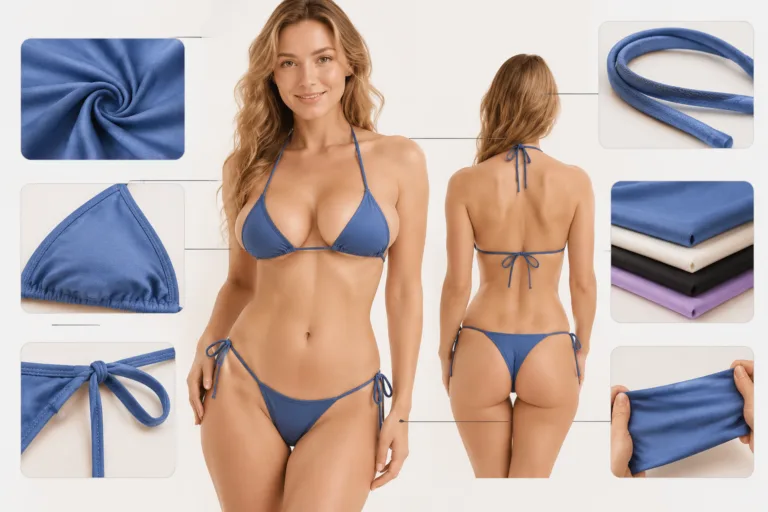
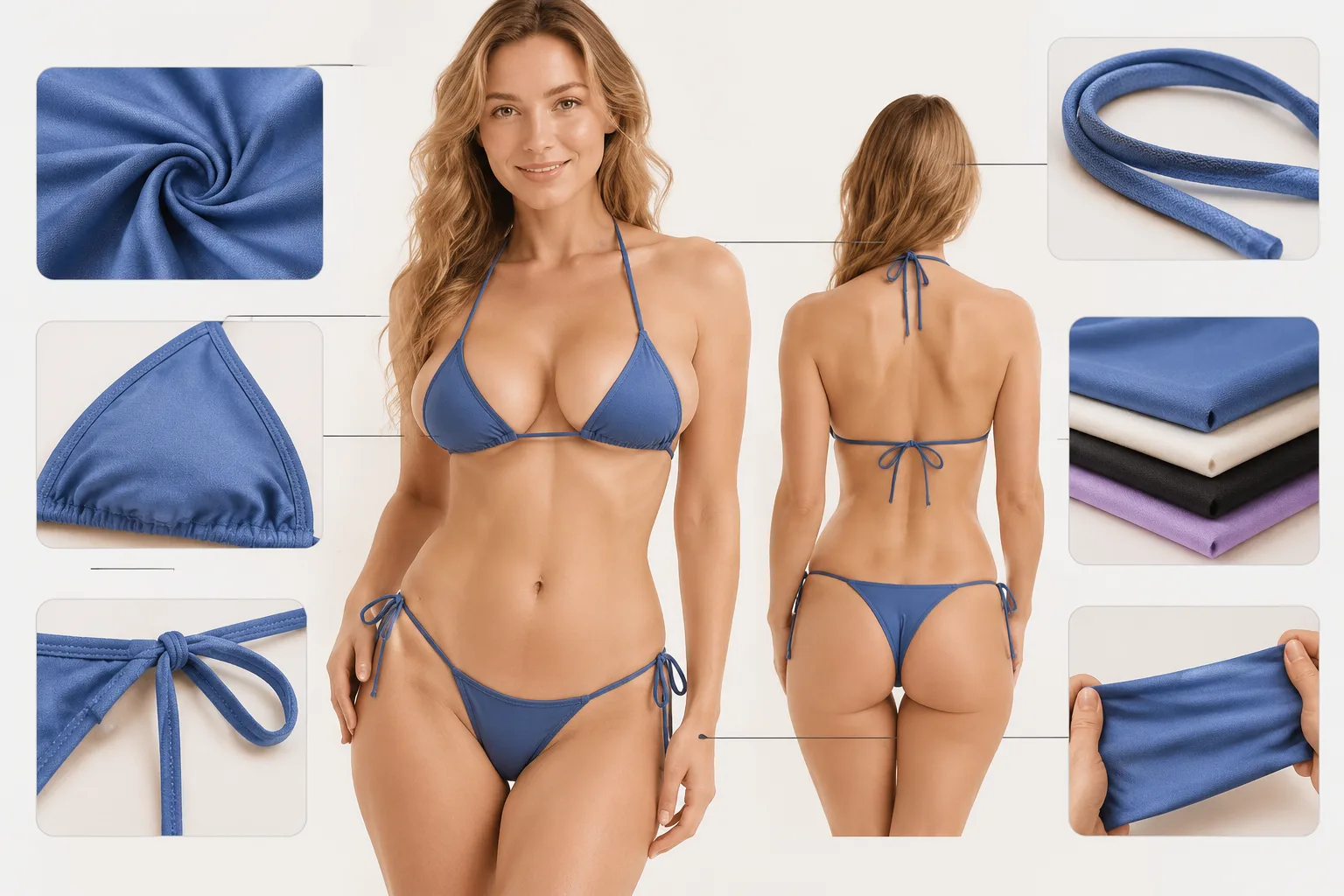
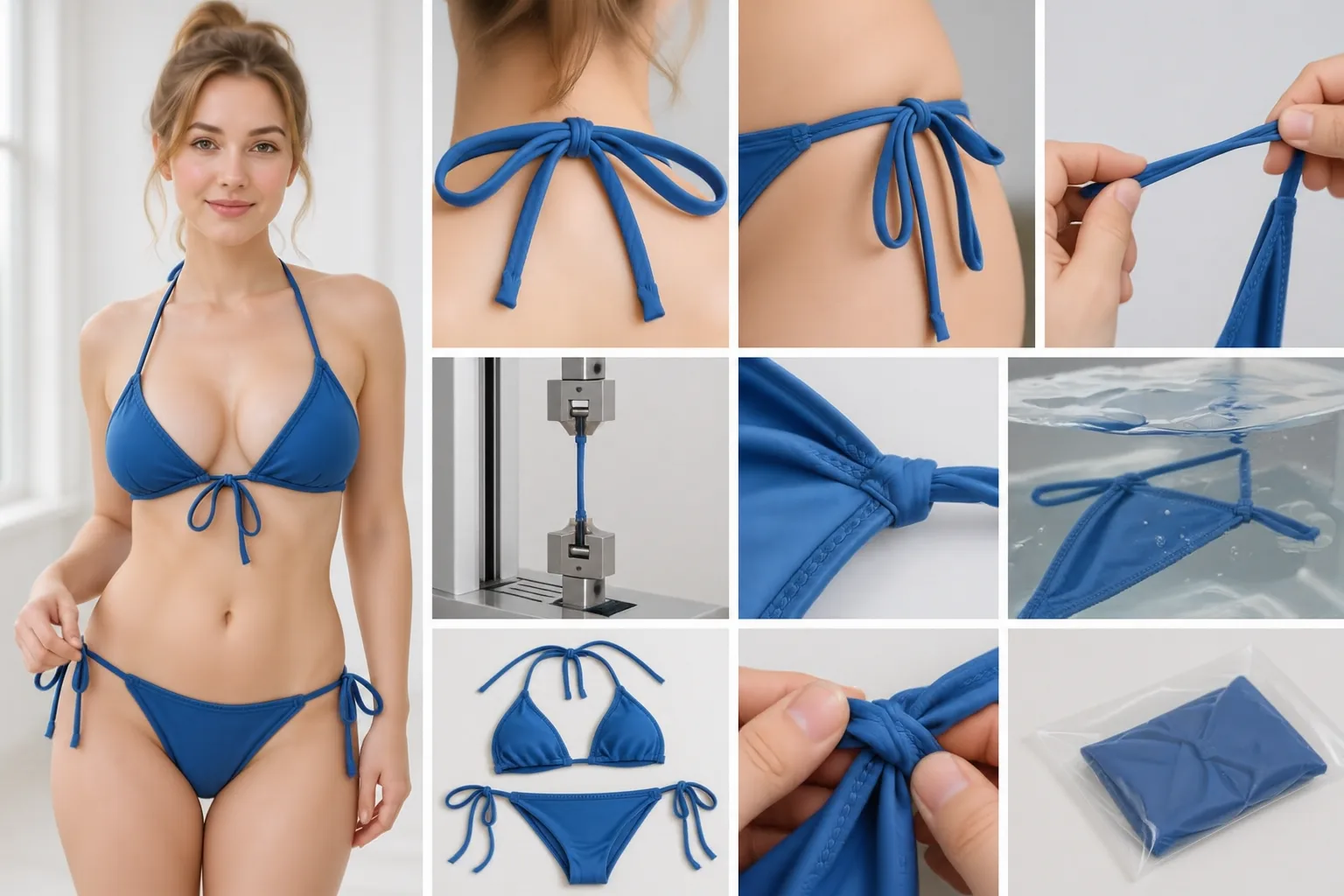
Trace each tie from the point a user grips it, through the knot or closure, into the attachment, and across the adjacent garment area. On the sample, identify whether the tie passes through a sewn loop, channel, folded edge, direct seam, or another visible construction. This map shows where movement enters the garment and where a local change may appear.
Inspect the attachment after adjustment and after the relevant movement review. Look for local distortion, seam opening, edge rolling, pull-through, uneven tension, or concentration of movement at a small point. These observations do not establish a strength rating. They identify questions for the complete sample, especially where a narrow tie or concentrated attachment meets a fabric that stretches.
| Observable input | Likely implication to investigate | Initial design choice | Variable that could change the choice |
|---|---|---|---|
| Continuous tie passing through a channel or around an edge | Adjustment can be distributed along the path, but movement or friction may differ across the channel | Inspect the full path, channel behavior, and edge stability | Tie surface, channel dimensions, fabric stretch, and adjustment position |
| Separate tie ends joined at a local attachment | Movement may concentrate near the joining point and closure | Inspect knot or closure behavior together with local seam distortion | Attachment geometry, seam structure, tie flexibility, and fit |
| Sewn or enclosed attachment | The attachment may protect or constrain the tie path, while transferring movement into nearby fabric | Inspect the enclosing construction, entry point, and adjacent edge | Reinforcement, loop shape, allowance, fabric recovery, and hardware |
Use the comparison as a starting point, not a ranking. Tie security depends on attachment geometry, seam structure, fabric stretch, tie surface, and the amount of adjustment used together. A visible loop or neat seam can be examined, but its appearance does not prove finished-garment performance.
When a change appears, classify its location before changing the design. A knot or closure problem suggests examining the tie path or closure handling. Pull-through or local distortion points toward the attachment and surrounding fabric. Broader garment movement may indicate fit, stretch, or recovery rather than an isolated tie fault. This distinction keeps a component observation separate from a formal test result.
Check Fit, Adjustment, and Movement Together
Start with the adjustment range and the selected starting position. Check whether the tie can provide the intended retention without creating unreasonable pressure, visible distortion, or loss of coverage. A tighter setting is not automatically a better setting: it may alter the garment’s position, concentrate stress, or make adjustment difficult.
Review the garment on the relevant body form or fit model through movements defined by the intended use. Possible observations include standing, bending, reaching, turning, sitting, and entering water when that condition is relevant. The sequence should reflect the task rather than an arbitrary universal movement protocol. Record the initial tie position and compare it with the position after movement.
- Check whether the tie loosens or the knot migrates.
- Inspect whether the attachment pulls, twists, or distorts.
- Watch for fabric rolling, garment shift, or changed intended coverage.
- Record whether repeated retightening is needed.
- Separate pressure and ease-of-adjustment feedback from visible opening or coverage changes.
For a lightweight tie-side bikini used with frequent movement, inspect both knot behavior and displacement at the side attachment. The observation may lead to different questions: the knot may need review if it changes position, while the side construction may need review if the attachment pulls or the fabric shifts. Tie surface, fabric stretch, fit, and closure choice could change the result, so the observation should not be generalized to every bikini style.
Fit feedback also requires careful interpretation. Pressure may make a setting unacceptable even when the tie stays closed. Conversely, comfortable adjustment does not prove that coverage remains stable. Record posture, reach, contact, and wearer feedback rather than inferring identical needs from a wearer label.
Review key sizes and relevant user conditions with the final materials and assembly. The result from a tie, loop, or fabric component alone does not establish whole-garment security. If water or another use condition is part of the product brief, include that condition in the evaluation and document what changed, without treating the condition itself as proof of a particular friction, stretch, or recovery effect.
Material and Construction Variables That Change Security
Bikini tie material and construction details should be evaluated as interacting variables, not as a ranked list of guaranteed solutions. A tie’s width, thickness, surface character, flexibility, and stretch can affect how it is handled, adjusted, knotted, and retained. The same change may also alter pressure, appearance, or ease of adjustment.
Review the main fabric at the same time. Stretch, recovery, edge stability, and local distortion can change how far movement travels from the tie into the garment. A tie that remains closed cannot prevent shifting caused by a fabric edge that rolls, a panel that deforms, or an attachment that concentrates movement in a small area.
Inspect seam allowance, reinforcement, channel dimensions, loop geometry, and edge finishing. These details influence how the attachment transfers movement into the surrounding material. A wider support area may change local distortion, while added reinforcement may increase bulk or reduce flexibility. Neither observation establishes a universal advantage without reviewing the complete sample.
Hardware or another closure can change adjustability, bulk, skin contact, attachment behavior, and inspection needs. Treat it as a design option rather than an automatic improvement. The relevant question is whether the closure suits the defined movement and coverage requirement while remaining practical to adjust and inspect.
| Observable input | Security implication to investigate | Initial choice | What could change the choice |
|---|---|---|---|
| Tie width, surface, flexibility, or stretch | Handling, knot formation, slippage, or pressure may change | Compare the tie in its actual adjustment position | Fabric stretch, wearer handling, closure type, or movement |
| Fabric recovery and edge stability | The garment may shift or distort even when the tie stays closed | Review the attachment and adjacent fabric together | Size, fit setting, use condition, or material version |
| Loop, channel, seam, or reinforcement geometry | Movement may spread across the fabric or concentrate locally | Inspect the area before and after movement | Seam behavior, bulk, flexibility, or adjustment range |
| Hardware or alternate closure | Adjustability, skin contact, bulk, and attachment may change | Compare its complete garment effect | Coverage expectation, activity, and wearer feedback |
Use each observation to identify the next variable to review. Changing the tie may address loosening but create pressure. Reinforcing an attachment may reduce local distortion but affect flexibility. Tightening the fit may improve retention while changing coverage or comfort. This whole-garment approach keeps material selection tied to the use task rather than to a product-category promise.
A Practical Tie Security Evaluation Sequence
Begin with a written evaluation brief. Record the bikini style, size, final materials, tie configuration, adjustment position, intended use, relevant movements, coverage expectation, and specific concern. “Security” is too broad for a useful record unless the concern is identified as loosening, opening, shifting, coverage change, pressure, or another observable issue.
Inspect the garment before movement. Check the tie condition, attachment alignment, seam appearance, edge behavior, and symmetry where relevant. Adjust it using the intended process and note whether the setting is practical without excessive force or repeated handling. This initial review can reveal a construction or adjustment issue before movement is introduced.
Next, use the movement sequence defined for the product. Observe the initial and final tie position, knot or closure change, visible loosening, attachment distortion, garment shift, coverage change, and fabric behavior. Record pressure and ease-of-adjustment feedback separately from visible opening or coverage findings. They inform the decision, but they are not the same result.
- Identify the posture, reach, contact, or motion being reviewed.
- Note what changed at the tie, attachment, fabric, and coverage areas.
- Record whether repeated retightening was needed.
- Separate wearer feedback from visual observations.
- List unresolved questions instead of assigning an unsupported pass or fail.
Repeat the review when a meaningful variable changes, such as size, tie material, attachment construction, fit setting, or use condition. For a tie-back style used during repeated upper-body movement, compare the tie position and attachment behavior across the defined sequence. Fit and fabric recovery may change the decision even when the closure itself appears unchanged.
This is an editorial evaluation sequence, not a validated test, certification method, or universal quality threshold. Use final materials and assembly, because a favorable result from a tie, loop, or fabric component alone does not establish whole-garment security. A project may accept the sample for its current design stage, revise it, or escalate a regulated or formal performance claim for review under an applicable method.
Interpret Findings and Choose the Next Design Change
Match the observation to the likely variable. Review the tie or closure when loosening is the concern, the attachment when local distortion appears, and the surrounding fabric or fit when the garment shifts. Review the adjustment approach when pressure or coverage changes result. Compare any revised sample under the same defined conditions, document the differences, and check the applicable material, construction, evaluation, or safety requirements before treating the result as a finished decision.
Frequently Asked Questions
Can a bikini tie be considered secure just because the knot does not come undone?
No. The garment may still shift, lose intended coverage, or pull at its attachment while the knot remains closed. Review the knot, tie position, attachment, surrounding fabric, fit, and coverage together during the defined use movements.
Which parts of a bikini should be inspected when evaluating tie security?
Inspect the tie or closure, knot area, channel or loop, seam, edge, adjacent fabric, and adjustment range. Look for loosening, migration, local distortion, edge rolling, attachment pull, garment shift, and changes in intended coverage.
How do fit and fabric stretch affect bikini tie security?
Fit determines how much adjustment is needed and where pressure or movement may occur. Fabric stretch and recovery can change how the garment responds around the attachment. Review both with the final materials and distinguish retention from comfort and coverage.
Should tie security be evaluated differently for different bikini styles?
Yes. Tie locations, closure arrangements, coverage expectations, and intended movements differ by style. Define the relevant task first, then select movements and observations that represent that style rather than applying one universal sequence.
When does a bikini tie security review require a formal test method or regulatory check?
Seek the applicable authoritative requirement when making a regulated, legal, child-safety, or formal performance claim. An editorial sample review can organize observations, but it does not replace a jurisdiction-specific requirement, recognized method, or qualified laboratory review.