Building a Base Pattern (Block Pattern)
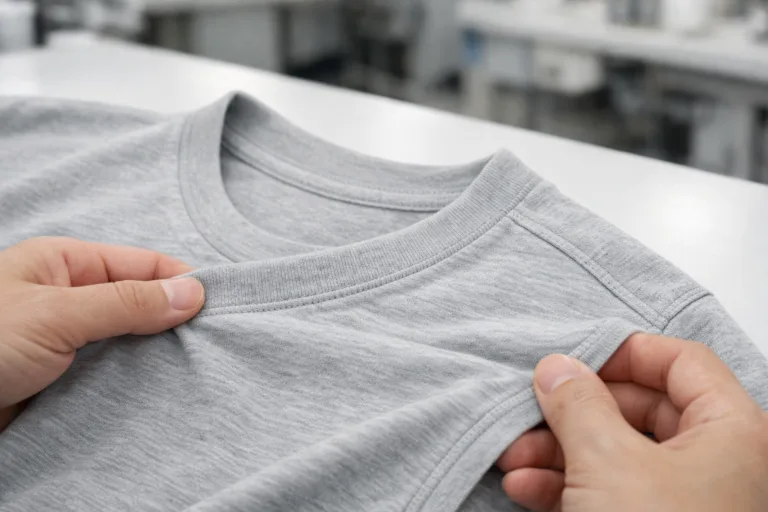
A base pattern—or block pattern—is the backbone of apparel development. Used by pattern makers in factories and studios, this template underpins every fitted garment, whether for fashion, mass market, or uniforms. A well-constructed base pattern ensures that style variations, sizing, and fit are consistent from start to finish. Understanding the purpose of the block, the measurement process, and how to build in ease is critical for both students of fashion and working professionals in production environments.
What Is a Base Pattern?
A base pattern, also known as a pattern block, is a master template, typically drafted for a ‘zero style’—with no design details, minimal seam shaping, and standard fit. It acts as the foundation for developing all sorts of styled patterns, allowing technical designers and pattern technologists to create consistent, scalable silhouettes. In large export apparel factories, block patterns are essential for streamlining communication across design, sample, and production teams.
Why Is Pattern Block Development So Important?
- Ensures fit and balance across style variations.
- Reduces sampling time and costs: only the style details need modification.
- Anchors size grading, ensuring shape consistency across sizes.
- Acts as a fit reference for spec sheets, tech packs, and production QC.
The Role and Purpose of the Block Pattern
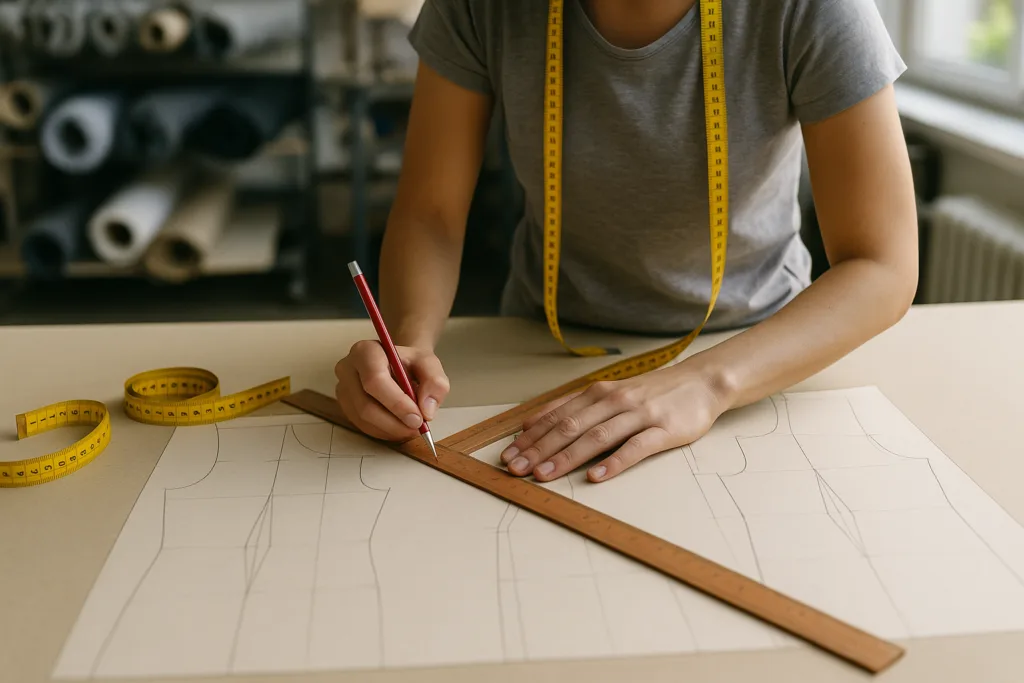
The primary purpose of a base or block pattern is to embody the core body measurements, proportions, and ease allowance required for any garment family—such as a T-shirt, shirt, or pants. Factories often develop dedicated blocks by market (men’s, women’s, children’s), region, or client. Once established, a block pattern enables the rapid development of new silhouettes and seasonal offerings while maintaining construction standards and buyer expectations.
Key Functions in Garment Production
- Standardizing fit for a target population (e.g., US men’s medium, European women’s size 38).
- Reducing defects related to mismatch in seam, sleeve, or rise dimensions between styles.
- Accelerating style development—since foundational work is already complete.
- Enabling effective communication of to-spec and out-of-spec tolerances during QC checks.
Essential Body Measurements for Block Pattern Development
Creating an accurate base pattern starts with precise body measurements. Factories use a combination of target market anthropometrics, wear trial data, and buyer-provided spec sheets. Measurement accuracy directly impacts fit success and minimizes costly sample iterations.
Critical Measurements for Major Garment Types
| Garment Type | Primary Body Measurements | Common Tolerances (±cm) |
|---|---|---|
| T-shirt/Top | Chest, waist, hip, back length, shoulder width, biceps, sleeve length, neck circumference | ±1-1.5 |
| Trousers/Shorts | Waist, hip, thigh, knee, outseam, inseam, front and back rise, leg opening | ±1-2 |
| Dresses | Bust, waist, hip, back length, shoulder, sleeve length (if applicable) | ±1-1.5 |
How to Take Accurate Measurements
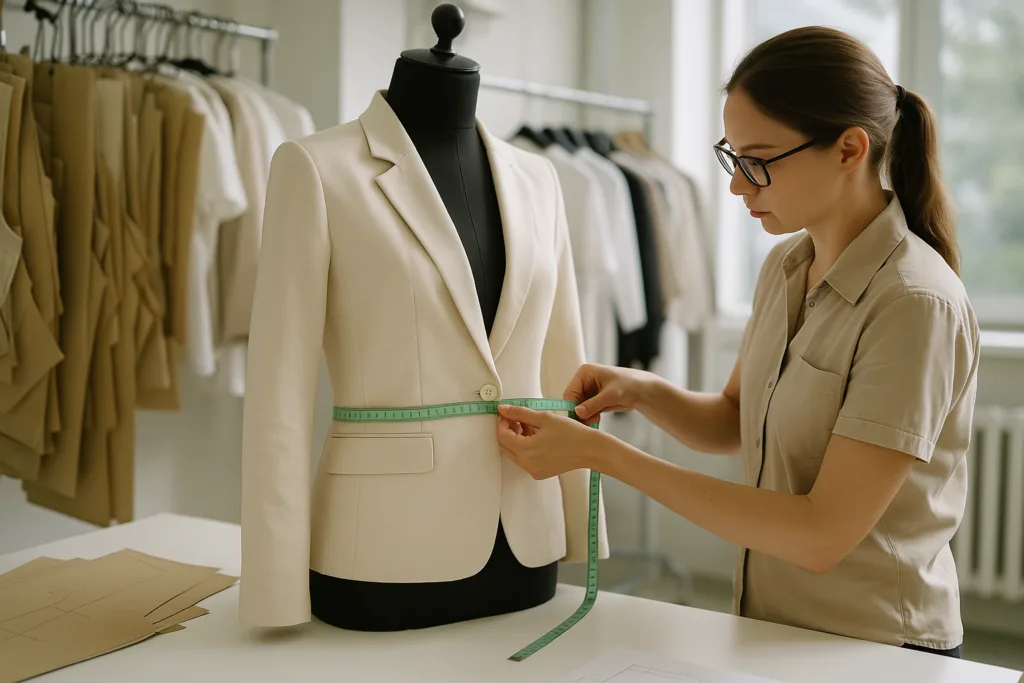
- Use a soft, flexible measuring tape—never stretch or compress the tape during measurement.
- Record data in centimeters for consistency (millimeters for tight tolerance areas like collar or cuff width).
- Measure on body forms or fit models standing upright and relaxed.
- Document measurements with photos for future reference.
Adding Ease: Balancing Comfort and Aesthetics
Every garment block includes ease: the intentional addition of space beyond the body measurement to allow for movement, comfort, and the intended silhouette. The correct ease value depends on garment type, fabric properties, and fashion trend. Underestimating ease leads to tightness and poor mobility; too much results in a sloppy fit. In my years on the factory floor, miscommunication about ease is a top reason for style rejection.
How Much Ease to Add?
Ease is typically categorized as either fitting ease (to accommodate the body’s natural movement and posture) or design ease (extra room added for fashion, such as an oversized or relaxed look). The chart below offers general guidelines, but always confirm with client specifications:
| Garment Area | Fitting Ease (cm) | Design Ease (cm) |
|---|---|---|
| Chest/Bust | 6–10 | 0 (slim) – 18 (oversized) |
| Waist (tops/pants) | 2–5 | 0 – 12 |
| Hip | 3–7 | 0 – 15 |
| Sleeve Width (Biceps) | 3–5 | 0 – 8 |
Adjusting for Fabric Stretch and Shrinkage
- Knit fabrics (e.g., single jersey, rib) may require negative ease for a body-hugging fit.
- For woven fabrics, incorporate ease plus potential shrinkage (typically 2–4% for cotton after wash).
- Discuss expected post-wash dimensions with your buyer before finalizing patterns.
Base Pattern Drafting Methods
The two most common methods are:
- Flat Pattern Drafting: Use measurement data to draft pattern pieces directly onto paper or CAD (e.g., front bodice, back bodice, sleeve). This method yields highly repeatable results and is preferred for mass production.
- Draping: Build a block directly on a mannequin using muslin or similar fabric, then transfer the basic contours to paper. This technique is used in luxury/fashion segments and to draft new silhouettes when no existing block exists.
Key Drafting Steps
- Draw control lines (center front, center back, bust/chest, waist, hip, armhole).
- Add seam allowance (usually 1 cm for knits, 1.2–1.5 cm for woven garments).
- Mark reference points for notches and balance points—this is critical for checking symmetry and easing pieces together accurately during sewing.
- True up all seam lines: ensure curved lines match in length, shoulder slopes are even, and grain lines are marked correctly.
Factory Tip: A clean, digital base pattern minimizes errors when copying or adapting for style developments. On Apparel Wiki’s production lines, we see that blocks with clearly marked grain lines, balance points, and notches pass sample QC much faster.
Building a Responsive Block for Fit and Grading
A strong block pattern system supports both precise fit and smooth grading across sizes. Key aspects include:
Block Adjustments for Different Body Types
- For unisex or extended size ranges, develop separate base blocks for each population, adjusting for anatomical differences.
- Test blocks on multiple wearer types; record pattern corrections, such as sway-back or forward-shoulder adjustments, for future iterations.
Grading the Block Pattern
Grading is the technique of creating different sizes from the base pattern. This is performed through a series of carefully plotted measurement increments. If the base block is accurate, grading is efficient and low-risk. Tolerances for critical areas (like chest/bust, waist, and hips) should never exceed ±1.5 cm between adjacent sizes unless otherwise specified by the buyer.
From Base Pattern to Style Development
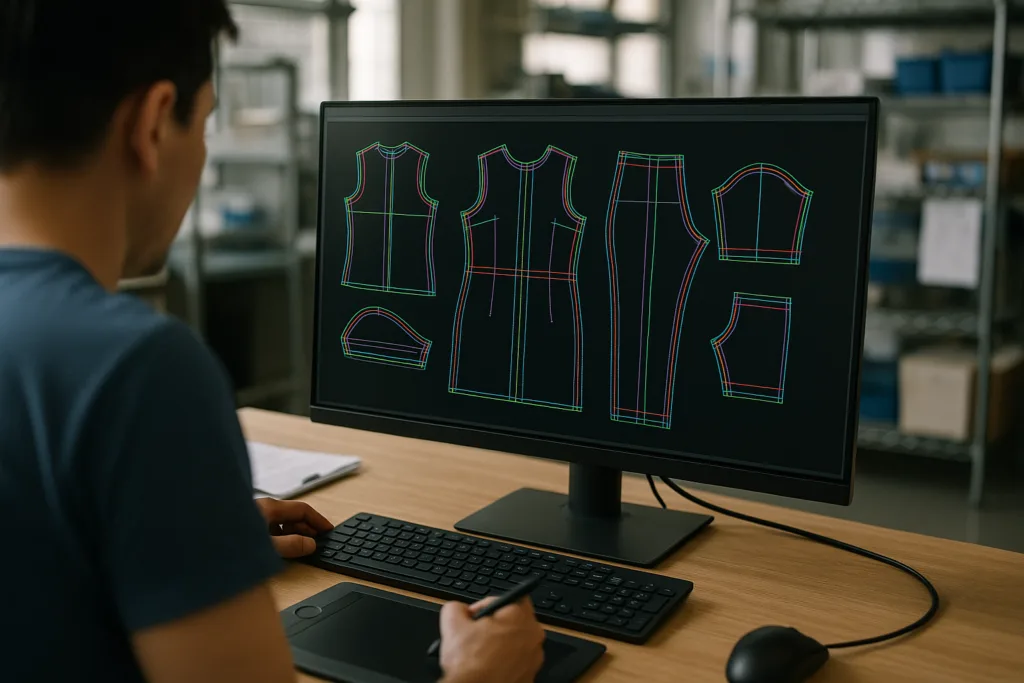
Once your block is solid, all style variations—whether a raglan polo shirt, a hooded sweatshirt, or a dress shirt with a shaped hem—are created by adjusting the base pattern’s lines and details. Common changes include neckline drops, sleeve variations (set-in, raglan, cap sleeve), body shaping (tapered, flared), and the addition of pockets, pleats, or closures.
Process for Developing Style Patterns
- Trace the block pattern onto drafting paper or CAD layer.
- Mark style lines: adjust neckline, armhole, hem, or add new design elements (such as plackets or cuffs).
- Integrate decoration or branding panels: e.g., chest panels for sportswear, yokes for work shirts.
- Finalize seam allowances, notches, and pattern labels for production handoff.
Practical Review Checklist
- Cross-check all adjusted seams for matching length and accurate balance points.
- Status: are the blocks up to date with the latest fit corrections? Always use the current version.
- Confirm that all style adaptations are clearly communicated to sewing and QC teams.
Pattern Block Development in Modern Apparel Factories
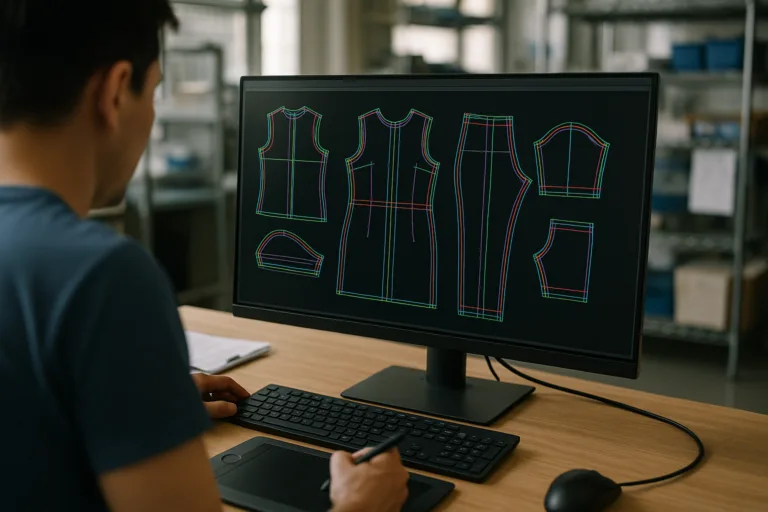
In export-focused garment factories, pattern block development typically leverages CAD systems such as Gerber AccuMark, Lectra, or Optitex. Digital storage enables rapid retrieval and adaptation, version control, and integrated grading. High-volume clients often supply their proprietary base blocks for consistency across international vendors.
Digital Patterns vs. Manual Patterns: Comparison Table
| Aspect | Manual Pattern | Digital/CAD Pattern |
|---|---|---|
| Accuracy | Good, but risk of copy error over time | High and repeatable |
| Storage | Physical files may degrade or get lost | Easy digital archiving and backup |
| Grading | Manual tracing: slower, more error-prone | Automated, fast, with templates |
| Integration | Requires manual pattern room cross-checks | Integrates with cutting and QC workflows |
Quality Control for Block and Style Patterns
Quality assurance starts with validating the fit and proportions of the base pattern before any garment goes to bulk production. Factories typically review PP (pre-production) and size set samples for dimensional accuracy and overall balance.
Key QC Steps
- Check main pattern pieces (front, back, sleeve) for measurement accuracy versus spec sheet (within stated tolerances).
- Inspect seam lines for clean transitions, minimum puckering, and proper notching for assembly.
- Review samples post-wash for shrinkage and twist, especially in knitted fabrics.
- Conduct wearer trials and record fit feedback for block improvement.
Common Pitfalls in Block Pattern Development
Factory experience shows several recurring issues in base pattern and pattern block development:
- Neglecting to update blocks after market feedback leads to ongoing fit dissatisfaction.
- Poor body measurement data or inconsistent ease addition causes sizing complaint returns.
- Partial grading (only around key girths, but not body length or sleeve) results in unbalanced silhouette across the size range.
- Lack of clear documentation—teams may use out-of-date or incorrect versions, causing miscommunication and sample rejections.
Best Practices and Action Steps for Pattern Block Success
Follow these industry-proven practices to ensure your base pattern delivers value across style lines and mass production runs:
- Regularly review and update block patterns using the latest fit data and wearer feedback every season.
- Cross-department collaboration: design, sampling, production, and QC should all validate blocks before style development.
- Label base pattern files with version number, date, and unique reference number for tracking.
- Use standard seam allowances, notches, and grain line markings. This ensures correct construction and reduces rework.
- Digitize manual patterns wherever possible to reduce long-term error and allow for rapid adaptation.
- Document all fitting corrections, ease parameters, and material-specific modifications for every block variant.
Frequently Asked Questions
What is a base pattern in garment design?
A base pattern is a master template representing body proportions and minimal ease, used to build all style variations with consistent fit and balance.
How is a base pattern different from a finished style pattern?
The base pattern lacks design details—it’s for core fit only—while a style pattern includes necklines, sleeves, shaping, and any style-specific elements.
What body measurements are needed for pattern block development?
Typical measurements include chest/bust, waist, hip, back length, shoulder, sleeve length, and for pants: rise, inseam, thigh, and leg opening.
How much ease should I add to the base pattern?
Ease depends on garment type, target market, and fabric; refer to fit guidelines or client requirements when adding ease to each body area.
Can I use the same block for all fabric types?
No. Fabrics with stretch or differing shrinkage rates require separate blocks or fabric-specific adjustments to achieve consistent fit and performance.
How often should garment factories update their base pattern blocks?
Factories should review and update base blocks each season or after receiving significant market or fit feedback, especially for fast fashion or new markets.