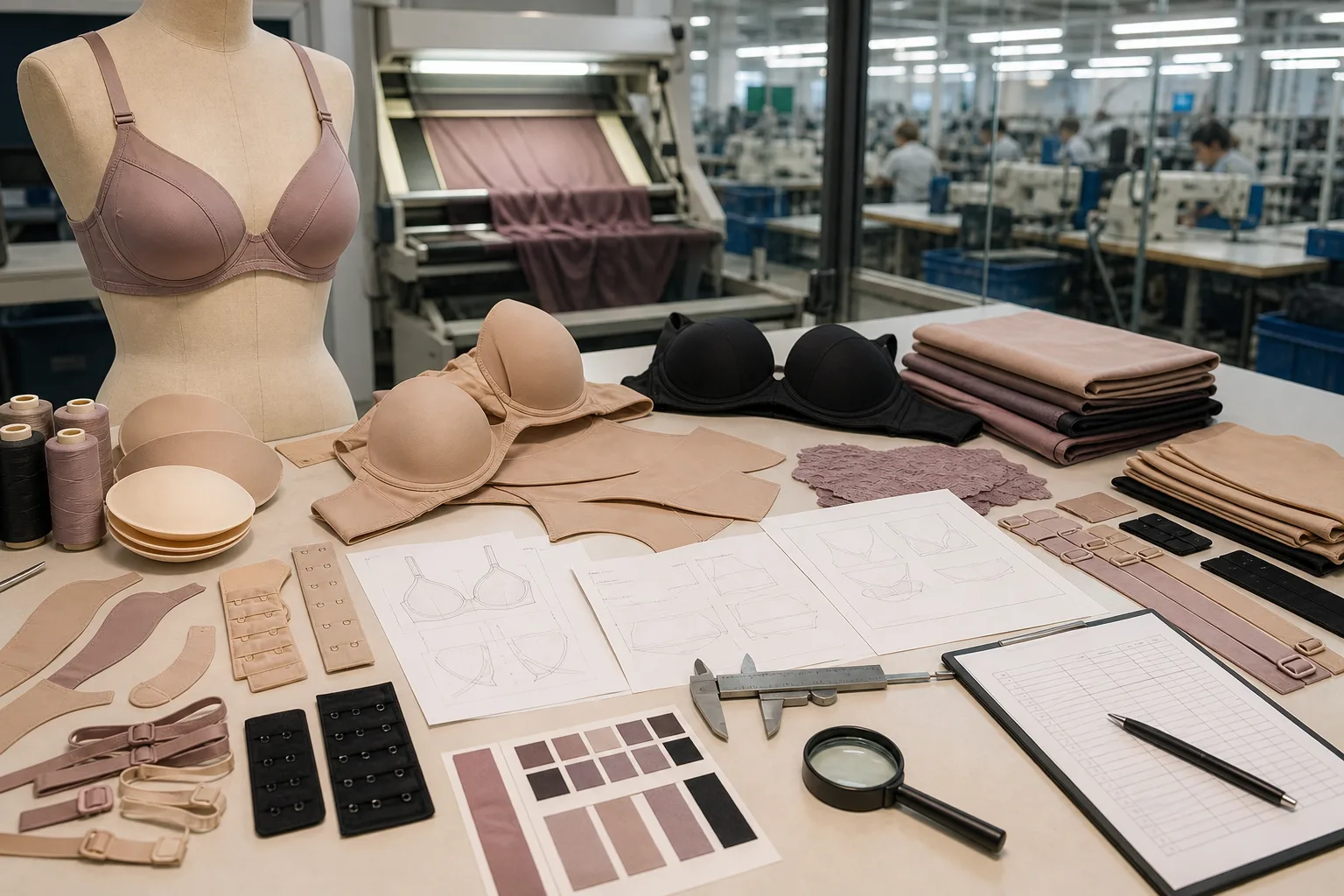
When evaluating bra manufacturers, look for demonstrated ability to develop, produce, inspect, and deliver the specific bra product you plan to sell. The most useful evidence covers product-category experience, pattern and fit development, support construction, material control, sampling, quality assurance, capacity planning, and communication. Factory photos, equipment lists, country of origin, company size, and a low quoted price may provide context, but none proves that a manufacturer is suitable for your product. Apparel Wiki is an independent educational publication, not a manufacturer, factory, laboratory, or sourcing service; its Sponsor information explains the publication’s editorial boundary.
Capability is therefore a product-specific concept. A manufacturer may be experienced with one bra style, material set, size range, or order profile and still be a poor fit for another. Assess the combination of construction, materials, intended market, development stage, and production requirements. Request evidence from comparable products, then test the working relationship through documented development and controlled production steps.
What capabilities should you look for when evaluating bra manufacturers?
Start by asking whether the manufacturer understands the product category and the particular technical problems it presents. Relevant capability may include pattern making, grading, fit sampling, support-structure construction, elastic application, component handling, cutting, sewing, finishing, inspection, packing, and shipment coordination. The right combination depends on whether the product is, for example, underwire, wireless, molded-cup, lace, sports, nursing, or another construction. Do not treat any one category as proof of universal bra-making expertise.
For each claimed capability, ask what evidence can be reviewed. Useful evidence may include comparable samples, development records, process explanations, approved specifications, material documentation, inspection records, or direct answers to technical questions. A sample that looks similar can show relevant experience, but it does not prove identical fit, support, durability, or production consistency. Treat every manufacturer statement as a claim requiring verification.
A practical decision principle is to evaluate behavior as well as facilities. Does the manufacturer identify unclear requirements, explain limitations, record revisions, and connect the approved product to production controls? Those working practices are often more informative than a polished presentation. The goal is not to find the largest company or the cheapest quotation, but the supplier whose evidence matches the risks of your specific bra.
Can the manufacturer develop the bra you actually want to sell?
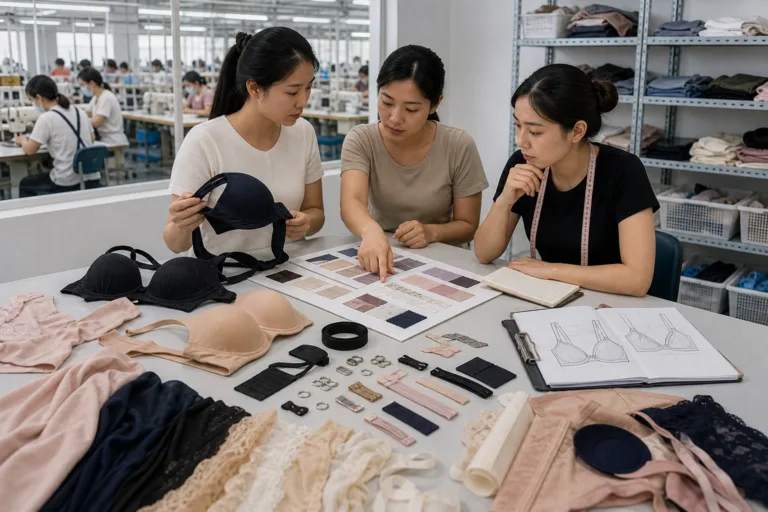
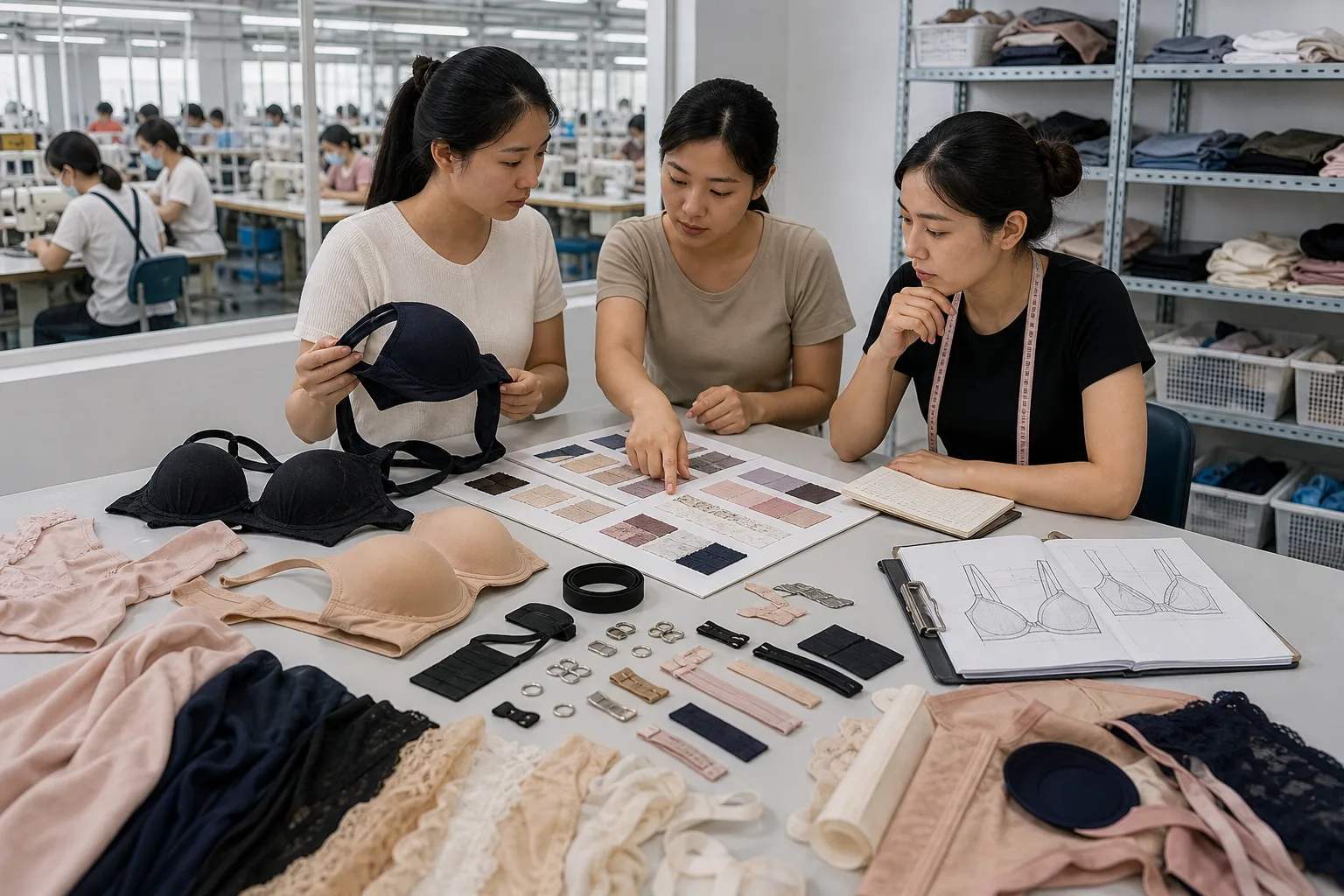
Product development determines whether a design concept can become a wearable and repeatable garment. Ask how the manufacturer handles pattern making, grading, fit samples, cup-and-band balance, support placement, seam engineering, elastic tension, closures, strap attachment, and construction sequencing. Where molding, bonding, specialized sewing, or finishing is proposed, request a clear explanation of the relevant process and direct evidence that it is available for the product under review.
Fit should be assessed against the intended block, materials, construction, and size range rather than as an abstract factory capability. A manufacturer experienced with one cup shape or size range may need a different development approach for another. Review how fit comments are recorded, how pattern revisions are identified, and how approved measurements are carried forward. Version control matters because an unrecorded change to a pattern, component, or construction detail can make later samples difficult to compare.
Request comparable development work where confidentiality permits, but interpret it carefully. Similar-looking lingerie does not establish that the manufacturer can reproduce your desired support, comfort, appearance, or fit. During sampling, document the sample version, comments, revisions, and outstanding decisions. The manufacturer should be able to explain what changed between versions and why, rather than relying on informal conversations or memory.
How should you assess materials, components, and construction control?
Review the manufacturer’s experience with the actual material and component set: stretch fabrics, lace, linings, foam, elastics, wires, sliders, rings, hooks, closures, and other specified parts. Ask how incoming materials are identified, approved, stored, inspected, and linked to the correct product version. The objective is to establish control from specification through production, not merely to confirm that the factory can purchase a visually similar item.
| Area to review | Evidence to request |
|---|---|
| Materials and components | Approved specifications, identification records, supplier documents, and inspection procedures |
| Substitutions | Approval workflow, notification rules, and criteria for renewed fit review or testing |
| Construction | Process explanation or work instructions for stretch direction, elastic application, wire placement, symmetry, seams, and finishing |
| Product version | Records connecting the approved sample, materials, patterns, and production instructions |
Material substitution should be treated as a product decision, not an informal purchasing adjustment. Two materials with the same nominal fiber composition can differ in weight, stretch, wash behavior, color, hand feel, or fit. A change may therefore require buyer approval and renewed fit review or relevant testing, depending on the product and intended market. Do not assume that a nominally equivalent replacement is functionally equivalent.
Construction control should address the details that affect consistency: stretch direction, elastic tension, wire placement, cup symmetry, seam quality, bonding or molding where applicable, and finishing. Keep qualitative manufacturing guidance separate from laboratory results, legal requirements, and performance claims. For those matters, use current specifications and qualified testing or regulatory sources appropriate to the target market.
What quality-assurance capabilities should a bra manufacturer demonstrate?
A single attractive sample is not the same as a quality system. Ask where inspection occurs from development and pre-production through cutting, sewing, finishing, packing, and shipment. The manufacturer should be able to explain how measurements, workmanship, appearance, component function, shade, labeling, and packing requirements are checked against an approved sample or written specification.
Use staged validation before making a substantial commitment. A suitable sequence may include specification review, fit and construction approval, material confirmation, a pilot or trial production step where appropriate, inspection, and corrective-action follow-up. The exact scope should reflect the product and order risk. Acceptance criteria should be documented by the buyer and manufacturer, or taken from an applicable authoritative requirement when one applies; avoid assuming that a universal defect limit or inspection level exists.
Also clarify how problems are managed. Ask who decides whether nonconforming goods are reworked, rejected, or approved under a documented exception; who authorizes rework; how root causes are investigated; and what evidence confirms that corrective actions were completed. Sample inspection reports, quality procedures, and corrective-action records are more useful than general assurances about quality.
Keep facility or social-responsibility audits separate from product-quality verification. An audit may address a facility, management practice, or social condition, while product inspection addresses whether a defined product matches its approved requirements. Each can be relevant, but one does not automatically prove the result of the other. Evaluate evidence and repeatability rather than relying on certificates, labels, or marketing language alone.
How do capacity, subcontracting, and delivery controls affect manufacturer selection?
A manufacturer’s stated capacity is only useful when it explains what can be produced for your specific style, material set, order window, and workload. Equipment counts or a stated monthly output do not show how much capacity is available when your order is scheduled. A complex underwire, molded-cup, lace, or support garment may depend on particular equipment, experienced operators, component availability, and approval timing.
Ask for a production explanation that connects the proposed schedule to the actual product. It should identify material readiness, development and approval gates, specialized operations, expected production stages, inspection points, and escalation routes. Compare how clearly each manufacturer explains constraints and dependencies. A credible explanation may identify a limitation or assumption rather than presenting an unconditional delivery promise.
Clarify the business and production relationships before committing. The quoting party, contracting party, payment recipient, production site, and subcontractors may not be the same entity. This does not make a trading company or sourcing intermediary unsuitable by itself. The important questions are who controls the work, who is accountable for product quality, and who must notify you when the arrangement changes.
Ask whether subcontracting is permitted, which operations may be assigned elsewhere, how subcontractors are selected, and how quality requirements follow the product. Written terms should explain how changes are disclosed and who authorizes them. Confirm that the manufacturer can identify the responsible production location and retain records for the relevant materials, operations, inspections, and approvals.
Evaluate delivery control as an ongoing process rather than a single promised date. Review communication cadence, material confirmation, sample approvals, production updates, issue escalation, and the handling of schedule changes. The result should be a documented, project-specific commitment. It is not a guarantee that future production will remain unaffected by materials, workload, approvals, or other unresolved risks.
Which commercial and communication capabilities should you test before committing?
Send the same specification and request-for-quotation package to each shortlisted manufacturer. Include the product drawings or reference sample, measurements, materials, components, size range, packaging expectations, intended market, development questions, and known quality requirements. Comparable inputs make it easier to see whether a difference in the quotation reflects a real commercial difference or an unspoken assumption.
A useful quotation should make its assumptions visible. Review what is included and excluded, which materials or components are assumed, whether alternatives are proposed, and how packaging, development work, delivery terms, and other requested items are treated. Do not compare prices as though they were equivalent when one offer uses substitute materials, a different packing basis, different delivery terms, or a different scope of development.
The manufacturer’s questions are also evidence of capability. A team that notices unclear measurements, missing component details, incomplete grading information, or conflicting requirements may be better prepared to manage development than one that silently fills gaps. Evaluate whether replies identify risks, assign action owners, record decisions, and distinguish approved changes from suggestions.
During sampling and quotation review, observe document control and follow-through. Check whether the latest specification is easy to identify, whether fit comments are tracked against a sample version, and whether open issues remain visible until resolved. Response speed matters, but useful ownership and accurate records matter more than rapid replies that create further confusion.
A comparison matrix can keep the decision balanced. Record evidence for technical fit, relevant samples, material control, quality procedures, capacity explanation, subcontracting transparency, commercial comparability, communication, and unresolved risks. This is a decision aid, not a universal scoring formula. Prioritize verifiable follow-through over the lowest quoted unit price.
How can you verify a bra manufacturer before making a final choice?
Begin with a shortlist based on relevant product experience, then ask each candidate to respond to a controlled brief. The brief should describe the design, measurements, materials, components, size range, intended market, quality expectations, and development questions. Request evidence for claimed capabilities rather than treating a website, factory photograph, equipment list, or similar-looking sample as proof of suitability.
Review the response for technical understanding and practical accountability. Does the manufacturer identify product risks? Does it explain the sample route, material approvals, construction approach, inspection steps, and revision process? Does it distinguish what it can demonstrate from what still needs confirmation? These questions help separate a manufacturer that understands the product from one that is simply repeating broad capability language.
Evaluate relevant samples and the development relationship in stages. Record fit and construction findings, material decisions, component changes, and the status of each revision. Where appropriate, use a pilot or trial production step before a substantial commitment. Confirm that the approved sample or specification is the reference for production inspection and that nonconformities have a defined decision and corrective-action process.
Before selecting a partner, confirm the commercial identity, production responsibility, subcontracting arrangements, capacity explanation, material controls, and available quality documentation. A final review can use this checklist:
- Product match and relevant development evidence
- Pattern, fit, construction, and material control
- Inspection process and corrective-action ownership
- Project-specific capacity and delivery explanation
- Transparent production and subcontracting responsibility
- Comparable commercial assumptions and clear communication
- Documented unresolved risks and required next actions
The outcome should be a reasoned sourcing decision proportionate to the product and order risk. It should not be presented as a guarantee of future production performance. For a broader way to organize sourcing evidence and production decisions, review the relevant Apparel Manufacturing Tools resources and keep the manufacturer’s claims separate from independently verified evidence.
Next step: Turn this framework into a working manufacturer brief and comparison record. The goal is to make every important assumption visible before development, sampling, and production commitments begin.
What is the most important capability when evaluating a bra manufacturer?
The most important capability is product-specific, repeatable control: the ability to develop, produce, inspect, and communicate about the exact bra construction, materials, size range, and order profile under review.
How can I verify whether a manufacturer really has bra-making experience?
Ask for relevant samples, development explanations, fit and revision records, material controls, and inspection evidence. A similar-looking product alone does not prove experience with your construction or performance requirements.
Should I choose a bra manufacturer based on factory size or equipment?
No. Size and equipment can provide useful clues, but neither proves that the manufacturer has available capacity, suitable operators, relevant process control, or accountability for your order.
What should a bra manufacturer include in a quotation?
The quotation should clearly identify its scope, assumptions, inclusions, exclusions, material or component alternatives, packaging basis, development work, delivery terms, and any information still required for a reliable comparison.
How are a factory audit and a product-quality inspection different?
A facility or social-responsibility audit examines defined aspects of a site or management practice. Product inspection checks whether a specified product matches approved requirements. Each answers a different question, and one does not automatically prove the other.
How can I check whether a bra manufacturer has enough capacity for my order?
Request a project-specific production explanation covering materials, specialized operations, available scheduling, approvals, inspection, subcontracting, and escalation. Do not infer reliable capacity from equipment counts or a general output claim.