Choose a grosgrain fabric care routine from the sewn-in label and material information, not from the fabric name alone. Fiber content, finish, color, lining, interfacing, bonding, and trims can all change the appropriate method. If reliable instructions are missing, pause before washing and favor low-stress, reversible handling while seeking product-specific guidance. This guidance remains editorially independent under the principles described on Apparel Wiki’s Sponsor page.
That sequence matters because two garments sold as grosgrain can react differently to moisture, friction, heat, or drying. The safest routine accounts for the complete garment rather than treating its visible outer fabric as the only care variable.
What grosgrain fabric means for clothing care
Grosgrain is a textile or trim category associated with a pronounced ribbed character, as described in this background on grosgrain fabric and its textile characteristics. It is not a fiber name. The term alone therefore does not tell you whether a garment is washable, how it should be dried, or whether it can tolerate pressing.
Material identity has several layers. Fiber content identifies materials such as silk, polyester, rayon, cotton, or a blend. Yarns and fabric construction help create the textile’s structure. Dyeing, coating, printing, bonding, and other finishes modify the surface or behavior. These layers are related, but they are not interchangeable.
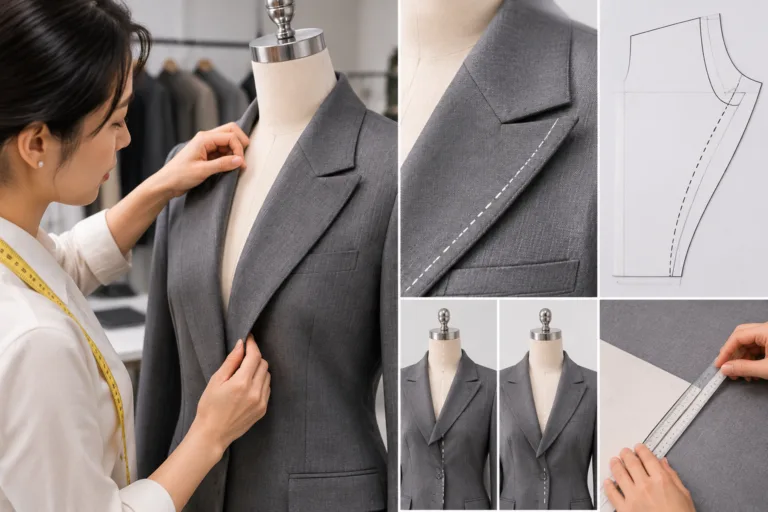
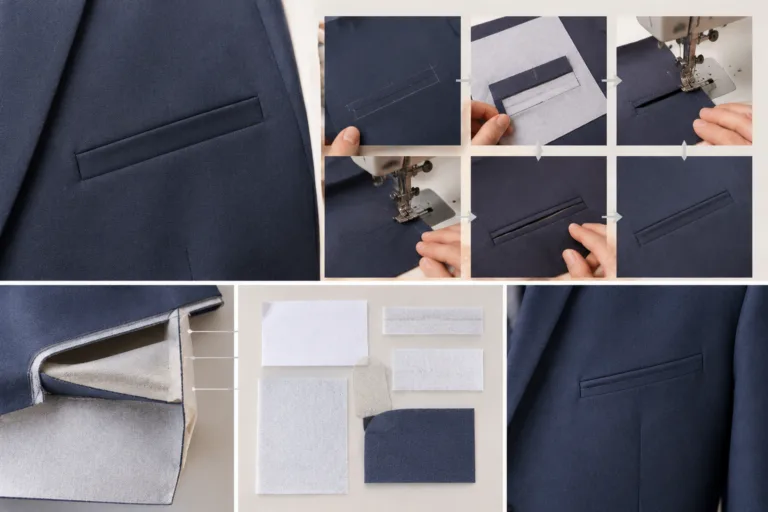
The garment assembly adds another set of variables. A lining can differ from the outer fabric in fiber, color, or response to cleaning. Interfacing and bonded areas can introduce adhesives or layered structures. Embroidery, beads, metal hardware, closures, and decorative trims may have their own limitations. Garment shape also matters because a fitted or structured piece must retain more than a clean surface.
For example, a structured grosgrain dress may combine an outer fabric, lining, interfacing, closures, and shaped seams. A simple unlined accessory might use a similar-looking grosgrain but contain far fewer vulnerable components. A method acceptable for the accessory does not establish that the dress can receive the same treatment.
Colorfastness, dimensional stability, and finish performance also cannot be judged reliably from ribbing or apparent stiffness. A silk version and a polyester version may require different handling, while two polyester versions may still differ because of their dyes, coatings, or construction.
When the label is present, its garment-specific instructions take priority over a general editorial framework. When it is missing, damaged, or incomplete, cautious handling is a risk-management recommendation, not proof that a particular method is safe. Obtain fiber and product documentation before making an irreversible choice.
Build a grosgrain fabric care routine from the garment label
Begin the assessment by reading the complete care label and any attached product instructions. Record the fiber blend and follow the symbols or wording as printed; do not infer missing settings. Next, inspect the garment inside and out for contrasting colors, lining, interfacing, coated or bonded sections, embellishment, hardware, and high-friction areas.
Use those observations in this decision order: identify documented instructions, establish the materials and construction, locate vulnerable components, and then choose cleaning and drying actions. The label provides garment-specific evidence. The framework below helps interpret what still needs attention without replacing those instructions.
| Observable input | Likely care implication | Initial choice | Variable that could change the choice |
|---|---|---|---|
| Clear, legible care label | The garment has documented care directions. | Follow the printed method and restrictions. | Later product instructions or visible damage may require clarification. |
| Unclear, incomplete, or missing label | Critical settings or limitations are unknown. | Pause and seek fiber- and product-specific guidance. | Reliable manufacturer documentation may resolve the uncertainty. |
| Structured or lined garment | Internal components may respond differently from the face fabric. | Evaluate the complete assembly before cleaning. | Lining fiber, interfacing type, or garment shape may alter the method. |
| Visible embellishment or hardware | Trims may be vulnerable to friction, moisture, or cleaning contact. | Protect them and follow any trim-specific instructions. | Whether a component is detachable can change preparation. |
| Coated or bonded area | Surface or layer adhesion may be a separate weak point. | Avoid assuming the face fabric’s method applies to the whole area. | Verified documentation for the coating or bond may permit a method. |
Contradictory information is a reason to stop, not to select the most convenient instruction. Compare the sewn-in label, attached literature, and reliable documentation for the exact garment. If the conflict remains, further manufacturer guidance or qualified professional assessment may be appropriate, although neither automatically guarantees an undamaged result.
When suitable, a hidden area or separate fabric swatch can screen for an obvious adverse response. Keep the test conditions relevant to the proposed treatment. A small-area check cannot prove that an entire garment, including its seams, lining, bonding, shape, and trims, will perform the same way.
Wash and dry grosgrain clothing without guessing
Follow the label when it specifies machine washing, hand washing, or professional care. It should also control applicable cleaning and drying details. There is no universal water temperature, cycle, detergent quantity, or drying method for washing grosgrain fabric because the name does not identify every material or component.
Before cleaning, empty pockets and inspect the garment in good light. Note existing stains, weak seams, loose embellishment, lifting bonded areas, or damaged hardware. Secure fasteners when appropriate, protect components that could catch, and remove detachable trims only when the garment instructions permit it. This inspection helps distinguish pre-existing defects from changes that occur during care.
Decide whether the garment has light surface soil, a localized stain, or enough overall soil to require full cleaning. These conditions do not automatically call for the same response. Avoid aggressive rubbing or repeated treatment when the dye, fiber, ribbed surface, or finish is uncertain. A local treatment can alter one area even when the rest of the garment remains unchanged.
During cleaning and drying, consider the combined effects of agitation, heat, moisture, added water weight, pressure, and uneven support. Depending on the materials and assembly, these factors can change shape, surface appearance, lining alignment, or bonded sections. The outer fabric’s apparent stability does not establish the performance of hidden layers.
After rinsing according to the documented method, support the garment in the permitted drying position and preserve its intended silhouette. Do not improvise with irreversible heat or force the wet garment into shape. When instructions are absent, seek guidance for the identified fiber, finish, and construction before proceeding.
Consider a lightweight, lined grosgrain garment with delicate trim. Even if its outer fabric appears simple, the lining may move differently when wet and the trim may need protection from friction. The appropriate choice could change if the same garment were unlined, used another fiber blend, or had removable decoration. Drying grosgrain garments is therefore a whole-garment decision, not merely the final step after washing.
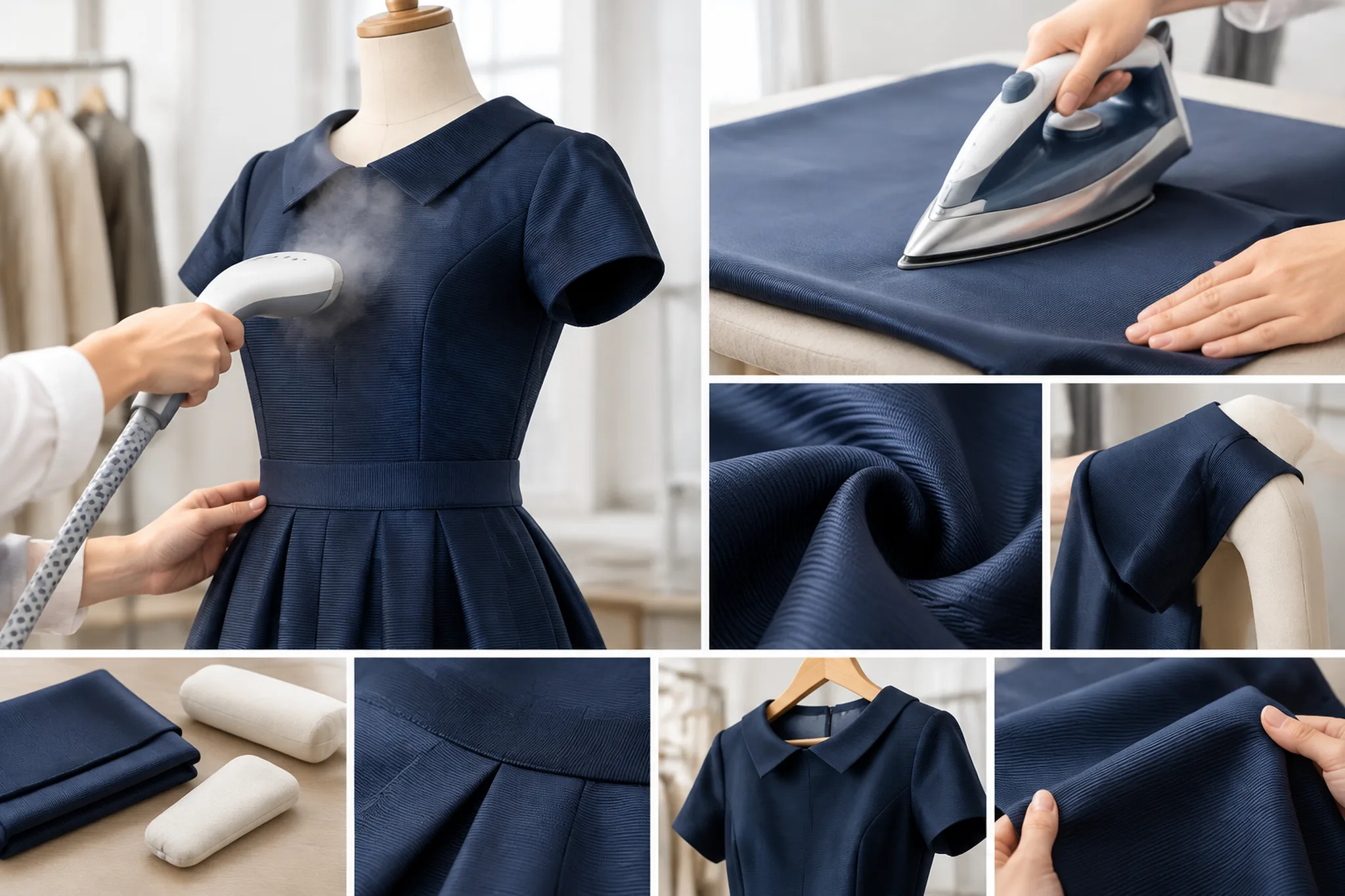
Press, steam, and reshape grosgrain garments carefully
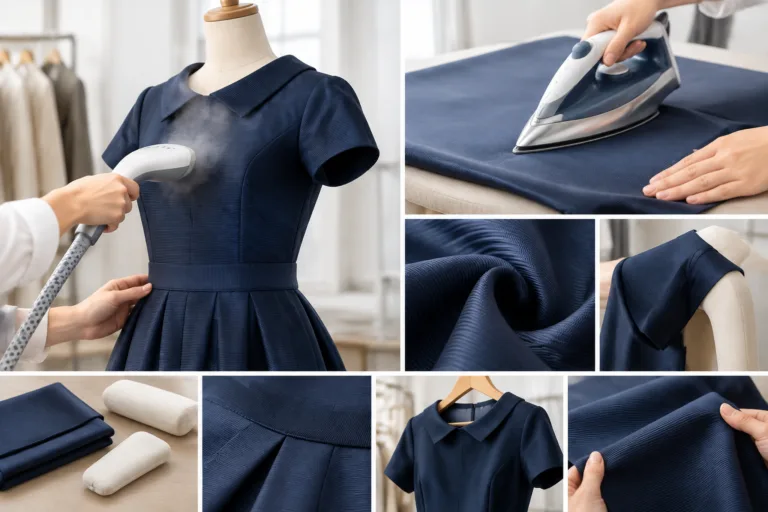
Appearance care needs its own decision after cleaning. Permission to wash a garment does not establish permission to iron or steam it. Read the applicable instructions before adding heat or moisture, and identify which areas need attention rather than treating the entire garment automatically.
Pressing combines heat with contact pressure. Steaming introduces heat and moisture, sometimes without direct contact. Hanging and gentle reshaping rely on support and positioning, although hanging also places tension on the garment. Consider the least disruptive permitted option that addresses the actual crease or alignment problem.
Before pressing grosgrain fabric, inspect the intended contact area on both sides where accessible. Note synthetic blends, printed or coated surfaces, bonded sections, lining, and decoration. These features identify questions to resolve; their presence alone does not establish a particular temperature or prove that steaming is suitable.
Keep direct contact away from vulnerable trims and unfamiliar finishes unless product instructions expressly address them. If the maker specifies a protective cloth, working side, or steam restriction, follow that detail. A cloth does not establish that an otherwise undocumented heat treatment is suitable.
Work only under the documented conditions, and inspect the treated area before continuing. Compare its color, texture, and outline with the surrounding material. Stop if the surface or structure changes unexpectedly. Repeated passes should not become a substitute for understanding why a crease remains.
When reshaping is permitted, use the original seam lines, hem, and silhouette as references. Arrange the garment without pulling it into new dimensions. Check that the lining sits naturally inside the outer shell rather than drawing one layer into alignment by stretching another.
For a structured, lined grosgrain jacket, first distinguish an ordinary crease from a lining caught inside or a misshapen internal layer. More pressing may not address the latter problem. An unlined garment could allow easier access, while a finish-sensitive blend may require different guidance.
A smoother appearance alone does not establish that the original finish or internal structure remains intact. Successful treatment of one area also does not establish tolerance for repeated heat exposure.
Store, spot-check, and reassess grosgrain clothing
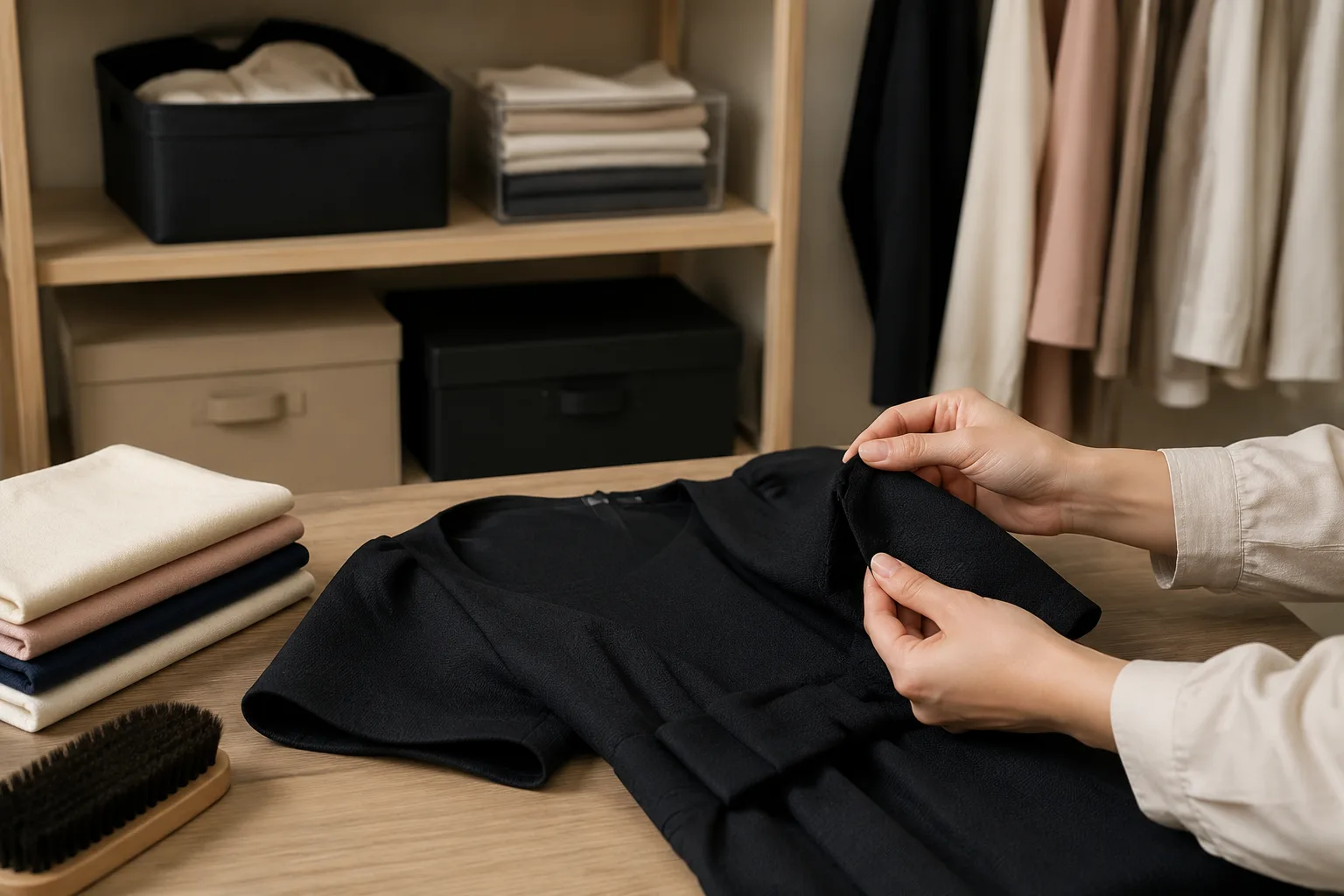
Store the garment only after it is fully dry, including accessible linings, pockets, and layered areas. Choose a ventilated storage space with enough room to avoid sustained crushing or rubbing against neighboring garments. These are cautious handling choices, not guarantees against every storage problem.
Match support to the garment’s shape. If hanging preserves the intended silhouette without pulling at the shoulders or distorting the body, use suitable support. If hanging visibly draws the garment out of shape, consider supported folding where permitted, keeping folds away from prominent decoration and structured areas.
Check stored garments periodically, especially where a fold, hanger, or adjacent item contacts the surface. Look for unwanted creases, compressed decoration, displaced lining, or new distortion. Adjust the support or spacing when those observations show that the current arrangement is unsuitable.
For minor marks, first identify whether you are seeing loose surface material, a localized stain, or a change in the finish itself. Do not assume every mark needs liquid treatment. When stain identity or surface treatment is uncertain, obtain product-specific guidance before choosing a cleaner.
If spot treatment is permitted, keep it within the documented method. Avoid vigorous rubbing or successive attempts with different products. A spreading mark, changing color, or altered texture is a reason to stop and reassess, not to intensify the treatment.
After any care, compare the garment with its previous condition. Check color and rib definition, then examine the silhouette, seam alignment, lining position, and trims. On bonded areas, look for new bubbling or visible layer separation. Note any change in how the material feels.
Record these observations alongside photographs of the label and relevant construction details. An unchanged outer surface does not establish that seams, lining, or hidden layers are unaffected. This comparison is an educational condition check, not a performance test.
Pause further home treatment if damage worsens, the proposed action conflicts with the label, or important material information remains unknown. Valuable structure and delicate decoration strengthen the case for obtaining garment-specific guidance before continuing.
Use the label and garment construction as your final care checklist
Grosgrain fabric care is garment-specific. Before the next care session, work through this compact checklist:
- Record the label instructions, fiber content, and known finish.
- Identify lining, interfacing, bonding, and vulnerable trims.
- Select the least disruptive permitted cleaning method.
- Check drying, pressing, and steaming permissions separately.
- Compare shape, surface, seams, and components afterward.
As an educational next step, compare those notes with the actual garment and its product documentation. Resolve missing or contradictory instructions before acting. When evidence is incomplete, pause for authoritative product-specific guidance instead of inventing a temperature, cycle, or treatment.
Frequently Asked Questions
Is grosgrain fabric washable?
The name alone does not establish washability. Follow the garment’s instructions, accounting for its fiber content, finish, and assembled components. An outer fabric that permits washing does not establish that the lining, interfacing, or attached decoration permits the same method.
Can I iron or steam grosgrain clothing?
Only when the garment’s instructions support the method. Ironing and steaming apply different combinations of heat, moisture, and pressure. Check any restrictions separately, including instructions for trims and finishes. Do not assume that avoiding direct iron contact makes steaming suitable.
What should I do if my grosgrain garment has no care label?
Look for original product documentation or ask the maker for instructions tied to that garment. Record any known fiber and construction details. Until the uncertainty is resolved, avoid trial washing, heat treatment, or stain removal based solely on the grosgrain name.
How should I care for grosgrain clothing with lining, interfacing, or embellishment?
Choose a method documented for the assembled garment. Check restrictions affecting each vulnerable component, including whether decoration is removable. If available information addresses only the face fabric, seek clarification before applying that method to the whole piece.
How can I tell whether a spot-cleaning attempt has damaged grosgrain fabric?
Compare the treated area with its previous appearance and adjacent material. New color differences, spreading edges, altered rib texture, stiffness, or distortion warrant stopping. These signs indicate a change requiring assessment; appearance alone may not establish its cause or whether it is permanent.
Should grosgrain garments be stored folded or hanging?
Choose according to garment shape, weight, decoration, and documented instructions. Hanging should support the silhouette without visible pulling. Folding should avoid crushing structured or embellished areas. Recheck the garment and adjust its support if creases or distortion develop.