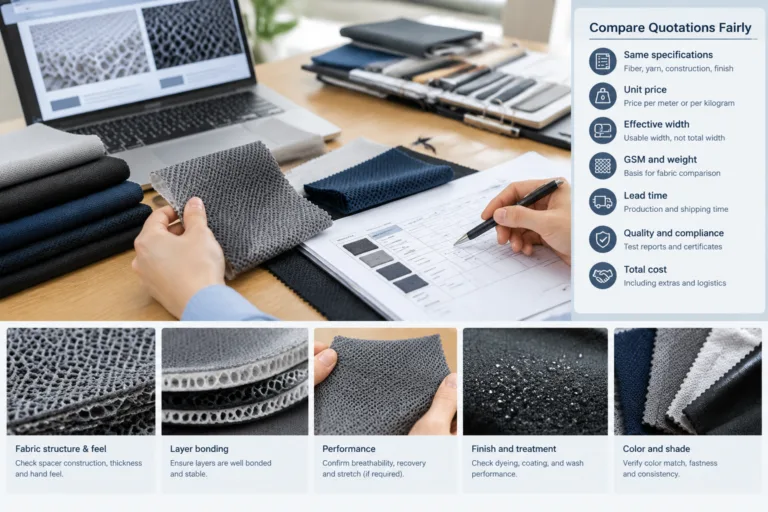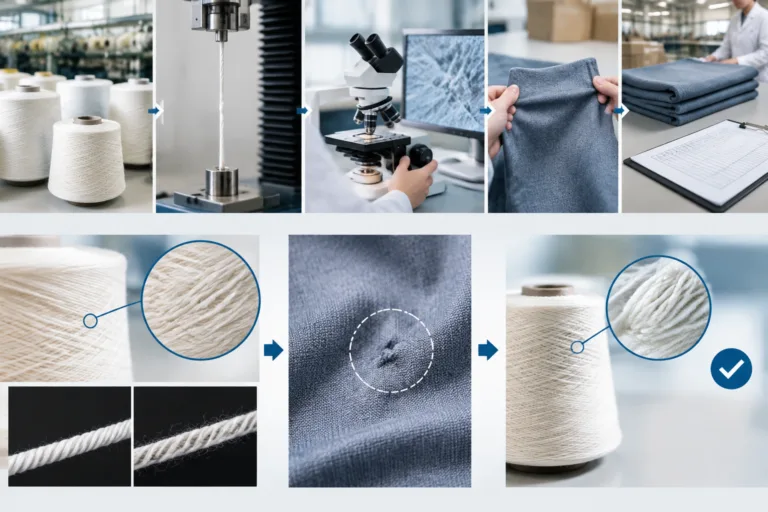
High-twist yarn defects are yarn-level irregularities or unsuitable twist-related properties that may contribute to fabric faults, but high twist is not automatically a defect. Excessive, insufficient, uneven, unstable, or poorly controlled twist can affect appearance, handle, dimensional behavior, or processing performance. The practical question is whether the yarn evidence matches the fabric evidence. Apparel Wiki is an independent educational publication; its Sponsor information does not make it a manufacturer, testing laboratory, or certification body.
A fabric photograph can show a symptom, such as streaking, torque-related distortion, or an uneven surface, but it cannot by itself prove a yarn root cause. The same appearance may result from fiber properties, spinning, winding, knitting or weaving, finishing, equipment, storage, laundering, or the inspection method. Treat high twist as a working hypothesis until production records, matched comparisons, and appropriate yarn or fabric checks support a stronger conclusion.
What Are High-Twist Yarn Defects in Fabric?
Yarn twist describes the helical arrangement introduced as fibers or yarn elements are turned around the yarn axis. Its level, direction, consistency, and stability influence how the yarn behaves during handling and how it interacts with a fabric structure. A high-twist yarn may be intentionally engineered for a particular effect or performance objective. The diagnostic issue is whether its actual twist-related properties are suitable for the approved product and process.
In this context, high-twist yarn defects include a twist level outside the applicable specification, unexpected twist variation along or between packages, inconsistent twist direction, or instability that changes the yarn’s behavior during processing. These conditions may contribute to liveliness, snarling, torque, crimp irregularity, uneven cover, or dimensional instability. They become relevant quality concerns only when supported by the product requirements and evidence from the affected production.
Keep three ideas separate during an investigation:
- Symptom: what is visible or measurable in the fabric, such as a streak, distortion, handle change, or unstable dimension.
- Hypothesis: a possible explanation involving yarn twist, yarn construction, machine tension, fabric structure, or another variable.
- Confirmed cause: an explanation supported by traceable samples and a comparison that distinguishes it from competing causes.
This distinction prevents teams from treating every yarn-related fabric defect as proof that the yarn was unsuitable. A yarn can meet its stated requirements while a machine setting, fabric construction, finishing condition, or measurement procedure creates the reported fault. Conversely, a supplier statement that a yarn passed an internal check does not automatically explain the behavior of the finished fabric. The relevant specification, sampling record, test method, and production traceability still matter.
Which Fabric Symptoms Can Point to a High-Twist Yarn Problem?
Several observations can justify checking high-twist yarn quality, although none proves the diagnosis alone. Possible clues include streaks that follow particular yarn paths, torque-related distortion, lively or difficult-to-control yarn during processing, snarling, an uneven surface, barre-like visual effects, irregular crimp, or dimensions that shift unexpectedly. The relationship depends on the yarn type, fiber properties, ply construction, fabric structure, machine settings, finishing, and care conditions.
Start by recording the defect before production conditions change. Note where it appears, its direction, frequency, repeat length, severity, and the first stage at which anyone detected it. Record whether it is visible in greige fabric, after finishing, after laundering, or only during garment inspection. These details help distinguish a yarn-path pattern from a finishing-wide effect or an inspection artifact.
| Observation to record | Why it helps |
|---|---|
| Location and direction | May show whether the fault follows a yarn path, fabric course, wale, machine zone, or finishing direction. |
| Frequency and repeat pattern | Can indicate a package, feeder, spindle, machine position, or recurring process condition. |
| Stage of first detection | Helps separate yarn or fabric formation issues from finishing, laundering, storage, or inspection effects. |
| Appearance and handle | Shows whether the issue is primarily visual or also involves stiffness, liveliness, torque, or surface behavior. |
Photograph the defect with a scale and retain representative samples from both acceptable and defective areas. Include enough fabric to show the repeat pattern rather than only a close-up. Preserve the related lot, roll, package, machine-position, and process-date information. A fault that repeats with selected packages or machine positions supports a different line of inquiry from one distributed evenly across the full width or length.
How Can You Separate Yarn Quality from Fabric and Machine Causes?
Build the investigation around competing cause groups. Consider fiber blend or morphology, yarn linear density and ply, twist level and variation, package condition, knitting or weaving settings, yarn tension, fabric construction, finishing, storage, laundering, and the inspection method. Yarn quality is one part of a multivariable textile system, so a generic defect checklist cannot replace traceability and controlled comparison.
Record yarn identification precisely. The numbering system matters because direct linear-density systems and indirect count systems do not express size in the same way. A notation such as 30/2 should be clarified with the supplier or mill: the record should identify the single-yarn count or linear density, the ply construction, and the applicable numbering system. Do not assume that a commercial notation has the same meaning across all suppliers or systems.
Matched comparisons are more useful than isolated observations. Where feasible, compare the same fabric construction made with another yarn lot, the same yarn lot processed in another machine position, or acceptable and defective packages run under otherwise comparable conditions. Then check whether the fault follows the yarn lot, a package, a machine position, a process date, or a finishing batch.
Keep an evidence record for each hypothesis:
- What observation supports the hypothesis?
- What observation argues against it?
- What is the smallest comparison that could separate it from another cause?
- Which sample, package, machine, or process record must be retained?
This approach helps avoid both premature supplier blame and premature rejection of an entire lot. A fault that follows one package may call for package-level review; a fault that appears only after finishing may require process investigation; and a fault reproduced with an acceptable control yarn weakens the case against the suspected yarn. Conclusions should remain provisional until the comparison has been completed.
What Yarn Checks Help Confirm a High-Twist Quality Issue?
Begin with sample integrity. Identify the yarn lot, package, production date, storage condition, and sampling location before testing. Connect each yarn specimen to the fabric showing the fault. Without that chain of identity, a technically valid result may still be irrelevant to the reported production.
Review the approved yarn specification before selecting checks. It may define composition, numbering system, ply, twist direction, twist level or range, appearance, strength-related requirements, or irregularity criteria. Use an appropriate validated method for twist and any other relevant property. Test selection, conditioning, reporting conventions, and acceptance limits are method- and specification-dependent; do not present an unverified internal procedure or invented pass-fail value as a universal requirement.
Compare the affected yarn with three references where available: the approved specification, a retained standard or approved sample, and a known acceptable lot. Use the same sampling and conditioning approach for each comparison. Review not only average results but also variation between packages or sampling locations when the fabric pattern suggests an isolated source.
Finally, correlate the yarn findings with production behavior. Ask whether the fabric fault aligns with particular packages, positions, or a broader lot trend. Supplier certificates, internal screening, and independent laboratory confirmation serve different evidentiary roles. A twist difference can support the yarn hypothesis, but it does not automatically establish that the difference caused the fabric fault. The strongest conclusion connects the measured property, the affected sample, the production pattern, and the elimination of credible alternative causes.
How Should a Mill Investigate and Confirm the Root Cause?
Begin with the fabric complaint as it was observed, before changing settings or reprocessing material. Record the fault location, direction, repeat pattern, visual appearance, handle, dimensional behavior, and the first stage at which it was detected. Photographs should be linked to fabric rolls, production dates, yarn lots, and machine positions where those records are available.
Next, create a short hypothesis table. Include twist level or variation, yarn count or ply, package damage, fiber or blend differences, machine tension, fabric construction, finishing, laundering, storage, and inspection error. For each possibility, note the supporting evidence, the evidence that would weaken it, and the smallest comparison that could test it. A common defect checklist can organize the investigation, but it cannot identify the cause by itself.
Use a controlled comparison that changes as few variables as possible. Depending on the production record, this may involve comparing retained yarn from the affected lot with an approved lot, checking packages from different positions, or processing a control yarn under comparable conditions. Record the specimen identity, test method, relevant environmental conditions, machine settings, and any departure from normal production.
Classify the result carefully. A cause may be confirmed when the evidence connects the measured yarn condition with the affected fabric pattern and credible alternatives have been addressed. It may be probable when the evidence is persuasive but incomplete, unsupported when testing does not sustain the hypothesis, or unresolved when the comparisons cannot separate the competing causes. Containment and corrective action should reflect that level of confidence rather than automatically rejecting an entire lot.
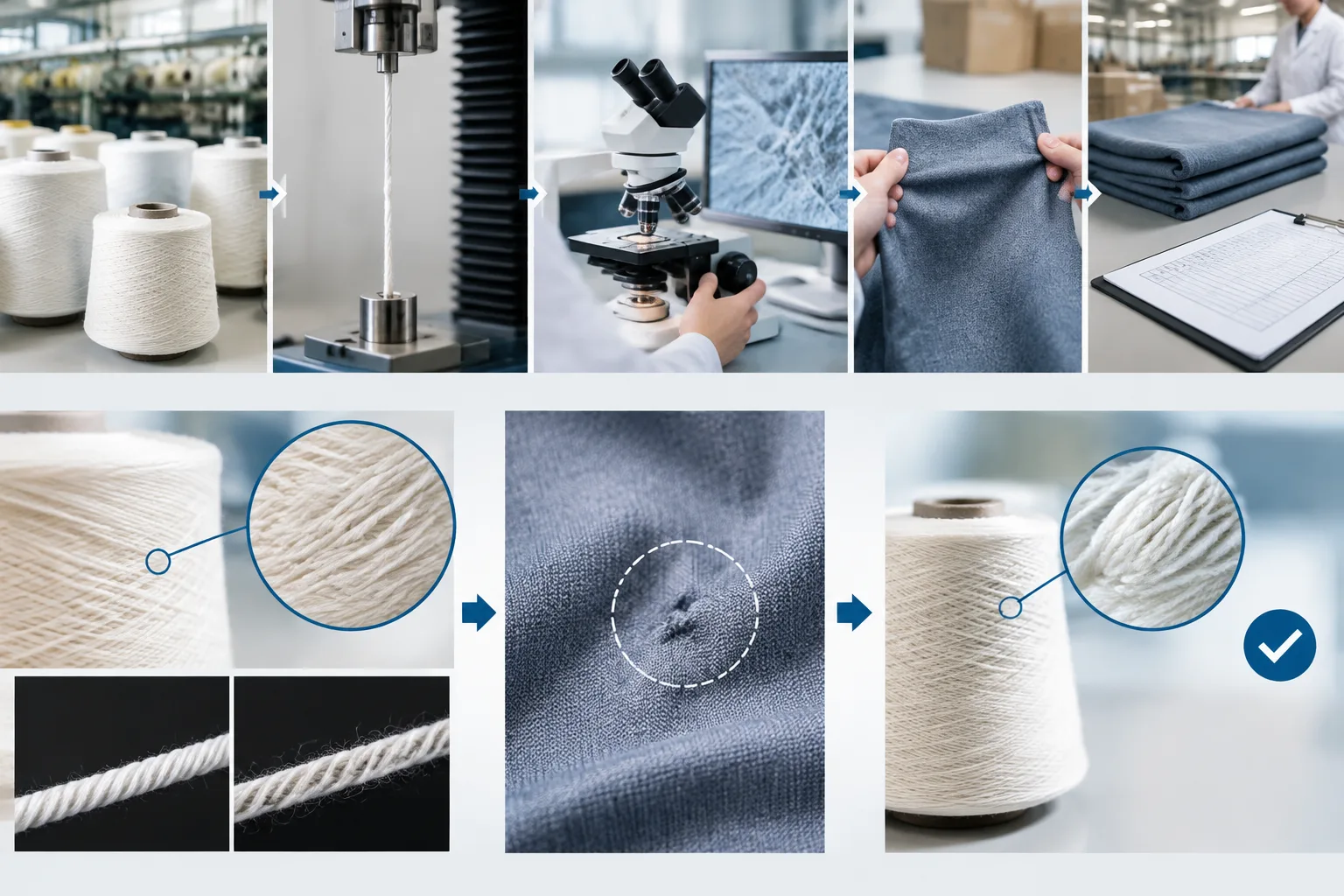
How Do You Evaluate Supplier Evidence and Decide on Next Steps?
A useful supplier response should identify the exact yarn, numbering system, ply description, applicable twist requirement, test method, sample identity, and basis for the reported result. “The yarn passed inspection” is not enough to connect a supplier record with a fabric complaint. The result must be traceable to material that could have entered the affected production.
Compare the supplier’s information with the buyer’s specification, approved sample, and fabric production records. Check whether the stated property, method, conditioning approach, and acceptance limit are the same ones used in the original approval. A certificate can support conformity evidence, but it does not by itself prove that the yarn caused or did not cause a particular fabric behavior.
When internal results conflict with the fabric evidence, request a comparison using retained samples or an independent laboratory where the dispute justifies it. The comparison should preserve specimen identity and use an appropriate validated method. Independent testing is evidence for a defined question; it is not automatically a complete explanation of the production fault.
Use the result to choose a proportionate next step. Release may be reasonable when the yarn conforms and another cause is supported. Containment is appropriate when the production risk remains unresolved. A confirmed specification breach may require correction or replacement under the applicable agreement. Repeated patterns across lots should lead to escalation and a documented review of specifications, supplier controls, package handling, or incoming inspection.
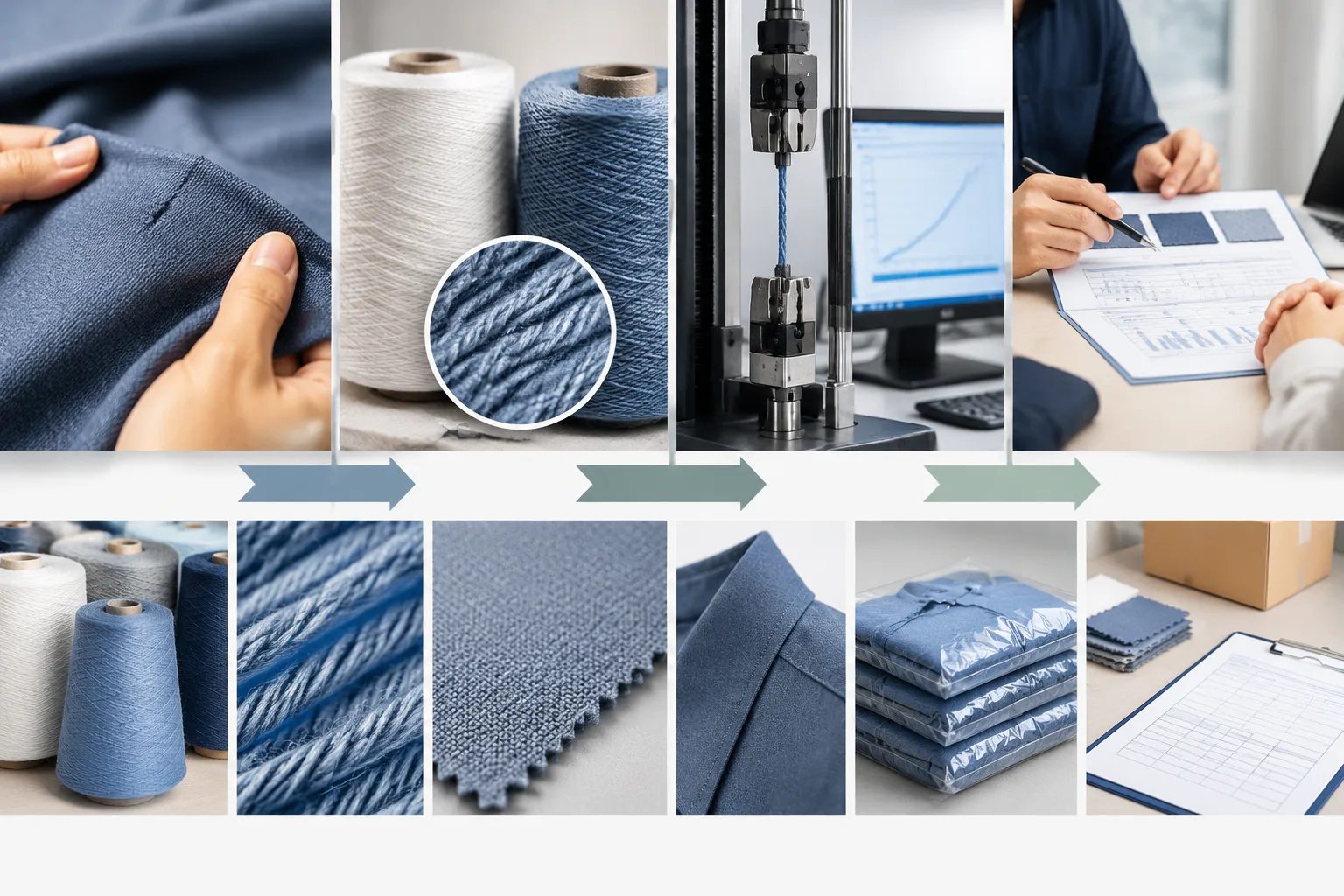
What Are the Limits of Attributing Fabric Faults to High-Twist Yarn?
Twist does not operate independently. Its effect can vary with fiber properties, blend composition, yarn construction, fabric structure, machine settings, finishing, storage, laundering, and the way the fabric was inspected. This is why a twist-related measurement should be treated as one part of a causal chain rather than as a complete diagnosis.
A measured difference from an approved lot can support the yarn hypothesis without proving that the difference produced the reported fault. The connection is weaker when the defect has no relationship to a yarn lot or package, appears only after finishing or laundering, or can be reproduced with a known acceptable yarn. These patterns call for broader testing rather than a narrower accusation.
Keep representative acceptable and defective fabric, yarn samples, package information, production records, and finishing details until the investigation is closed. State uncertainty explicitly when the available evidence cannot distinguish yarn quality from machine, construction, finishing, handling, or measurement causes. A calibrated conclusion is more useful for the next production decision than an unsupported single-cause explanation.
Next step: Turn the investigation into a traceability record that links the fabric symptom, affected roll or panel, yarn lot and package, machine position, process history, test results, and final decision. That record gives the mill and sourcing team a usable reference for the next lot without treating one incident as a universal rule about high-twist yarn.
What is a high-twist yarn defect?
It is a yarn-level condition involving excessive, insufficient, uneven, unstable, or otherwise unsuitable twist-related behavior for the specified product. High twist itself is not automatically defective; the question is whether the yarn meets its specification and contributes to the observed fabric fault.
Which fabric faults may be associated with high-twist yarn quality?
Possible observations include torque-related distortion, liveliness, snarling, streaks, uneven surface appearance, irregular crimp, barre-like effects, or unstable dimensions. These are hypotheses, not proof, because fabric structure, equipment, finishing, and inspection can create similar symptoms.
Can a fabric photograph prove that high twist yarn caused the defect?
No. A photograph can document appearance, location, direction, and repeat pattern, but it cannot establish the yarn root cause. Yarn, fabric, process, and control-lot evidence are needed to support a causal conclusion.
What yarn information should a mill or supplier provide?
Request the exact yarn identification, numbering system, ply description, twist direction and requirement where specified, test method, sample identity, conditioning or test basis, and applicable acceptance criteria. These details allow the result to be compared with the approved specification and affected production.
Which tests can help compare a suspected yarn lot with an approved lot?
Use validated methods appropriate to the question, such as checks of twist and other properties named in the specification. Compare the affected lot with the approved specification, retained standard, and known acceptable lot using consistent sampling and conditioning. Acceptance limits remain specification- and method-dependent.
How can a team distinguish a yarn problem from a machine or finishing problem?
Check whether the fault follows a yarn lot, package, machine position, process date, or finishing batch. Matched comparisons and controlled production checks can narrow the cause. The strongest conclusion connects the pattern and test results while addressing credible alternative explanations.