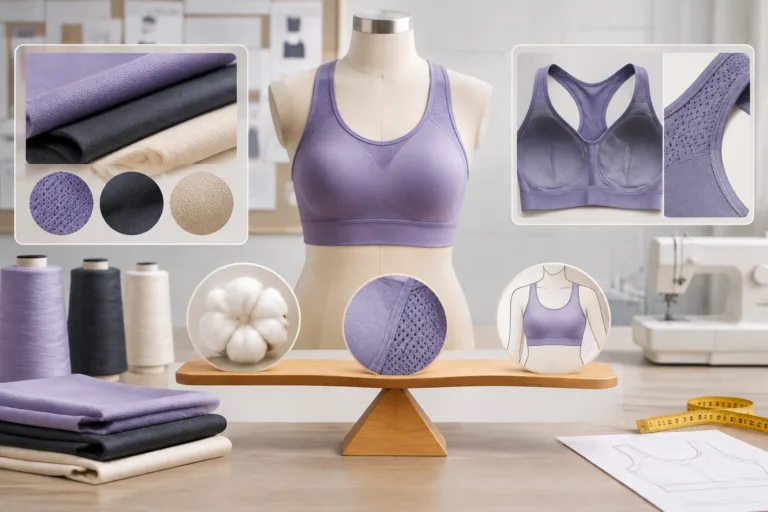
Improving sports bras encapsulation design starts with the wearing task, not the category name. Encapsulation uses separate shaped areas or cups to organize and support each breast, while compression uses pressure from the garment to hold the bust more collectively. Many sports bras combine both approaches, so neither construction is automatically superior. The design question is whether the complete garment provides the intended balance of containment, movement, coverage, comfort, and fit. An independent resource such as Sponsor information should not be confused with technical validation. For development, examine the cups or panels together with the underband, straps, neckline, seams, materials, and body fit.
Improving sports bras encapsulation design: define the support task
Encapsulation is a construction approach that gives each breast a more distinct shaped area instead of treating the bust as one compressed volume. Cups, molded sections, or seamed panels can organize individual body volume and coverage. Compression, by contrast, relies more on the garment pressing the bust toward the body. A product may use separated cups with a compressive outer layer, making the distinction useful for analysis rather than a strict product classification.
Begin with a design brief that describes what the garment must do during use. Identify the activities and movements that matter, such as repeated arm elevation, bending, rotation, or changes between upright and supported positions. Then ask where the garment needs stability, how much coverage is intended, whether adjustment or easier entry matters, and which comfort complaints would make the design unsuccessful. These questions turn a broad category into observable development tasks.
A shaped cup or panel expresses design intent, but it does not establish a performance level. Its result depends on the wearer, size, body shape, fabric behavior, elastic components, seam construction, and the relationship between every garment section. A cup that appears well formed in a sketch may still gap, migrate, restrict movement, or create uncomfortable edge pressure when assembled and worn.
For that reason, treat encapsulation sports bra design as a coordinated system. Give each visible feature a functional objective and a manufacturability question: what volume or movement does it accommodate, how is it joined, and can the intended shape be reproduced consistently? Keep design intent separate from typical practice and from validated performance evidence. The category label can guide investigation, but only a defined task and later garment review can show whether the design addresses the intended use.
Map movement, body areas, and support zones before pattern development
Before drawing or revising a pattern, create a body-and-motion map. Connect each relevant action to the garment area likely to need review. For example, arm movement may expose restricted armholes or strap migration; rotation may reveal shifting at the side or back; bending may expose neckline gaping or inadequate coverage. These are design observations, not universal failure rules, and the same movement can produce different results with different bodies, materials, and construction.
Review the bust, underbust, neckline, armholes, straps, side panels, back, seams, and closure or entry points as related but distinct zones. Cup shaping and breast separation address how volume is organized. The underband addresses anchoring around the torso. Straps distribute connection between the upper body and garment, while the neckline and side or back structures influence containment and positional stability. Each zone needs its own design question; tightening one component does not solve every fit problem.
Include body and size variation early. Review cup volume, breast position, torso length, shoulder slope, and asymmetry rather than scaling one front-view shape mechanically. A nominal measurement can behave differently when elasticity, construction tension, or movement changes. Static measurements and a front sketch help establish starting geometry, but they cannot establish dynamic fit.
Plan reviews in relevant postures and actions. Record where the garment migrates, wrinkles, cuts in, gaps, chafes, or limits arm movement. Note whether the concern appears at rest, during a particular movement, or after repeated movement. Wearer feedback is evidence to interpret, not a universal rule. People with different body shapes, dressing access, or activity contexts may need direct participatory feedback instead of assumptions based on a size label or product category.
Coordinate cup shape, fit, and structural components
Cup or panel geometry organizes volume and coverage, but it must connect to the surrounding garment. Review seam placement, edge finishing, lining, and the transition into the body section as one construction problem. A seam can help shape a volume while also affecting thickness, stretch direction, pressure, and assembly. The cup should therefore be assessed in the assembled garment rather than judged by its outline alone.
Different components perform different jobs. The underband helps establish a lower anchoring relationship with the torso. Straps connect the upper garment to the body and influence how the cup or panel remains positioned. The neckline contributes to coverage, while side and back structures connect the bust area to the garment body. Lining, bindings, and seam finishes affect the stability and comfort of those relationships. Changing one component may alter the demands placed on the others.
Separate pattern dimensions from material extension. Apparent fit depends on body measurements, design ease, movement ease, fabric stretch, elastic behavior, recovery, construction tension, and grading. These variables should not be collapsed into one ease value or one visual proportion. A pattern that fits a static form may behave differently when the material extends, relaxes, or pulls against an adjoining section.
Build the fit review around separation, containment, edge behavior, strap position, underband migration, arm movement, breathing comfort, and visual balance across representative sizes. Consider a lightweight knit with limited recovery: it may need a different combination of shaping and anchoring from a firmer, more stable material. That is a development hypothesis, not a guaranteed solution. The final choice remains subject to prototype evaluation on the intended material and complete construction.
In encapsulation cup construction, every visual detail should have both a functional purpose and a construction check. Do not prescribe one cup shape, seam arrangement, or ease value for every body, activity, or fabric. A useful pattern review asks whether the geometry preserves the intended body space, whether the anchoring areas remain positioned during movement, and whether the manufacturing sequence can reproduce those relationships without distortion.
Balance materials, construction, and comfort trade-offs
Sports bra encapsulation materials should be assessed as a system. Main fabric, lining, cup layers, elastic, foam or padding, thread, bindings, and closures interact after assembly. A favorable property in one component does not guarantee support, comfort, or durability in the finished garment.
Begin with observable material behavior: stretch direction, recovery, thickness, hand, surface friction, moisture behavior, and edge stability. Then connect each observation to a design implication. A material that extends readily may follow body contours, but the pattern and surrounding components must still retain the intended cup shape. A more stable layer may help organize volume while adding bulk or creating abrupt transitions at seams and edges.
Firm elastic or reinforcement may improve positional stability in one area. It can also increase pressure or make the transition to a softer fabric more noticeable. Conversely, a soft lining may feel comfortable against the skin but need support from cup geometry, anchoring, or additional layers. Neither choice can be judged independently of body shape, activity, placement, and attachment tension.
Construction decisions can alter the behavior expected from the material specification. Seam placement changes shaping and where thickness contacts the body. Joining order can affect alignment and repeatability. Elastic application and binding tension may distort an edge or change how it sits. Thread, seam type, and finishing also influence bulk, flexibility, surface feel, and the ability to reproduce the intended shape.
For a low-bulk everyday design, an initial concept might favor soft layers, discreet seams, and uncomplicated entry. The review should then ask whether those choices preserve separation, coverage, and shape during intended movements. For a more movement-intensive design, the first prototype might use firmer anchoring or added stabilization. That approach still requires checks for edge pressure, arm mobility, dressing access, and wearer priorities.
Treat both concepts as development hypotheses. Record the material identity, layer arrangement, stretch orientation, elastic and binding placement, seam construction, closure, and intended function. These records help connect later fit or wear observations to deliberate choices rather than to a vague impression of the fabric.
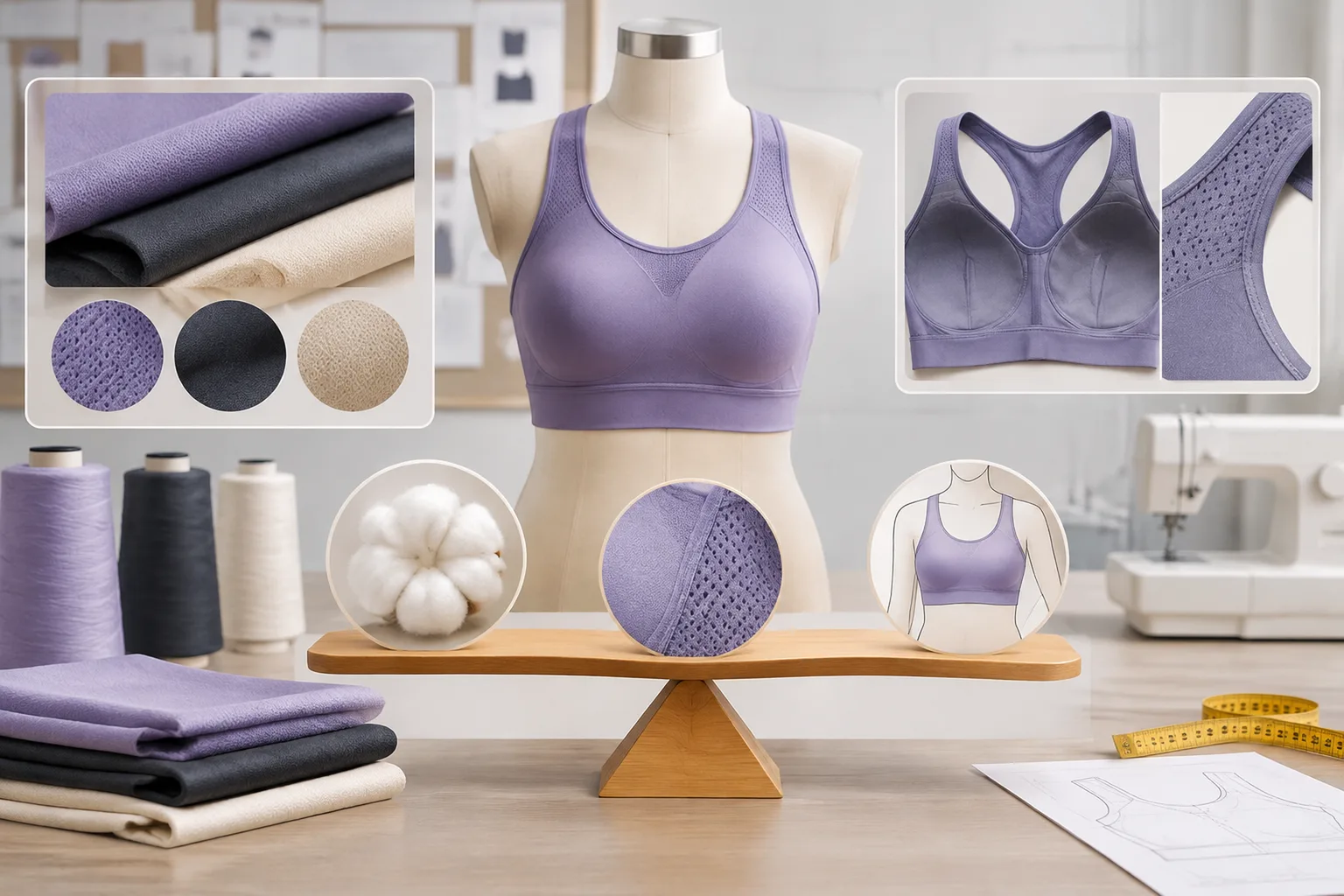
Evaluate prototypes and diagnose encapsulation design problems
Evaluate the final material and assembly combination rather than relying on an isolated cup, elastic, or fabric sample. Start with static fit, then repeat the review during movements from the design brief. Include representative sizes and relevant body shapes where practical, because one wearer’s result cannot establish a universal solution.
Observe separation, containment, gaping, edge pressure, garment migration, strap movement, underband position, arm mobility, seam contact, and adjustment or dressing usability. Ask wearers to identify the location, movement, and garment feature connected with their feedback. Record observations without assuming that one comment applies to every wearer or size.
| Observable input | Likely implication | Initial design response | Variables that could change the response |
|---|---|---|---|
| Garment or underband migrates during movement | Anchoring, fit, recovery, or the movement assumption may be mismatched | Review underband position and behavior before changing tension | Torso shape, size, activity, material recovery, closure, and grading |
| Cup edge gaps or loses containment | Cup geometry, volume, neckline, or material behavior may not coordinate | Compare cup shape and edge placement with the observed body position | Breast shape, posture, movement, lining, stretch direction, and size |
| Edge pressure or cutting in | Geometry, tension, finishing, or local fit may be concentrating contact | Inspect the affected edge and adjoining structure rather than simply tightening elsewhere | Elastic application, seam bulk, body shape, posture, and fabric extension |
| Strap shifts or restricts arm movement | Placement may conflict with shoulder movement or surrounding pattern geometry | Review strap position, armhole shape, and back connection together | Shoulder slope, torso length, strap adjustment, activity, and size |
Where practical, change one meaningful variable at a time. That variable might be cup shape, underband behavior, strap placement, neckline coverage, side stability, material recovery, binding construction, or grading. Controlled comparisons make the cause of an improvement easier to interpret, although interacting components may still require a later combined revision.
For every comparison, record the garment version, size, materials, construction, wearer context, activity, posture, observations, and feedback. Use the same movement sequence when repeatability matters. An internal prototype review guides development, but it does not establish a certification, regulated claim, quantified support result, or universal performance rating.
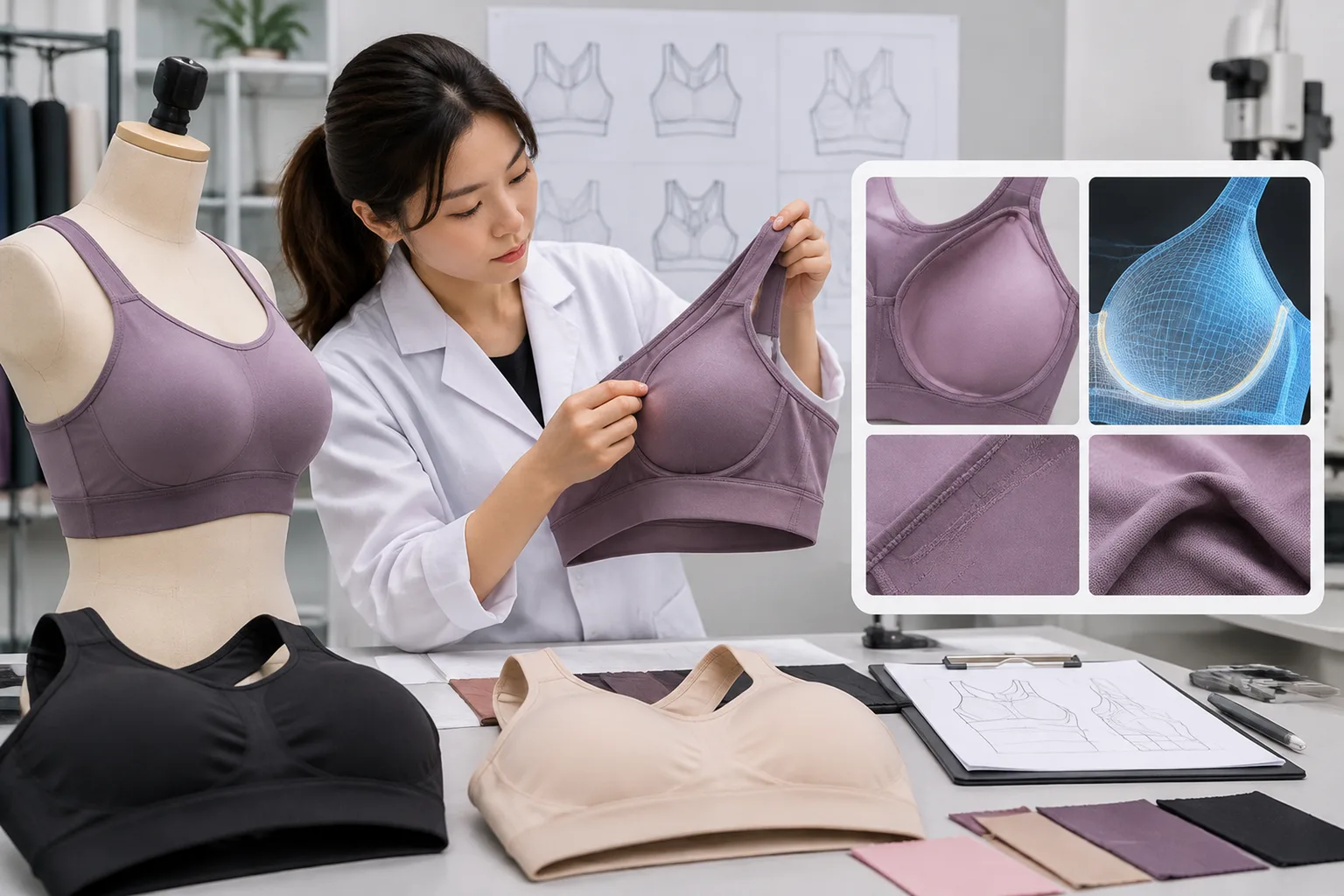
Next steps for improving an encapsulation design
Improving encapsulation sports bra design follows a connected sequence: define the movement and support task, map body zones, coordinate pattern and materials, and evaluate the assembled garment across relevant sizes and actions. Create a concise record linking each intended function to a pattern, material, construction, and evaluation question. Next, compare the design brief, component specifications, prototype observations, and unresolved variables. Select one meaningful variable for the next revision. If a quantified performance, safety, or regulatory claim is required, check the applicable authoritative method and evidence; omit the claim when it cannot be verified.
Frequently Asked Questions
How is an encapsulation sports bra different from a compression sports bra?
Encapsulation uses separate shaped cups or panels to organize each breast volume. Compression applies pressure more collectively across the bust. A design may combine both approaches, and neither construction alone proves a particular support level.
Which garment areas should be reviewed first when an encapsulation sports bra shifts during movement?
Review the underband, cup position, straps, side and back structures, and entry or closure system together. Also check fit, material recovery, and the movement that triggered shifting before assuming that greater tension is the appropriate response.
Can a supportive fabric or elastic component guarantee effective encapsulation on its own?
No. Complete-garment behavior depends on cup geometry, body fit, anchoring, material direction, recovery, component attachment, construction, size, and wearer movement. A strong result from one component cannot be treated as a whole-garment guarantee.
How should cup shape and underband behavior be evaluated together?
Check whether the cup preserves the intended space and containment while the underband remains positioned during relevant movements. Note gaping, migration, edge pressure, breathing comfort, and changes in cup position rather than assessing either component alone.
What should be recorded when comparing sports bra encapsulation prototypes?
Record the version, size, materials, layer arrangement, construction, component settings, wearer context, activity, posture, observations, and feedback. Consistent records help distinguish a useful revision from a result caused by another changing variable.
When is formal testing or an authoritative test method needed for a sports bra performance claim?
Use an applicable authoritative method and suitable evidence when making a quantified, regulated, safety-related, or certified performance claim. Qualitative prototype review can guide development, but it cannot establish those claims by itself.