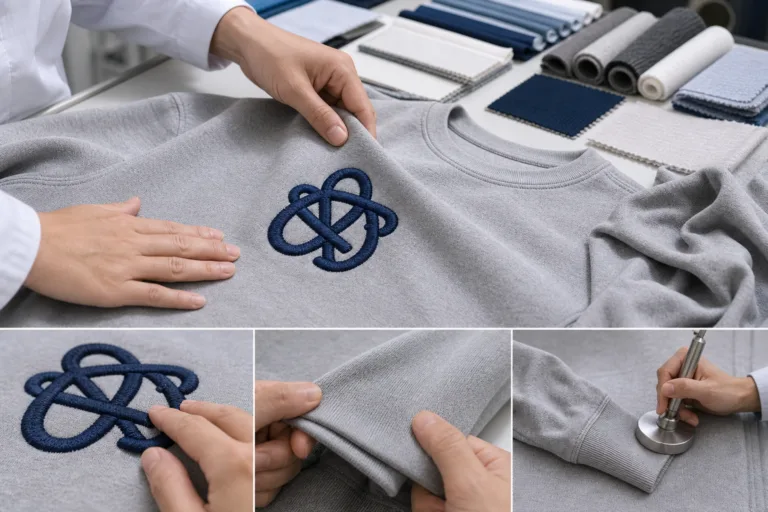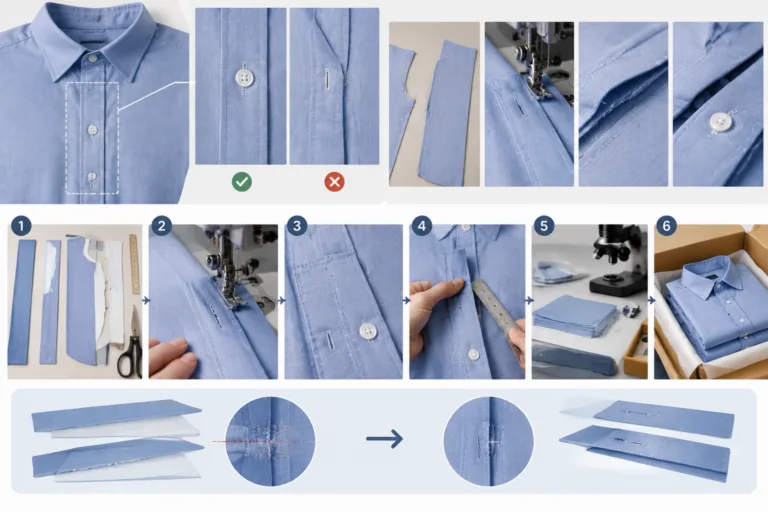
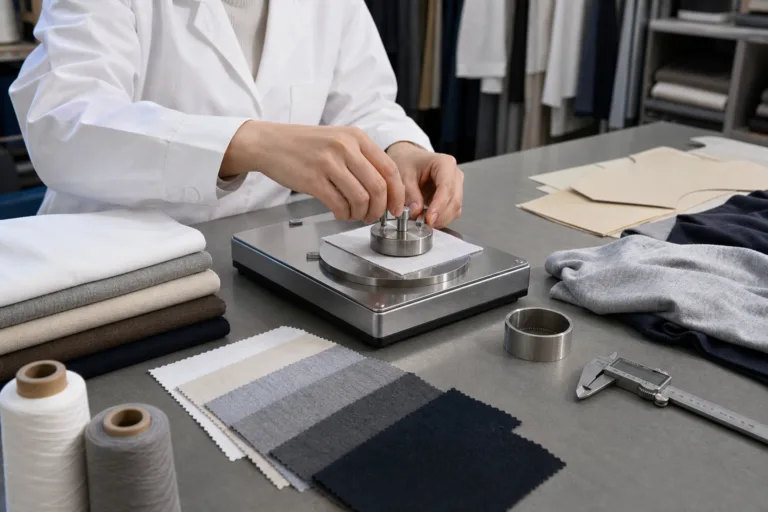
Improving t shirts fabric weight does not necessarily mean making the fabric heavier. It means selecting and consistently controlling the mass per unit area that best serves the intended garment. Apparel Wiki is an independent educational publication, and its Sponsor page explains the site’s approach to editorial independence.
For product developers and sourcing teams, fabric weight should be treated as one specification among several. A change may influence drape, coverage, warmth, packing volume, and sewing behavior, but the result also depends on the fiber, yarn, knit construction, finishing, fit, and garment design. The practical objective is therefore controlled optimization—not simply adding material or pursuing the highest available GSM.
What Does T-Shirt Fabric Weight Mean?
T-shirt fabric weight is primarily the mass of fabric per unit area. The global apparel industry commonly expresses it in grams per square meter, abbreviated as GSM. A 200 GSM specification, for example, describes the mass of one square meter of that fabric under the stated measurement conditions. It does not describe the weight of an entire finished t-shirt.
GSM must also be distinguished from thickness. Two fabrics can have similar mass per area yet differ in thickness because their fibers, yarns, loop geometry, surface texture, or finishing routes differ. Likewise, GSM does not identify fiber content, yarn count, knit structure, softness, strength, stretch, or overall quality.
A heavier fabric is not automatically more durable, comfortable, or suitable. Added mass may create greater perceived coverage or a different drape, but those outcomes are project-dependent. A lighter, well-engineered fabric may perform better for layering or warm conditions, while a heavier construction may better support a structured silhouette.
Meaningful GSM comparisons require the same basis. Sampling location, fabric relaxation, moisture condition, finishing state, and measurement procedure can affect the reported result. Buyers and suppliers should therefore agree on how specimens will be prepared and measured rather than comparing numbers taken under unknown or inconsistent conditions.
Choose the Right T-Shirt Weight for the Intended Use
The best fabric weight for t-shirts begins with the garment’s job. A lightweight base layer, everyday casual tee, oversized fashion style, work shirt, and structured premium garment may require different balances of drape, coverage, warmth, and handling. No universal GSM band can define the correct choice for every market or construction.
| Positioning | Questions to evaluate | Possible trade-offs |
|---|---|---|
| Lightweight | Will it be layered, packed, or worn in warm conditions? | May reduce bulk but can change opacity, sewing stability, or perceived coverage. |
| Midweight | Does the brief prioritize versatile everyday wear? | Requires a project-specific balance among drape, coverage, climate, and cost objectives. |
| Heavyweight | Does the silhouette require structure or a more substantial hand? | May increase warmth and packing volume or alter seam and graphic behavior. |
These descriptions are positioning tools, not fixed GSM categories. Climate and layering can change how a fabric feels in use. Opacity can also depend on color, stretch, knit density, and fit, while comfort and durability depend on more than mass alone.
Evaluate the complete garment before approving t-shirt GSM selection. Fit, body length, neckline rib, seam construction, graphics, garment wash, and the amount of fabric used all influence the result. A weight that works for a relaxed crewneck may not create the same effect in a close-fitting style.
Before requesting a change, document the intended wearer and use, desired silhouette, acceptable weight variation, and non-negotiable performance needs. This gives the supplier a clearer development target than an instruction such as “make it heavier” or “make it feel premium.”
Which Fabric Variables Change T-Shirt Weight?
Several specification layers affect t-shirt jersey fabric weight. Fiber content, yarn characteristics, knit structure, stitch density, loop length, finishing, and usable fabric width should be recorded separately. None of these variables can be inferred reliably from a broad commercial name such as “cotton jersey” or “premium knit.”
Yarn selection can change the quantity and arrangement of material in the fabric. Knit settings—including loop length and stitch density—can also alter mass per area. However, changing one of these variables may affect hand, stretch, recovery, surface appearance, drape, and dimensional behavior. The exact response depends on the combined construction and production route.
Finishing adds another source of variation. Washing, compacting, heat exposure, or other project-specific processes may change fabric dimensions. If the same mass occupies a smaller or larger finished area, the measured GSM can change. For that reason, greige, finished, relaxed, and garment-processed fabrics should not be treated as directly comparable unless their states and measurement conditions are clearly identified.
Fabric width belongs in the specification but is not itself GSM. It affects the mass of a linear length and the potential cutting yield, whereas GSM describes mass per area. Two rolls with the same GSM but different widths can therefore have different weights per linear yard or meter.
A useful material-identity description records four distinct layers: fiber, yarn, knit structure, and finishing. GSM can then be added as a measured specification. This framework helps explain why two fabrics carrying the same nominal weight may look, stretch, sew, and wear differently.
How to Improve Fabric Weight Without Creating New Problems
Begin with a written target covering GSM and its agreed variation, fabric width, fiber composition, knit construction, finishing route, and intended garment use. The allowed variation is a buyer-defined quality requirement; it should not be assumed from a supplier’s general practice or from the fabric name.
Ask the mill or supplier to state exactly how the proposed adjustment will be made. Possible project-dependent levers include yarn selection, loop length, stitch density, blending, or finishing. A nominal GSM change without this explanation gives the development team little ability to anticipate secondary effects.
- Request swatches or sample lots made through the intended production and finishing route.
- Compare original and revised fabrics in equivalent finished and relaxed states.
- Use the same sampling, conditioning, specimen preparation, and measurement procedure.
- Review dimensional change, skew or spirality, stretch and recovery, pilling, color appearance, printability, and sewing behavior where relevant.
- Make a sample garment and check fit, measurements, seams, neckline, drape, graphics, and wearer experience.
These checks do not establish universal acceptance criteria. The buyer should define which characteristics matter, which methods apply, and what constitutes an acceptable result for the product. Supplier routines can support development, but they do not replace a documented specification.
Approve the revised weight only when fabric-level measurements and garment-level evaluation confirm that the original product objective remains intact. The most successful adjustment is not necessarily the largest GSM increase; it is the controlled change that achieves the required weight while avoiding unacceptable effects elsewhere.
How to Measure and Compare T-Shirt Fabric Weight
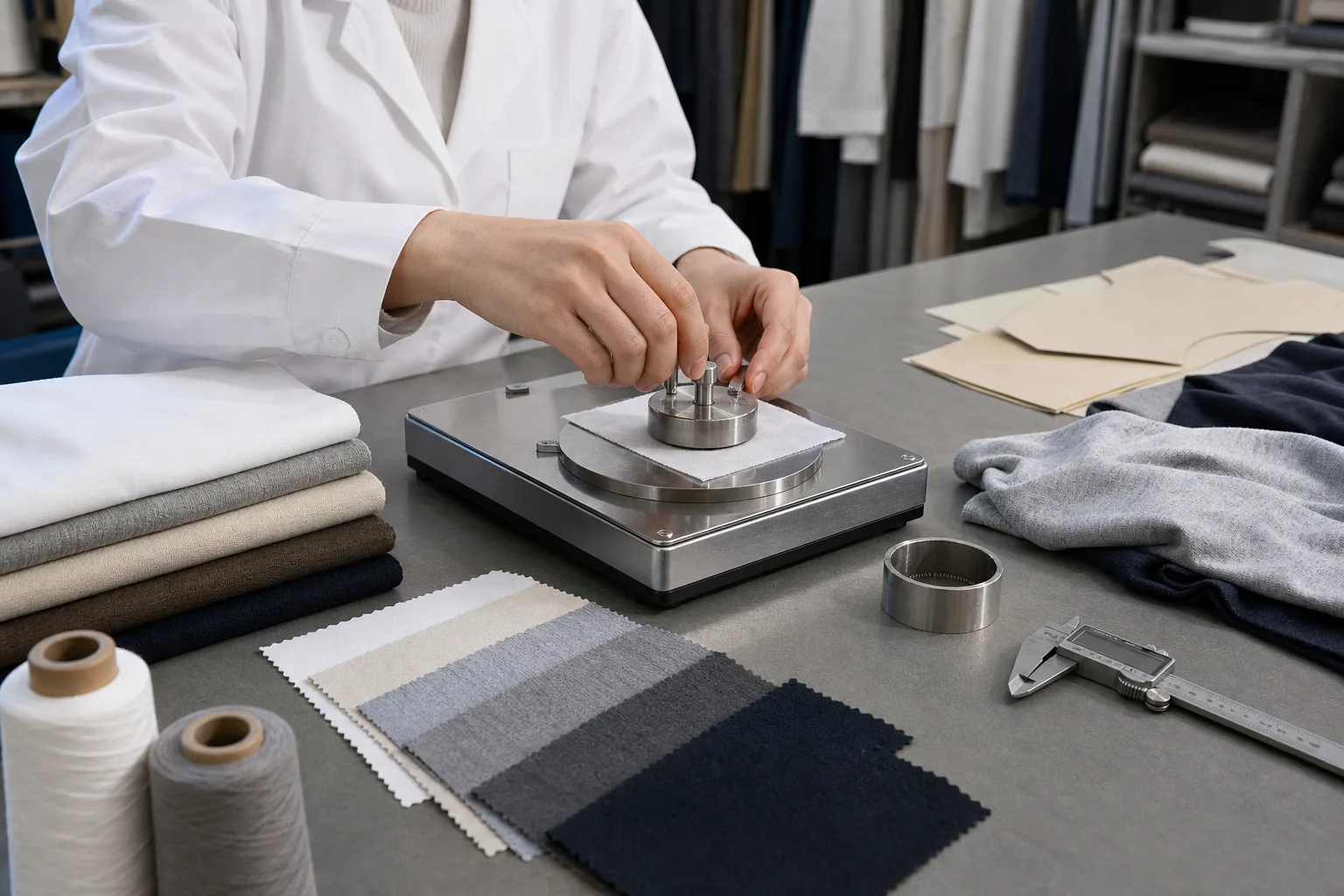
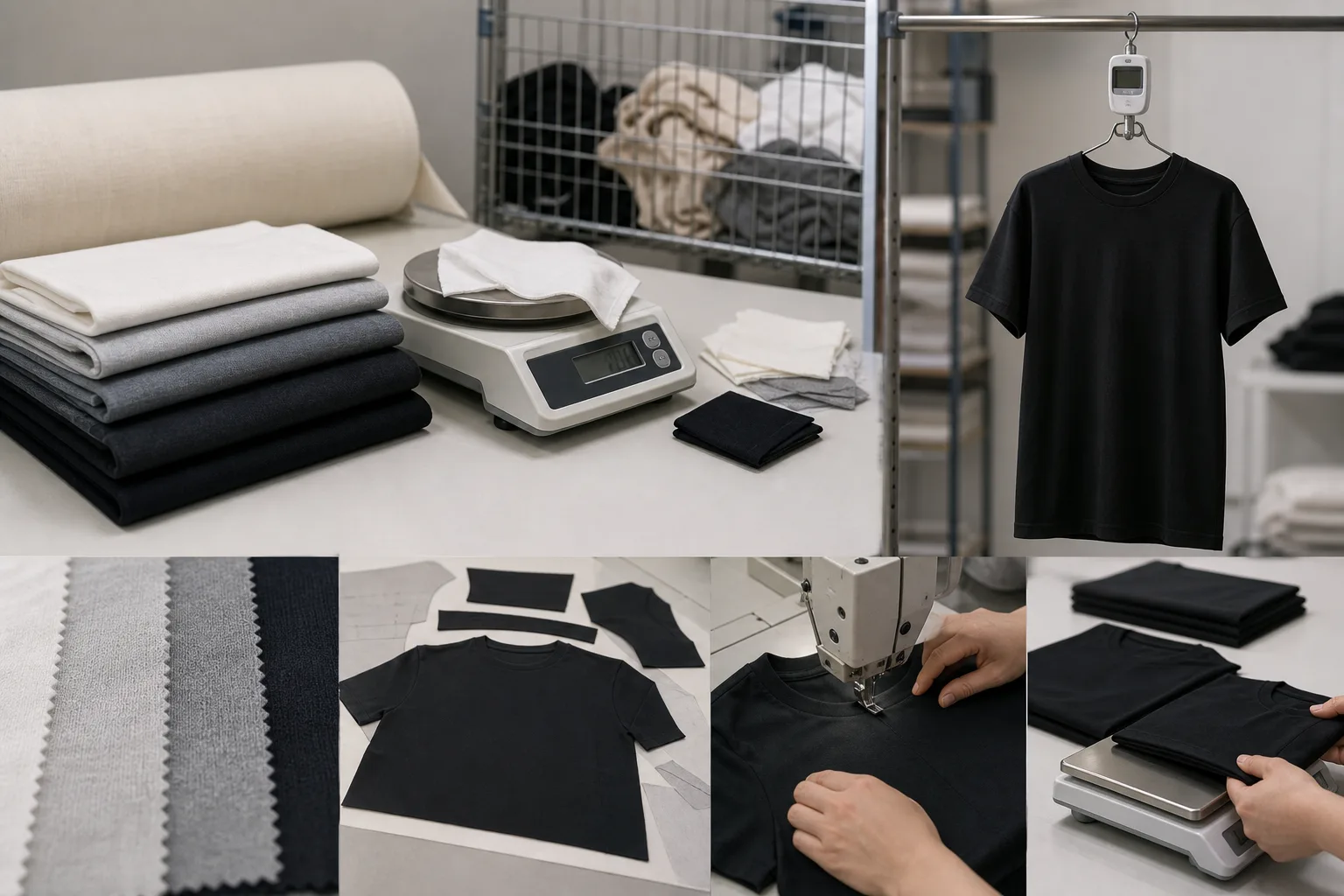
A useful fabric-weight comparison begins with clearly identified samples and a consistent procedure. Record which fabric, color, lot, finish, and production stage each specimen represents. Sampling direction, usable fabric area, specimen preparation, conditioning assumptions, weighing equipment, calculation method, and reporting units should remain consistent. Otherwise, an apparent GSM difference may partly reflect how the samples were prepared or measured.
The result should include more than a number. Record the applicable test method or buyer-defined procedure, specimen basis, units, and relevant sample condition. When weight uniformity matters, examine multiple specimens or locations according to the applicable specification or test method. A single reading should not be treated as proof that an entire roll, shipment, or finished-garment batch has the same mass per unit area.
For unit comparison, ounces per square yard can be estimated by dividing GSM by 33.905747. In a hypothetical example, 200 GSM is approximately 5.90 oz/yd². This is an area-weight conversion, not ounces per linear yard. Calculating weight per linear yard also requires the fabric width, so the two expressions are not interchangeable.
Fabric weight and finished-garment weight must also remain separate. Fabric GSM describes mass per unit area. The weight of a t-shirt additionally depends on its size, pattern pieces, seam allowances, rib, thread, labels, graphics, trims, and finishing. Two garments made from nominally equal-GSM fabric can therefore have different total weights.
A compact fabric weight inspection record should include the fabric ID, fiber composition, yarn or construction description, usable width, finish, test method, reporting units, specimen basis, sample condition, and measured result. Add the buyer’s target and acceptance criteria only when they have been documented for that project.
Evaluate Fabric Weight at Fabric and Garment Level
Measured GSM confirms one property, but it does not show how the material will behave as a t-shirt. Compare representative fabric samples for hand, drape, opacity, stretch, recovery, surface appearance, and dimensional stability. Any conclusion about shrinkage, pilling, colorfastness, seam behavior, or recovery should be based on project-specific testing rather than inferred from weight alone.
Next, make representative garments using the intended pattern, seam construction, neckline rib, labels, prints or embroidery, and wash or finishing route. Review the garment in the relevant sizes and wearing context. A fabric that looks suitable as a flat swatch may hang differently after cutting and sewing, interact poorly with a graphic, or change the intended silhouette after finishing.
Pay particular attention to the neckline, armholes, side seams, hems, and high-friction areas. Local construction can dominate performance in these locations. For example, changing the body fabric weight without reconsidering rib compatibility or seam construction may alter appearance and handling even if the measured GSM reaches its target.
A comparison matrix can keep approval decisions traceable. Useful columns include target weight, measured result, appearance, hand and drape, fit, dimensional change, surface performance, and approval status. Keep numerical test results separate from observations such as “firmer hand” or “less fluid drape,” and separate both from an editorial or commercial preference.
Suppose two candidate fabrics have similar measured GSM but visibly different drape and recovery. The correct choice cannot be made from GSM alone. Each fabric should be evaluated against the intended fit, graphics, care route, and wearer expectations. Independent component results remain incomplete until the assembled t-shirt has been reviewed against documented product criteria.
Limits of Fabric Weight and the Next Specification Step
Fabric weight alone cannot establish quality, comfort, durability, fit, safety, legal compliance, or suitability for a particular wearer. It does not identify fiber content, yarn characteristics, knit structure, finishing, or the causes of a measured result. Nor does a higher number automatically mean that a t-shirt is stronger, more comfortable, or more premium.
Product claims and regulatory obligations depend on factors such as the destination market, fiber content, labeling, intended use, and other applicable requirements. GSM is not evidence of certification or compliance. Relevant claims and obligations should be checked against current official requirements and supported by the appropriate documentation and testing.
Once the preferred direction has been validated, convert it into a practical fabric specification. Document composition, yarn and knit construction where relevant, weight basis, usable width, finish, agreed variation, test method, sampling basis, reporting units, and approval sample. The stated variation and conformity rules should reflect the buyer’s contractual criteria and the selected method rather than an assumed industry-wide tolerance.
Design, sourcing, quality, pattern, and manufacturing teams should review the specification before the bulk standard is locked. This helps expose conflicts between weight, silhouette, sewing behavior, graphics, finishing, and performance requirements while changes can still be evaluated through samples.
Next step: Build a short approval sheet that connects the intended use to the target GSM, construction details, measurement method, garment checks, and signed reference sample. Select the lightest or heaviest option only when it satisfies the defined use and verified performance requirements—not because its number sounds more premium.
Frequently Asked Questions
Is heavier t-shirt fabric always better?
No. A heavier fabric may provide a different hand, drape, or coverage, but quality and suitability also depend on fiber, yarn, construction, finishing, fit, and intended use.
What does GSM mean in a t-shirt?
GSM means grams per square meter. It expresses the mass of fabric over a defined area, not the thickness or total weight of the finished t-shirt.
How can I increase the fabric weight of a t-shirt?
Project-dependent options may include changing yarn selection, loop length, stitch density, knit construction, or finishing. Each adjustment should be sampled and evaluated for secondary effects.
Is t-shirt fabric weight the same as thickness?
No. Weight measures mass per unit area, while thickness measures the distance between fabric surfaces under defined conditions. Fabrics with similar GSM can have different thicknesses.
How should a supplier’s t-shirt fabric GSM be checked?
Use an agreed test method and consistent sampling, conditioning, specimen preparation, weighing, calculation, and reporting practices. Record the sample identity and compare multiple specimens when the specification requires it.
Can two t-shirts with the same GSM perform differently?
Yes. Fiber content, yarn, knit structure, finishing, pattern, seams, rib, graphics, and care processing can produce different appearance and performance even when GSM is similar.